 Drapehaus
Drapehaus
Preparing the room
Drapehaus
Preparing the room
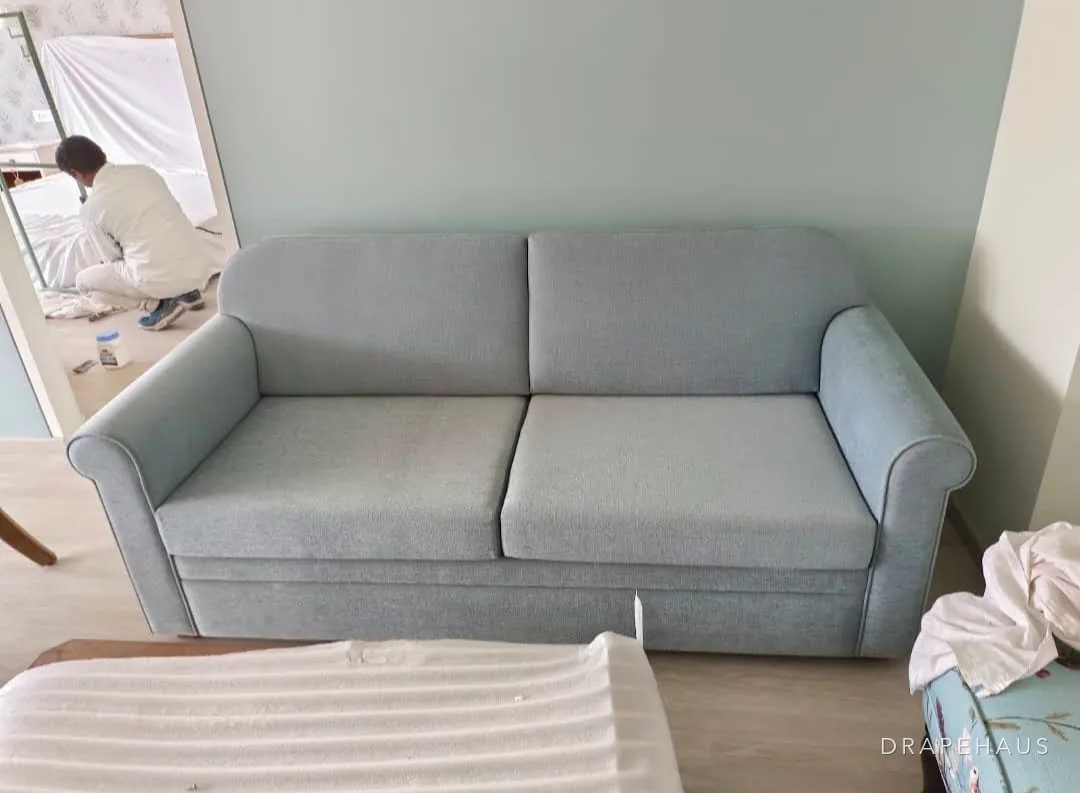
Upholstery
Cushions, bolsters, runners and bed dressing made in the same workroom and fabrics as the curtains, so the room reads as one decision rather than several.

Durability scale (Martindale rubs, BS 2543)
15k
20k
25k
30k
40k
Who uses it
Where it lives
How it is used
Durability to ask for
30,000+ rubs
Severe domestic / general contract
Removable covers
Yes
zipped, washable, and a spare set
Fibres that suit
Avoid: Anything you cannot clean in place, on a piece used every day. Rub count is one number among several — weave, colour-fastness and how a fabric handles humidity matter as much. We bring samples to see in your room.
In short
By the Drapehaus studio · How we write
Is it right for you?
Soft furnishings are the textiles that sit on top of the larger pieces: scatter cushions on a sofa, bolsters on a daybed, seat pads on dining chairs or a window seat, runners and cushions dressing a bed. They are small in scale and large in effect. A sofa in a plain linen looks entirely different with deep indigo cushions than with ochre and rust ones, and a bed dressed with a runner and bolster looks finished in a way that sheets alone never do.
Made to measure, they solve problems off-the-shelf pieces cannot. A window seat of an odd length, a built-in stone bench in a balcony, a daybed with an unusual depth, or a set of cane chairs that need seat pads tied on at particular points. They can also be made from the same fabrics as the curtains and upholstery, so the room reads as one piece of thinking.
Custom soft furnishings suit anyone refreshing a room, finishing a new one, or wanting to try a colour before committing to it on larger pieces. They are also the most practical way for a rental villa to change its look between seasons.
If what is really wrong with a room is a sagging sofa or tired curtains, cushions will not fix it. They work best on top of sound pieces, not as a disguise for worn ones.
The details
It is also the least expensive way to change how a room feels — worth trying before committing to new curtains or a new sofa.
Covers are removable and washable as standard, and we choose inserts by feel: feather for softness, foam for structure.
Your options
The choices come down to shape, edge finish and filling. Each changes how a piece looks and how it behaves in use.
Swipe for all 6 →
The honest view
The quickest change to a room
New cushions and a runner change a room's colour and mood in days, without moving furniture or recovering anything. They are the best way to test a colour before using it on larger pieces.
Matched to the whole scheme
Made from the curtain or upholstery fabrics, or in colours drawn from them, they tie the room together deliberately rather than approximately.
Made for awkward spaces
Window seats, built-in benches and odd-sized daybeds are templated and made to fit, which no ready-made cushion can do.
Washable and replaceable
Removable covers can be washed, and replaced on their own when they wear or when the scheme changes, keeping the inserts.
Feather fillings need attention
Feather cushions need plumping daily and airing in humid weather, or they flatten and can develop a musty smell.
Easy to overdo
Too many cushions crowd a sofa and end up on the floor. A few well-chosen ones look better and are used more.
Colours fade in sun
Cushions near sunny windows fade faster than the sofa beneath them, since they are the most exposed textile. Choose lightfast fabrics or rotate them.
Side by side
The filling decides how a cushion looks, feels and copes with humidity.
| Feather | Feather and down | Hollowfibre | Foam with wrap | |
|---|---|---|---|---|
| Feel | Soft, supportive | Very soft | Soft, springy | Firm, crisp |
| Look | Relaxed, chopped | Relaxed | Plump, rounded | Tailored |
| Humidity | Needs airing | Needs airing | Good | Good if quality foam |
| Washable | Specialist | Specialist | Usually | Cover only |
| Allergies | May trigger | May trigger | Non-allergenic | Non-allergenic |
| Best use | Living rooms | Bedrooms | Rentals, children | Seat pads, window seats |
Swipe to compare →
Rather see it in your own room?
We bring samples to the house, measure every window, and specify for the light and exposure you actually have.
Room by room
Scatter cushions carry the room's accent colours and textures. Mix sizes and finishes, and relate them to the curtains and rug.
Bolsters, cushions and a runner make a bed look finished. Feather-and-down inserts give the softest result.
Indoor cushions fade and mildew outside. Use outdoor fabric and quick-dry fillings, or bring cushions in daily.
Washable covers and fibre inserts are practical and safe. Bold colours and patterns can change as children grow.
Runners and cushions give each room its identity while bedding stays white. Keep spare covers for quick turnarounds.
Templated seat pads and bolsters make these spaces usable and comfortable. Allow for old walls that are rarely square.
In depth — tap a heading to read
Cushion size should relate to the depth and height of the seat. On a deep sofa, larger cushions fill the space and support the back; on a shallow one, large cushions push the sitter forward. A good arrangement usually layers two sizes, larger at the back and smaller in front, with perhaps a rectangular or lumbar cushion in the centre or on a chair.
Odd numbers and asymmetric arrangements look relaxed; matched pairs at each end look formal. Resist filling every inch: a sofa should still be comfortable to sit on without moving cushions to the floor. On a bed, a pair of European pillows, a pair of standard pillows and one bolster or cushion is usually enough.
The simplest way to make soft furnishings work is to draw their colours from something already in the room: the curtains, the rug, a painting. Pick one accent colour to repeat across two or three pieces, then vary scale and texture. A large pattern, a small pattern and a plain or textured weave in related colours sit together easily.
Texture matters as much as colour. Linen, velvet, woven cotton, a nubbly slub and a smooth sateen catch light differently, and a mix of them gives a room depth even in a narrow palette. Contrast piping or a flange in a second fabric is a quiet way to connect pieces. Using the curtain fabric for a cushion or two is the most direct link of all.
Cushions are the most exposed textiles in a room: handled daily, sat against with damp skin, often near windows. In the monsoon, feather fillings absorb moisture and can develop a musty smell, and cotton covers can spot with mildew if the room is closed. The fix is simple. Choose fibre or quality foam fillings in rooms that will be shut for the rains, and remove covers for washing and storage.
For houses closed through the monsoon, strip covers at take-down, wash and dry them fully, and store them flat or rolled in breathable bags. Keep inserts in a ventilated space, never sealed in plastic, where trapped moisture guarantees mould. When the house reopens, air inserts in the sun for a morning before refitting covers.
Never store cushion inserts sealed in plastic. Trapped humidity will mould them.
Well-made covers have zips concealed in a seam, usually at the bottom or back, so they can be removed without showing. Patterns are centred and matched on the front, and piping is cut on the bias so it follows curves without puckering. Corners are shaped to avoid the dog-eared points that make cushions look unfinished, and inserts are sized slightly larger than the cover so it is filled out.
For seat pads and window-seat cushions, the foam is cut to a template taken on site, wrapped in fibre to soften edges, and covered with a boxed edge. Ties, tabs or a non-slip base keep pads in place on cane or timber seats. All of this is standard in our workroom, and it is the difference between a cushion that looks finished for years and one that sags after weeks.
In a rental, soft furnishings carry the room's personality while the hard-wearing essentials stay neutral. White bedding with a coloured runner and cushions photographs well, and the colour pieces can change with the season without replacing anything else. Keep a full spare set of covers for each room, so housekeeping swaps rather than washes between guests.
Specify fibre inserts, which wash and recover well, and covers in fabrics that tolerate frequent laundering. Limit the number of scatter cushions per room: guests move them to chairs or floors, and fewer, larger pieces look tidier. Label covers by room so they return to the right place after laundering.
Living with it
Plump and turn feather cushions daily so they keep their shape. Fibre and foam need less attention.
Follow the fabric's care guidance. Wash matching covers together so they fade evenly, and refit slightly damp for a smooth fit.
Put feather inserts in the sun and breeze for a few hours on dry days, especially after the monsoon.
Swap cushions between positions so fading spreads evenly.
For the monsoon, wash, dry fully and store covers and inserts in breathable bags in a ventilated space.
Avoid these
An insert the same size as the cover looks thin and flat. Specify inserts slightly larger for a full, plump cushion.
A crowded sofa is uncomfortable and untidy. Choose fewer, better cushions.
Identical cushions look flat. Vary size, pattern scale and texture within a related colour range.
Feather absorbs humidity and can smell in rooms shut for the rains. Use fibre there, or store feather inserts ventilated.
Old walls and reveals are rarely square. Template window seats on site rather than working from a tape measurement.
Checklist
More in upholstery
Reupholstering a well-built frame costs less than replacing it and keeps a piece you already love.
From the Journal
All articlesOur process
One team from the first visit to the last bracket, so nothing is lost between the person who specified it and the person who fits it.
FAQ
Yes — that is one of the best ways to tie a room together.
Feather for a soft, relaxed cushion; foam for a crisp shape that holds up in a busy room or a rental.
Scale them to the seat depth and back height. Deep sofas suit larger cushions at the back and smaller ones in front; shallow sofas need smaller cushions so the seat stays usable. Layering two sizes almost always looks better than a row of identical ones. We suggest sizes when we see the sofa.
Hollowfibre and quality foam cope best with humidity, since they absorb little moisture and dry quickly. Feather and down are softer but need regular airing in the monsoon. For rooms closed through the rains, fibre is the safer choice.
Yes. We take a template on site, since old walls and reveals are rarely straight, and cut foam and fabric to it. Boxed edges and a fibre wrap give a tailored, comfortable seat, with a zipped cover for cleaning.
Fewer than you might think. A pair of large pillows at the back, a pair of standard pillows, and one bolster or decorative cushion is plenty. A runner at the foot adds colour without more pieces to move each night.
Many can, depending on the fabric and trims. Some velvets, silks and embroidered fabrics need dry-cleaning. We give care guidance for each fabric and can choose washable fabrics when that matters, as it often does in rentals.
Next step
We visit, look at the sofa, bed, window seats and fabrics already in the room, and measure or template anything built-in. We bring fabrics to see beside your curtains and upholstery in the room's own light, and suggest sizes, finishes and fillings. Then we make the pieces in our workroom and deliver them ready to use. Book a home visit and we will arrange a time that suits you.