 Drape Haus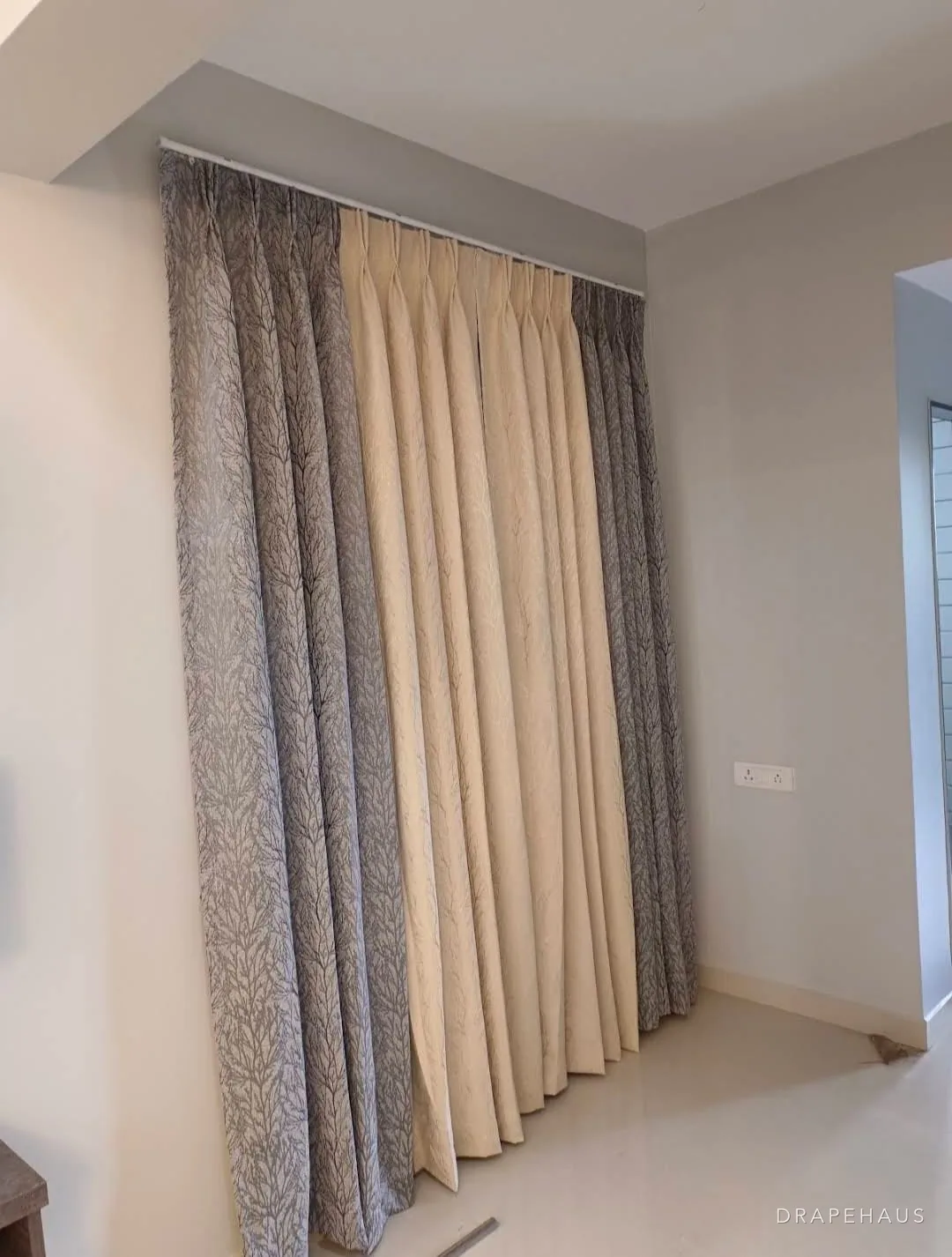

An old house in Goa is a wonderful thing to move into and an easy one to get wrong. The temptation in the first weeks is to start with what you can see: paint, a new kitchen, curtains. The right order is the reverse. Water and safety come first, because the roof, the wiring and the damp decide whether everything else survives the first monsoon.
This guide is written for people who have just rented, bought or inherited an old Goan house and want to know where to start. It sets out what to check in the first week, what must be finished before the rains arrive in early June, what can wait until after the monsoon, and how to make the house comfortable while the work goes on.
We should be clear about our part. Drape Haus makes and fits soft furnishings, nets and window treatments. We are not builders, electricians, engineers or pest controllers, and the roof, wiring and structure need those people. What follows gives honest pointers on each so you can ask the right questions; for the larger restoration sequence, read our guide to restoring an old Portuguese house.
The first week: four things to check
Before unpacking anything precious, walk the house with a torch, a notebook and someone who knows old buildings. You are looking for four things: whether the roof keeps water out, whether the wiring is safe to use, whether the water supply works and is fit for its purpose, and where the worst damp is. Everything else is secondary for now.
Write down what you find, room by room, with photographs. Note stains on the ceiling boards, cracked or slipped tiles visible from the yard, sockets that feel warm, the age and type of the fuse board, the source of water and the condition of tanks, and every patch of damp, blown plaster or white salt on the walls. That record is what you will hand to the builder and electrician, and it is the baseline against which you will judge the first monsoon.
- Roof: daylight through tiles, stained or sagging ceiling boards, blocked gutters and valleys.
- Wiring: the fuse board, the type of cable, warm sockets, scorch marks, a burning smell.
- Water: where it comes from, the state of tanks and pipes, whether a well is in use.
- Damp: dark patches, blown plaster, salt bloom, musty rooms and cupboards.
Roof, wiring, water, damp. Until those four are understood, everything else is decoration.
Roof and rainwater, before June
The calendar sets the deadline. The India Meteorological Department's climate summary for Goa says the southwest monsoon usually sets in over the state in the first week of June and withdraws around the third week of September, and that July alone brings about a third of the year's rain. A roof that leaks in May will pour in July. If the house changes hands in the dry season, roof work goes to the top of the list.
Most old Goan roofs are clay tiles on timber rafters and battens. They are repairable piece by piece, which is their great advantage: slipped tiles can be reset, broken ones replaced, and rotten battens or rafter ends pieced in by a carpenter. A roofer who knows tiled roofs should walk the whole roof, clear the valleys and gutters, and check where the roof meets walls and chimneys. Ask them to look at the timber too, because termites and rot at the wall bearings are common and invisible from below.
Water at ground level matters as much. Make sure downpipes discharge away from the walls, that the ground slopes away from the plinth and that no concrete has been laid against the base of the wall to channel water into it. These are small jobs that prevent years of damp.
Planning something like this?
We visit homes across North and South Goa, measure on site, and bring samples to see in your own light.
Wiring and water: get a professional check
Old Goan houses often have wiring added in stages over decades, some of it run along the surface, some of it buried in plaster. Electrical Safety First, the UK electrical safety charity, advises that electrics more than 50 years old should be checked and updated, lists warning signs such as sockets mounted in skirting boards, burn marks and crackling from switches, and recommends finding out whether the installation has been fully checked in the past ten years. It also notes that a general survey will not cover electrical safety.
Its simplest check applies anywhere: look on the fuse board for a test button marked 'T' or 'Test', which indicates a residual current device, the safety switch that cuts power if current leaks to earth. If there is none, the charity advises plug-in RCDs for the sockets until the board can be upgraded. In Goa, have a licensed electrician inspect and test the whole installation, including the earthing, before you load the house with air conditioners and water heaters. Plan now for anything you may want powered later, such as motorised curtains in a tall room, so cables can be routed once rather than twice.
For water, find out where it comes from, mains, well or both, and have a well tested by a laboratory before anyone drinks from it. Clean overhead tanks, check that they are covered, and look at the plumbing for leaks inside walls, which are a common hidden source of damp patches in old houses.
Damp: find the source before treating the wall
Almost every old Goan house has some damp, and almost all of it has a cause you can find. Rain getting in through the roof or round a window, a leaking pipe, ground raised against the wall, a blocked drain, or a wall sealed in cement and plastic paint that can no longer dry out. The US Environmental Protection Agency's guidance is blunt: the key to mould control is moisture control. Treating the surface without fixing the source simply brings the mould back.
Resist the quick waterproofing fix. Old laterite and lime walls stay healthy by letting moisture evaporate, and the Society for the Protection of Ancient Buildings explains that permeable lime mortar protects old masonry by eroding in its place, while hard cement makes the stone itself the most permeable, fastest-decaying part of the wall. Our guide to laterite and old walls explains how this shapes everything from repairs to curtain fixings.
For mould already on surfaces, the EPA recommends drying wet materials within 24 to 48 hours, wearing an N-95 respirator, gloves and goggles while cleaning, and calling in professionals when an area larger than about ten square feet, roughly one square metre, is affected. Keep indoor humidity below 60% where you can. Wardrobes and furniture should stand a hand's width off external walls until you know which walls stay dry.
Termites, mosquitoes, bats and snakes
Old houses share their space. Termites are the most destructive tenant. Rutgers University's extension guidance lists the signs to look for: mud tubes on walls and masonry, a hollow sound when timber is tapped and swarming winged termites. It advises removing wood-to-soil contact, fixing leaks and keeping firewood and debris away from the house, and calling a licensed professional for an active infestation. Do this before you move furniture and books in.
Mosquitoes are the daily nuisance and, with dengue, a health issue. The World Health Organization notes that the mosquitoes spreading dengue bite during the day, and recommends window screens, bed nets and covering, emptying and cleaning water containers every week. Old windows make screens tricky: inward-opening shutters, iron grilles and frames that are no longer square. Nets need to be made to each opening and fixed so the shutters still close. Our sliding window nets suit most old frames, and torn mesh in existing frames can often be repaired and re-meshed rather than replaced.
Bats sometimes roost in roof spaces and false ceilings of houses that have stood empty. Do not handle them; get advice on letting them leave before the gaps are closed. Snakes shelter in houses more often in the rains. A Goan newspaper, reporting the advice of a wildlife rescuer, says that if a snake is inside with no way out you should call a rescuer, that rescuers can be reached through Goa's 108 emergency service, the fire service and the police, and that you should never try to hit it. Clearing rubble, long grass and stored junk from against the house reduces hiding places.
High ceilings and tall windows
Old Goan rooms are tall and their windows are tall, often with timber shutters inside and sometimes with shell or glass panes. That changes the window-dressing problem in three ways. Drops are long, so fabric quantities are larger than people expect; fixings have to go into timber frames or ceilings rather than crumbling wall; and anything that stops the shutters closing is a mistake, because the shutters are the house's storm protection.
A ceiling-fixed track is often the neatest answer. It fixes into the timber ceiling or a batten above it, avoids drilling laterite, and lets curtains hang from the full height of the room, which suits the proportions. Our ceiling curtain tracks are chosen for exactly this. If the ceiling boards are being repaired, tell the carpenter where tracks will go so blocking can be added first.
On quantity, a pleated or ripple-fold curtain usually needs a fabric width of around twice the track length, more for a fuller look, and the drop is the full height from track to just above the floor. Across a tall sala with four or five windows that adds up quickly. Our fabric calculator gives a realistic figure for your measurements, and we measure on site before quoting. Light linens and sheers suit these rooms better than heavy drapes, which are hard to keep dry in a house that breathes.
Floors, furniture and rugs on uneven ground
Old floors are rarely level. Red oxide floors crack and settle with the ground beneath them, timber floors upstairs dip between joists, and patterned tile floors may have lifted in places. None of this is a reason to replace them; they are part of the house, and lifting an old floor usually destroys more than it saves. It does change how you furnish.
Choose furniture that can be levelled. Adjustable feet or simple timber wedges under a cupboard or bookcase stop it rocking and pulling away from the wall. Put felt or cork pads under chair and table legs on oxide and timber, which scratch easily. Keep heavy wardrobes off external walls and away from any damp patch you noted in the first week.
Rugs need thought on old floors. A low, flat rug follows an uneven floor better than a thick one, and a natural-fibre underlay stops it creeping on polished oxide. Flatweaves such as dhurries can be washed and sun-dried; a wool rug is warmer underfoot in the bedrooms but should be lifted, cleaned and stored dry for the wettest weeks if the room is not dehumidified.
Phasing the year, and living comfortably meanwhile
The monsoon divides the year into work that must be finished before it, work that can safely happen during it, and work that should wait until after it. The table below is a simple way to plan. Your builder will adjust it for the house, but the logic holds: outside and wet trades in the dry months, inside and soft trades once the walls are dry.
While work goes on, make one room fully comfortable rather than every room half comfortable. Usually that is the main bedroom: roof sound above it, wiring checked, a ceiling fan, nets on its windows or a bed net, sheers for daytime privacy with a lined curtain for sleep, and a dehumidifier running with the door closed through July and August. A pleated mosquito net on the bedroom door means it can stay open on still nights. When the house is ready to furnish, we can visit, measure every window and door, and quote for curtains, blinds, nets and upholstery together; book a home visit.
| When | Priority work | Soft furnishings |
|---|---|---|
| On arrival | Survey roof, wiring, water and damp; pest inspection | Bed nets and temporary sheers in the bedroom you will use |
| Before June | Roof and gutters repaired; urgent electrical faults fixed; drains cleared | Nets on bedroom windows; nothing heavy on damp walls |
| June to September | Watch and record where water gets in; indoor carpentry and wiring | Dehumidify one room; store good textiles dry; measure windows |
| October to November | Wall repairs in lime once walls dry; external painting | Order curtains and blinds; fit tracks once ceilings are sound |
| Dry season | Larger restoration work, kitchen, bathrooms | Fit the rest of the house; reupholster old pieces |