 Drapehaus
Drapehaus
Preparing the room
Drapehaus
Preparing the room
Sliding Nets
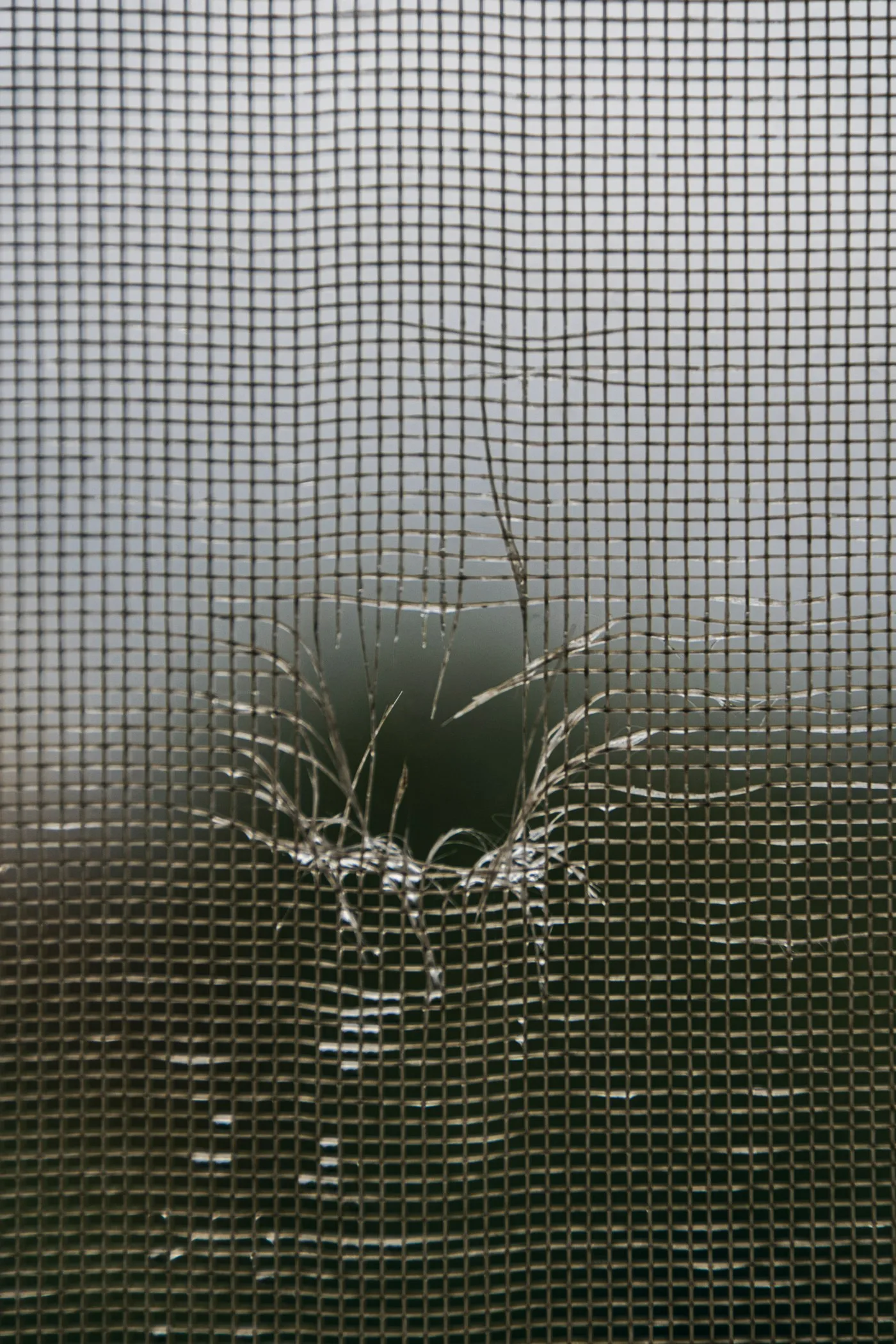
A torn or rusted mesh does not mean a new frame. We re-mesh existing sliding nets and repair rollers and tracks so they slide properly again.
The opening
What matters most
Setting
System
Pleated screen, side-opening
Mesh
Coated fibreglass or polyester mesh
Frame
Powder-coated aluminium, stainless fixings
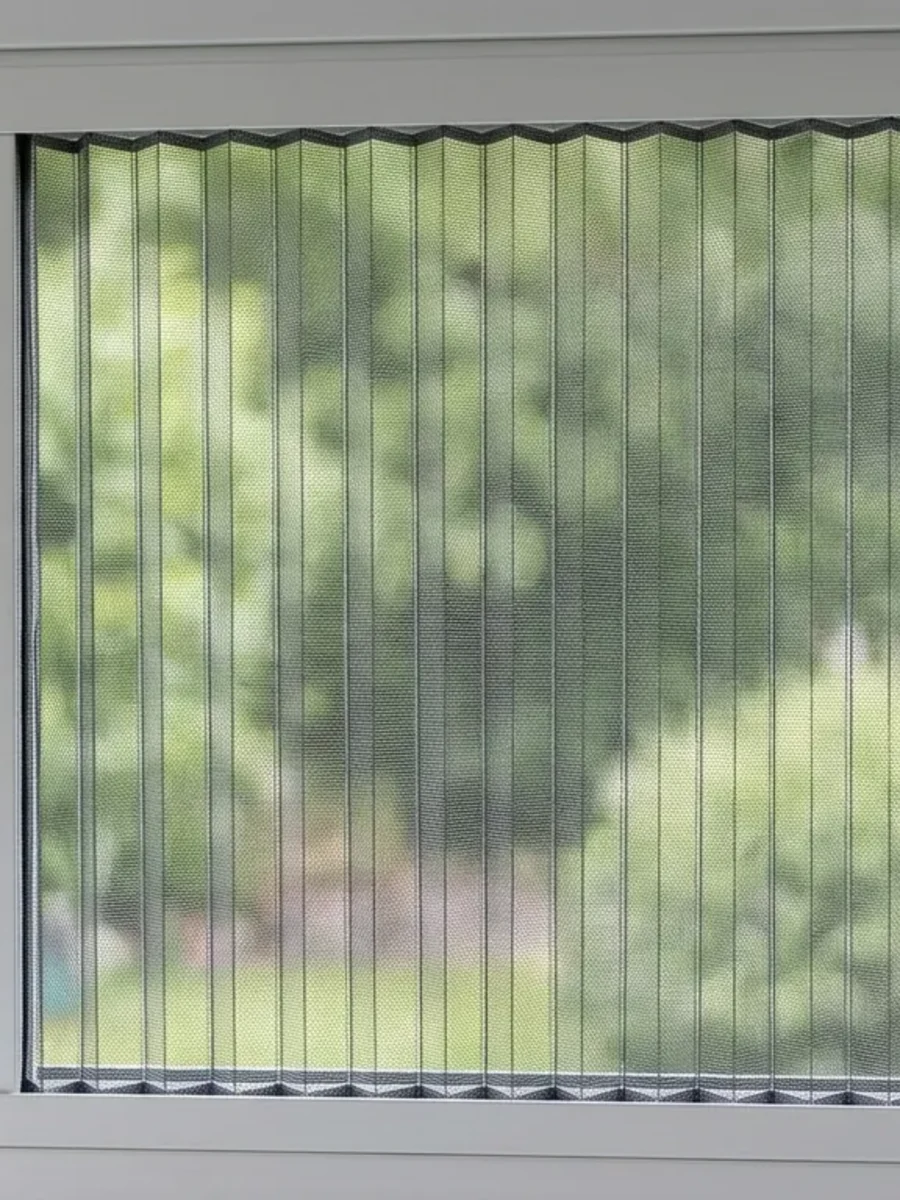
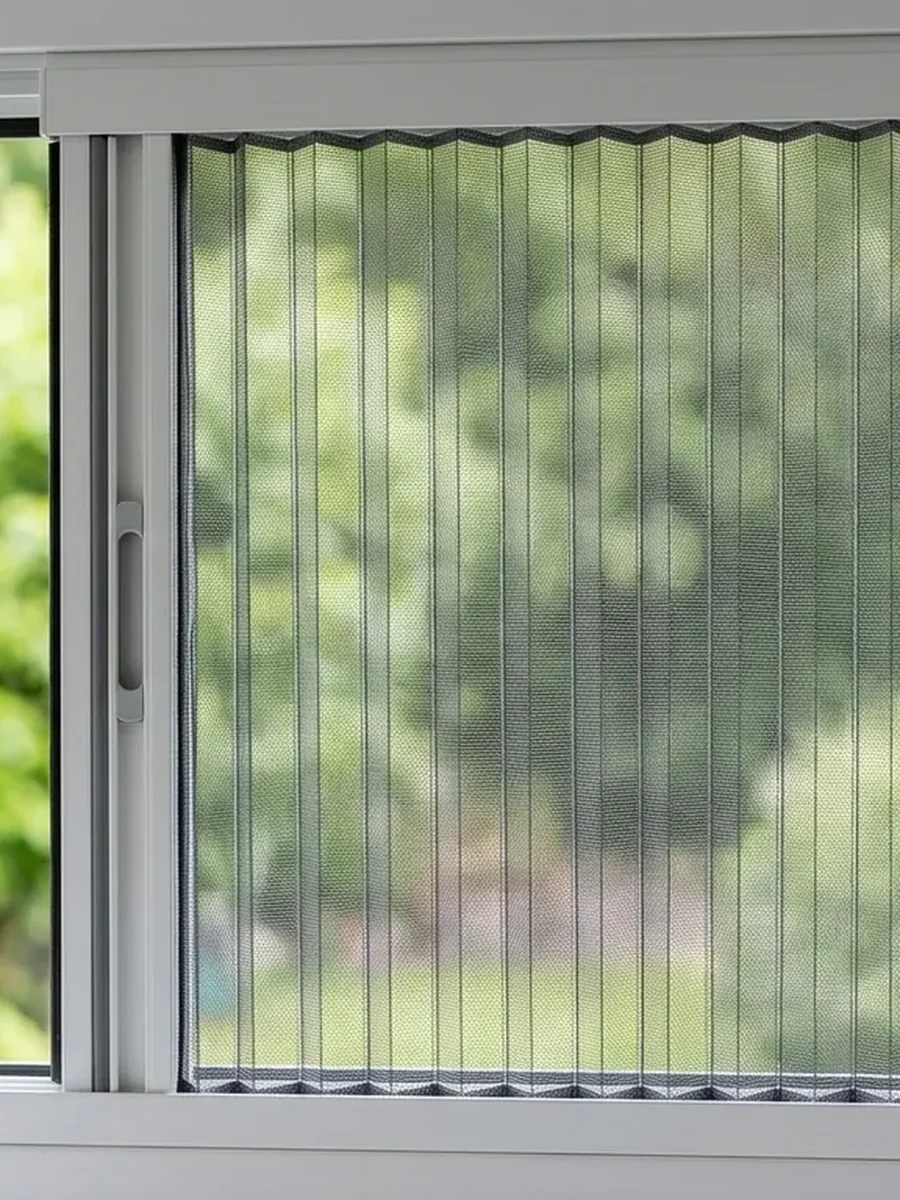
Pleated mesh folds into a slim stack, so a wide opening needs no heavy panel and no bottom lip to trip on. Near the sea, plain steel screws and untreated mesh corrode within a season or two. Rinse mesh and track with fresh water after the monsoon.
In short
By the Drapehaus studio · How we write
Is it right for you?
Most sliding nets do not fail all at once. The mesh tears where a dog pushes it, rust spots appear on a steel mesh, a roller cracks and the net starts to drag, the brush seal falls out and insects walk in along the edge. Each of these is a small, replaceable part, and the aluminium frame around them is often in perfectly good condition.
Repair and re-meshing suits nets whose frames are straight, whose corners are tight and whose tracks are sound. It keeps a net that already fits the opening, in the finish that already matches the window, and puts right the parts that wear. It is also the obvious moment to fix the original mistake, such as a steel mesh that was never going to last near the sea.
It is not the right answer when the frame itself has corroded through at the corners, has been bent out of square, or was badly made to begin with. It is also not worth repairing a net that never fitted the opening properly, or one that clashes with the curtains or handles every day. In those cases a new net, correctly planned, will serve better than new mesh in an old mistake.
The details
Pets, children and the monsoon wind are hard on mesh. Where the frame is sound, we replace only the mesh, and swap worn rollers and seals so the net glides instead of sticking.
If the old mesh has rusted, we replace it with a corrosion-resistant one so the problem does not come back next season.
Your options
A repair visit usually combines several of the jobs below. We assess each net, tell you which it needs, and say plainly when replacement makes more sense.
Swipe for all 5 →
The honest view
Keeps a frame that fits
A net made to the opening years ago still fits it. Re-meshing keeps that fit and the matching finish, with far less disruption than removing and replacing the whole net.
Fixes the underlying fault
Replacing a steel mesh with coated fibreglass, polyester or marine-grade stainless means the rust does not come back next year.
Quick to arrange
Many repairs are done on site or with a short turnaround, so rooms are not left unscreened through the evenings for long.
Less waste
The aluminium frame, which is the bulk of the material, stays in service. Only the parts that wear are replaced.
Cannot correct poor design
New mesh will not fix a net that clashes with a handle, parks in the wrong place or fights the curtain. Those faults need a redesign.
Old profiles and odd parts
Some older nets use rollers or seals that are no longer made. We can usually adapt, but occasionally a frame has to be replaced because parts cannot be sourced.
Corrosion hides inside
Aluminium frames can look sound but be corroding at the corner joints. When the mesh comes out, some frames turn out to be past saving.
Side by side
For a damaged net there are four realistic routes. The right one depends on the frame, not the mesh.
| Re-mesh and service | Patch the tear | New sliding net | Switch to pleated | |
|---|---|---|---|---|
| Frame condition needed | Straight, sound | Any | Not relevant | Not relevant |
| Result | As new, same frame | Visible repair | New throughout | Different system |
| Fixes rust for good | Yes, with new mesh | No | Yes | Yes |
| Fixes dragging | Yes, new rollers | No | Yes | Yes |
| Fixes design clashes | No | No | Yes | Sometimes |
| Disruption | Low | Very low | Moderate | Moderate |
| Lasts | Like a new mesh | Short term | Longest | Depends on use |
Swipe to compare →
A patch kit is fine for a small hole in the meantime, but mesh around a patched area usually tears again, and patches never cure rust.
Rather see it in your own room?
We bring samples to the house, measure every window, and specify for the light and exposure you actually have.
Room by room
Verandah door nets take the most traffic and the most sand. Re-meshing with pet-resistant polyester and new heavy rollers usually returns them to daily use.
Bedroom window nets tend to fail from the edges: flattened seals let insects in at night. New brush seals are a small job that restores proper screening.
Tears at hand height are common. Re-mesh with tougher polyester and add a mid-rail if the frame allows, so the next push does not undo the repair.
Greasy mesh clogs and cannot always be cleaned back. Re-meshing restores airflow; choose a sash that lifts out so future washing is easy.
Nets on fully exposed openings often have frames corroded beyond repair. We check the corners first, and sometimes replacement with a heavier section is the honest answer.
Between seasons, a round of re-meshing, new seals and roller checks keeps guest rooms free of insect complaints for far less upheaval than new nets.
In depth — tap a heading to read
The symptoms point to the part. A net that grinds or needs two hands has worn rollers or a gritty, corroded track. A net that jumps out of the track has lost its anti-lift blocks, or its frame has sagged so the rollers no longer sit square. Insects inside with no visible hole means the brush seals have gone. Orange streaks on the sill mean steel mesh rusting.
Before we recommend anything, we slide every net, lift it out, and look at the corners, the rollers and the channel the mesh sits in. If a corner flexes when pressed, or white corrosion has lifted the powder coat at the joints, the frame is weakening, and we will tell you before you spend anything on new mesh.
Mesh is held in a groove around the frame by a rubber cord called a spline. The old spline and mesh come out, and the groove is cleaned of grit and corrosion. The frame is laid flat and checked for square; new corner keys go in where the old ones have cracked. The new mesh is cut oversize, rolled into the groove on two sides, tensioned, then rolled into the remaining sides, and trimmed.
Getting the tension right is the whole craft. Too slack and the mesh ripples and bellies in the wind; too tight and it bows the frame inwards, so the net no longer runs straight in the track. Heavier polyester and stainless meshes need a different spline size and more care at the corners than fibreglass.
A good re-mesh looks like a new net: flat mesh, straight weave lines, no puckering at the corners and a frame that still slides true.
Re-meshing is the natural moment to change mesh, because the old one is coming out anyway. If the old mesh rusted, move to coated fibreglass, coated polyester or a marine-grade stainless. If pets or children tore it, move to pet-resistant polyester, at least on doors. If the view looked hazy, change from grey to charcoal.
The one caution is weight and thickness. A heavier mesh may need a different spline, and on a light, older frame it can pull the sides inwards. We check the frame section before recommending a heavier mesh, and suggest a mid-rail or a new frame where the existing one would struggle.
The best time for a repair round is as the rains ease, before the dry-season evenings bring the insects back and before the house fills with guests. Salt and damage from the monsoon are visible by then, and nets can be put right while windows are still mostly closed.
For houses that are shut through the rains, a pre-closure check is also worthwhile: rinse and dry the nets, note tears and dragging rollers, and book the repairs for your return. Parts for unusual older nets sometimes take longer to find, so an early look avoids a season with an unscreened door.
Living with it
New rollers wear quickly in a gritty track. Vacuum the bottom channel regularly and clear the drain holes, particularly on doors.
Pushing on the mesh stretches it and pulls it from the spline. Use the pull or the frame.
On sea-facing and pool doors, a fresh-water rinse every week or two in use protects the new mesh, rollers and seals.
A small hole grows quickly once insects or claws find it. Patch it the same day and plan a re-mesh at the next service.
Avoid these
New mesh in a frame corroding at the corners will not last. Check the corners and the powder coat first, and replace the frame if it is going.
Oil gathers sand and makes things worse within weeks. Clean the track and replace worn rollers instead.
Putting the same steel mesh back guarantees the same rust. Upgrade to a mesh suited to the sea air.
Re-meshing a net but leaving flattened brush seals means insects still get in around the edges.
Checklist
More in sliding nets
Sliding mosquito nets for windows, doors and balconies, planned alongside your curtains so the two work together — the window opens for air, the net stays closed, and the curtain still draws.
From our guides
Our process
One team from the first visit to the last bracket, so nothing is lost between the person who specified it and the person who fits it.
FAQ
Usually, yes — if the frame is sound we can re-mesh it and replace worn parts.
Worn rollers, sand in the track or a bent frame. New rollers and a cleaned track fix most of them.
Yes, if the frame is straight and the corners are sound. Re-meshing, new rollers and new seals make a well-fitting net work like new. If the frame is bent, corroding at the joints or never fitted properly, a new net is the better use of the effort.
Straightforward re-meshing is often done in a day or on site, and a round of several nets typically takes a few days. Unusual rollers or seals for older nets can take longer to source, which we tell you after the first inspection.
Usually through the edges. The brush seals that close the gap between net and frame flatten or fall out, and small insects walk straight through. Replacing the seals, and checking the net closes fully against the jamb, cures it.
Not usefully. Surface rust can be brushed off, but the steel wires are already weakening and will keep rusting in humid, salty air. Replacing the mesh with a rust-free type is the lasting fix.
A small hole can be patched as a stopgap with a stick-on or sewn mesh patch. The mesh around a tear is often already weak, though, so plan a proper re-mesh when convenient.
Next step
We come to the house, slide and lift out each net, and look closely at frames, corners, rollers, seals and tracks. We bring mesh samples, so if an upgrade makes sense you can see the new mesh against your window. You get an honest view of which nets are worth repairing and which are not, then we re-mesh and service on site or in the workshop and refit. Book a home visit and we will look at every net in the house.