 Drape Haus
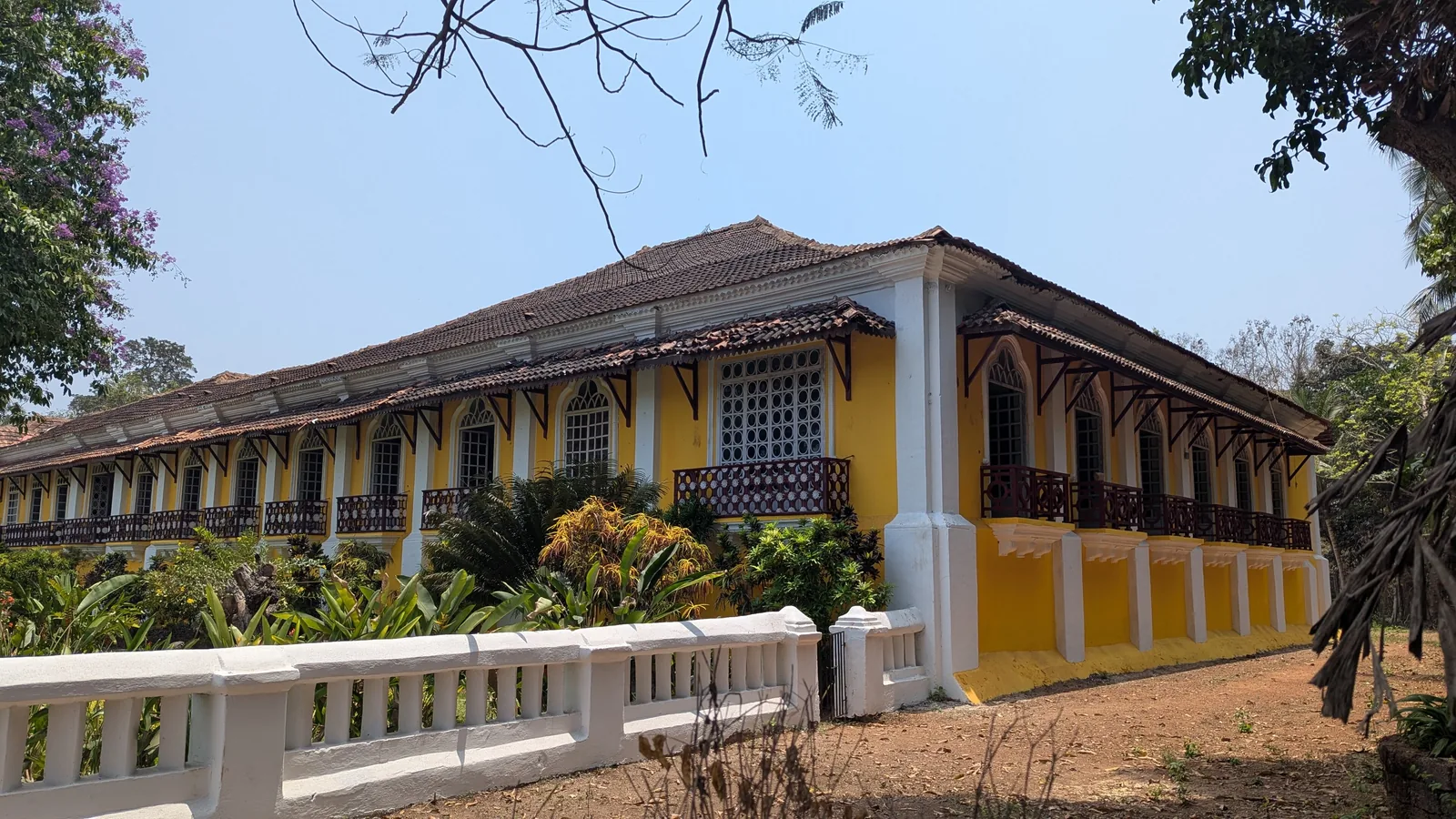
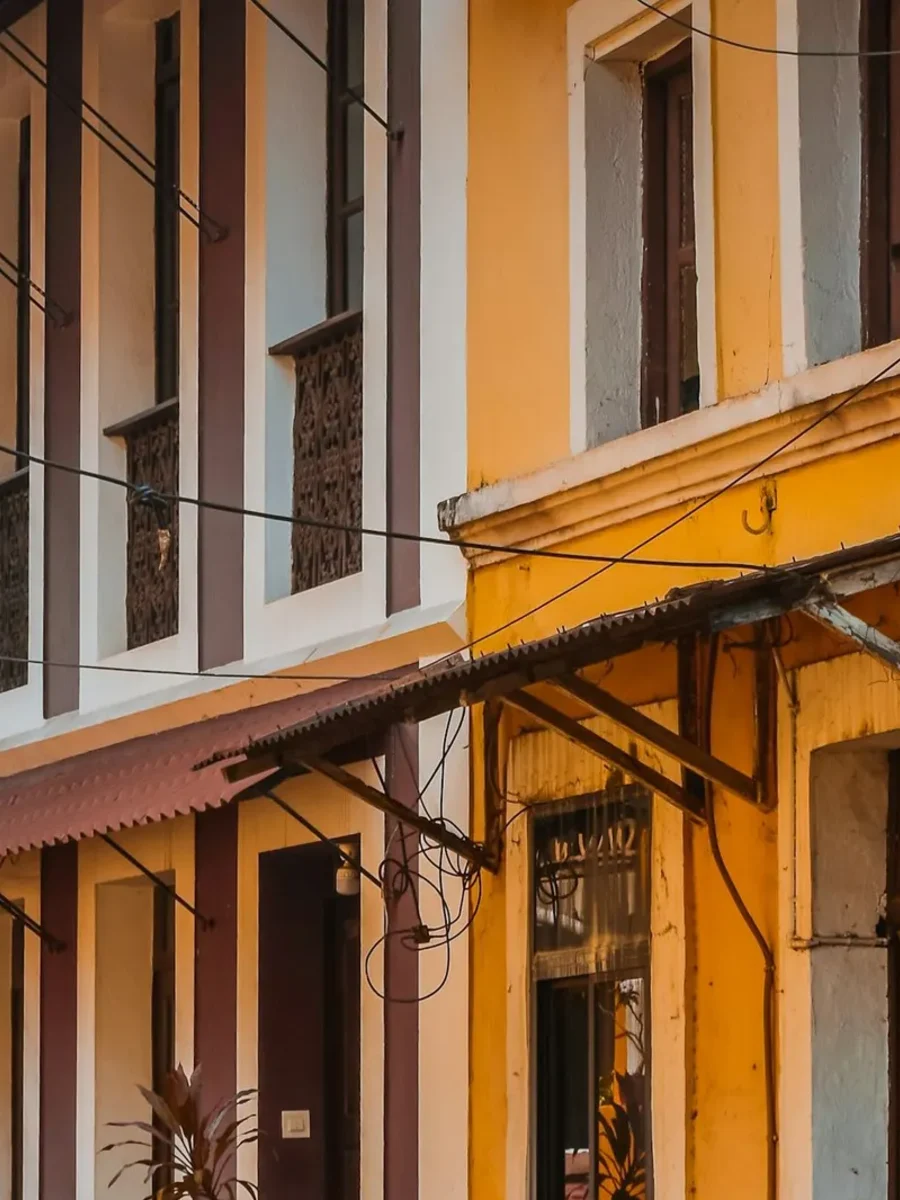
People who live in Goa often say you can tell where you are from the houses: grand mansions in Salcete, neat colour-washed houses in Bardez, courtyard houses under low roofs in Ponda. There is something in it. Goa became Portuguese in two stages more than two centuries apart, and that history shaped who lived where, what they believed, and the houses they built.
There is also a good deal of folklore. The same laterite, lime, clay tile and timber were used everywhere, the same craftsmen worked across villages, and Hindu and Catholic houses often stand on the same lane. A careful look shows that wealth, community and date usually explain a house better than its taluka does.
This piece sets out what the history supports, flags where common generalisations go further than the evidence, and ends with a practical method for reading the house in your own village. If you are new to the vocabulary of plinth, balcão and sala, start with our field guide to Goan architecture.
Old Conquests and New Conquests: the basic split
By 1543 the Portuguese held the Ilhas (today's Tiswadi), Salcete, Mormugao and Bardez. Together these became known as the Old Conquests, the Velhas Conquistas, and they make up only about a fifth of the area of modern Goa. Their populations became predominantly Christian, while the traditional village land system, the gaunkari or communidade, was continued under Portuguese rule.
The rest of present-day Goa came under Portuguese control only in the second half of the 18th century, through campaigns and treaties that took in Ponda, Sanguem, Quepem, Canacona, Bicholim, Sattari and Pernem. Historians date the individual acquisitions slightly differently, but they agree on the essentials: these New Conquests, the Novas Conquistas, were about twice the size of the Old, were chiefly Hindu, and were absorbed after the conversion campaigns had ended, so they kept their Hindu identity.
For houses, the split matters in two ways. It decided which communities lived where, and so which domestic tradition dominates a village. And it decided for how long a place was under Portuguese rule and exposed to the building fashions that came with it.
Old Conquests: Tiswadi, Bardez, Salcete and Mormugao, Portuguese by 1543. New Conquests: the rest of Goa, added in the second half of the 18th century.
Salcete: the country mansions
Salcete, the taluka around Margao, holds the best-documented group of large family houses in Goa. Chandor has Braganza House, described by the Government of Goa as a 17th-century mansion running the length of the village square, and the Fernandes house nearby. Loutolim, around its church of 1586, has a dense cluster of family houses. Many other villages in the taluka have one or two large houses among many smaller ones.
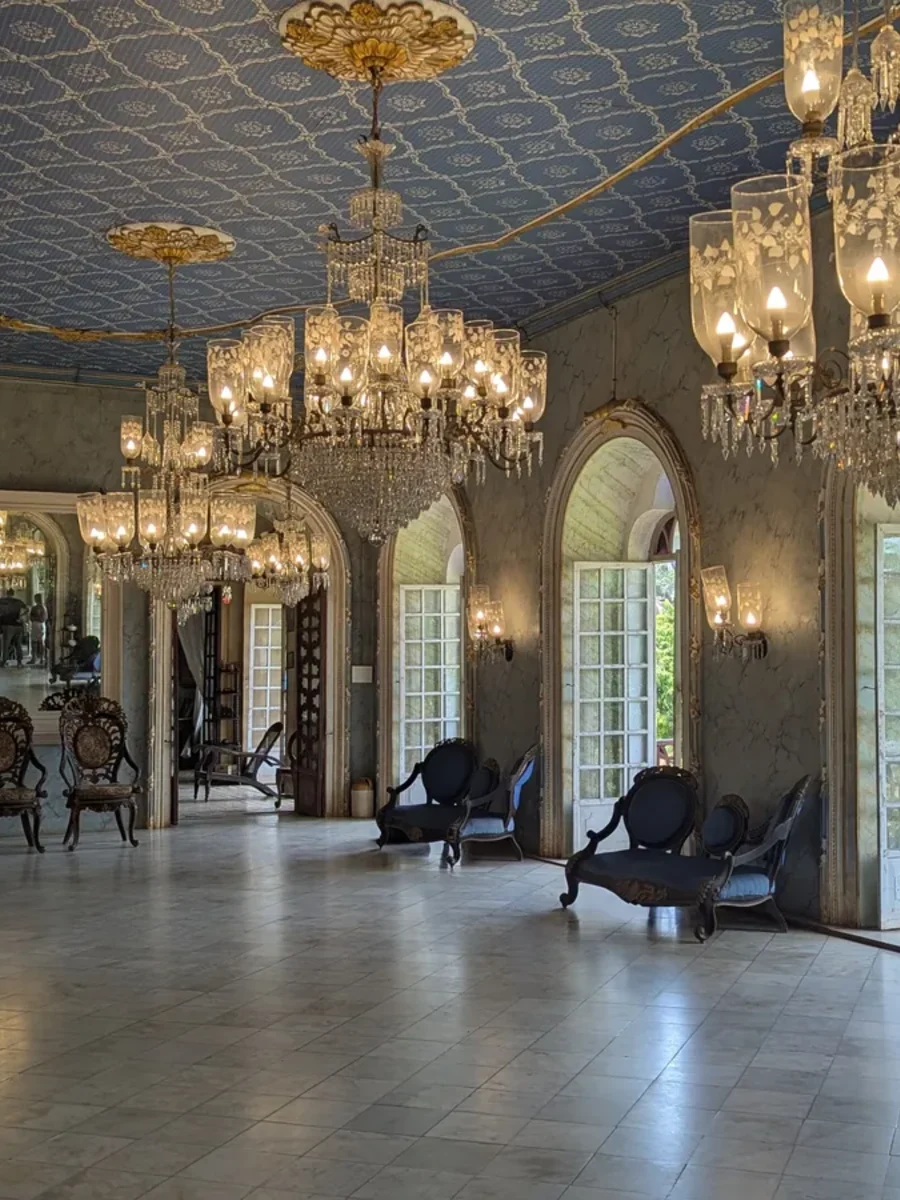
What these mansions share is scale and formality: long street fronts with many windows, a sequence of salons and a ballroom for entertaining, a family chapel in the largest, and collections of imported porcelain, glass and furniture alongside locally made inlaid pieces. They were built and extended over generations by Goan families who held land and office under Portuguese rule. Behind the European front, some, such as the Fernandes house in Chandor, are planned around an inner courtyard, the older Goan way of arranging a house.
It is easy to over-read this. Salcete is not a taluka of mansions; it is a taluka of ordinary village houses with a few famous mansions among them. And great houses are not unique to it: Quepem, in the New Conquests, has the Palácio do Deão, built in 1787 by a senior churchman. What can fairly be said is that the largest and best-known group of surviving mansions is in Salcete.
Planning something like this?
We visit homes across North and South Goa, measure on site, and bring samples to see in your own light.
Bardez: emigrant houses and river villages
Bardez, north of the Mandovi, is the other great Old Conquests taluka, and its houses tell a slightly different story. Over the 19th and early 20th centuries large numbers of Goan men left home for work, and Bardez, Tiswadi, Salcete and Mormugao supplied most of the emigrants. They went to Bombay, into shipping, and later to East Africa. Much of the money they sent or brought home went into houses.
Village histories in Bardez record this directly. In Cunchelim, near Mapusa, young men left for Bombay to work in the civil service and with steamship companies, and some went on to British East Africa; the village's early 20th-century houses were built by returning emigrants, known locally as Afrikanders, from their earnings abroad. Similar stories are told across the taluka, and they help explain why so many Bardez villages have solid, decorated houses of a middling size rather than a few vast mansions.
We would put the contrast carefully. Salcete also sent many emigrants abroad, and Bardez has its own large old houses. The fair summary is that remittance-built houses of the late 19th and early 20th centuries are a strong theme in Bardez, while the older landed mansions are better documented in Salcete. Treat any sharper rule with suspicion.
The New Conquests: Hindu courtyard houses of Ponda and beyond
In the New Conquests the dominant tradition is the Hindu courtyard house. A paper by the Goan architect Trupti Naik describes the traditional Goan Hindu house as built for joint families around an internal courtyard, the rajaangan, with a tulsi plant at its centre, built of mud or laterite under low sloping roofs of clay tile. It illustrates the type with a courtyard house at Mangueshi in Ponda taluka.
Several features set these houses apart from the street-facing Catholic house. Entry is through a padvi or sopo, a seat-lined transition space, rather than a raised balcão. Rooms are arranged in a hierarchy, with the prayer room given the highest place. The houses are usually a ground floor with an attic rather than two full storeys, and the paper puts their sill heights at roughly 60 to 85 cm, low enough to sit at. Facades tend to use earthier colours than the bright washes of the Old Conquests.
Portuguese influence reached the New Conquests later and in a different way. During the early decades of Portuguese rule, many deities were carried from the Old Conquests to safety across the border in Ponda, Bicholim, Quepem and Pernem, and the temples that grew up there took on European elements: pilasters, domes over the sanctum, tall lamp towers and crystal chandeliers. Those temples are the clearest Indo-Portuguese buildings of the New Conquests.
What changes by region, and what does not
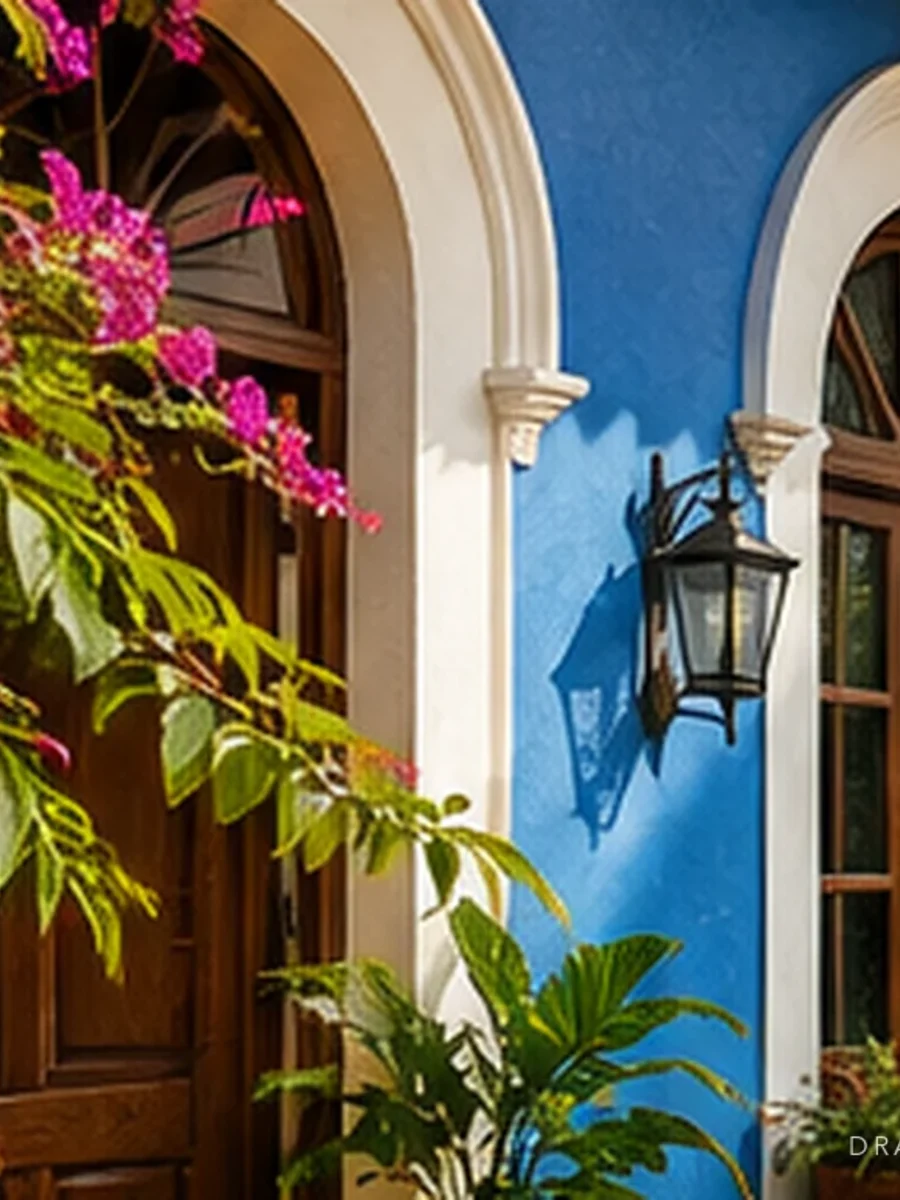
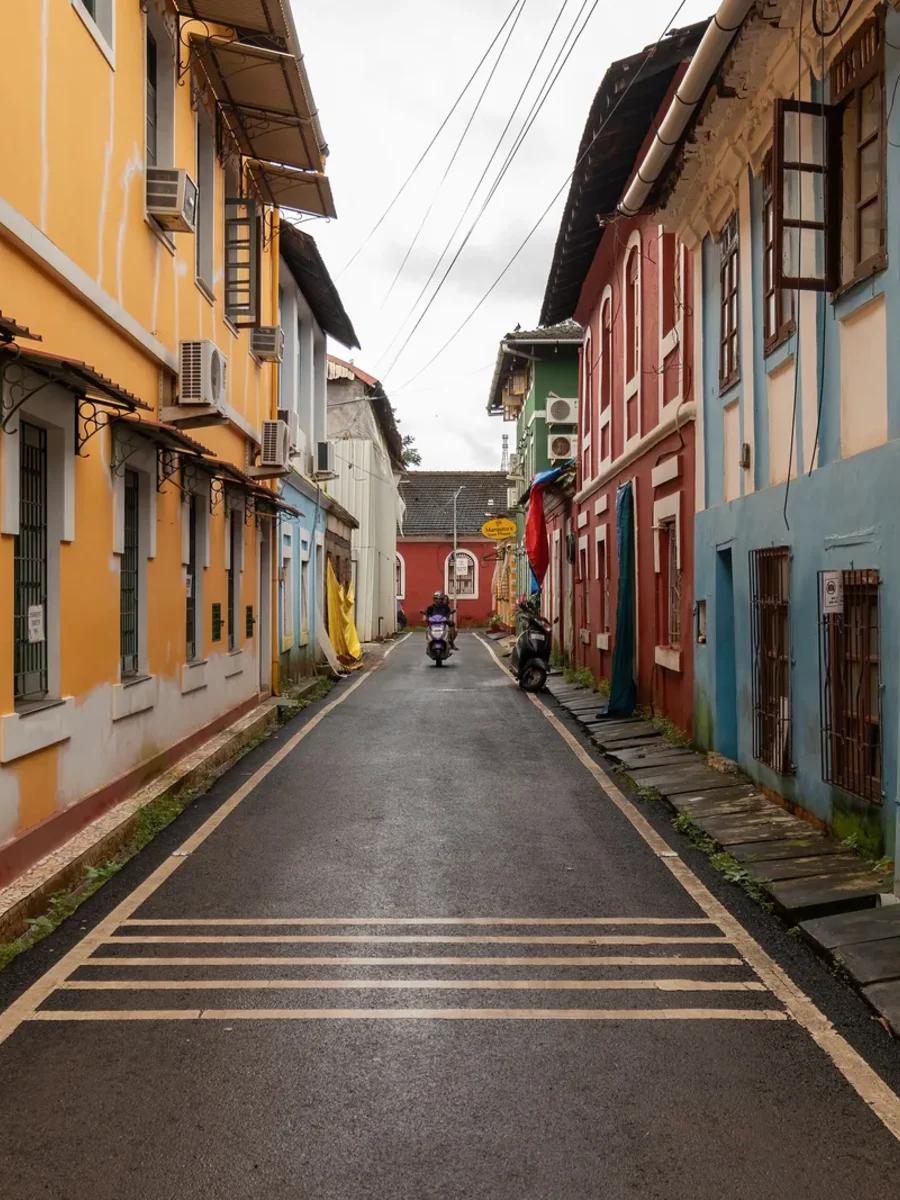
The materials are the same everywhere. Laterite walls, earlier ones in mud, are plastered in lime and washed in colour, under timber roofs covered in clay tile. The rule that kept private houses from being painted white is recorded as applying to Hindu and Catholic families alike. What varies is mainly the plan and the public face of the house, and those follow community and wealth more than geography.
The table below sets out the contrasts the sources support, alongside ones that are often repeated but are better treated as tendencies. It is deliberately cautious: any village will have exceptions, and many houses mix both traditions, with a Catholic street front laid over an older courtyard plan.
| Feature | Old Conquests (Bardez, Salcete, Tiswadi) | New Conquests (Ponda and others) | How firm |
|---|---|---|---|
| Dominant tradition | Catholic street-facing house with balcão and sala | Hindu courtyard house around a rajaangan | Well supported |
| Under Portuguese rule from | The 16th century | The second half of the 18th century | Well supported |
| Largest surviving mansions | Best-known group in Salcete | Some, such as the Palácio do Deão at Quepem | Supported, with exceptions |
| Emigrant-funded houses | A strong theme in Bardez villages | Less documented | Tendency only |
| Height and sills | Raised plinth, tall rooms and windows | Ground floor plus attic, sills of about 60–85 cm | Supported for traditional examples |
| Facade colour | Bright washes with white trim | Earthier colours | Tendency only |
| Materials | Laterite or mud, lime, clay tile, timber | The same | Well supported |
How to read a house in your own village
Start outside and work in. Note whether the house faces the road with a raised plinth, steps and a balcão, or turns a quieter face to the road with the entrance through a seat-lined porch. Count the storeys and look at the window sills: tall windows starting well above the floor point to the street-facing Catholic type; low sills, a single storey with an attic and a deep roof point to the older Hindu type.
Then look for evidence of more than one period. Many Goan houses have a newer, more ornamental front added to an older core. A cornice, pilasters or a balcão that does not quite line up with the roof or the side walls may be a later addition. Inside, an inner courtyard behind a European front tells you the plan is older in spirit than the facade.
Finally, ask. Older neighbours, the parish or temple community and the family's own papers often know when a house was built, extended or refronted, and who paid for it. A Bardez house built with money from Bombay or Africa usually comes with a family story attached; a courtyard house in Ponda may be recorded in family or temple documents. Write down what you learn before any work starts, and if you plan alterations, involve a conservation architect.
Why the regional type matters when you furnish
The type of a house changes practical decisions. A tall Salcete-style sala with long windows wants curtains that start well above the window head and fall to the floor, in light natural fabrics, with fixings that keep the internal shutters working. A Hindu courtyard house with low sills and deep eaves may be better served by Roman blinds or bamboo and chik blinds that sit within the opening and leave the sill free to sit on.
Courtyards bring their own needs. Rooms that open onto an inner court get soft, even light but also insects and monsoon damp, so screens and fabrics that dry quickly matter more than heavy blackout. Our guides to laterite and old walls and the village house cover fixings and fabric choices for these houses.
Whatever the region, the rule is the same: let the house set the brief. We work across Goa, from Pernem to Canacona, and are happy to visit, measure and suggest what will suit your house and its climate. Book a home visit and tell us the village; we will come to you.