 Drapehaus
Drapehaus
Preparing the room
Drapehaus
Preparing the room
Material
Solution-dyed acrylic is the fabric we recommend most often for exposed coastal properties, and it is worth understanding why, because on the roll it looks unremarkable next to a good linen and it costs more.
By the Drapehaus studio · 19 September 2026 · How we write
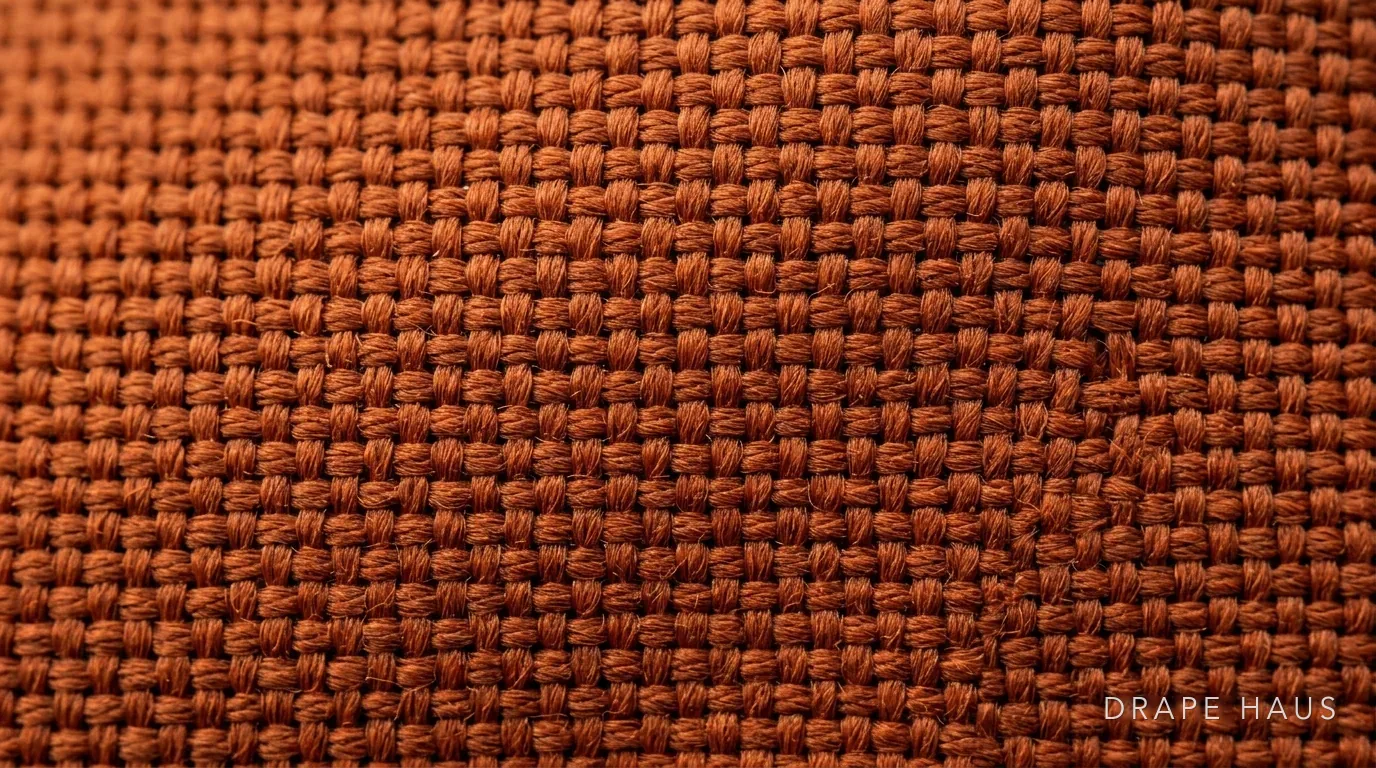
The difference is in how the colour gets there. In a conventionally dyed fabric, pigment is applied to finished yarn or woven cloth, so it sits on or near the surface. In solution-dyed acrylic the pigment is mixed into the liquid polymer before the fibre is extruded, so colour is distributed evenly through the entire cross-section of every filament.
That single manufacturing difference is why it behaves the way it does under UV and abrasion, and it is why marine and outdoor fabrics are almost universally made this way.
UV degrades the surface of any fibre it strikes. On a surface-dyed fabric, that degradation removes the dyed layer and exposes undyed material underneath, which is why conventional fabrics fade unevenly and go blotchy rather than simply going paler.
In solution-dyed acrylic there is no undyed layer to expose. As the surface weathers, what is revealed is identical in colour to what was there before. The fabric still ages, but it ages evenly and far more slowly, which is what makes a decade-old awning still look like a faded version of itself rather than a ruined one.
The same logic applies to abrasion. Salt crystals working against the fibre remove material, and on a surface-dyed fabric that means removing colour. Here it does not.
Acrylic absorbs very little water, typically well under two percent by weight. That matters enormously in a climate where the hygroscopic salt problem and four months of saturated air are the main causes of fabric failure.
It is worth being precise: acrylic itself does not mildew, because mildew needs an organic food source. What can grow on it is mildew feeding on dirt, salt residue and organic matter trapped in the weave. The practical implication is that keeping it clean is what keeps it mildew-free, and because it does not absorb, cleaning is straightforward.
Most solution-dyed acrylic can be washed with mild soap and water and rinsed thoroughly, which is a genuinely useful property for anything in a coastal property that accumulates salt.
Rather see it in your own room?
We bring samples to the house, measure every window, and specify for the light and exposure you actually have.
More on this — tap a heading to read
Unquestionably worth it within a kilometre of the sea, on any south or west elevation, on anything outdoors, and in properties that are let commercially where replacement cost and downtime dominate the calculation.
Less obviously worth it in a sheltered inland bedroom with north-facing glass, where the UV and salt loads are low and a good cotton or linen will last perfectly well and feel considerably nicer.
The honest drawback is hand. Acrylic does not drape like linen and does not feel like cotton, and in a formal room where the curtain is a soft furnishing rather than a piece of equipment, that difference is real. We would rather say that plainly than sell it into rooms that do not need it.
On a sample card, a solution-dyed acrylic and a conventionally dyed acrylic can look identical, and so can a solution-dyed polyester or olefin. They do not behave identically. Acrylic as a polymer is inherently resistant to sunlight; olefin needs added stabilisers to survive UV at all, and polyester sits between the two. The dye method and the fibre both matter, and neither is visible to the eye.
The reliable test is the specification sheet rather than the swatch. It should state the fibre content, confirm that the fibre is solution-dyed, and give a lightfastness rating and a recommended end use. A fabric sold for outdoor or marine use by a reputable mill will say all of this plainly. If the answers are vague, or the supplier cannot say how the colour was applied, treat it as a conventionally dyed fabric and set your expectations accordingly.
A useful secondary check is the care label. Many genuine solution-dyed acrylics permit cleaning with a diluted bleach solution, because the colour cannot be bleached out of a fibre that is coloured all the way through. A fabric that must never meet bleach may still be perfectly good, but it is telling you its colour sits somewhere closer to the surface.
Solution-dyed acrylic is made in several distinct grades. Awning and canopy cloth is tightly woven and firm, built to be tensioned on a frame. Outdoor upholstery grades are softer and intended for cushions. Indoor drapery grades are lighter again, with a looser, more textured weave that hangs in folds rather than standing stiffly. Asking for the wrong grade is the commonest reason clients are disappointed by the hand.
Most outdoor grades carry a water-repellent finish applied after weaving. This is what makes rain bead and run off, and it is separate from the fibre's own low absorbency. The finish wears with sun, abrasion and washing, so after a few seasons water starts to wet the surface rather than bead. That is normal, and on many cloths the repellency can be renewed with a spray-on treatment once the fabric is clean and dry.
Acrylic is also sensitive to heat in a way natural fibres are not. A hot iron or a hot tumble dryer can glaze the surface, flatten the texture or distort the weave permanently. Cool washing and air drying are the rule, and in Goan sun air drying is quick in any case outside the monsoon.
Near the sea, a well-chosen acrylic routinely outlasts everything it is attached to. The first part to go is usually the sewing thread. Ordinary cotton or standard polyester thread degrades in direct sun faster than the cloth around it, so seams open while the fabric still looks sound. Anything in direct sun should be sewn with a UV-resistant thread made for outdoor use, and it is worth asking the workroom which thread they intend to use.
Hardware is the second weak point. Plated steel eyelets, zinc-plated brackets and mild-steel fixings corrode quickly in coastal Goa, and rust stains run down the fabric before the fixing actually fails. Near the sea, specify marine-grade stainless steel for exposed fittings, anodised or powder-coated aluminium for tracks and frames, and avoid mixing metals that corrode each other on contact.
The practical consequence is that the fabric choice and the making-up choice have to be made together. Specifying a premium acrylic and then sewing it with ordinary thread onto plated fittings produces a curtain or blind that fails at the seams and fixings in a couple of seasons, and the owner reasonably concludes the fabric was not worth it.
In a let villa or a small hotel, solution-dyed acrylic earns its place through downtime rather than appearance. A curtain that can be washed down between bookings, that does not fade unevenly by the pool and that survives guests who leave doors open to the rain is worth more there than the same curtain in a family home where someone is watching it.
Acrylic is not inherently flame retardant, and it burns readily once alight. Registered tourism properties and hotels are often asked for curtains that meet a recognised fire standard; in India that is IS 15741, and hospitality groups commonly also request BS 5867-2 Type B or NFPA 701. Some acrylics are supplied with a flame-retardant treatment and a test certificate; many are not.
If fire performance is part of the brief, ask for the certificate for the exact fabric and colourway, not for the range, and check whether the treatment survives washing. In some hospitality rooms an inherently flame-retardant polyester is a simpler answer than a treated acrylic, and we would rather point that out than force the wrong fibre into the room.
The best time to install exposed acrylic is in the dry months, when fixings can go into dry masonry and the fabric can be tensioned and checked in stable weather. The IMD normal date for the monsoon's onset in Goa is 5 June, so anything external should be up, adjusted and tested by late May rather than rushed in during the first week of rain.
The maintenance calendar is just as simple. Rinse salt off exposed fabric before the rains so it goes into the wet season clean, then wash properly once the monsoon withdraws in October and let it dry fully in the sun. A second rinse during the peak season, particularly on sea-facing verandas, keeps salt from building up in the weave where mildew would later feed.
Diagnosis
WhyMildew is growing on dirt and salt residue trapped in the weave, not on the fibre itself.
FixWash with mild soap and rinse thoroughly. Because acrylic does not absorb, cleaning genuinely resolves it rather than just masking it.
WhyAcrylic has a different hand from natural fibre, and heavier outdoor-grade weights are noticeably firmer.
FixAsk for an indoor-weight solution-dyed acrylic, which drapes far better than awning cloth while keeping the UV performance.
WhyA technical fabric used in rooms that had no technical problem to solve.
FixUse it where the exposure justifies it and natural fibres elsewhere. Very few houses need it in every room.
WhySolution dyeing produces very consistent colour without the depth variation that surface dyeing can give.
FixChoose a textured weave rather than a flat one. Texture supplies the visual depth that the dye method does not.
WhyStandard sewing thread degrades in direct sun faster than the acrylic cloth it holds together.
FixRe-sew with a UV-resistant outdoor thread. Specify that thread from the outset on anything in direct sun.
WhyPlated or mild-steel fixings corroding in salt air, with the rust carried down the fabric by rain.
FixReplace with marine-grade stainless fittings and aluminium frames. Most rust marks lift with prompt cleaning.
WhyThe water-repellent finish has worn away with sun and washing. The fibre itself is unaffected.
FixClean and dry the fabric thoroughly, then renew the repellency with a suitable spray-on treatment.
Checklist
Within a kilometre of the sea
Any south or west-facing window
Anything outdoors or on a veranda
Commercially let properties where downtime is costly
Windows that are hard to reach and rarely cleaned
Not needed in sheltered, north-facing inland rooms
Confirm fibre and dye method on the specification sheet, not the swatch
Sew anything in direct sun with UV-resistant outdoor thread
Use marine-grade stainless or aluminium hardware near the sea
Wash cool and air dry; never iron hot or tumble dry hot
From the Journal
All articlesFAQ
Acrylic fibre where pigment is mixed into the liquid polymer before the fibre is extruded, so colour runs through the whole cross-section rather than sitting on the surface. It is how marine and outdoor fabrics are made, and it is why they hold colour for years in strong sun.
The fibre itself cannot, because mildew needs an organic food source. What grows on it is mildew feeding on dirt and salt trapped in the weave — so washing genuinely solves the problem, which is not true of an absorbent natural fibre.
Within a kilometre of the sea, on sunny elevations, outdoors, or in a let property, yes clearly. In a sheltered north-facing inland bedroom, no — a good cotton or linen will last well there and feel considerably nicer.
Not as well, and it is worth being honest about that. Indoor-weight solution-dyed acrylics drape far better than outdoor awning cloth, but they will not match linen for softness. In a formal room where the curtain is decoration rather than equipment, that difference matters.
Ask for the specification sheet. It should state the fibre, confirm solution dyeing and give a lightfastness rating and intended end use. A swatch alone tells you nothing, because solution-dyed and conventionally dyed cloth look the same when new. A care label permitting diluted bleach is a helpful secondary sign, since the colour runs through the fibre.
Not inherently. Acrylic burns readily once alight, and only some ranges carry a flame-retardant treatment with a test certificate. For a hotel or registered rental that needs curtains to meet IS 15741, BS 5867-2 Type B or NFPA 701, ask for the certificate for the exact fabric, or consider an inherently flame-retardant polyester instead.
Brush off loose dirt, wash with mild soap and cool water, rinse thoroughly and air dry. Many ranges allow a diluted bleach solution for stubborn mildew spots. Avoid hot irons and hot tumble dryers, which can glaze the surface. After a deep clean, the water-repellent finish on outdoor grades may need renewing.
In strong direct sun and salt, acrylic holds its colour and strength longer, which is why it dominates outdoor and marine use. Indoors behind glass, a good polyester performs very well, drapes more easily and can be inherently flame retardant. Most coastal houses use acrylic on the exposed elevations and outdoors, and polyester elsewhere.
Keep reading