 Drape Haus
Drape Haus
Preparing the room
Drape Haus
Preparing the room
Upholstery
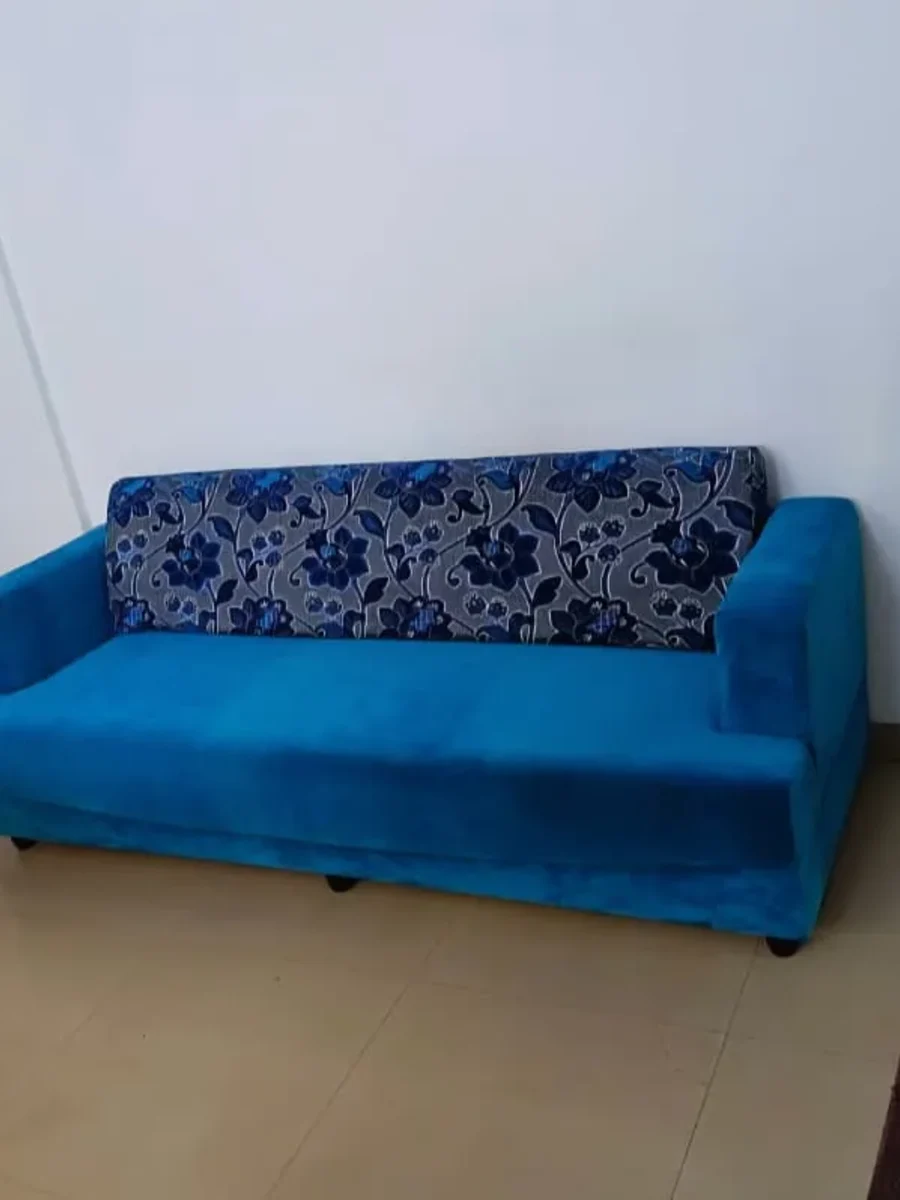
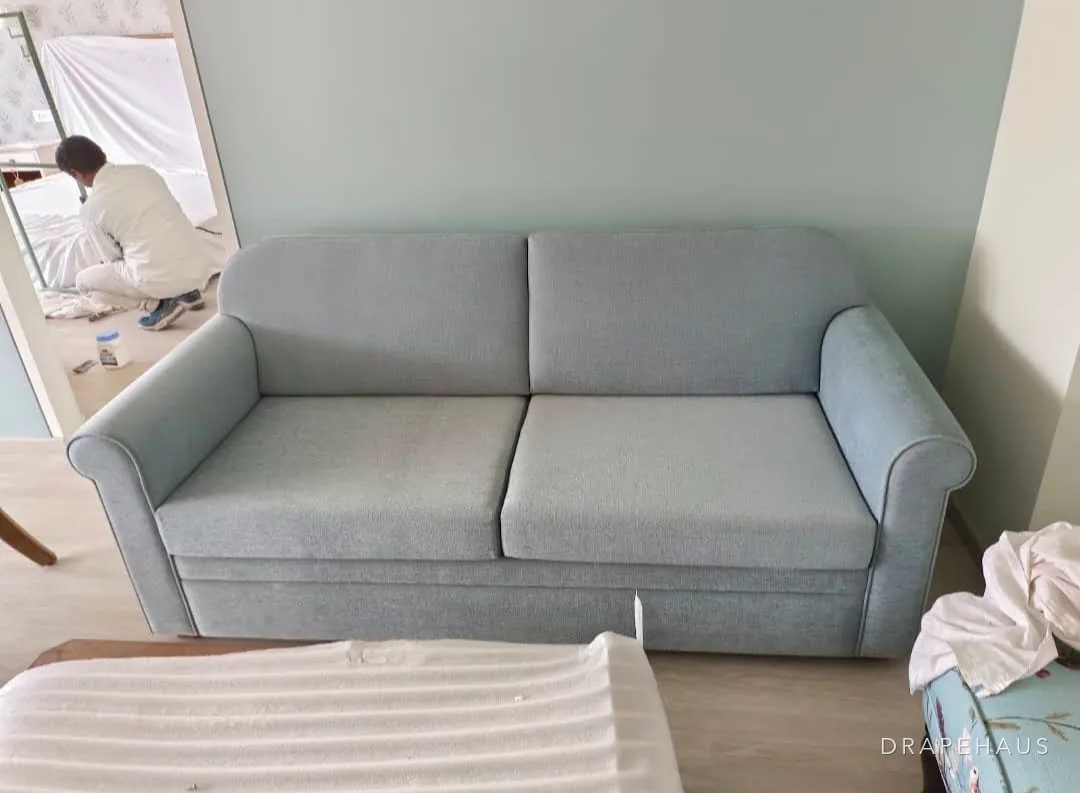
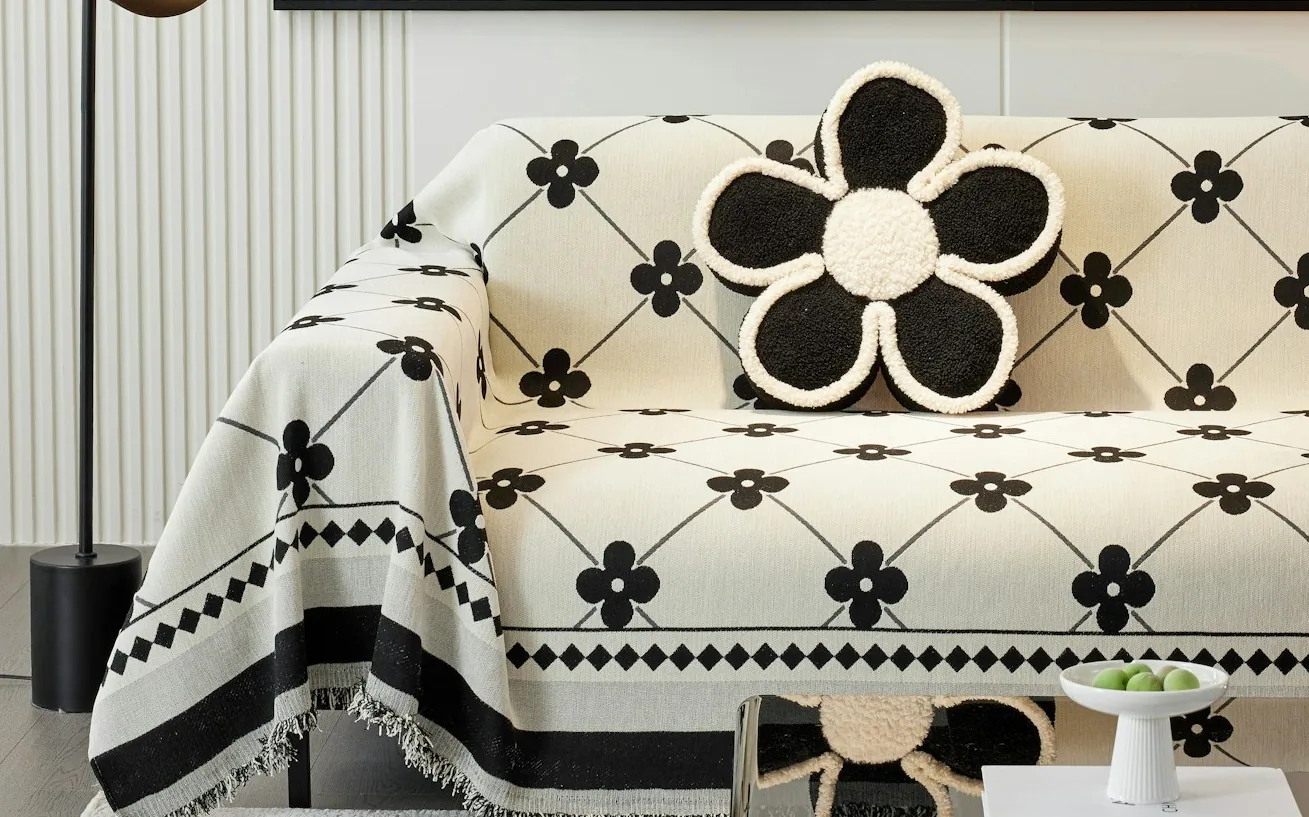
A tailored loose cover for a sofa whose frame and seat are still good but whose fabric has had its day — cut to the actual piece, whether it is a compact three-seater, a five-seater set or a deep L-shape, and made to come off for the wash.
Durability scale (Martindale rubs, BS 2543)
15k
20k
25k
30k
40k
Who uses it
Where it lives
How it is used
Durability to ask for
30,000+ rubs
Severe domestic / general contract
Removable covers
Yes
zipped, washable, and a spare set
Fibres that suit
Avoid: Anything you cannot clean in place, on a piece used every day. Rub count is one number among several — weave, colour-fastness and how a fabric handles humidity matter as much. We bring samples to see in your room.
In short
By the Drape Haus studio · How we write
Is it right for you?
A made-to-measure sofa cover is the lightest intervention you can make on a sofa. It changes the colour, the texture and the cleanability of the piece without touching what is inside. That makes it the right answer for a particular kind of sofa: one that is still comfortable, still solid, still the right size for the room, but whose original fabric has faded, stained, pilled or simply stopped suiting the house.
Sit on the sofa before you decide anything. If the seat still holds you up, the arms do not rock and nothing creaks when you lean back, a cover is worth considering. If you sink to the frame or hear the joints move, a cover will only dress a problem. In that case look at sofa repair first, and at full reupholstery if the fabric and the filling are both finished.
Covers also suit people who want to change the sofa more than once. A pale linen for the dry months and a darker, harder-wearing cover for the monsoon and the busy holiday season is a realistic arrangement, and many homestay owners keep two sets so one can be in the wash while the other is in use.
They are less suitable on sofas with tight, shaped backs, deep buttoning, exposed carved timber or very sculptural arms. A cover over those details either hides what is beautiful about the piece or sits badly over its curves. Leather sofas can be covered, but the cover slides on the smooth surface unless it is anchored well.
The details
A sofa cover is a second skin rather than a rebuild. Nothing underneath is touched: the cover is patterned on the sofa itself, sewn in the workshop and fitted in your room, with zips or ties hidden where the arms and back meet. When it needs cleaning, it comes off.
There are two very different products sold under the same name. A stretch cover is a knitted tube that grips any sofa roughly the right size; it is quick, but it creeps, bunches in the seat joins and shows every cushion edge. A made-to-measure cover is cut panel by panel to your frame, so the arms, back and seat cushions each have their own fitted piece and the sofa still looks like a sofa rather than a draped shape.
Corner and L-shaped sofas are where the difference shows most. The inside corner, the chaise end and the join between modules all need their own panels and openings, or the cover pulls and gapes. We pattern each module separately so sections can be moved and the cover still sits flat.
In Goa, covers earn their place for practical reasons. Homestay and rental sofas take sunscreen, sand and wet swimwear; family sofas take children and dogs. A washable cover in a fabric that dries quickly between monsoon showers lets you keep the sofa fresh without sending it away.
Your options
The word cover is used for everything from a throw tucked into the seat to a tailored slipcover that reads as upholstery. The style you choose affects how much fabric is needed, how the cover behaves when people sit on it, and how easy it is to put back on after washing.
Swipe for all 5 →
The honest view
The sofa never leaves the house
Patterning happens in your room, sewing in the workshop, and fitting back in your room. You keep sitting on the sofa throughout, which matters in a rental with guests arriving or a family home without a second sofa.
Washable on your schedule
Spilt tea, muddy paws, salt and sunscreen come out in the wash. For a homestay host turning rooms around between guests, this alone justifies the cover.
A fresh look for a sound sofa
If the shape and comfort are right, a new cover gives the room a new sofa without the cost and waste of replacing a good frame.
Seasonal or reversible changes
A second cover lets the sofa go lighter for the dry season and darker for the rains, or survive a busy holiday period and then return to its good fabric.
It does not fix comfort
A cover sits on the existing seat. If the foam is tired or the springs have gone, the sofa will look new and feel exactly as it did.
Less crisp than fixed upholstery
Even a well-fitted cover moves a little in use and needs tucking and straightening. If you want sharp, unmoving lines, reupholstery gives that; a cover cannot.
Shrinkage must be planned for
Natural fabrics shrink in the first wash. The fabric is pre-washed before cutting where it allows, or the cover is dry-cleaned only; ignoring this produces a cover that no longer fits.
Some shapes resist covering
Deep buttoning, curved show-wood and very tight backs do not cover well. We say so at the visit rather than make a cover that fights the frame.
Side by side
Three routes for a sofa that no longer looks right. Each answers a different problem, so start with what is wrong with the sofa rather than what it looks like.
| Made-to-measure cover | Stretch cover | Reupholstery | New sofa | |
|---|---|---|---|---|
| Changes the look | Yes | Yes, loosely | Yes | Yes |
| Fixes sagging or creaks | No | No | Yes | Yes |
| Removable for washing | Yes | Yes | Only if designed in | Depends |
| Fit on L-shapes and chaises | Module by module | Poor at corners | Exact | As bought |
| Sofa leaves the house | No | No | Yes, for some weeks | Old one goes |
| Holds its look in humid months | Good with the right fabric | Elastic tires | Very good | Depends |
Swipe to compare →
If the sofa feels right and only looks wrong, cover it. If it feels wrong, repair or rebuild it first.
Rather see it in your own room?
We bring samples to the house, measure every window, and specify for the light and exposure you actually have.
Room by room
The family sofa takes the most spills and the most sun. A tailored cover in a hard-wearing weave keeps it smart, and a spare set means the room never looks half-dressed on wash day.
Guests arrive from the beach. Washable covers in a mid-tone fabric that hides sand and sunscreen let you reset the room properly between stays.
Choose a tight weave that claws do not catch, in a colour close to the pet's coat. Expect to wash the seat covers more often than the backs.
Under a roof but open to the air, a relaxed cover in a quick-drying fabric copes with humid nights. Fully exposed seating needs outdoor upholstery instead.
Carved or show-wood sofas and buttoned pieces are better reupholstered. A cover would hide the very detail that makes the room.
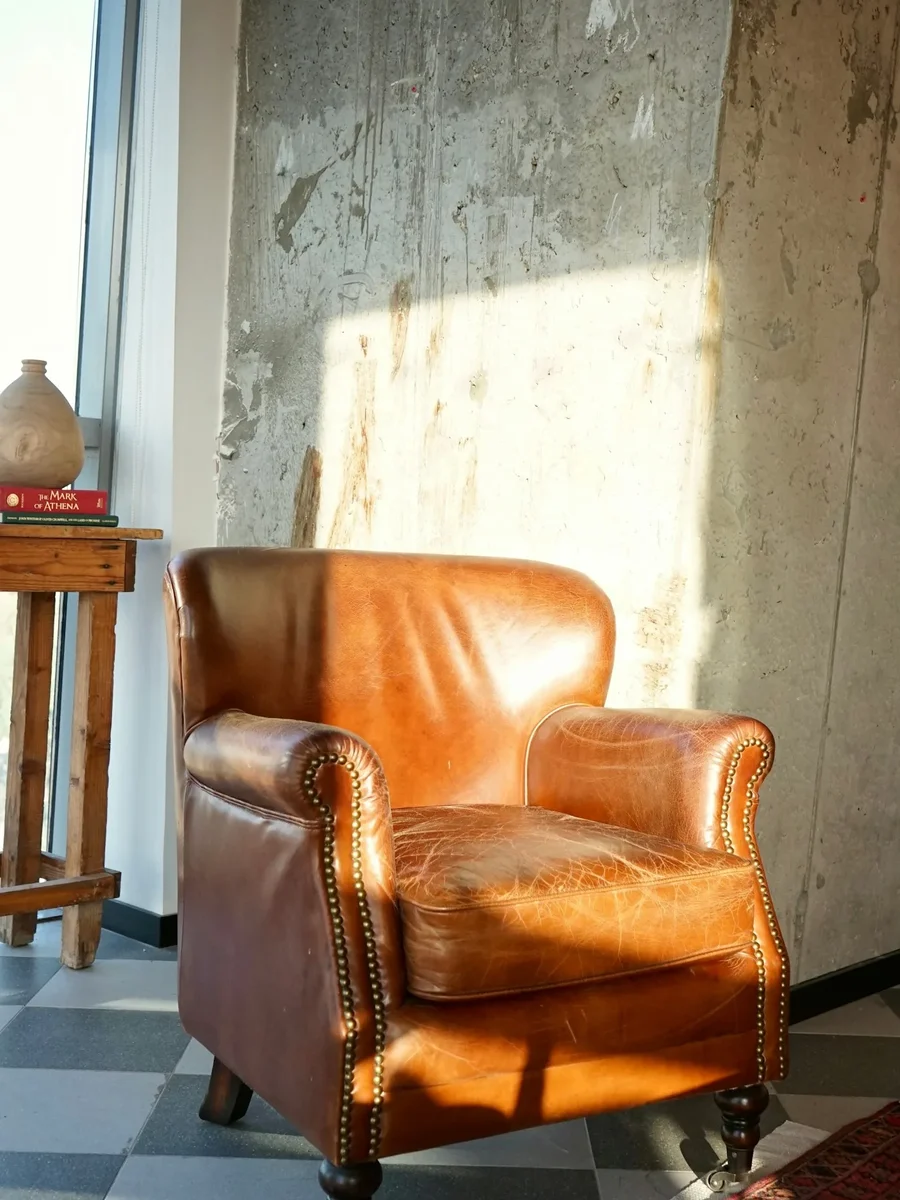
An old leather or worn fabric sofa can be given a new life with a fitted cover, provided it is anchored so it does not slide.
In depth — tap a heading to read
A good cover starts with the sofa, not a tape measure alone. We take the seat, back, arm, front and outside measurements, then pin calico or paper templates over the awkward parts: the curve of a scroll arm, the slope of a back, the shape where the arm meets the seat. These templates go to the workshop with photographs from every side.
For a three-seater with loose seat cushions, that means a body cover plus three separate cushion covers. A five-seater set is usually a three-seater and a two-seater, or a three-seater and two armchairs, each patterned separately but cut from one batch of fabric so the colour is identical. Seven-seater arrangements are typically an L-shape plus a chair, or a three-two-one-one set, and again each piece is its own pattern.
Every sofa in a set gets its own pattern, even if the catalogue said they were identical.
The inside corner of an L-shape is the hardest part of any cover. Fabric has to turn ninety degrees without bunching, and it has to allow for people sitting right in the corner. We pattern the corner unit as a separate piece with its own shaping, and give the chaise its own cover with an opening along the side that faces the main sofa.
Where modules are not fixed together, each cover closes fully, so you can pull the sofa apart for cleaning or to rearrange the room. Where modules are bolted, the openings sit on the hidden faces and the covers meet with a tuck strip that keeps the join neat.
Covers are washed far more often than fixed upholstery, so the fabric must survive the machine, the line and the iron repeatedly. Tight cotton twills, cotton-linen blends and good polyester-blend weaves are the usual choices. Pure linen looks beautiful and relaxed, but it creases readily and shrinks, so it suits a relaxed cover better than a tailored one.
Drying time matters more in Goa than in most places. In July a heavy cover may take days to dry indoors, and a cover put back on damp can develop mildew inside the seat. Lighter weights, blends and synthetics dry faster. If you plan to wash in the monsoon, choose with that in mind, or keep a second set so nothing goes back on until it is fully dry.
Near the sea, strong west light fades dark and saturated colours on the side of the sofa facing the window. Mid-tones, natural colours and solution-dyed fabrics hold up better. A rub count suited to daily use is essential on the seat covers, which take most of the wear.
For a rental, practicality comes first: a mid-tone, a small pattern or a textured weave that hides marks; seams that do not trap sand; fastenings that a housekeeper can manage without help. We often make the seat cushion covers reversible and supply a spare set of seat covers alone, because seats wear and stain long before backs and arms.
With small children, choose a fabric that can be washed hot enough for spills and accidents, and avoid loose weaves that catch on toys and buckles. With dogs and cats, tightly woven fabrics resist claws far better than loose linens or textured bouclés, and a colour close to the animal's coat makes the daily hair less obvious.
A fitted cover is held in place by its cut first and its fastenings second. Concealed zips at the back corners let the body cover open wide enough to go on; ties or hook-and-loop tabs under the frame pull it taut at the base; tuck strips pushed down between seat and back stop it riding forward. On smooth leather or vinyl sofas, a non-slip lining on the seat deck keeps the cover from creeping.
At the fitting we put everything on, sit on every seat, and adjust anything that pulls or puckers. You are shown how to take the cover off and put it back on, which takes a little practice the first time.
Living with it
Wash cushion covers and the body cover in the same cycle, or at least the same week, so they fade and soften at the same rate.
Putting cotton and linen covers back on while barely damp lets them settle to the shape of the sofa. In the monsoon, make sure the inside is dry within the day.
Close every zip and fastening before washing. Open zips snag the fabric and bend in the machine.
Swap seat cushion covers between positions and turn reversible ones over regularly to share the wear.
Strong sun fades covers quickly. Dry them in shade or inside out, and bring them in before the afternoon showers.
Avoid these
A cover over sagging seats or a loose frame looks fine for a week. Fix the sofa first.
Two three-seaters can differ by a hand's width in depth and arm height. Universal sizes are why stretch covers look loose.
Cotton and linen cut without pre-washing can shrink enough to stop the cover closing after its first wash.
White and cream look lovely in a photograph and impractical after a beach day. Choose a forgiving mid-tone.
Without a spare, the sofa sits bare on wash day, and in the monsoon that can be several days.
Checklist
More in upholstery
Reupholstering a well-built frame costs less than replacing it and keeps a piece you already love.
Our process
One team from the first visit to the last bracket, so nothing is lost between the person who specified it and the person who fits it.
FAQ
For a sofa you see every day, yes. A stretch cover grips loosely and shifts each time someone sits down. A fitted cover is cut to each part of the frame, so it stays put and keeps the sofa's lines.
Yes. Each module and the chaise get their own panels, with openings placed where the sections join, so the cover sits flat at the inside corner and the modules can still be rearranged.
No. A cover changes the surface only. If the seat sinks or the frame creaks, the sofa needs repair first, and we will say so before you order a cover.
Most of the fabrics we suggest for covers can be, on a gentle cycle. Large covers are easier dry-cleaned or washed in sections. We tell you the care for the fabric you choose.
Yes — the three-seater, two-seater and armchairs of a set are patterned together from one fabric batch so the colour matches across every piece.
It depends on use and washing more than anything else. A cover on a daily family sofa washed often will show wear on the seats first; a spare set of seat covers extends the life of the whole cover considerably.
Yes. The cover is cut to follow the fixed seat and back, with tuck strips into the joins so it does not ride up. It looks closest to a reupholstered sofa.
We can for many recliners, with openings around the mechanism and the footrest, but the moving parts make a fitted cover more complex. We check the mechanism at the visit.
Yes, if the fabric dries quickly and you have a way to dry it. Covers protect the sofa from damp hands and wet clothes, but must never be refitted while still wet inside.
Next step
We come to your home, sit on the sofa and check that a cover is the right answer before anything else. Then we measure and template every piece, show you fabric samples against the sofa in its own light, and talk through the look, the fastenings and the care. The cover is made in our workroom and fitted in your room, and we show you how to take it off and put it back on. Book a home visit to get started.