 Drape Haus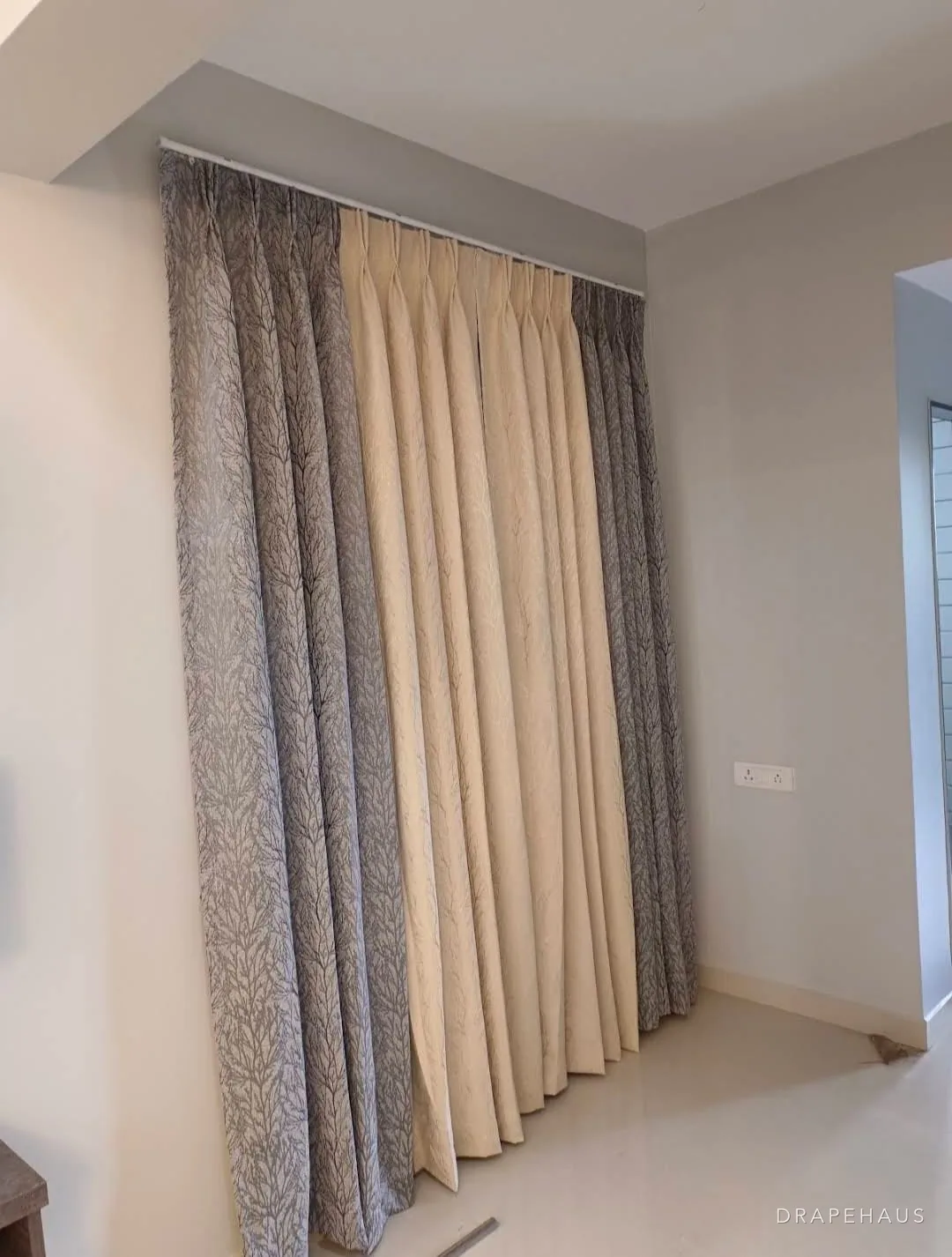
Drape Haus
Preparing the room
Drape Haus
Preparing the room
Hardware
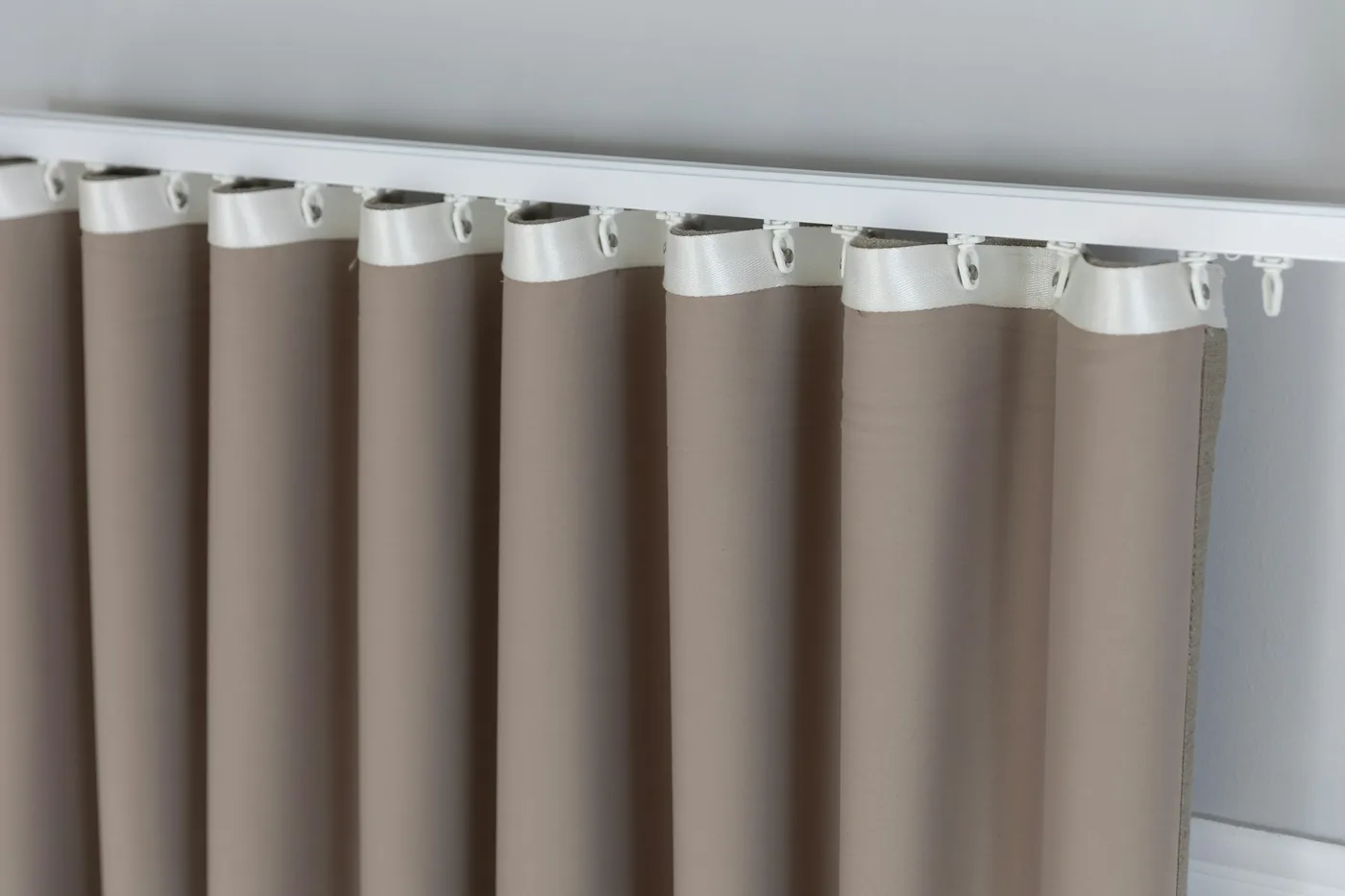
A curtain track is a slim profile with gliders running inside it, hidden behind the heading of the curtain. It draws more smoothly than a rod, carries heavy curtains over long spans and can bend round bays — provided the right profile is chosen for the job.
Fabric
Heading
Opening
Track length
330 cm
about 73 cm past the window each side
Fullness
2.25×
fabric to track
Fabric width
7.3 m
finished, before hems
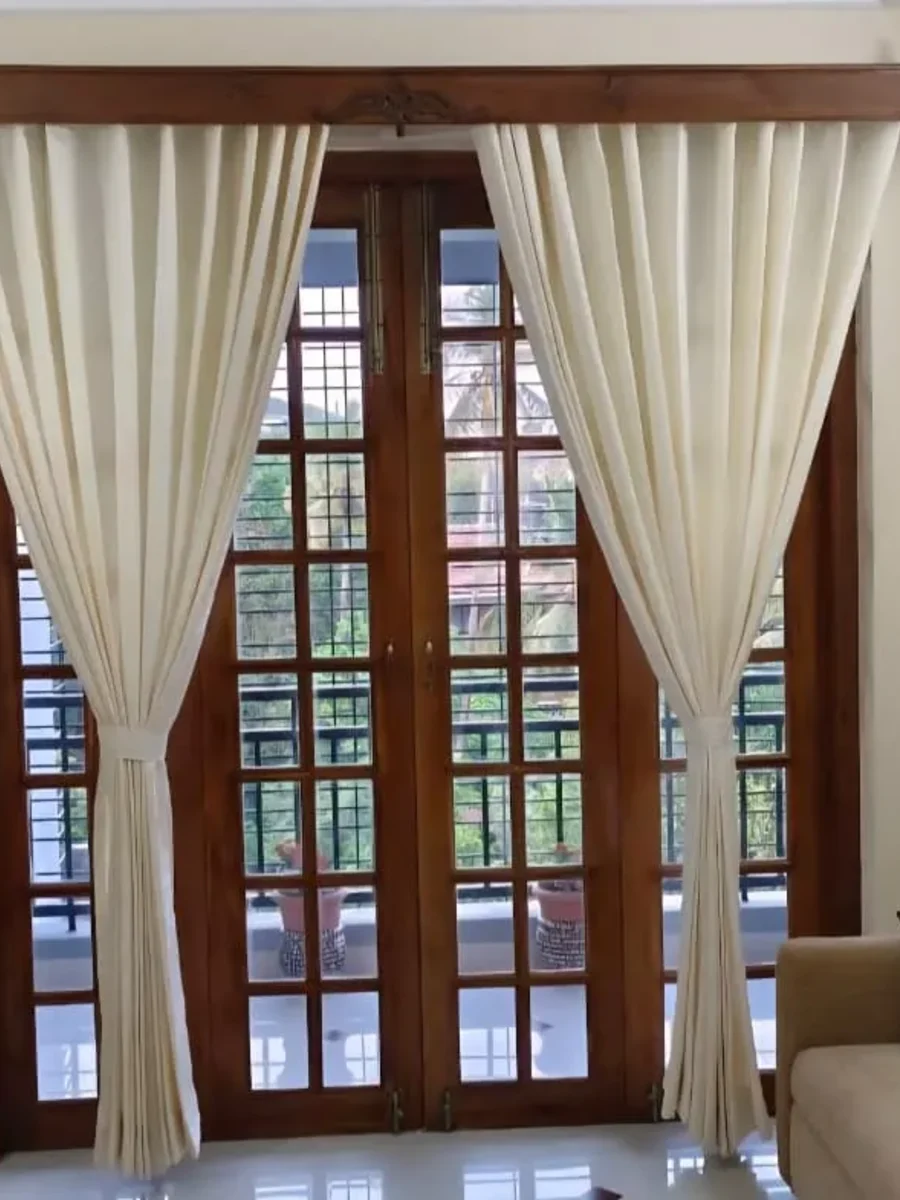
Run the track past the window by the stack, and the open curtains frame the glass instead of covering it — the room keeps its light and the window looks wider. Needs wall space either side; we check that, and the fixing, on site.
In short
By the Drape Haus studio · How we write
Is it right for you?
A curtain track is designed to disappear. The profile sits behind the curtain's heading, gliders or runners move inside or along it, and hooks on the curtain drop into the gliders. When the curtain is drawn, nothing shows but fabric. That makes tracks the choice for rooms where the curtain, not the hardware, should be seen.
Tracks are also the better engineering for most windows. They draw with less friction than rings on a rod, they carry heavy and full-length curtains over long spans with support at every bracket, and the curtain can pass the brackets because the gliders run on the inside. They bend round bays and curved walls, double up for sheers and lined curtains, and take motors.
A track is not the right answer if you want a visible, decorative pole, or if your curtains have eyelets. In some heritage rooms a fine pole suits the architecture better, and we will suggest one — sometimes with a hidden track behind it to do the daily work.
The details
Tracks differ far more than they look. A light profile with small gliders is fine for a voile over a bedroom window; a lined, full-height curtain across a sliding door needs a heavier profile, more brackets and gliders that will not crack under the load. We choose the profile from the curtain's weight, the span and how often it will be drawn.
Tracks can be fixed to the wall face on brackets or to the ceiling. Face-fixed tracks are the usual retrofit; ceiling fixing gives a cleaner line and less light over the top, and our ceiling curtain tracks page covers it in depth. Where a motor is planned, the track is a different system again — see motorised curtain tracks.
Near the sea the profile should be aluminium rather than plain steel, with nylon or acetal gliders and stainless fixings. Plastic gliders that are left in strong sun can turn brittle, and grit in the channel makes any track drag, so a well-chosen track is also a well-looked-after one.
Every track is cut to length on site, fitted with end stops and — for a pair of curtains — overlap arms so the two halves close without a gap of light down the middle.
Your options
Tracks are chosen by what they carry and where they fix. These are the families we specify, from the lightest to the most demanding.
Swipe for all 6 →
The honest view
Smoothest manual drawing
Gliders run with less friction than rings on a pole, so even wide curtains move easily.
Brackets don't stop the curtain
The curtain passes every support, so a long track can be fully supported without dividing the curtain.
Shapes to the window
Tracks bend round bays, corners and curves, and can be fixed to the ceiling.
Ready for motors and layers
Double tracks carry two curtains; motorised tracks take the work out of wide or tall windows.
Not decorative
A track is designed to vanish. If you want the hardware to be a feature, a pole suits better.
Gliders wear
Gliders can crack or stiffen over the years, especially where sun reaches them. They are easy to replace but need checking.
Eyelets don't fit
Eyelet curtains need a rod. Track headings use hooks or ripple-fold carriers.
Side by side
The main choice is between a track and a rod, and for wide windows between a hand-drawn and a cord-drawn or motorised track.
| Standard track | Heavy-duty track | Curtain rod | Motorised track | |
|---|---|---|---|---|
| Visibility | Hidden | Hidden | On show | Hidden |
| Curtain weight | Moderate to heavy | Heavy | Light to moderate | Moderate to heavy |
| Passes brackets | Yes | Yes | Only with passing brackets | Yes |
| Bays and curves | Yes | Yes | With elbows | Yes, specialist |
| Ceiling fixing | Yes | Yes | No | Yes |
| Headings | Hook-on pleats | Hook-on pleats | Eyelets, rings | Ripple fold, pleats |
Swipe to compare →
When in doubt on a wide or heavy curtain, choose a heavier track than you think. Light tracks are the most common cause of sagging.
Rather see it in your own room?
We bring samples to the house, measure every window, and specify for the light and exposure you actually have.
Room by room
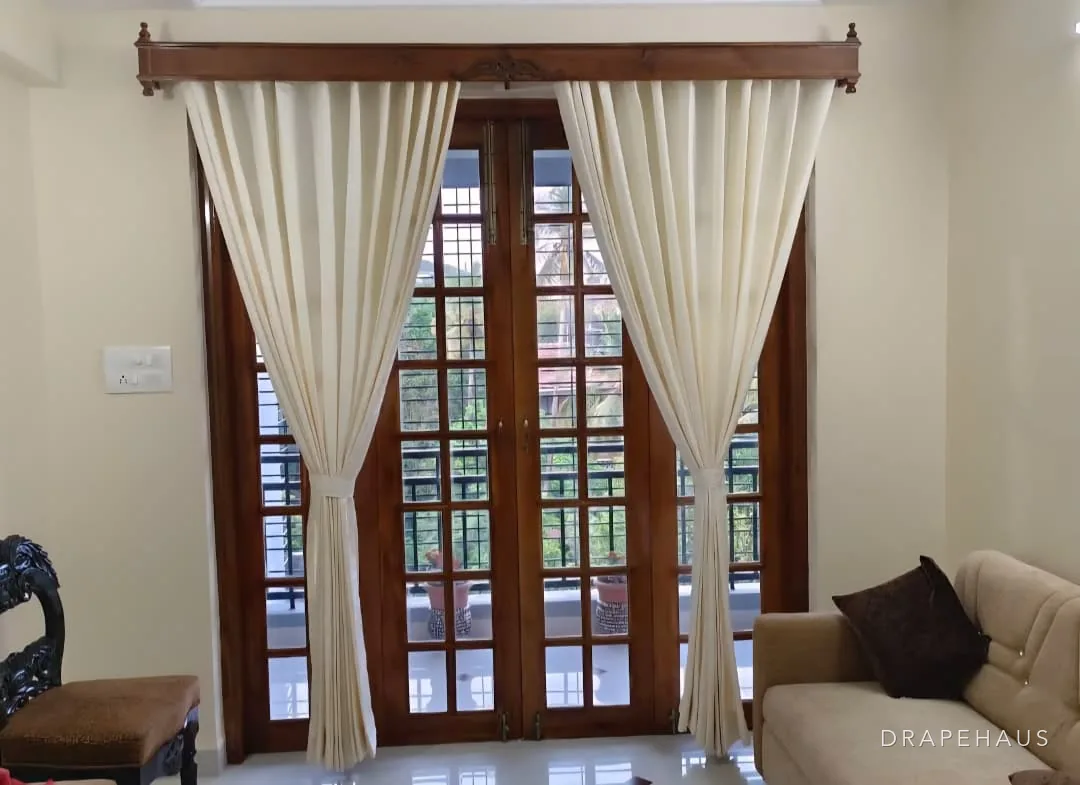
A standard or heavy-duty track across the full width, extended past the doors so the curtains stack clear of the opening.
A double track for a sheer and a blackout. Ceiling-fixed if possible, to reduce light at the top.
A bent track lets one curtain run round the bay in a single sweep, without separate panels.
Hand-drawn or motorised tracks avoid loose cords. If a cord-drawn track is used, it must be tensioned to the wall.
Aluminium tracks with nylon gliders tolerate steam. Keep fixings stainless.
A track hidden behind the pelmet keeps the period detail visible and the curtain running smoothly.
Sun on exposed gliders can make plastic ones brittle. Keep them behind the heading, or use acetal or metal runners.
In depth — tap a heading to read
Start with the curtain, not the window. A curtain's weight depends on its fabric, lining, fullness and drop, and a lined, floor-length pair across a wide door can be far heavier than people expect. The profile is chosen to carry that weight across the span without bowing between brackets.
Then the gliders. They should be sized for the profile and the curtain, with one per hook plus spares at each end. Undersized gliders crack, and a missing glider leaves a gap in the heading where the fabric sags.
Tell us the fabric you are considering. We size the track from it.
Brackets carry the track; their spacing decides whether it stays straight. Heavier curtains and longer drops need brackets closer together, and there must always be one near each end and either side of any bend or joint. Too few brackets is the most common cause of a sagging, sticking track.
The fixing behind each bracket matters just as much. Laterite and old masonry need resin anchors; concrete needs drilling into solid material rather than a hollow block; a false ceiling needs backing or a fix into its framing. Our ceiling curtain tracks page explains ceiling fixing in detail.
Where two curtains meet in the middle, overlap arms or master carriers let one leading edge pass in front of the other, closing the gap that otherwise lets a vertical line of light through. On blackout curtains this matters as much as the lining.
Stack-back is the width the open curtain takes up. A track extended past the window lets the curtain stack against the wall instead of the glass. The amount varies by heading and fabric; the curtain rod and track planner on this page gives a starting figure. End stops hold the curtain at the right place and stop gliders running off.
Aluminium profiles resist salt air well; plain or painted steel profiles do not, and rust along the channel is hard to stop once it starts. Nylon and acetal gliders are unaffected by humidity, but low-grade plastic gliders exposed to strong sun for years can turn brittle and snap. Keeping them behind the heading, out of direct light, prolongs their life.
The most common coastal problem is not corrosion but grit. Fine sand and salt crystals settle in the channel and make gliders drag. A dry cloth or a soft brush along the channel each season, and a dry silicone spray if needed, keeps the track running.
Most tracks are hand-drawn. Pulling at the leading edge marks pale fabric over time, so a slim draw rod clipped to the first glider is a small, sensible addition. Cord-drawn tracks move the curtain from the side, useful on wide or high windows, but in homes with children the cord loop must be tensioned to the wall.
For tall or very wide curtains, or houses that are often empty, a motorised track is the better route. It is a different system from a manual track, with its own carriers and belt; our motorised curtain tracks page covers it.
Living with it
Brush or wipe out the channel each season. Sand and salt are the main causes of drag.
If gliders still stick, a light dry silicone spray helps. Oil or grease attracts dust and stains fabric.
Swap cracked or stiff gliders as soon as you notice them; they are inexpensive and quick to change.
Look along the track once a year. A dip between brackets means one is loose or another is needed.
Draw curtains with a rod, not the fabric, to protect leading edges and keep the gliders aligned.
Avoid these
A light track under a heavy curtain sags and drags. Choose by the curtain's weight.
Long gaps let the track bow. Space brackets for the load.
Steel tracks rust in the channel. Use aluminium.
A line of light down the middle defeats the lining. Fit overlap arms.
The stacked curtain then covers the glass. Extend it past the frame.
Checklist
More in hardware
A good curtain on a bad track is a bad curtain — and near the sea, a good curtain on untreated steel is a rust stain running down your wall within one monsoon.
From the Journal
All articlesOur process
One team from the first visit to the last bracket, so nothing is lost between the person who specified it and the person who fits it.
FAQ
For smooth drawing, heavy curtains, long spans, bays and ceiling fixing, yes. A rod is better when you want the hardware on show or are using eyelet curtains.
Usually grit or salt in the channel, a cracked glider, or a track bowing between brackets that are too far apart. Cleaning, replacing gliders or adding brackets fixes most cases.
Yes. Bendable aluminium tracks are formed to the measured angles or curve, with brackets either side of each bend, so the curtain runs in one sweep.
Pinch pleat, pencil pleat, goblet and other hook-on headings, and ripple fold on a ripple-fold track. Eyelet curtains need a rod.
Only into backing or framing, not into the board alone. Our ceiling curtain tracks page explains how.
Both are the small carriers that move along the track and hold the curtain hooks. Gliders usually run inside the channel; runners may ride on the outside. Heavy-duty tracks sometimes use ball-bearing runners.
Often, if the track is straight, aluminium, firmly fixed and rated for the new curtain. We check it at the visit, and replace gliders if they are worn.
Tracks can run very long with enough brackets, and can be joined. Very wide openings are usually split into two curtains so each stacks to its own side.
The fitting itself is simple; getting the bracket spacing, height, extension and fixings right for the wall is where experience matters.
Next step
A track is chosen from the curtain it will carry and the wall or ceiling it fixes to. We visit, measure the window and the space for the stack, find out what is behind the plaster, and specify the profile, gliders, brackets and fixings with the curtains. Then we fit the whole system and check it draws smoothly. Use the planner on this page for a first idea of length, then book a home visit.