 Drape Haus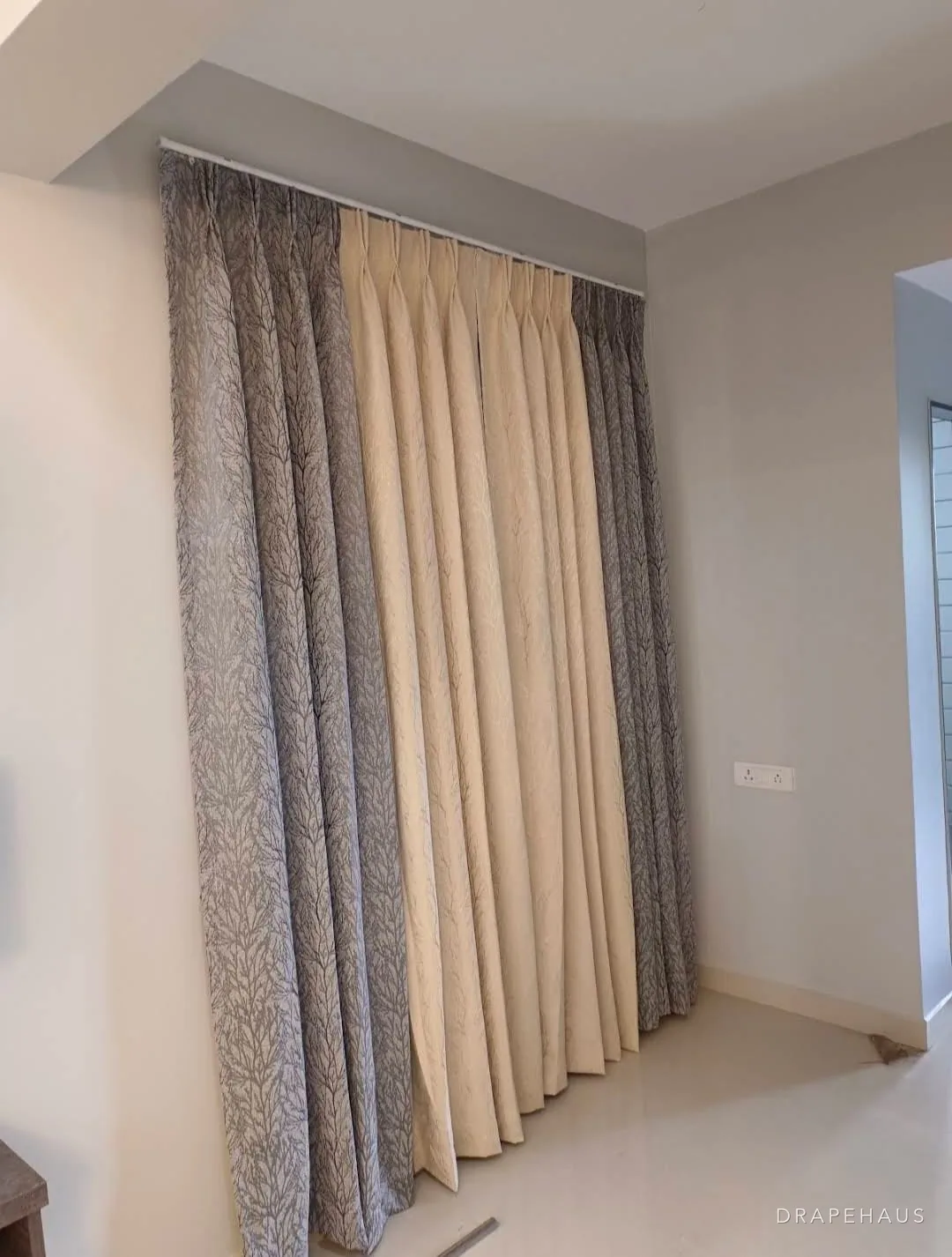
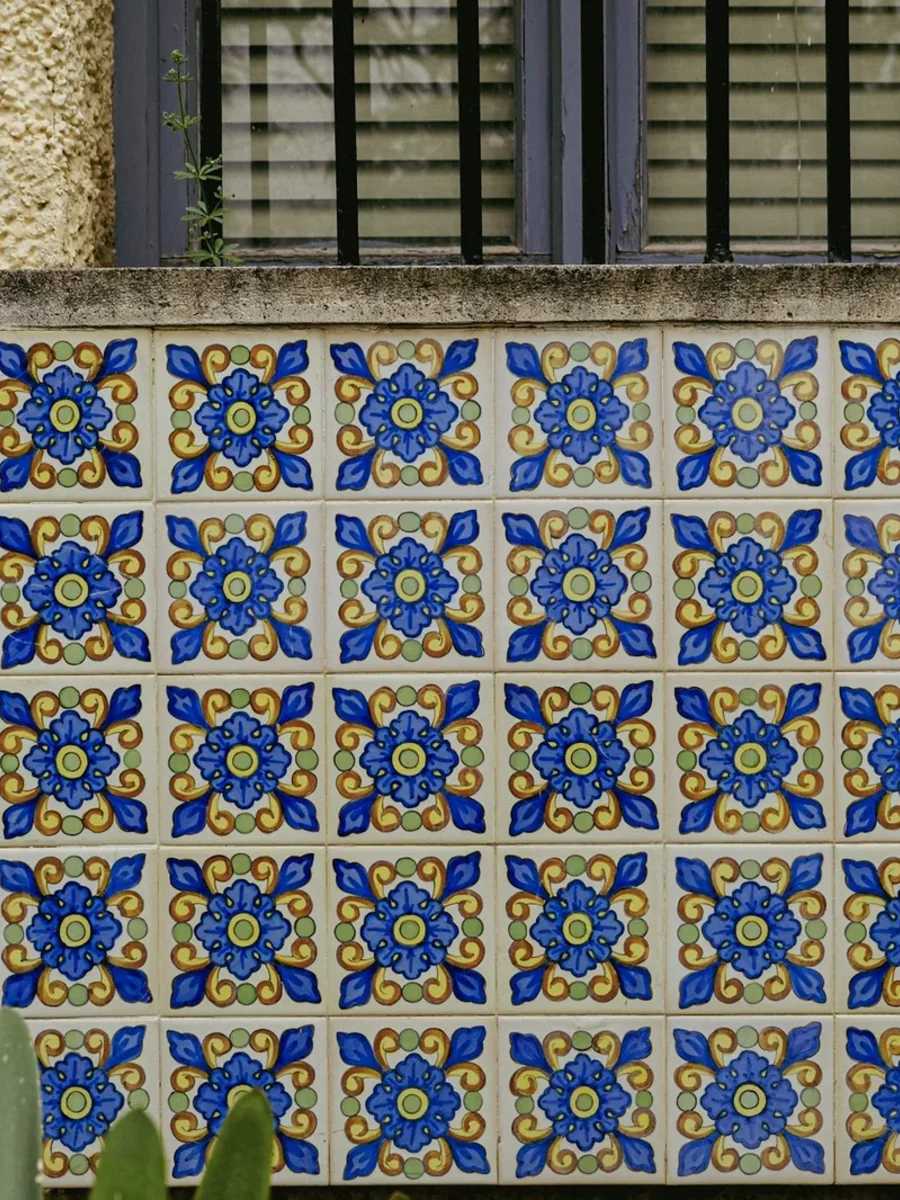
Azulejos are glazed, hand-painted ceramic tiles in the Portuguese tradition, and in Goa they are part of the visual language of the old churches and houses. The Asia InCH craft encyclopedia records that they can be seen across old churches and homes in the state, that they arrived in Portuguese times, and that they are still made today with both traditional and modern methods. A Herald feature notes that today they are made mostly as name plates, souvenirs and decorative pieces.
Most people meet them first on a gatepost. Our guide to Goan house name plates covers that custom, the making of the tiles and how to fix a plaque outdoors. This guide goes inside the house: where to see the historic tiles, how to tell a hand-painted tile from a printed one, where azulejos work in a kitchen, bathroom or hall, and how to pair blue and white with curtains and cushions so the room feels calm rather than busy.
It ends with the practical side that matters most in Goa: fixing tiles so they survive monsoon damp and salt air, cleaning them without damage, and what to do about old tiles in an old house.
A short history: from Lisbon to Old Goa
The word azulejo, a Goan journalist's account of the Panjim panels explains, comes from the Arabic for a little polished stone. The craft reached Portugal through Spain and the Moors, and Portugal began making its own decorative tiles from the 16th century, once potters from Spain, Flanders and Italy had settled there. The early 18th century is often called the golden age of the azulejo, when whole churches, palaces and houses were covered in tiles inside and out.
In Goa, the Herald's feature on the tradition says, the art arrived particularly through Augustinian buildings, the churches of Nossa Senhora da Graça and Santa Monica in Old Goa. The same feature makes two further points worth knowing: that the tiles reflect a wider exchange between Portuguese India and the Islamic courts of the subcontinent, and that some azulejos in Goa may have been brought from Bijapur. That second point is offered as a possibility, not a finding, but it is a useful reminder that a tile in Goa was not always made in Portugal.
The Asia InCH entry records the traditional palette as blue and yellow, with floral patterns and religious scenes, though every colour and many new subjects are painted now. A modern Goan school of azulejo painting has grown up alongside the old one: a travel feature on the craft describes tiles showing fisherwomen, boats, churches and the kunbi dance, often drawn in the cartoon style of Goa's best-loved illustrator, Mario Miranda.
Where to see azulejos in Goa
The oldest tiles survive as fragments. At the ruined church and convent of St Augustine on the Holy Hill in Old Goa, a 2009 newspaper report on an exhibition by the Archaeological Survey of India recorded that excavations inside the complex unearthed many polychrome glazed tiles, and that they were painstakingly rearranged like a jigsaw and fixed back to the walls wherever possible. The ASI has worked on the site since 1988.
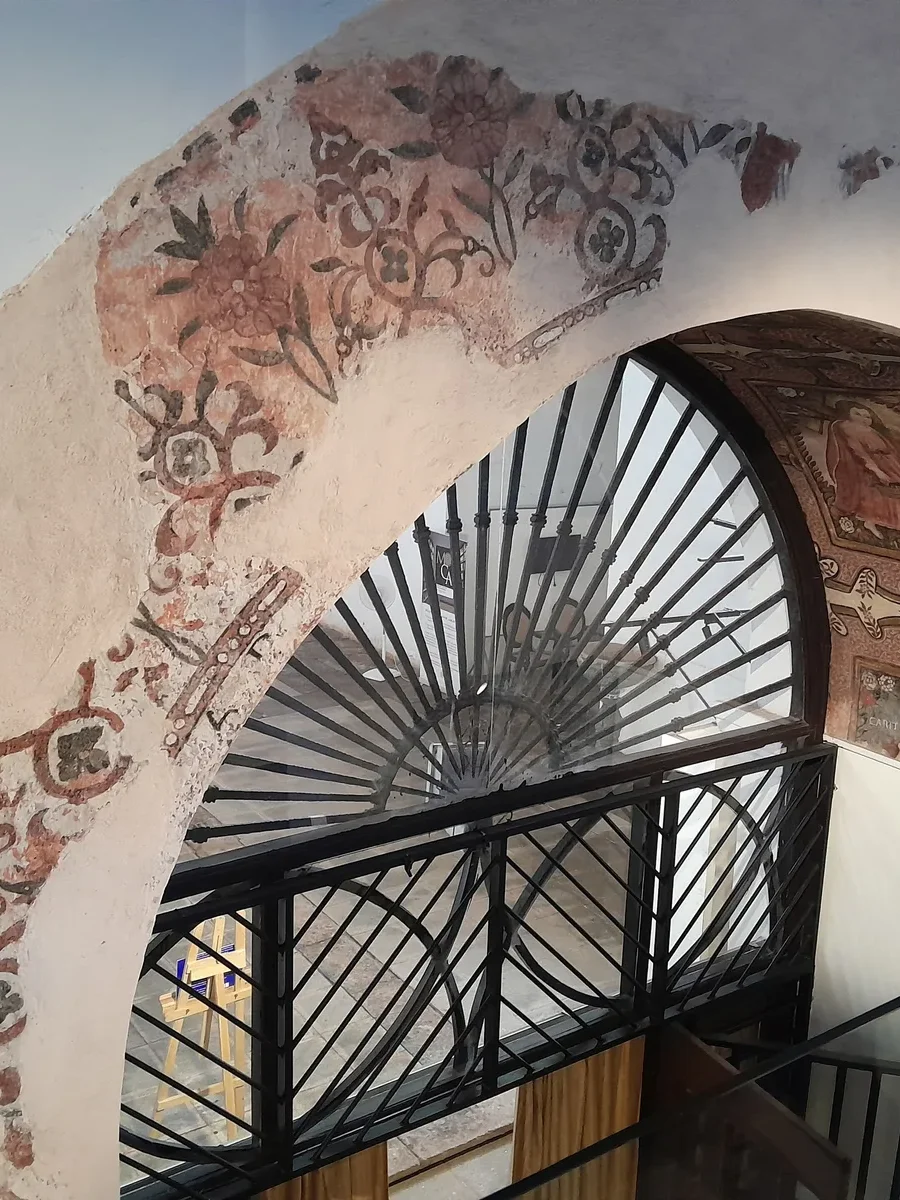
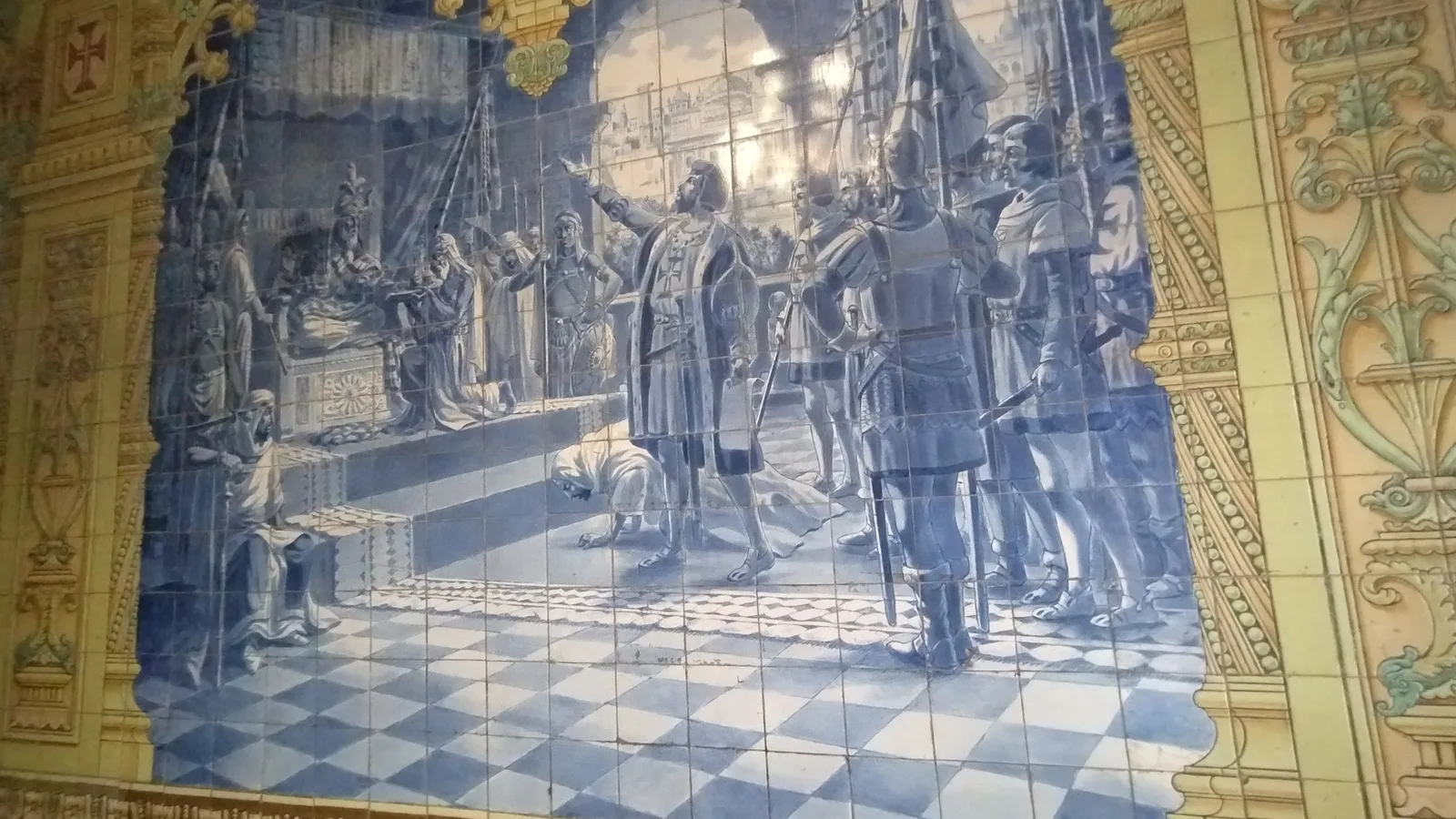
Nearby, heritage writer Heta Pandit describes the chapel of the Santa Monica convent as a place where azulejos, stencilled decoration, sgraffito, pointillism and murals all appear together on the wall panels. The best-known later tiles are in Panjim. In the entrance of the Institute Menezes Braganza, five floor-to-ceiling blue-and-white panels with gold borders by the Portuguese painter Jorge Colaço (1868–1942) tell the story of Vasco da Gama's voyage from Camões's epic Os Lusíadas. A Goan journalist who studied them records that each panel is inscribed 'Jorge Colaço, 3-7-1935', that they were painted in Lisbon and shipped to Goa, and that they are the only work of his in India.
The same writer noted that some of the Panjim tiles are chipped and that things were sometimes left leaning against them, which is a reminder that public heritage needs care too. Look, do not touch, and check access before you go, since the use of these buildings changes. For the domestic side, many village houses show tiles on their gateposts and porches; those are private, so enjoy them from the road.
| Place | What you see | Worth knowing |
|---|---|---|
| St Augustine complex, Old Goa | Excavated polychrome glazed tiles refixed to the ruined walls | Fragments, reassembled by the ASI; a lesson in how tiles are lost |
| Santa Monica convent chapel, Old Goa | Azulejos alongside stencils, sgraffito and murals | Tiles in their setting with other wall arts |
| Institute Menezes Braganza, Panjim | Five blue-and-white panels with gold borders by Jorge Colaço | Each inscribed 3-7-1935; painted in Lisbon and shipped |
| Village houses across Goa | Name tiles and small panels at gates and porches | Private property: look from the road |
Planning something like this?
We visit homes across North and South Goa, measure on site, and bring samples to see in your own light.
Hand-painted, printed or antique: knowing what you are buying
Azulejos sold in Goa today range from fully hand-painted tiles made to order to printed tiles produced in quantity. The Herald's feature notes that the cost of a commission depends on the size of the order, the complexity of the design and whether the tiles are hand-painted or printed. Both have a place: a printed tile is consistent and quick for a large splashback, while a hand-painted panel carries the character that makes the tradition worth having.
Hand painting shows in the details. Look for brush strokes in the blue, slight variations from tile to tile in a repeat, and colours that pool a little where the brush lifted. A printed tile is uniform, and under a magnifying glass its colour often breaks into a fine pattern of dots. Ask the maker how the colour was fired: colours fused into the glaze at high temperature are generally more durable than colours applied on top of the glaze and fired at a lower temperature, which matters behind a sink or on a table top that is scrubbed every day.
Be careful with old tiles. Genuinely old azulejos are rare in Goa, and tiles taken from churches or ruined houses are part of someone's heritage. Buy antique tiles only with a clear account of where they came from, and never from anyone offering tiles that have obviously been prised from a wall. If you want an old look, a skilled painter can make new tiles in a historic style that will outlast any salvaged piece.
Using azulejos indoors: kitchens, bathrooms, tables and walls
Glazed tile is a natural fit for the wet and greasy parts of a house, because the glaze sheds water and wipes clean. A splashback is the classic use: a band of plain white tiles with a hand-painted panel set into it behind the sink or the cooker, rather than a whole wall of pattern. Behind a hob, keep the painted panel a little above the cooking zone and choose high-fired colours, since heat and frequent scrubbing are hard on any surface decoration. Our article on dining room wall decor looks at tiles and plates in the room next door.
In a bathroom, a single panel above the basin, a border at dado height, or a tiled niche in the shower brings the tradition in without turning the room into a souvenir shop. Wet walls need proper waterproofing behind the tiles, which is the tiler's job, and the grout should be a good-quality, mould-resistant type, because Goan bathrooms rarely dry out fully in the monsoon. In both rooms, a few patterned tiles set in plain white usually look more considered than many.
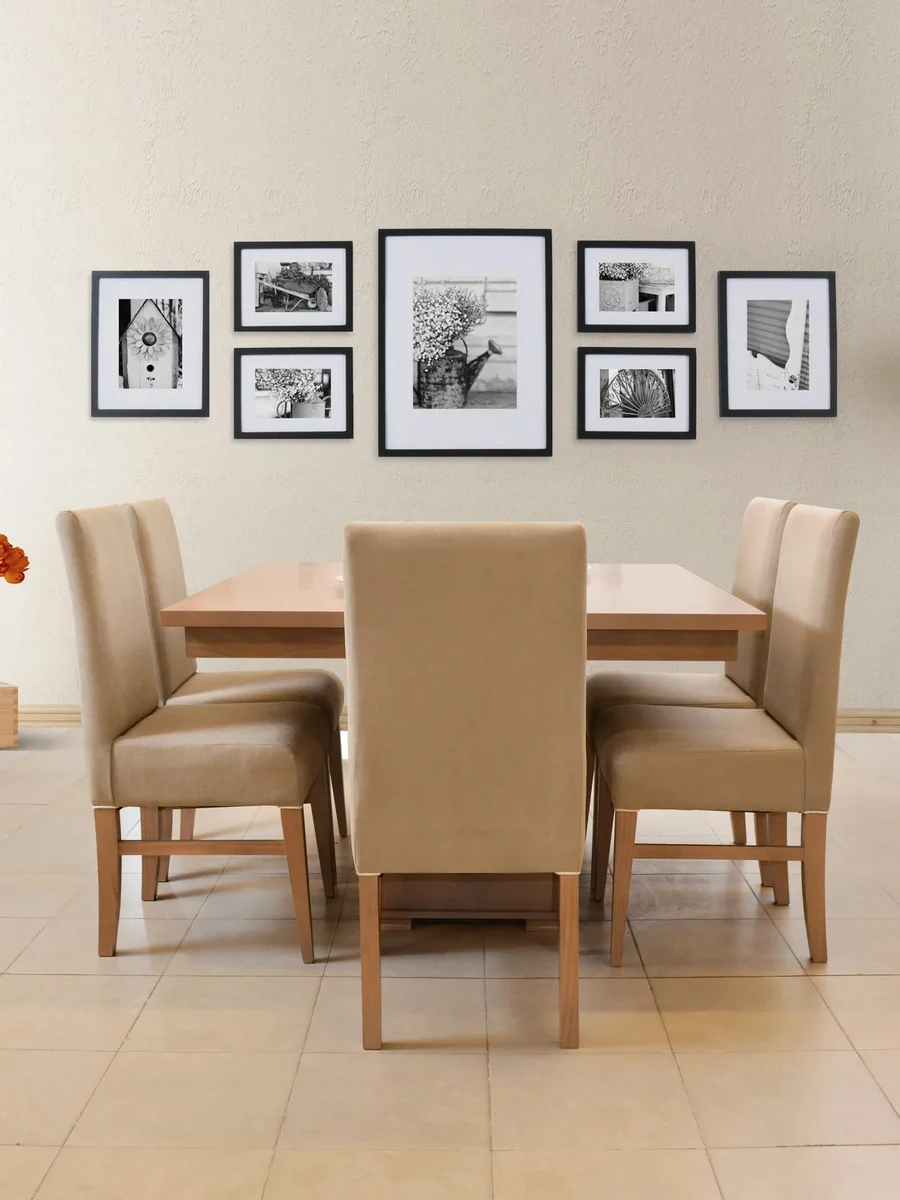
Away from water, the options widen. A tile-topped side table or a coffee table inset with a panel is practical in a Goan house, where tables meet wet glasses and hot cups. A framed panel mounted on a backboard and hung like a picture works in a hall or above a console, and it is the best answer for rentals and for old lime-plastered walls, because it can be taken down and nothing is stuck to the wall itself.
| Use | Tile choice | Watch out for |
|---|---|---|
| Kitchen splashback | Plain white field with a hand-painted panel | Heat and scrubbing near the hob; use high-fired colours |
| Bathroom panel or niche | Glazed tiles with mould-resistant grout | Waterproofing behind; monsoon damp in grout lines |
| Table top | A small panel inset in timber | Hot pans, uneven grout lines, sealing the timber edge |
| Framed feature panel | Tiles fixed to a backboard and hung | Weight: fix the hanging into sound masonry or timber |
| Stair risers or a doorway border | A single repeating motif | Restraint: one feature per room |
Blue and white with curtains and cushions
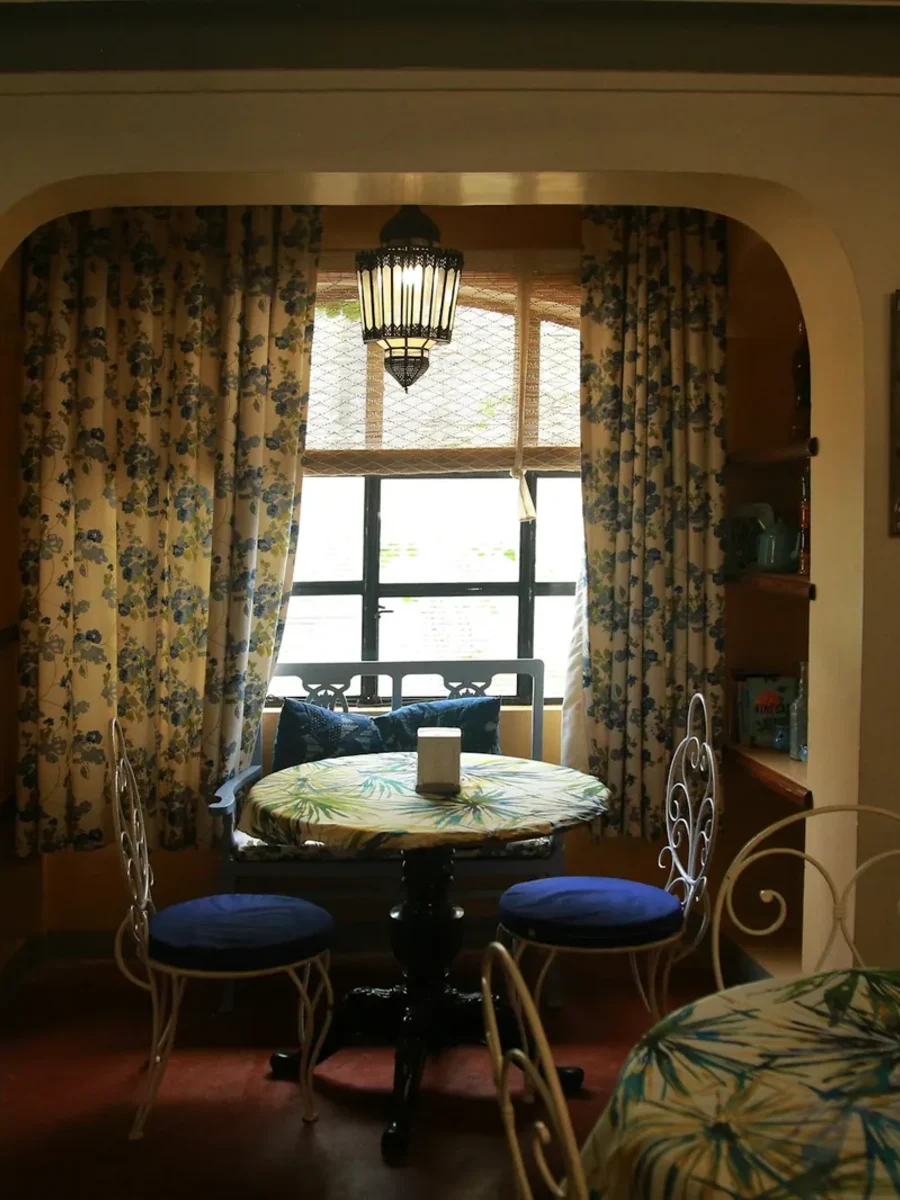
The most common mistake with azulejos is to repeat the pattern in every fabric in the room. Blue-and-white tiles are already a strong pattern; curtains and cushions in a second blue-and-white print compete with them, and the room starts to look like a theme. Let the tiles lead and keep the textiles quieter.
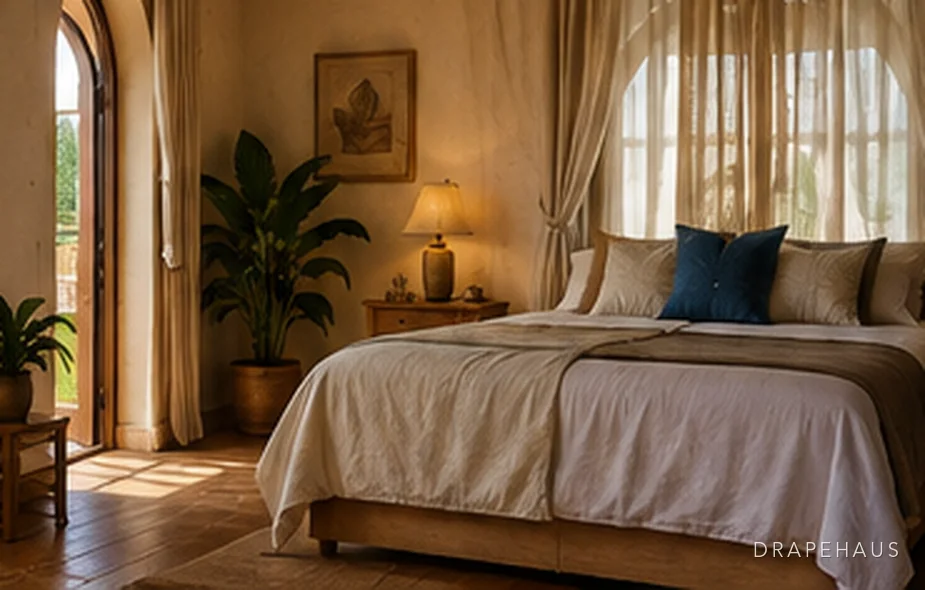
Plain linens are the easiest partners. Natural or off-white linen curtains at the window soften the hard, reflective surfaces of a tiled kitchen or bathroom and diffuse the glare that bounces off a glazed wall in strong west light. Add blue in two or three small, plain doses, a cushion, a runner, a lampshade, rather than one large patterned one. Do not try to match the tile blue exactly; a slightly deeper indigo or a softer grey-blue looks deliberate, whereas a near-miss looks like an error.
If you want pattern in the fabric, change its scale and character. A small, irregular indigo block print or a fine stripe sits happily beside a large tile panel because the two do not fight for the same role. The traditional blue-and-yellow pairing gives a warm counterpoint: an ochre or mustard cushion, a cane chair or a timber table stops a blue-and-white room from feeling cold. Our cushions and soft furnishings and printed curtains can be made in fabrics chosen against your own tiles.
- Let the tiles be the one strong pattern in the room.
- Choose plain or textured linen and cotton for curtains near tiled walls.
- Repeat blue in two or three small plain accents rather than one large print.
- Use a deeper indigo or a softer grey-blue, not a near-match.
- Add ochre, cane or warm timber to balance the cool of blue and white.
Fixing and caring for tiles in humid, salty air
New tiles on new walls are straightforward: a sound, dry substrate, the right adhesive for a wet or dry area, and good grout. Old walls are different. Goan houses are built of laterite under lime plaster, and lime walls need to breathe. A study of historic azulejo setting mortars by researchers at NOVA University of Lisbon and Portugal's national civil engineering laboratory found that, until cement became established for wall coatings in Portugal in the second half of the 20th century, azulejos were set in air-lime mortars. It describes cement mortars as completely inadequate for replacing old tile work, because they contain soluble salts, are dense and impermeable to water vapour, and are too strong and stiff for the old wall.
The lesson for a Goan owner is clear. Do not fix tiles to an old lime-plastered wall with cement adhesive, and do not re-stick a loose historic tile with cement. On an old house, choose a framed panel hung clear of the wall, or ask a conservator about lime-based setting for real restoration work. Our guide to laterite and old walls explains why breathable materials matter here.
Cleaning should be gentle. Wipe glazed tiles with water and a pH-neutral cleaner, and avoid acids such as vinegar or descalers on old or hand-painted tiles and on grout, which they attack. Near the sea, rinse porch and balcony tiles with fresh water now and then, because salt left to dry on the surface draws moisture back in the monsoon. A white, powdery crust on or around tiles is usually salt brought out by moisture behind the wall rather than mould; our article on efflorescence explains how to tell. If a historic tile cracks or comes loose, keep every piece, note where it came from and ask a conservator. If you are planning a tiled room and want fabrics that suit it, send us a photograph of the tiles.
Never use cement to fix or repair old azulejos; it traps salts and moisture and is too hard for the wall.