 Drape Haus
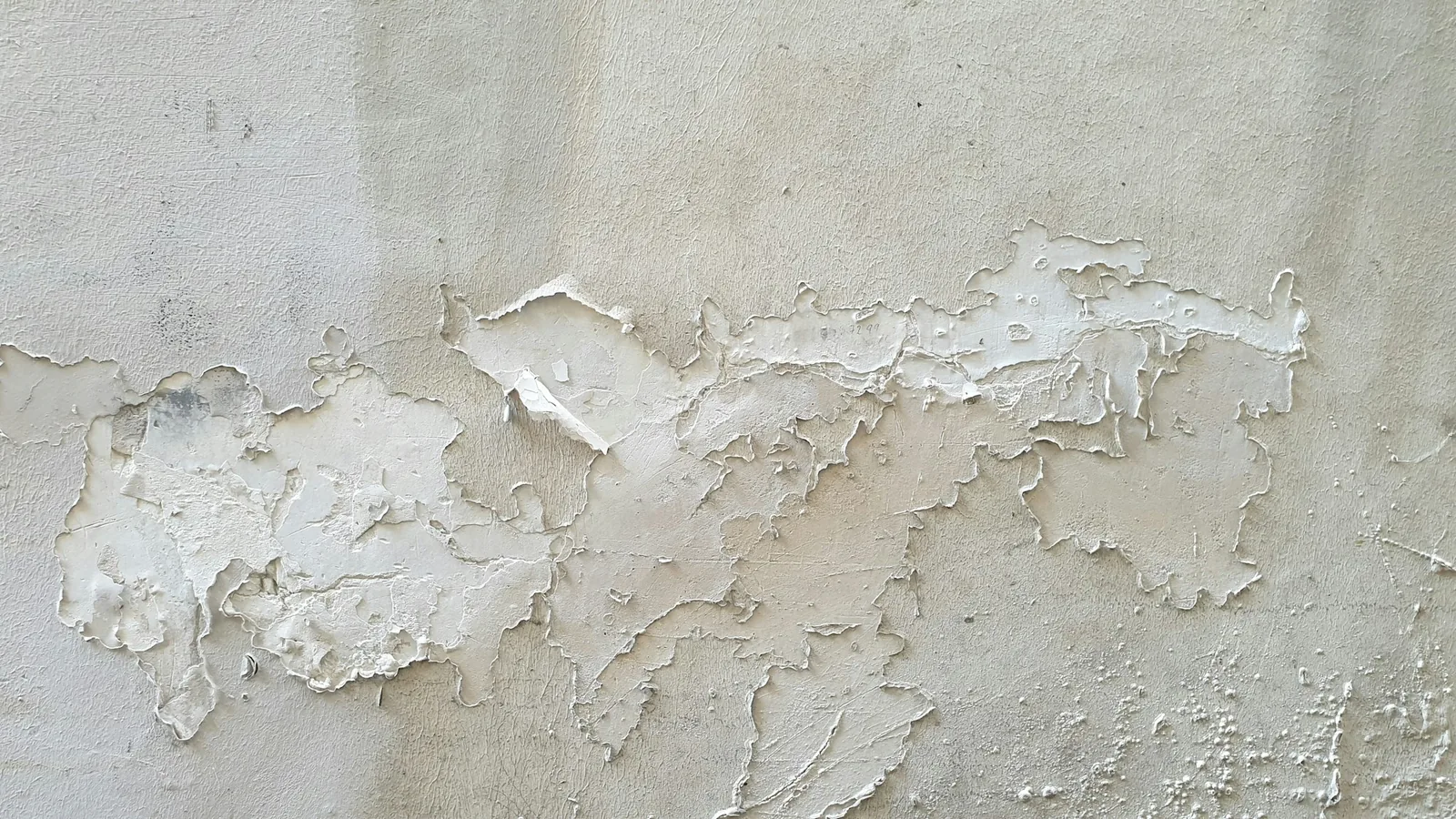
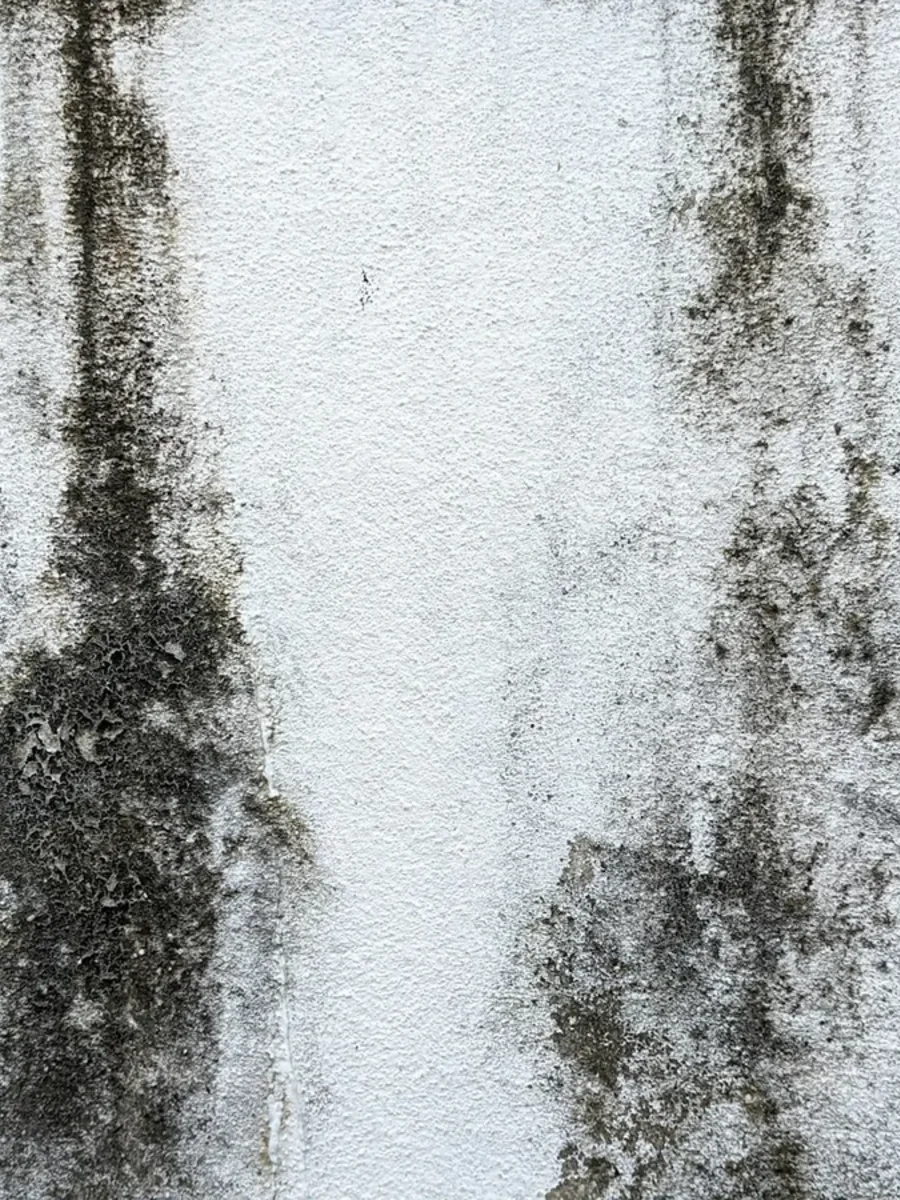
What people in Goa call white fungus on walls is one of two quite different things. It may be efflorescence: salt carried out of the wall by water and left behind as a white, powdery or crystalline crust when that water evaporates. Or it may be white mould: a living growth on the paint, plaster or dust film. At arm's length they can look alike. Even the US Environmental Protection Agency's mould course warns investigators that a white, soluble, fibrous material found in a crawl space may be alkaline salt rather than mould.
The quickest guide is texture, smell and place. Salt is dry, gritty or crunchy, has no smell, and gathers where water leaves the wall: a band near the floor, the edges of a damp patch, the face of new plaster. Mould is soft and furry, smells musty, often sits among grey, green or black spots, and favours still corners and the backs of furniture. Both are telling you the same thing, that water is moving where it should not, but they point to different sources of that water.
The difference matters because the right cleaning method for one is wrong for the other. Salt is brushed off dry. Mould should never be dry-brushed. Below: how to tell them apart, why new plaster and old laterite push salts to the surface, what to do about each, and why wallpaper and wall panels have to wait.
Two different things that look alike
Efflorescence is a mineral deposit. The US National Park Service, in its guidance on masonry, describes how moisture moving through a wall carries soluble salts from the bricks, stone or mortar to the surface, where they are left as a whitish powder once the water evaporates. The Society for the Protection of Ancient Buildings (SPAB) adds that efflorescence shows that water has passed through a material, and that the salts are usually sulfates, white or off-white and salty in appearance. It is not alive, it does not spread across a dry wall, and it has no smell.
White mould is a fungus. The EPA's mould course is clear that moulds come in many colours, white included, and North Dakota State University Extension notes that mould can turn surfaces white, green, brown, black or orange, and is usually detected by a musty odour. It feeds on organic material: the binders in emulsion paint, dust, soap residue, wallpaper paste, the paper itself. It needs moisture at the surface for long enough, and it gets that most easily in still, humid air.
The useful part is what each tells you about the water. SPAB's diagnostic table links salts to liquid water: ground moisture tends to bring chlorides with nitrites, plumbing leaks chlorides and possibly nitrates, and rain penetration usually none, except possibly sodium chloride near the coast. Condensation, by contrast, brings no salts, which is why it shows as mould. So a white crust is a clue that water is travelling through the masonry, while mould on a wall with no salts at all points towards condensation from the air inside the room.
Salt on the wall usually means liquid water moving through it. Mould with no salt usually means condensation from the room.
How to tell efflorescence from white mould
Start in good light, with a torch shone across the surface rather than straight at it. Salt deposits catch the light as tiny crystals or a dusty crust, sometimes in feathery growths that SPAB describes as typical of salts brought up from the ground. Mould looks soft, with a fine cottony or velvety texture, and often has darker spots mixed in. Then smell the patch. A musty, earthy smell points to mould; salt has none.
Next, look at where it is and when it appeared. Salts collect where the wall dries out, so they follow the edge of a damp patch, a horizontal band low on the wall, the line of a crack, or the face of a newly plastered area. The Park Service describes the classic case on damp masonry: a whitish tide mark of salts that rises and falls with the seasons, typically 1 to 3 feet, about 30 to 90 cm, above the ground outside. Mould grows where moist air sits still: the top corners of a room, behind a wardrobe or headboard, on a cold wall above a bed, and inside cupboards.
Finally, the touch and water test. Wearing gloves, rub a little of the deposit between finger and thumb. Salt feels gritty and dry and crumbles to powder. Then dab a small area with a damp cloth. Because efflorescence is made of soluble salts, much of it will dissolve and the patch will darken as if wet, often returning as a fresh white crust when the wall dries again. Mould does not dissolve; it lifts off as growth, frequently leaving a grey or dark stain beneath.
- Never taste a deposit to check for salt. SPAB warns that hazardous chemicals were once used to treat building decay, and residues may still be in old walls.
- If you are still unsure, treat it as mould: wear a mask and gloves and do not dry-brush it.
- A specialist can settle the question. The EPA notes that bulk samples can be examined under a microscope, and SPAB describes on-site salt test kits and laboratory salt analysis.
| Clue | Efflorescence (salt) | White mould |
|---|---|---|
| Texture | Dry, gritty, crystalline or powdery; can look feathery | Soft, cottony or velvety growth |
| Smell | None | Musty, earthy |
| Colour around it | White or off-white only | Often mixed with grey, green or black spots |
| Where it sits | Where water evaporates: tide-mark bands, patch edges, new plaster, cracks | Still, humid places: corners, behind furniture, inside cupboards |
| With a damp cloth | Largely dissolves; the patch darkens and the crust often returns as it dries | Does not dissolve; wipes off as growth, may leave a stain |
| What it points to | Liquid water moving through the masonry | Moist air and condensation at the surface |
Planning something like this?
We visit homes across North and South Goa, measure on site, and bring samples to see in your own light.
Why new plaster and laterite walls push salts to the surface
New plaster, mortar and concrete are wet when they go on, and all that construction water has to leave through the face of the wall. As it travels it dissolves whatever soluble salts it meets, in the sand, the cement and the masonry behind, and drops them at the surface where it evaporates. The Park Service's guidance on mortar even caps the alkali content of cement to help avoid efflorescence. That is why a white bloom so often appears on new or freshly replastered walls as they dry. If it fades steadily as the wall dries out, construction water was the cause.
Drying takes longer than most people expect. The Park Service notes that a traditionally lime-plastered wall could take more than a year to dry before it was painted or papered. SPAB's rule of thumb is that a wall dries at about 25 mm of thickness per month, a figure from British practice that is useful here only as a reference point. On that basis, a wall 300 mm thick could take around a year to dry right through, and Goa's monsoon, which puts morning humidity at 87–91% across the state from June to September, slows things further.
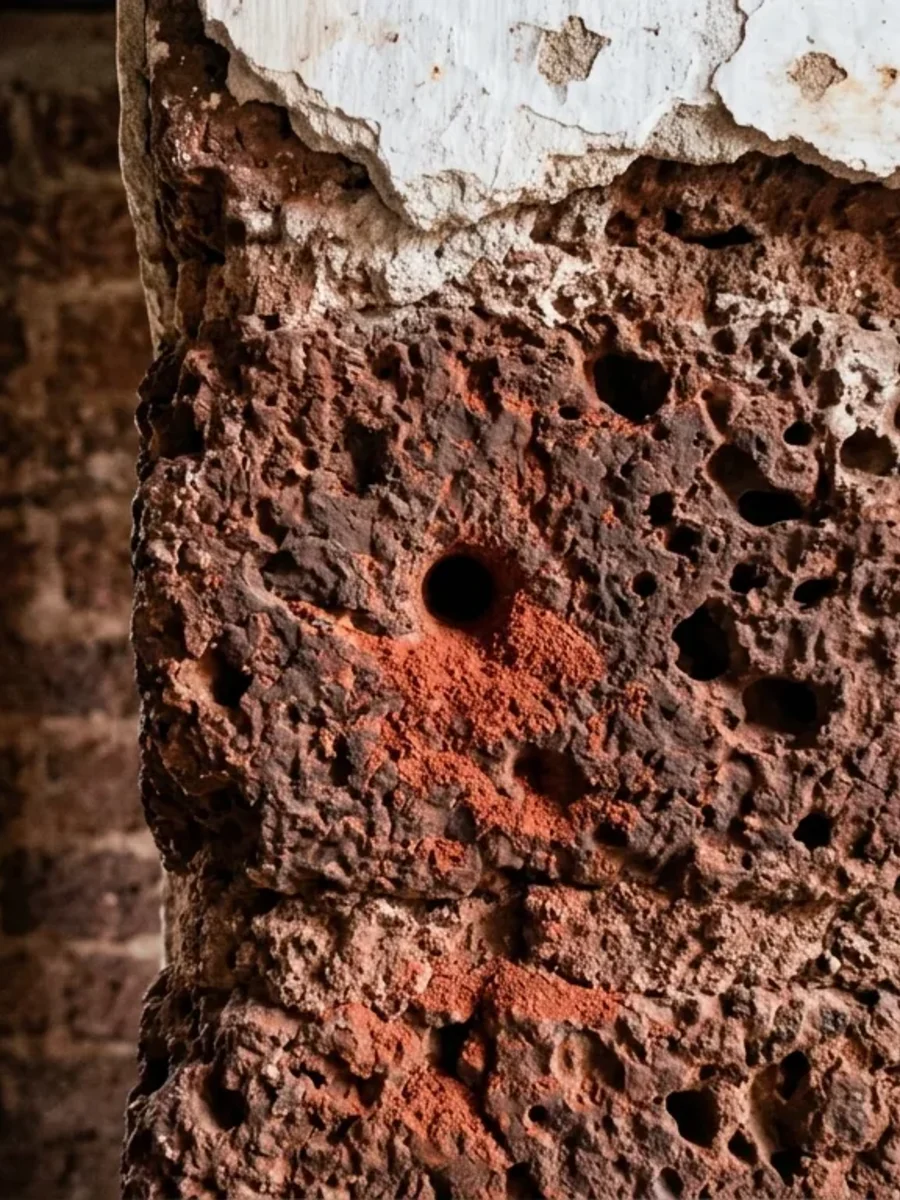
Old laterite houses have their own reasons. Laterite is porous, and these walls were built to take on water in the rains and give it back through lime plaster in the dry months, as our article on laterite houses explains. Water that rises from the ground, or seeps in through a cracked render, brings salts with it. SPAB's diagnostic tables also mention chlorides from sea water, which is relevant on a coastal belt.
The bigger trouble comes when that evaporation is blocked. SPAB documents how dense cement pointing, hard renders and impervious paints on old solid walls trap water, and how salts then crystallise behind or beneath the hard layer. That forces off cement patches and pushes plaster away from the wall, and efflorescence appears on the stone or brick instead of the joints. Our guide to laterite and old walls covers how these walls are best finished and fixed into.
Salts that come and go with the weather
Not all wall salts behave the same way. SPAB distinguishes efflorescent salts, usually sulfates, which are unsightly but seldom absorb moisture from the air, from hygroscopic salts such as chlorides and nitrates, which do. Some hygroscopic salts take up so much water from humid air that they dissolve in it. A wall loaded with them darkens and feels damp in muggy weather, then dries and grows a fresh crust when the air dries out.
In Goa that cycle has an obvious rhythm. Through the monsoon, salty patches can look persistently wet even after the leak or seepage that put the salt there has been repaired; SPAB notes that hygroscopic salts can keep moisture levels high after rising damp itself has been dealt with. In October and November, as the air dries, the same patches turn white and powdery. Repeated dissolving and recrystallising inside the pores is what slowly crumbles plaster and the face of the masonry.
The Park Service makes a related point: salts sitting on the surface as efflorescence are usually relatively harmless, but salts that crystallise just below the surface, called subflorescence, create pressure that can make the outer layer flake and spall.
Salt also confuses diagnosis. SPAB warns that electrical moisture meters often give high readings on old walls because of salts left by a past problem, which is one reason rising damp is so often misdiagnosed. If a damp specialist is coming, our guide to dampness in walls explains what a sound survey should include.
Treating efflorescence: stop the water, brush, wait, let it breathe
SPAB's advice is to tackle the sources of dampness before trying to remove salts. Otherwise the wall keeps delivering fresh salt to the surface as fast as it is cleaned. On new work that may simply mean waiting; on an older wall it means finding the leak, blocked downpipe, cracked render or raised ground outside.
Removal itself is gentle. SPAB recommends repeatedly brushing or vacuuming crystalline deposits off plain-faced walls, and the Park Service specifies non-metallic bristle brushes for masonry. Dry methods make sense because the salt is soluble: sponging it with water mostly dissolves it and lets it soak back into the wall, to reappear when the wall dries. For residual salts in plaster, SPAB mentions a poultice of whiting and water as a traditional method.
Do not reach for acid. The Park Service warns that hydrochloric (muriatic) acid should not be used on historic masonry because it can dissolve lime-based mortar, damage brick and some stones, and leave chloride deposits behind. It also cautions that water-repellent coatings can be especially damaging on masonry that contains salts, because they limit the flow of moisture out of the wall.
When the wall has dried, finish it so that it can keep drying. SPAB recommends lime plaster for repairs after salt problems, delaying replastering so that salts can come to the surface first, and permeable finishes such as limewash, soft distemper or clay-based paint. It is sceptical of so-called salt-resistant replastering, noting that it tends to disguise dampness rather than cure it.
Treating white mould: a moisture job, not a salt job
If the deposit is mould, the method changes completely. Dry-brushing mould throws spores into the room, so it is lifted with a damp cloth and detergent instead, and anything bigger than about a metre square is a job for a specialist. The full method is in our guide to fungus on walls. The EPA's rule for mould is short: do not paint over it. Clean it, dry the surface and then paint, or the new paint is likely to peel.
The real fix is the humidity at the wall surface. SPAB states that condensation is eliminated when relative humidity is kept to a maximum of 70%, and puts the optimum indoor range at 40–60%. In a Goan monsoon that means ventilating at the right times, keeping air moving behind furniture, and using air conditioning or a dehumidifier in rooms that must stay dry. Our guide to humidity in Goa sets out the numbers season by season.
Walls can show both at once. A seeping wall can carry salts to its face and also stay wet enough for mould to grow on the paint beside them. In that case, deal with the water source first, brush off the salt, clean the mould by the wet method, and give the wall time.
Why wallpaper and wall panels should wait
A white bloom is the worst possible base for wallpaper or panelling. Salt crystallising behind a covering pushes it off the wall, in the same way SPAB shows dense plaster being blown off by salts. Mould behind it grows unseen: the EPA lists the back of wallpaper and panelling among the commonest places for hidden mould. And the Park Service warns that vinyl wall coverings applied to the inside of a damp wall seal the moisture in and force it higher up the wall.
So the order is fixed. Find and fix the water source, let the salts come out and brush them off, give the wall at least one full dry season, and check it again after the next monsoon. Only then choose a covering, and choose it for the wall: breathable finishes on old lime and laterite, and on modern walls a paper or panel system that suits a humid house. Our piece on the best wallpaper for humid walls, linked below, compares the options.
We hang wallpaper and fit wall panels, and we will not advise covering a wall that is still moving water. We are not builders or waterproofing contractors, so we cannot repair the cause, but we can tell you whether a wall looks ready. If you are planning to paper or panel a wall that has shown a white bloom, send us a photo and a note of what has been done before you order anything.
How to remove efflorescence from a wall
For salt deposits you have identified with the checks above. If there is any sign of mould, follow the mould method instead.
Find the water first
Work out why the wall is wet: new plaster still drying, rain getting in, a leaking pipe, ground moisture or rainsplash at the base. Salt keeps returning until the source is fixed or the new work has dried.
Protect yourself and the room
Wear gloves, safety glasses and a dust mask, and move furniture and fabrics away from the wall. Lay a dust sheet along the floor to catch the powder.
Brush it off dry
Use a stiff brush with non-metallic bristles and work from the top of the deposit down. Collect the dust with a vacuum rather than sweeping it across the floor.
Skip the acid and the bucket
Do not use hydrochloric acid or strong cleaners, which can attack lime mortar and leave new salts behind. Avoid washing the wall down; water redissolves the salt and carries it back in.
Repeat as the wall dries
Expect the crust to return several times as the wall gives up its moisture. Brush it off each time it appears. A steadily smaller crop is a sign the wall is drying.
Deal with damaged plaster
If plaster is powdery, bubbled or coming away, have the loose material removed and leave the wall to dry before repair. On old walls, repairs are best made in lime plaster.
Finish with something that breathes
Once the wall has been through a dry season without fresh salt, decorate with a permeable finish such as limewash or a mineral or clay paint, not a sealing coat or water repellent.