 Drapehaus
Drapehaus
Preparing the room
Drapehaus
Preparing the room
Home type
An investment flat is specified for a person who is not you, will not treat it as theirs, and may never meet you. Every decision should be tested against that. The fabric you would choose for your own bedroom is usually the wrong choice here, not because it is too good but because it fails differently.
By the Drapehaus studio · 19 September 2026 · How we write
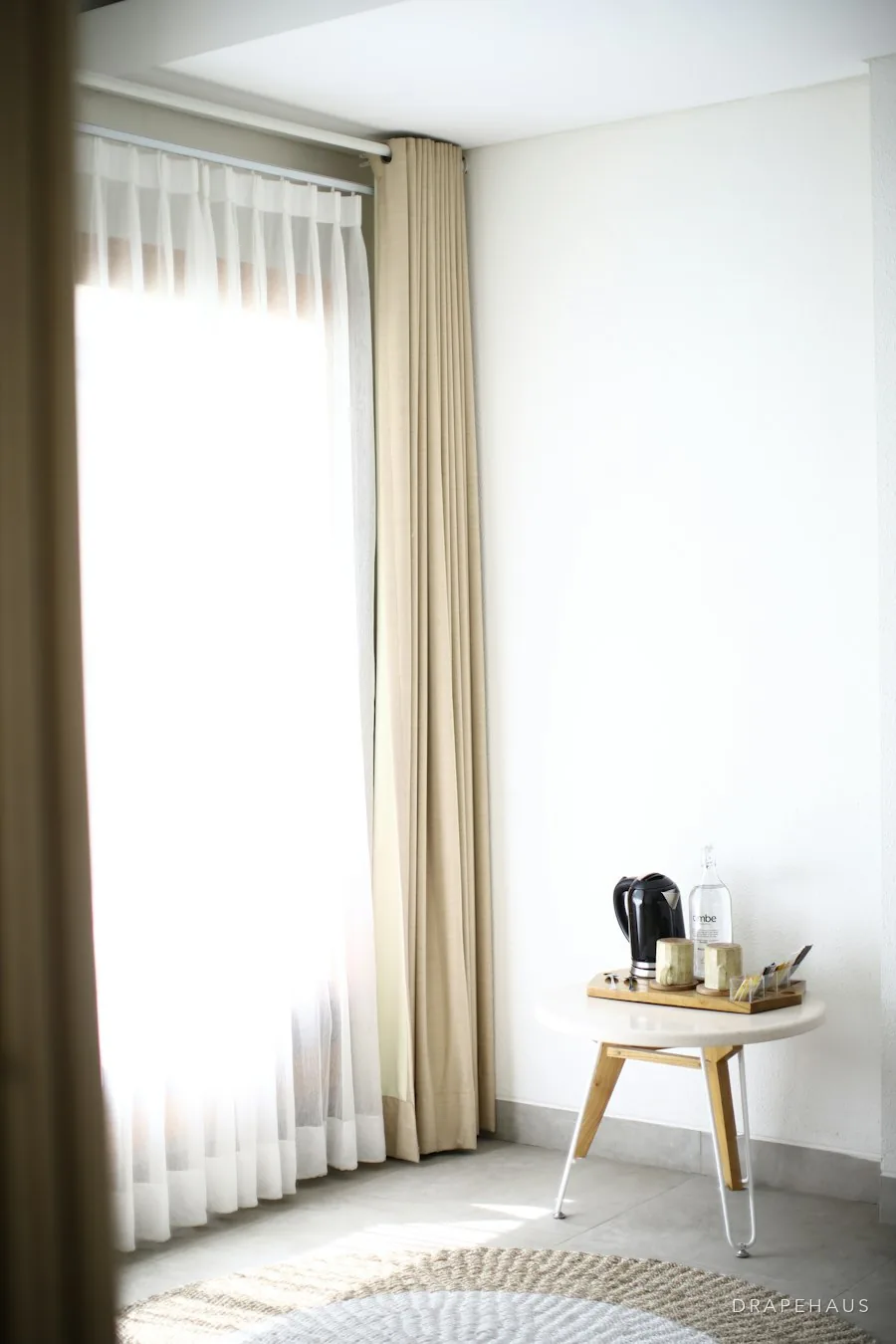
The economics are simple and unforgiving. Anything that needs the owner's attention will not get it, because the owner lives in another city or overseas. Anything that cannot be replaced from stock takes the flat off the market while it is remade. Anything a tenant can break, a tenant will break.
The right answer is nearly always neutral, durable, standardised and inexpensive to replace — and then slightly better quality than instinct suggests, because the labour of replacing something is the expensive part, not the fabric.
The most useful mental shift in rental work is to stop thinking about the lifetime of a curtain and start thinking about the cost and speed of replacing one. A bespoke lined curtain that lasts eight years is worse than a standard-size roller that lasts four, if the roller can be swapped in twenty minutes from stock and the curtain takes three weeks to remake.
That pushes strongly towards standard sizes, standard colours and common systems. If four flats in a building use the same spec, a manager can hold two spares in a cupboard and fix anything immediately.
It also pushes away from anything proprietary. A track system only one supplier stocks is a liability the day that supplier changes their range.
Cords and chains fail first, usually from being yanked rather than pulled. Cordless or wand operation removes the most common failure entirely and costs very little more.
Leading edges and hems go next, from handling and from being caught in doors and under furniture. A hem that sits a centimetre clear of the floor rather than pooling on it avoids a surprising amount of damage.
Fixings loosen over time from repeated operation, particularly on a track carrying a heavy curtain. Over-bracketing at installation costs far less than a call-out in eighteen months.
Stains on light fabric are inevitable. This is the strongest argument for mid-tone, slightly textured fabric over pale flat colours — it hides normal life without looking dirty.
Rather see it in your own room?
We bring samples to the house, measure every window, and specify for the light and exposure you actually have.
More on this — tap a heading to read
An unfurnished long let usually needs only basic privacy and light control, and over-specifying is wasted money because the tenant will layer their own things over it anyway.
A furnished long let needs treatments good enough to be part of the offer, because the flat is competing on how it photographs and how it feels on a viewing.
A short-term let is effectively a homestay and should be specified as one — genuine blackout, contract-grade durability, cordless operation and standardisation across rooms. The wear rate is many times higher than a long let and the review consequences of getting light control wrong are immediate.
Deciding which of the three the flat actually is, before specifying, prevents most of the money wasted in this category.
Many investment owners want to specify from photographs sent by a manager, and for a straightforward blind that can occasionally work. More often the photographs miss what matters: whether the wall above the window is concrete or a beam with a false ceiling, how much space there is to stack a curtain, or whether the balcony door handle fouls a blind. We measure on site and record those details once, so every later order can be placed remotely.
The survey is also a condition check. Existing fixings that have loosened, stains on the sill from driven rain, mould behind a previous tenant's curtains and chains snapped and knotted back together all show how the flat is really used. That history is the best guide to what will fail next. It also shows which windows tenants actually use, and which they ignore.
We finish by photographing each window with its measurements and specification, so the owner has a visual record to hand to any manager or future supplier. For someone who visits once a year, that record does more to keep the flat lettable than any individual product choice. It also means a new manager or supplier can pick up the flat without starting again. Keep a copy in the flat itself, in a drawer the manager knows about.
Letting a flat to tourists is not the same as letting it to a tenant. Under Goa's tourist trade legislation, anyone renting accommodation to tourists must register with the Department of Tourism before operating, and rented apartments are generally treated as a category of their own. The number of registered establishments, homestays included, has grown sharply in recent years, and enforcement has followed. Check the current rules and take advice.
Once a flat is a tourist let, soft furnishings start to look like hospitality furnishings. Insurers and some platforms ask about fire performance, and it is sensible to specify curtains and linings in inherently flame-retardant polyester, tested to a recognised standard such as IS 15741 or BS 5867-2. It costs little extra at the outset and avoids refitting later. Keep the certificates with the registration documents.
Registration also brings the flat into direct comparison with hotels in guests' minds. Genuine blackout, reliable operation and clean, fresh fabric are what separate a good review from a disappointed one, and window treatments are one of the few parts of the flat an owner can control fully. A guest who slept well rarely mentions the curtains; a guest woken at dawn nearly always does. That asymmetry is why blackout in a short let should be treated as essential rather than optional.
Polyester and polyester blends are the default for rental curtains and blind fabrics. They hold their size in humidity, wash easily, dry fast and resist the mildew that grows on cotton in a flat left closed for weeks. A textured weave in a mid-tone gives the look of a natural fabric without the care. It also photographs well for listings.
For blinds, standard roller systems with aluminium tubes and brackets, cordless springs or wands, and fabrics from widely stocked ranges give the best balance of durability and replaceability. Blackout rollers belong in every bedroom of a short let; screen or light-filtering fabrics suit living rooms where some view is wanted. Choosing from one range across the flat keeps spares simple.
Hardware should be chosen for the building as well as the tenant. A flat in a coastal block needs powder-coated or anodised aluminium and stainless fixings, because mild steel brackets rust quickly in salt-laden air and leave stains that are hard to remove before the next viewing. Specifying the right finish at the start is far easier than cleaning rust off fresh paint between tenancies, and it removes one more reason for a viewing to go badly.
Short lets in Goa run hardest from November to May, and many flats stand empty or lightly used through the monsoon. That quiet period, from early June to mid-October, is when to replace worn blinds, reorder curtains and change specifications, because nothing is lost in bookings while the work is done. Orders placed then also arrive before the pre-season rush.
An empty flat in the monsoon needs one simple instruction for the manager: leave blinds raised and curtains open or tied back, and air the flat whenever someone visits. Humidity in those months is far above the level at which mould grows, and a blackout blind left down against damp glass for three months often comes back spotted along its lower edge.
September is the time for the pre-season check: operate every blind, wash or replace curtains, and photograph the flat for its listing once the windows are dressed. Long-let changeovers follow a different rhythm, but the principle is the same — inspect and fix between occupants, never during a tenancy. A short checklist for the manager at each changeover catches small failures before they become a complaint or a deposit dispute.
Diagnosis
WhyBespoke sizes and discontinued fabric mean every repair is a remake with a full lead time.
FixStandardise sizes, colours and systems across the portfolio and hold spares. Replacement becomes a swap.
WhyChains and cords are the weakest part of the mechanism and take the most abuse from people unfamiliar with them.
FixSpecify cordless or wand-operated units. The premium is small and the failure mode disappears.
WhyFlat pale fabric shows every mark, and normal tenant life produces plenty.
FixMid-tone, lightly textured fabric hides ordinary wear without reading as dirty, and photographs just as well.
WhyNo specification record, and the owner is not local enough to look.
FixKeep a written schedule per flat — sizes, fabric, system, supplier — so a manager can order a replacement without a site visit.
WhyBlackout blinds were left down against damp glass in a closed flat, with humidity far above the mould threshold for months.
FixLeave blinds raised and curtains tied back when the flat closes, air it on every visit, and wash or replace affected fabric in September.
WhyNobody could tell the tenant what was installed or where to get a replacement, so they bought whatever fitted.
FixInclude the specification schedule in the tenancy pack, and make clear that replacements go through the manager from the standard range.
WhyThere was no dated record of the curtains' condition at check-in, so fair wear and tenant damage cannot be separated.
FixPhotograph every window treatment at check-in and check-out, and note its age in the inventory so normal wear is judged honestly.
Checklist
Decide first whether this is a long let, furnished let or short let
Standardise sizes, colours and systems across every unit you own
Specify cordless operation everywhere
Choose mid-tone textured fabric over pale flat colours
Keep a written specification schedule per flat
Hold spares if you own more than two units in a building
Register a short let with the Department of Tourism before taking guests
Use flame-retardant fabric and linings if the flat is let to tourists
Tell the manager to leave blinds raised and air the flat through the monsoon
Photograph every window treatment at check-in and check-out
FAQ
Standard-size, cordless roller or Roman blinds in mid-tone textured fabric, using a widely available system. The priority is speed and cost of replacement rather than lifespan — a blind that can be swapped from stock in twenty minutes beats a bespoke curtain that takes three weeks to remake.
Blinds, in most cases. They use less fabric, resist handling damage better, come in standard sizes that can be stocked, and do not have a leading edge for tenants to grab. Curtains make sense in a furnished let where the flat competes on how it presents.
Standardise across units and keep a written specification schedule per flat so a local manager can order a replacement without you being involved. Hold spares if you own several units in one building — most failures then become a same-day fix.
Yes. A short let is effectively a guesthouse — wear rates are many times a long let, and a guest who cannot sleep past sunrise writes a review that costs more than the windows did. Specify genuine blackout and contract-grade durability there.
If you let it to tourists, generally yes. Goa's tourist trade legislation requires anyone renting accommodation to tourists to register with the Department of Tourism before operating, and rented apartments fall within its scope. Rules and categories change, so check the current notification and take legal advice before listing the flat.
Leave them raised and tie curtains back so air can reach the glass and walls. A blind left down against damp glass for months usually comes back with mould along its lower edge. Ask the manager to open windows and run fans on each visit, and schedule a wash or replacement for September.
Photograph every window treatment at check-in and check-out, and record its age in the inventory. Curtains and blinds wear with normal use, and a dated record lets you separate fair wear from genuine damage. Including the specification schedule in the tenancy pack also stops tenants fitting non-standard replacements.
Usually not in a long let, where they add another thing for tenants to break and for an absent owner to repair. In a high-end short let with tall or hard-to-reach windows they can be justified, provided the system has local service and spare remotes are kept with the manager.
Keep reading
