 Drapehaus
Drapehaus
Preparing the room
Drapehaus
Preparing the room
Season
For anyone letting property in Goa, October and November are the months that determine how the season goes. The building has come through the monsoon, bookings are starting, and there is a narrow window to fix everything before the first guests arrive.
By the Drapehaus studio · 19 September 2026 · How we write
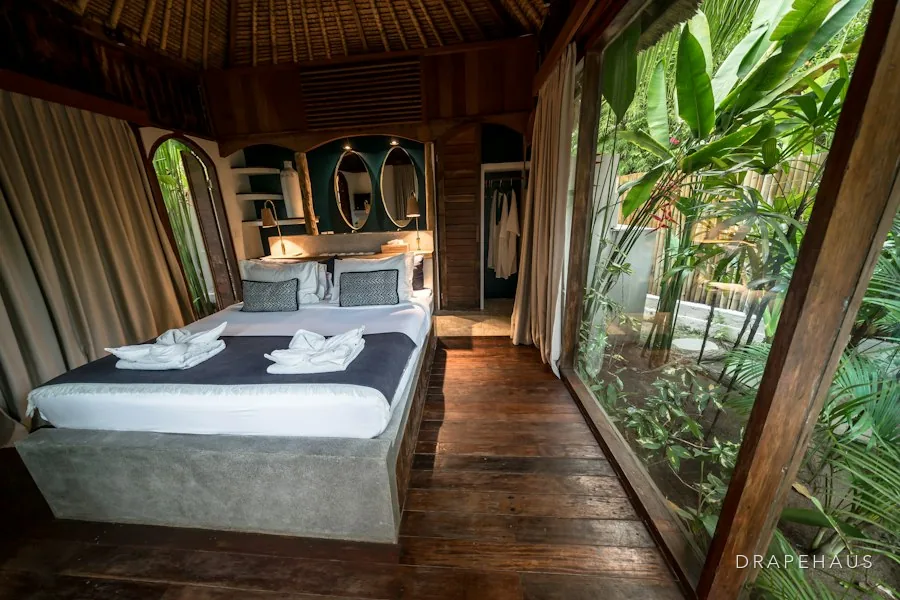
The thing worth understanding is which problems generate reviews. Guests do not review curtains. They review not being able to sleep, rooms being too hot, and things being broken — and window treatments are implicated in all three.
The single highest-value inspection is to stand in each guest bedroom at first light with the curtains closed. What you are looking for is not the fabric but the light path — around the edges, over the top, and through the gap where two curtains meet.
A guest arriving at two in the morning and being woken at six-thirty by a bright rectangle outlining the window will mention it, and light control is one of the few things a review will name specifically. It is also comparatively simple to fix, which makes the return on solving it unusually good.
Doing this in October, before bookings begin, means it can actually be fixed. Doing it in January means living with it.
Operate every mechanism through its full travel. Anything stiff after the monsoon will fail in season, and mid-season failures are expensive in both money and reviews.
Check every fixing. Humidity and corrosion over four months loosen things, and a bracket that is marginal in October is a failure in January with a guest in the room.
Look at leading edges and hems honestly. If they were grubby at the end of last season they will look worse in photographs this one, and listing photographs are what drive the bookings in the first place.
Replace rather than repair anything you are unsure about. The cost difference is small next to a room out of service in February.
Rather see it in your own room?
We bring samples to the house, measure every window, and specify for the light and exposure you actually have.
More on this — tap a heading to read
The first fortnight of October is for opening and drying. The monsoon's normal withdrawal date is mid-October, humidity is still high, and nothing should be judged or washed in bulk until the building has had several days of air. Use this time to open every room, run fans and note anything that smells or shows marks.
The second half of October is for inspection and decisions: the sunrise test in every bedroom, mechanisms cycled, fixings checked, fabric assessed. Anything that needs replacing should be ordered by the end of the month, because workshops across the state are at their busiest and lead times are at their longest.
November is for installation, washing, final cleaning and photographs. Aim to have everything finished a week before the first booking rather than the night before, because the one thing that always goes wrong — a short fabric delivery, a bracket into a hollow wall — needs somewhere to go. It also gives time to photograph rooms in good light for the listing.
A let room is used by people who do not know how anything works and have no reason to be careful. That changes what good specification looks like. Wands are more robust than cords, simple mechanisms outlast clever ones, and a curtain that runs smoothly on a good track is handled less roughly than one that sticks.
For upholstery and heavily handled fabric, abrasion resistance is worth checking. Under the Martindale test, 20,000 rubs is general domestic, 25,000 heavy domestic and 30,000 or more general contract. Seating in a busy guest lounge wants the upper end; a bedroom armchair can sit lower. The rating should be on the fabric's specification sheet; if it is not, ask.
Washability matters more than it does at home. Covers that zip off, sheers that go in a machine and linings that tolerate regular laundering keep a room fresh between guests without calling in specialist cleaners. Colour-fast, solution-dyed fabric is the calm choice for anything that will see both sun and frequent washing.
Anyone letting a hotel, homestay or rented villa to tourists in Goa is required to register with the Department of Tourism under the Goa Registration of Tourist Trade Act before operating. Requirements can change and depend on the category of property, so check the current rules and take advice rather than relying on what applied last year.
Separately from any formal requirement, fabric in let rooms is increasingly specified with fire performance in mind. In India, IS 15741 covers resistance to ignition of curtains and drapes, and hospitality buyers commonly ask for fabrics tested to BS 5867-2 Type B or NFPA 701. Many polyester fabrics are available inherently flame-retardant.
Inherently flame-retardant fibres keep their performance through washing, whereas fabrics treated after weaving can lose it over repeated laundering. For a let room washed several times a season, that difference is worth asking about when choosing fabric. Keep the test certificates with the property's records, because an inspector or insurer may ask for them. They also make it simple to order a matching replacement later, since the same fabric can be specified again with the same performance.
The right approach depends on how the property is run. In a homestay, where the family lives on site, small problems can be dealt with the same day. The priority there is fabric and mechanisms that are easy to maintain, and a small stock of parts the owner can fit.
A villa let as a whole, often with no one on site, needs robustness above everything. A failed blind in a villa can go unreported until the guest leaves a review. Simple, well-fixed hardware, blackout that does not depend on guests arranging curtains carefully and a caretaker who checks every mechanism at each changeover all matter more here.
Rental flats managed as a group gain most from standardisation. The same blind sizes, fabrics and tracks across units mean one spare covers several, one fitter knows every flat, and a replacement ordered in October matches what is already there. It also makes each flat look consistent in listing photographs, which helps a small portfolio read as one well-run business rather than a collection of different flats.
After light and broken fittings, heat is the complaint most often traceable to windows. A west-facing room with clear glass and a thin curtain can be uncomfortable from mid-afternoon, and the guest's response is to run the air conditioner at its coldest setting for hours. By the time the room cools, the guest has had an uncomfortable afternoon and the electricity meter has been running hard.
That has a cost for the owner too. Homestays and home-run tourism businesses are billed on a commercial electricity tariff in Goa, and a large villa's air-conditioning load tends to sit in the highest tariff slab. Shading that keeps the sun off the glass reduces that load for every guest, every afternoon.
October is the moment to decide. Pale-backed curtains closed in the afternoon, exterior blinds or awnings where the building allows, and sheers to cut glare in rooms used during the day can all be fitted before bookings begin. The pages on heat gain and west-facing glare go into the options in more depth.
Diagnosis
WhyLight leaking around curtain edges rather than through the fabric. Opaque fabric does not make a dark room.
FixBlackout roller with side channels inside the reveal, or curtains extended well past the opening with returns to the wall.
WhyStiff after the monsoon and not serviced, then subjected to peak-season handling.
FixCycle everything fully in October. Replace anything stiff rather than hoping it loosens up.
WhyFaded, grubby leading edges and hems that were already worn at the end of last season.
FixReplace before photographing. Listing images drive bookings, so this is marketing spend rather than maintenance.
WhyA marginal component was repaired rather than replaced in October.
FixReplace anything doubtful before the season. The cost gap is tiny next to lost peak-season nights.
WhyCord-operated blinds handled by people unfamiliar with them, often pulled at an angle.
FixSpecify wand or chain operation for let rooms, with simple mechanisms that tolerate rough handling.
WhyA topical treatment applied after weaving, washed out over repeated laundering.
FixChoose inherently flame-retardant fabric for let rooms that are washed regularly, and keep the test paperwork.
WhyNo margin in the timeline, so a single short delivery or hollow wall pushed installation to the last day.
FixPlan to finish a week before the first guest arrives, and order replacements by the end of October.
Checklist
Stand in every bedroom at sunrise with curtains closed
Fix light leaks at edges, top and centre gap
Cycle every mechanism through full travel
Check and tighten all fixings after the monsoon
Replace worn leading edges before photographing
Replace rather than repair anything marginal
Order replacements by the end of October, while lead times allow
Aim to finish a week before the first booking, not the night before
Use wands or chains, not cords, in rooms guests operate
Check tourism registration and fire requirements for your category
From the Journal
All articlesFAQ
Not being able to sleep because the room is too bright, rooms being too hot, and things being broken. Window treatments are implicated in all three, and light control in particular gets named specifically in reviews, which makes it unusually worth fixing.
October and early November, after the monsoon and before bookings start. It is the only window where rooms can be taken out of service without losing income, and anything not fixed then has to be lived with until March.
Stand in it at actual sunrise with the curtains closed and look for the light path — around the edges, over the top, and at the centre gap. That is what a guest sees at six-thirty in the morning, and it is quite different from how the room looks at noon.
Replace anything you are unsure about. The cost difference between a repair and a replacement is small compared with a room out of service in February, and listing photographs of tired fabric cost bookings before the season even starts.
Requirements depend on the property and can change, so check the current rules for your category and take advice. In practice, many let properties specify fabric tested to IS 15741, BS 5867-2 or NFPA 701. For rooms that are washed often, inherently flame-retardant fabric keeps its performance better than treated fabric.
For heavily used upholstery, look at the Martindale rating: 25,000 rubs is heavy domestic and 30,000 or more is general contract, which suits a busy guest lounge. For curtains, washability and colour-fastness matter more than abrasion. Solution-dyed or good polyester fabrics cope well with sun and frequent laundering.
Open and air the property in early October, inspect and decide in the second half of the month, and order replacements by the end of October. Use November for installation, cleaning and photographs, finishing a week before the first guest. That margin absorbs the delivery or wall that always causes a delay.
They can reduce air-conditioning load, particularly in west-facing rooms. Shading that keeps sun off the glass — exterior blinds or awnings where possible, pale-backed curtains closed in the afternoon otherwise — means guests run the air conditioning less hard. Much of a large villa's cooling load falls in the highest tariff slab.
Yes. Under the Goa Registration of Tourist Trade Act, anyone running a hotel, homestay or rented villa or bungalow for tourists must register with the Department of Tourism before operating. The detail depends on the category of property and can change, so check the current requirements and take advice before the season rather than during it.
Robustness. A problem in an unattended villa may go unreported until the guest writes a review, so simple, well-fixed hardware and blackout that works without careful arranging matter more than anything decorative. Ask the caretaker to cycle every blind and curtain at each changeover and report anything stiff straight away.
Keep reading