 Drape Haus
Good sofa cum bed design starts with the mechanism, not the upholstery. The mechanism decides how the bed opens, what you actually sleep on, how much floor the open bed needs and how often it can be opened without wearing out. The fabric, the arms and the colour come after.
There are four mechanisms you will meet in Goa: the pull-out, where a separate bed slides out from under the seat; the click-clack, where the seat and back hinge flat; the fold-out, where a folded metal frame and thin mattress unfold from inside the sofa; and the futon, where a thick flexible mattress lies over a frame that converts from seat to bed. Each suits a different room and a different pattern of use.
Below, each one is explained in plain terms and then compared on sleeping comfort, floor space in a small flat, daily versus occasional use, and how it copes with a guest room that may be shut for months in the humidity.
How each sofa cum bed mechanism opens
Pull-out (trundle). The sofa is an ordinary sofa on top. Beneath the seat sits a separate platform carrying its own mattress, which rolls forward on castors and either stays low as a trundle or lifts to sit level with the seat. Because the sleeping mattress never folds, it can be a proper mattress. It needs a smooth floor and clear space in front.
Click-clack. The seat and backrest are a single upholstered unit hinged in the middle. You lift the front of the seat until the mechanism clicks, then lower it, and the back drops flat to meet the seat. The sofa itself becomes the bed. It is quick, takes little extra floor and has few parts, but you sleep on the seat and back foam, with a join across the middle. Our sofa cum bed page describes a closely related type as a fold-down back.
Fold-out. The classic hotel-style sofa bed. The seat cushions come off, and a hinged steel frame with a thin mattress unfolds forward in two or three sections, standing on its own legs at roughly normal bed height. It gives the most conventional-feeling bed but has the most moving parts, and the mattress must be thin enough to fold away inside the sofa.
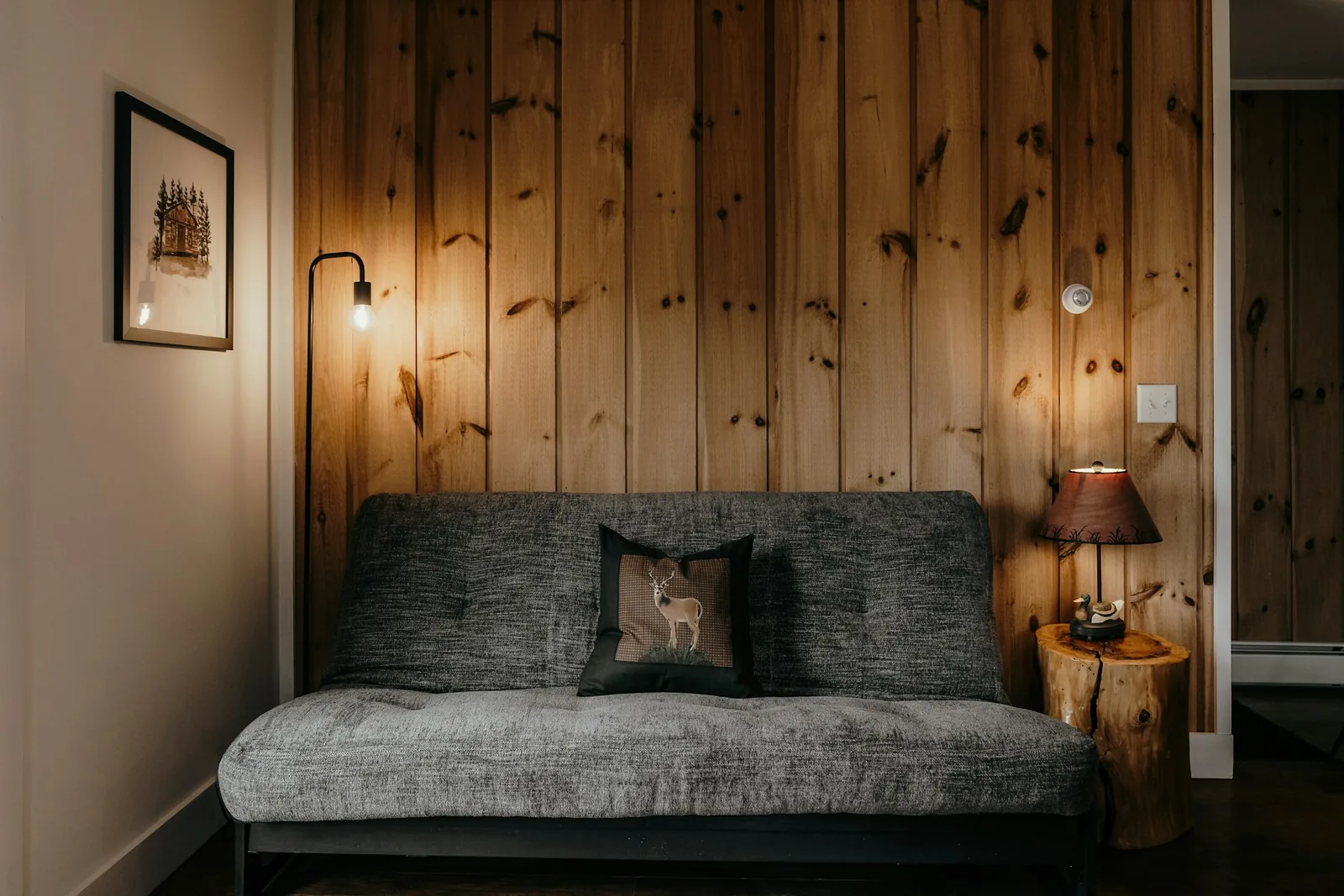
Futon. A frame, usually timber or metal, carries a thick, flexible mattress that serves as both seat and bed. You slide the seat forward or tip the back down, and the mattress lies flat. There is no separate bed hidden inside. The mattress is the whole comfort, so its quality and firmness decide everything.
| Mechanism | How it opens | You sleep on | Opening effort | Best suited to |
|---|---|---|---|---|
| Pull-out / trundle | Platform rolls out from under the seat | A separate, non-folding mattress | Light, but needs clear floor | Frequent guests, good sleep |
| Click-clack | Seat lifts, clicks, back drops flat | The sofa's own seat and back | Very quick | Daily use, small rooms |
| Fold-out | Cushions off, folded frame unfolds | A thin folding mattress on a steel frame | Most steps, heaviest | Occasional guests at normal bed height |
| Futon | Frame converts; mattress lies flat | The thick futon mattress | Simple | Studies, studios, relaxed rooms |
Sleeping comfort and mattress thickness compared
Comfort tracks one thing above all: whether the mattress has to fold. A pull-out's mattress lies flat in its drawer, so it can be as thick and supportive as the drawer depth allows. A futon mattress is thick by design but has to bend at the hinge, so it is usually a firmer, layered construction that some sleepers love and others find hard. A fold-out mattress has to fold into the body of the sofa with its frame, which limits its thickness more than any other type; a firm, dense foam makes the best of that limit.
Click-clack beds are a special case. There is no mattress as such; you sleep on the seat and back upholstery laid flat. That makes the foam specification critical. Firm, even foam across both halves gives a flat bed; a soft seat with a softer back gives a dip at the hinge line. Many owners add a folding topper, which works well if there is somewhere to store it.
Sleep height is the last comfort question. Fold-out beds sit near normal bed height; click-clack and futon beds sit at sofa-seat height; a trundle that stays low can be uncomfortably close to the floor for older guests, so choose a pop-up version if parents or grandparents will use it.
If good sleep matters most, choose a mechanism that never folds the mattress. That means a pull-out, or a daybed.
Planning something like this?
We visit homes across North and South Goa, measure on site, and bring samples to see in your own light.
Floor space when the bed is open in a small Goan flat
The closed sofa is the easy measurement. The one that catches people out is the open bed plus the space to walk round it, reach a light switch, open the wardrobe and get to the door. In a one-bedroom flat in Margao or Porvorim, where the living room doubles as the guest room, this decides the mechanism before anything else.
Click-clack and futon types grow least when opened: the bed extends forward by roughly the depth of the backrest. Pull-out and fold-out types grow most, because a full second surface extends in front of the sofa. A fold-out also needs space for the seat cushions to go somewhere while the bed is open.
The simplest test costs nothing. Ask for the open dimensions, then mark them on your floor with masking tape and live with the outline for an evening. Move the coffee table out of the way and see where it would actually go. Check that a door, a cupboard or a split AC indoor unit's airflow is not blocked by the head of the bed. If the outline makes the room unusable, choose a smaller-footprint mechanism or a narrower bed. Our guide to furnishing a flat has more on planning tight living rooms.
Daily use versus occasional guests at feasts and holidays
A sofa bed opened every night is a different product from one opened four times a year. For a studio or a one-room home where someone sleeps on it nightly, choose a mechanism designed for repeated cycling, with the fewest steps: a click-clack, a futon or a well-built pull-out. A mechanism that takes cushions off and unfolds a frame becomes a chore within a week, and a chore gets skipped.
Many Goan families need the opposite: a sofa that is simply a sofa for most of the year, and a bed when relatives arrive for Christmas, a wedding or Ganesh Chaturthi, or when children come home from abroad. Here the fold-out's occasional inconvenience matters less, and its normal-height bed is a kindness to visiting elders. A pull-out also suits this pattern well because the seat stays a proper sofa.
Homestays sit between the two. A sofa bed in a family suite may be opened by a different guest every few days, often without instructions. Simple, sturdy mechanisms that cannot be forced the wrong way serve best, with covers that come off between stays. Our homestay guide covers rooms planned for turnover.
Frames and fabrics for a guest room that stays shut
A guest room is often the least-used room in a Goan house, and that makes its sofa bed vulnerable. The India Meteorological Department records monsoon morning humidity of 87–91% across the state. The Canadian Conservation Institute's figures show how quickly that turns into mould: visible growth in about ten days at 80% relative humidity, and about two days at 90–100%. A mattress folded inside a sofa, in a shut room, is close to the worst case.
Three choices reduce the risk. First, a fabric that takes up little moisture, such as a polyester or polyester-led blend, rather than pure cotton or linen; our guide to polyester and blends explains why. Second, covers that come off, so a musty cover can be washed rather than tolerated; see our sofa covers. Third, a mechanism and frame chosen for the climate: coated steel rather than bare, kiln-dried and treated timber, and a mattress with a breathable, removable protector.
Habits matter as much as materials. Open the bed fully once or twice a month through the rains, even with no guest due, and run a fan or a dehumidifier in the room. The US Environmental Protection Agency advises keeping indoor humidity below 60% and drying anything damp within 24 to 48 hours, after which mould usually takes hold. A guest who spills water on the mattress should not be the reason it comes out grey in October. Our guide to humidity in Goa covers dehumidifier sizing.
Which mechanism suits a guest room, and which a living room
In a dedicated guest room that sits empty between visits, sleep quality and humidity resistance matter more than daily convenience. A pull-out, or a daybed with drawers, gives the best bed; a fold-out works if the room is large enough. In a living room that becomes a bedroom, the seat will be sat on every day, so the sofa has to be comfortable first: a pull-out keeps a proper seat, and a click-clack keeps the footprint small.
A study or home office often suits a futon or click-clack: firm enough to sit and read on, quick to open for a single guest. A children's room suits a trundle, so a friend can sleep over at floor level without anything to fold. And on a covered verandah, a daybed is the traditional answer, provided its mattress comes inside for the monsoon. When you know which room and which pattern of use, our sofa cum beds are built around the mechanism that fits, with the open bed planned on your floor plan.
- Guest room, occasional use: pull-out or fold-out; best bed, opened rarely
- Living room in a 1BHK: pull-out or click-clack; comfortable seat, small footprint
- Study or home office: futon or click-clack; firm seat, quick to open
- Children's room: trundle; no folding parts
- Homestay family suite: pull-out with removable covers; simple to operate