 Drape Haus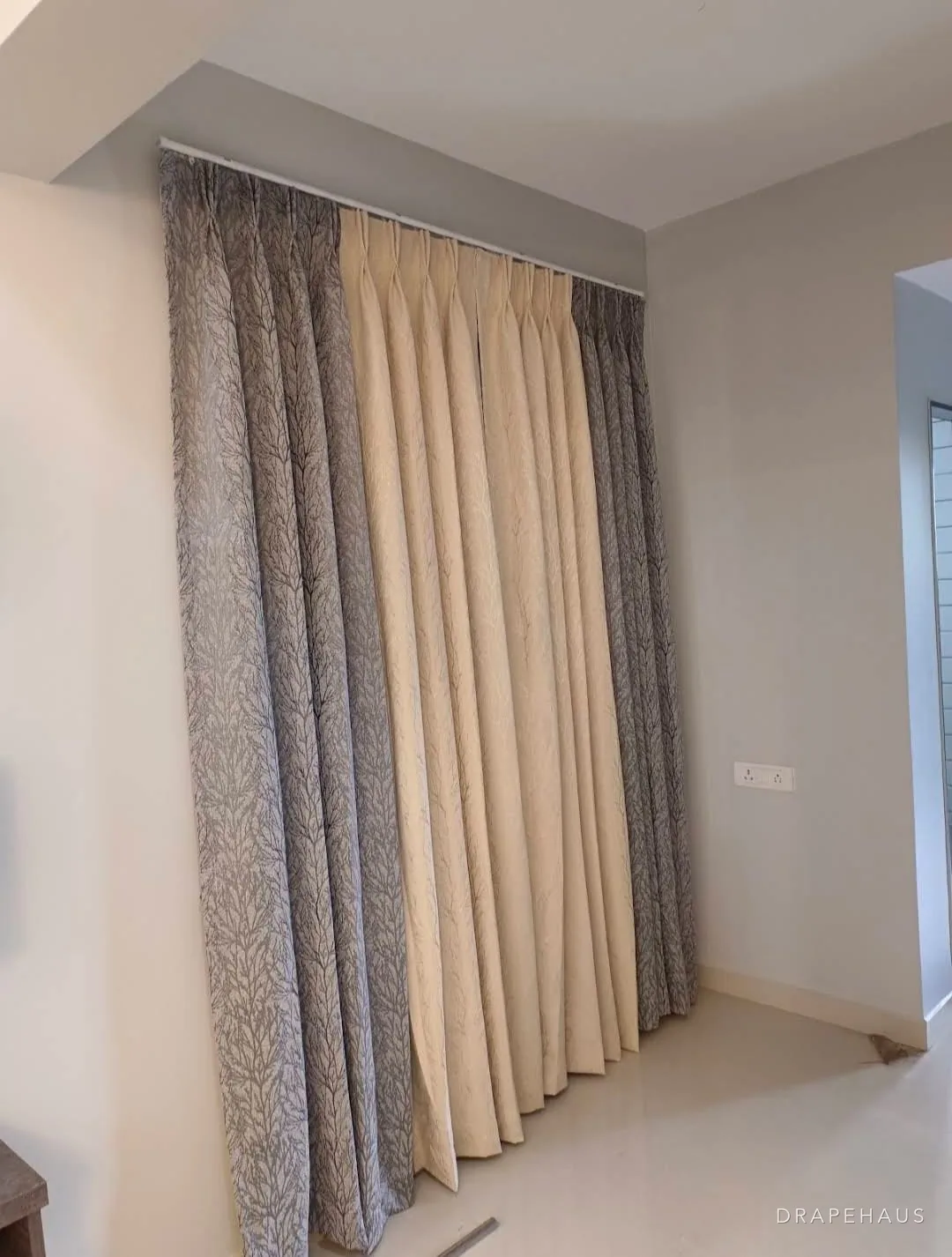
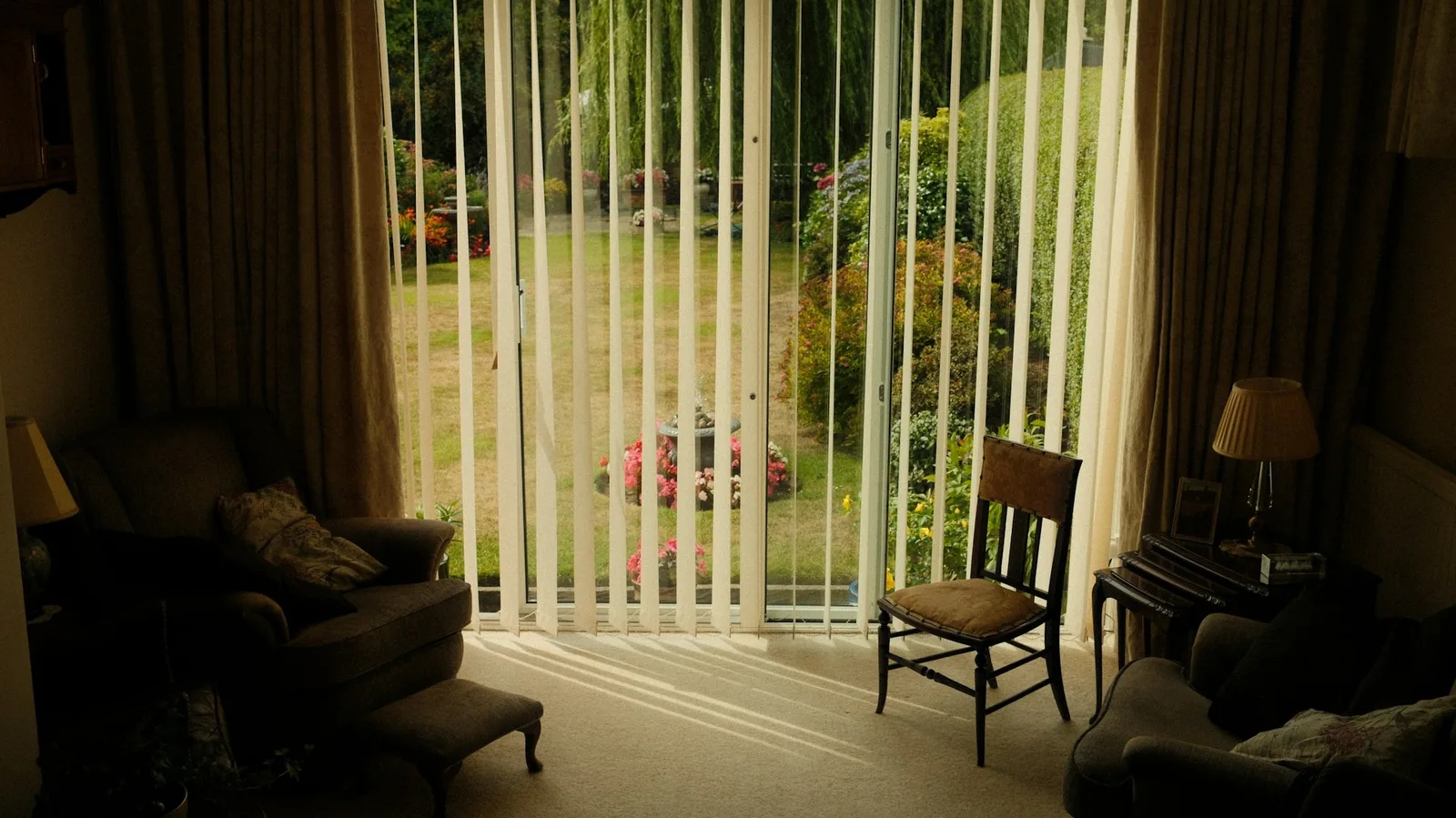
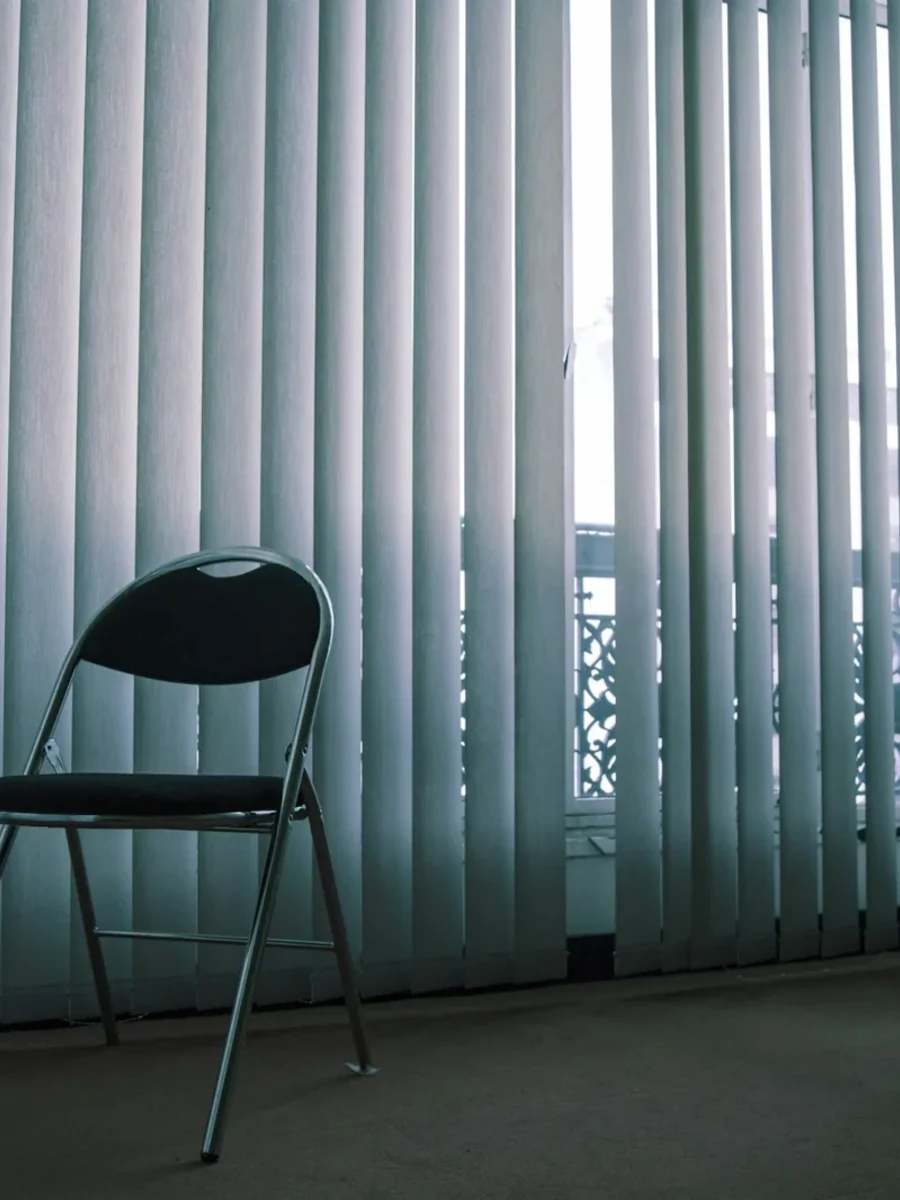
Vertical blinds have clear pros and cons. In their favour: they draw sideways like a curtain, so a wide sliding door stays usable without lifting anything heavy; the vanes rotate to control light and view; they cover very wide glazing in one run; and a damaged vane can be replaced on its own. Against them: vanes swing and clatter in a breeze from an open door, the stack takes a slice of the glass, they never give real darkness or a soft look, and in most homes they read as an office fitting.
So the honest verdict is narrow. Vertical blinds still make sense on very wide sliding doors and picture windows, especially in apartments and villas where a balcony door is used all day, and in offices, clinics and conference rooms with large glazing. In bedrooms and most living rooms, curtains, rollers or zebras do the job better and look warmer.
This article explains how vertical blinds work, where they still win, where they disappoint, fabric versus PVC vanes in a humid room, replacing individual vanes, and the alternatives for the same wide openings. You can rotate and draw vanes in our vertical blinds simulator before deciding.
How vertical blinds work
A vertical blind is a head track with a row of carriers running along it, each holding one vane by a hook at the top. A US federal guide specification for window blinds describes the parts well. The carriers run on wheels and have an automatic latch, so a vane clips in and out without tools. Flexible spacer links join the carriers, and their length is related to the vane width so that the vanes are evenly spaced, overlap properly when closed and cover the full width of the opening. A shaft through the carriers turns every vane at once, through a nominal 180 degrees.
Two controls do the work. A bead chain or a wand tilts the vanes, from edge-on and open to flat and closed in either direction. A cord or the same wand draws the carriers along the track, so the vanes stack at one side or split to both. At the bottom, fabric vanes carry a weight in a pocket, and a light chain often links the weights so the vanes turn together and hang in line.
The specification asks for 90 mm vanes as the usual, more economical choice, with 50 mm vanes for smaller windows, and sets a minimum overlap between closed 90 mm vanes of 10 mm. Those numbers explain both the strength and the weakness of the design: many separate vanes are what let a vertical blind span a three-metre door, and the joins between them are what let light, and wind, through.
Where vertical blinds still win
The best case is a wide sliding door to a balcony or verandah, a common feature of newer Goan apartments and villas. A roller or Venetian of that width becomes heavy to raise and blocks the door when lowered, and a split set of rollers leaves joins across the glass. A vertical blind draws aside like a curtain, so you can walk through without touching it, and the vanes can be angled to cut glare off the sea or a neighbour's view while the door stays closed. The federal specification asks for sliding doors to draw one way, with the stack opposite the opening panel, which keeps the way out clear.
The second case is large glazing in offices, clinics, conference rooms and shopfronts. Long runs of vertical blinds are consistent, easy to operate from the side, and simple to maintain, which is why they remain standard in commercial interiors. Our office blinds page covers those settings.
The third is practical: vertical vanes collect less dust than horizontal slats, because there is no flat top surface for it to settle on, and individual vanes can be swapped when one is damaged, as explained further down. For a rental flat with a busy balcony door, that serviceability counts.
- Very wide sliding doors used throughout the day
- Picture windows wider than a single roller can manage
- Offices, clinics and conference rooms with long runs of glazing
- Rentals where damaged vanes need replacing individually
Planning something like this?
We visit homes across North and South Goa, measure on site, and bring samples to see in your own light.
Where they disappoint
Breeze is the first problem in a Goan house. When the sliding door is open, the sea wind or an afternoon gust blows straight into the bottom of the vanes. Weighted, chained fabric vanes swing and settle; lighter PVC vanes knock against each other and the glass. The fix is behavioural as much as technical: draw the blind fully into its stack when the door is open. A blind you have to manage every time the door opens is less appealing than it looked in the showroom.
The stack is the second. Drawn back, the vanes gather at one side, and that stack takes width. On a door with a fixed panel beside it, the stack can sit over the fixed glass; on a window with no wall beside it, it covers part of the view. People who live with vanes swinging in the doorway also notice that children and pets walk through them rather than round them, which tangles the bottom chain.
The third is the look. Vertical blinds read as functional rather than furnished, and in a living room with good furniture and a tiled floor they can make a home feel like an office. They also never give darkness: light passes at each overlap, round the ends and under the vanes. In bedrooms, blackout curtains or a roller do both jobs better. Finally, they rely on cords or chains, and RoSPA advises against any looped cord or chain blind in a child's bedroom; a wand-operated system avoids the issue.
If the door stays open most of the day in a sea breeze, plan to keep the vertical blind drawn back, or choose curtains.
Fabric or PVC vanes in a humid room
Fabric vanes are stiffened polyester, sometimes with a flame-retardant treatment. They look softer, hang with a little weight and absorb some sound. Their weakness is the same as any fabric in Goan monsoon air: dust and moisture together encourage mildew, especially on vanes left closed against a damp sliding door for weeks. The US Environmental Protection Agency's guidance is that moisture control is the key to mould control, with indoor humidity below 60 per cent and ideally 30 to 50; a closed balcony room in July is far above that.
PVC vanes are rigid, wipe clean and ignore humidity, which makes them practical for kitchens, utility areas and offices. Their weakness is sun. Research on PVC photodegradation explains that ultraviolet light drives hydrogen chloride out of the polymer and forms conjugated chains that show as discolouration, which is why the federal specification asks for vinyl louvres to be UV stable. On a west-facing door, poorly stabilised white PVC vanes turn cream, then yellow, then brittle. There are also hybrid vanes, PVC with a fabric insert, which the specification describes as groovers and which combine a wipeable frame with a softer face.
For a Goan home we usually suggest fabric vanes in polyester for living spaces with air conditioning or good airflow, and UV-stable PVC for kitchens, rentals and doors that take the full afternoon sun. Whatever the vane, ask for corrosion-resistant chains and carriers near the sea, because plated steel rusts and stains pale vanes.
Replacing a vane instead of the whole blind
This is one of the genuine strengths of the design. Because each vane hangs from its own carrier with an automatic latch, a creased, stained or sun-cracked vane can be unclipped and replaced without taking the blind down. The replacement must match the width exactly, so that it overlaps its neighbours as the spacer links expect, and it should match the material, colour and texture as closely as possible.
Old vanes fade, so a new one rarely matches perfectly. Put it at the end of the stack that sits over a wall or a fixed panel, and move good originals to the most visible positions. If many vanes are failing, or the carriers themselves are cracking and some vanes no longer turn with the rest, the headrail has reached the end of its life and a new blind is the better spend. Our step-by-step guide to vertical blind slats replacement covers measuring and fitting.
Alternatives for the same wide openings
If a vertical blind does not appeal, there are good alternatives for wide doors and windows, each with its own trade-offs. The table compares them. The right one depends on whether the door is open most of the day, whether you need darkness, and whether insects are a problem.
Curtains on a ceiling or wall track are the most common choice in Goan homes. They draw aside completely, soften a tiled room, can be lined for darkness, and move with the breeze rather than clattering in it. Our ripple-fold curtains hang in even waves on a ceiling curtain track and suit wide modern openings particularly well. A split set of roller or zebra blinds gives cleaner lines but must be raised to use the door.
Panel track blinds, wide flat fabric panels that slide past each other on a multi-channel track, look calmer than vanes but do not rotate. And for a door that is open all evening, the real need may be an insect screen rather than a blind: a pleated mosquito net in the opening, with curtains inside, is often the best combination. Our article on mosquito nets for sliding doors compares the screen types.
| Option | Strengths | Weaknesses |
|---|---|---|
| Vertical blind | Draws aside; rotating vanes for light; vanes replaceable | Clatters in a breeze; office look; never dark |
| Curtains on a track | Draws aside fully; soft; can be lined for darkness | Needs stack space; fabric to clean |
| Split roller or zebra blinds | Clean lines; good light control | Must be raised to use the door; joins across glass |
| Panel track blind | Calm, flat panels; draws aside | No tilt; panels stack in layers |
| Pleated insect net plus curtains | Door open without mosquitoes; soft inside layer | Two systems to plan and fit |
If you choose vertical blinds, get these details right
Fix them where the stack can go. The federal specification notes that vertical blinds are typically wall-mounted outside the opening and finished at the sill or the floor, and that an outside mount must overlap enough to control light and privacy. On a sliding door, put the stack over the fixed panel. Measure the floor at several points, because tiles are rarely level across a three-metre opening, and leave a clear gap so the vanes do not drag.
Choose controls for the household. A wand that tilts and draws with no loose cord suits family homes and rentals; the specification asks for controls that reach to within 1.5 metres of the floor. On wide blinds, intermediate brackets support the head track, and the specification calls for them above 1,575 mm in width, so check the fixing surface above the door, which in older houses may be a timber lintel or soft laterite.
Choose a colour that sits with the walls rather than contrasting with them, and a vane with a slight texture, which looks more domestic than a flat sheen. When you are ready, our vertical blinds page shows the fabrics and vanes we fit, and we will measure and advise on whether a vertical blind, curtains or a combination with a net suits your opening best.