 Drape Haus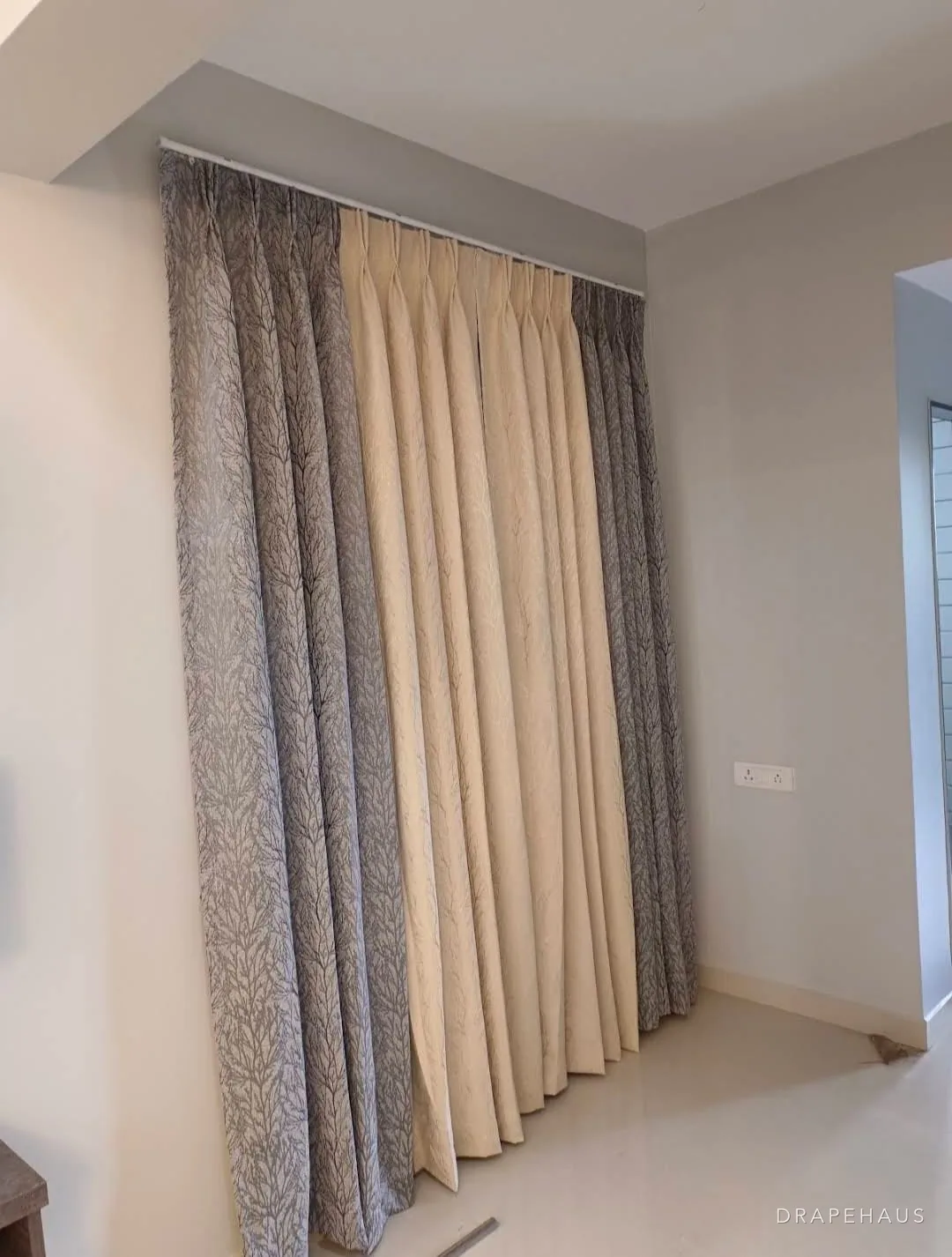
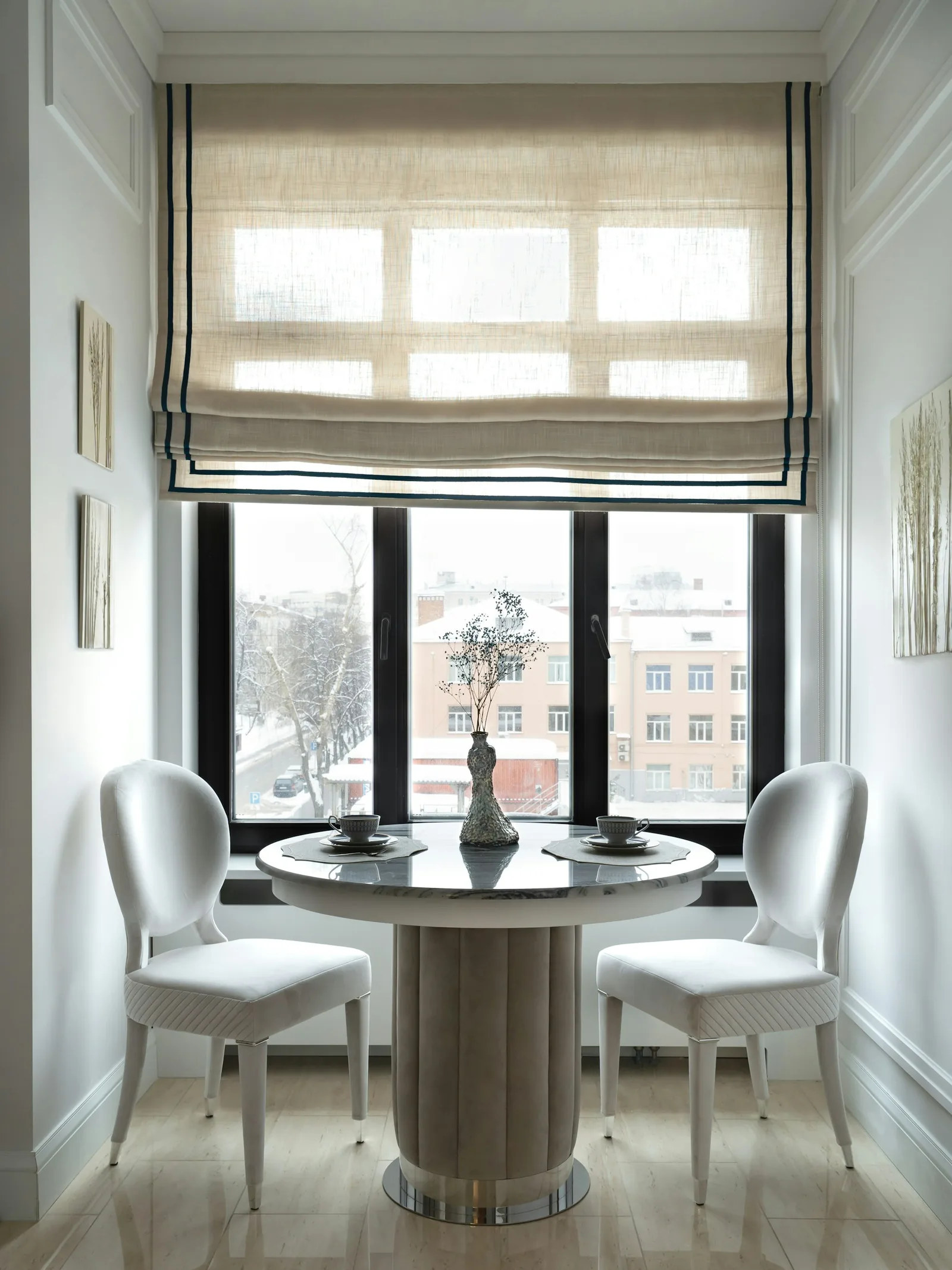
Curtains or blinds? In short: curtains are better at softening a room, framing a window, clearing the glass completely when open, and dressing tall, wide or arched openings. Blinds are better at precise light control, fitting tightly inside a recess, staying out of the way of counters, beds and desks, and surviving steam and splashes. In a Goan home, bedrooms and living rooms usually suit curtains, often with a blind as well; kitchens and bathrooms usually suit blinds.
Humidity tilts the choice in places. Fabric curtains take up moisture from the air, and Goa's monsoon air sits close to saturation for months. Blinds in PVC, aluminium or faux wood are not troubled by it, which is why they win in wet rooms and in houses closed for the season. But blinds give a room nothing of the softness, quiet and sense of finish that a pair of full-length curtains does.
Below is what each does best, a room-by-room verdict, the humidity and cleaning question, heat, what drives the cost of each, how they work together on one window, and what lasts in rentals. Our blinds simulator and curtain simulator let you compare the look on a drawn Goan window.
What curtains do best, and what blinds do best
The US Department of Energy's Energy Saver guidance draws the distinction by size: curtains are fabric coverings sized to fit the window, while drapes reach all the way to the floor. In everyday use, both are curtains: fabric hung from a track or pole, drawn sideways. A blind is a covering that raises, lowers or tilts within the window's own width: a roller, a Roman, a zebra, a venetian, a vertical or a pleated blind.
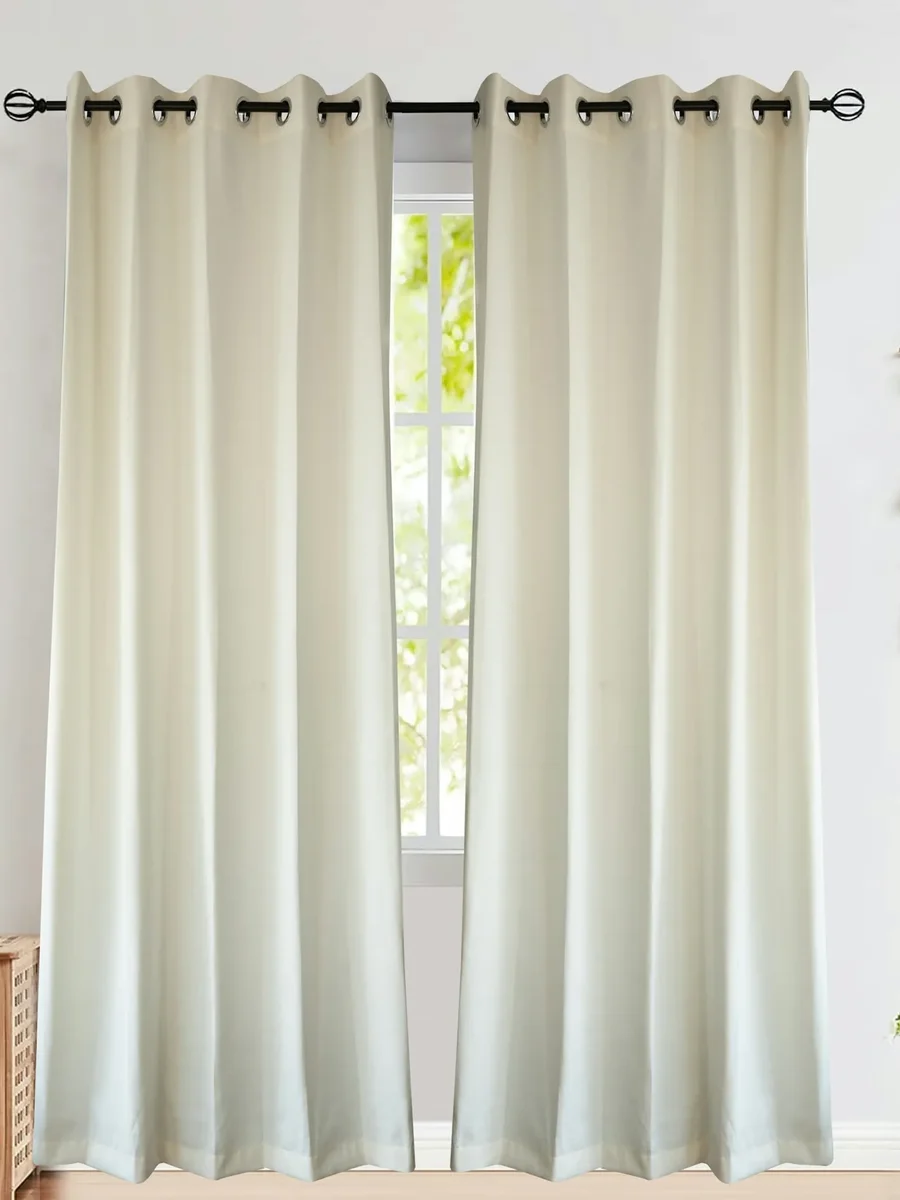
Curtains bring softness. Fabric absorbs sound and breaks up the hard surfaces of tile, stone and plaster, so a tiled Goan room with full-length curtains sounds as different as it looks. Drawn back to a stack beside the window, curtains leave the glass and the doorway entirely clear, which matters on a sliding door to a verandah. And they handle tall, wide, arched and double-height openings that are awkward for most blinds.
Blinds bring precision. A venetian or zebra blind can be set to exactly the light you want, angled away from a screen or a neighbour's window, without closing the room. A blind sits within the window's width, so it needs no wall space either side to stack, and it stays clear of a counter, a desk or a bed pushed under the window. University of Kentucky Extension guidance suggests weighing privacy, light control, energy efficiency and maintenance before choosing, and that is the useful frame: each room ranks those differently.
| Curtains | Blinds | |
|---|---|---|
| Light control | Open or closed, with sheers for soft light | Precise, especially slatted and zebra blinds |
| Look | Soft, full, frames the window | Tailored, minimal, sits within the window |
| Sound in a tiled room | Softens noticeably | Little effect |
| Space needed | Wall either side to stack | Within the window width or recess |
| Wet rooms | Poor near steam and splash | Good in PVC, aluminium and faux wood |
| Cleaning | Take down to wash or clean | Wipe or vacuum in place |
| Tall or wide openings | Very good | Limited by mechanism size |
Curtains or blinds, room by room
The table gives our usual verdict for each room in a Goan home. It is a starting point, not a rule; a north-facing bedroom in a quiet lane needs less than an east-facing one over a busy road. The bedroom is the most common question, and the honest answer is that a bedroom that faces the morning sun usually wants both: a blackout blind or curtain for darkness, and curtains for the look.
Verandahs and balconies are a special case. Indoor curtains and indoor blinds are both wrong for an open verandah exposed to driving monsoon rain. That space wants outdoor blinds or bamboo chiks, made to get wet and dry out again. Our outdoor blinds page covers what works there.
| Room | Verdict | Why |
|---|---|---|
| Bedroom | Both, or blackout curtains | Darkness at dawn and softness; a blind in the recess plus curtains outside works well |
| Living room | Curtains, often layered | Frames tall windows and sliding doors; sheers for breeze and glare |
| Kitchen | Blinds | Grease, steam and a counter under the window; PVC or aluminium wipe clean |
| Bathroom | Blinds | Steam and splash; choose moisture-tolerant materials |
| Study or home office | Blinds, or a sheer | Angle light off screens without darkening the room |
| Children's room | Either, cordless | Blackout for naps; wand, motor or hand-drawn, no loose cords |
| Verandah | Outdoor blinds or chiks | Rain and wind; indoor fabric and indoor blinds both suffer |
Planning something like this?
We visit homes across North and South Goa, measure on site, and bring samples to see in your own light.
Humidity and cleaning: fabric versus PVC, aluminium and faux wood
This is where Goa changes the answer. From June to September the morning air here sits at 87 to 91% relative humidity, by IMD's figures, well above the roughly 80% at which still air lets mould grow on cotton and linen, according to Smithsonian conservators. Polyester holds very little water by comparison. A fabric curtain in a closed, damp room is at risk; a polyester one much less so.
Blinds vary just as much by material. In the University of Kentucky Extension comparison of blind and shade types, moisture is listed as not a factor for vinyl, mini and aluminium blinds, and as something to consider for wood, fabric, vertical, cellular and woven types. In practice that means PVC, aluminium and faux-wood blinds are the safe choice by a shower or a hob, while real wood, bamboo and fabric blinds belong in drier rooms or need care through the rains.
Cleaning favours blinds. A blind is dusted or wiped where it hangs; a full-length lined curtain has to come down, be cleaned and be rehung. Fabric blinds sit between the two, and our guide to cleaning fabric blinds covers roller, zebra and vertical types. For curtains, the choice of fibre does most of the work: a polyester sheer can be washed often, a lined linen less so.
Heat and glare: what each does on a hot window
Both help against heat when they are closed. For curtains, the US Energy Saver figure is a reduction of about a third in heat gain from a medium-toned drape backed with white plastic, provided it is drawn while the sun is on the window. Blinds with solar-control fabrics, or slats angled to reflect, do a similar job while letting some daylight through.
Neither matches shade fixed outside. Once sunlight is through the glass, part of its heat is already in the room, which is why US building guidance ranks exterior attachments above interior ones for solar heat. On a fierce west-facing wall, an awning or outdoor blind does the heavy lifting, and the indoor curtain or blind handles glare and privacy.
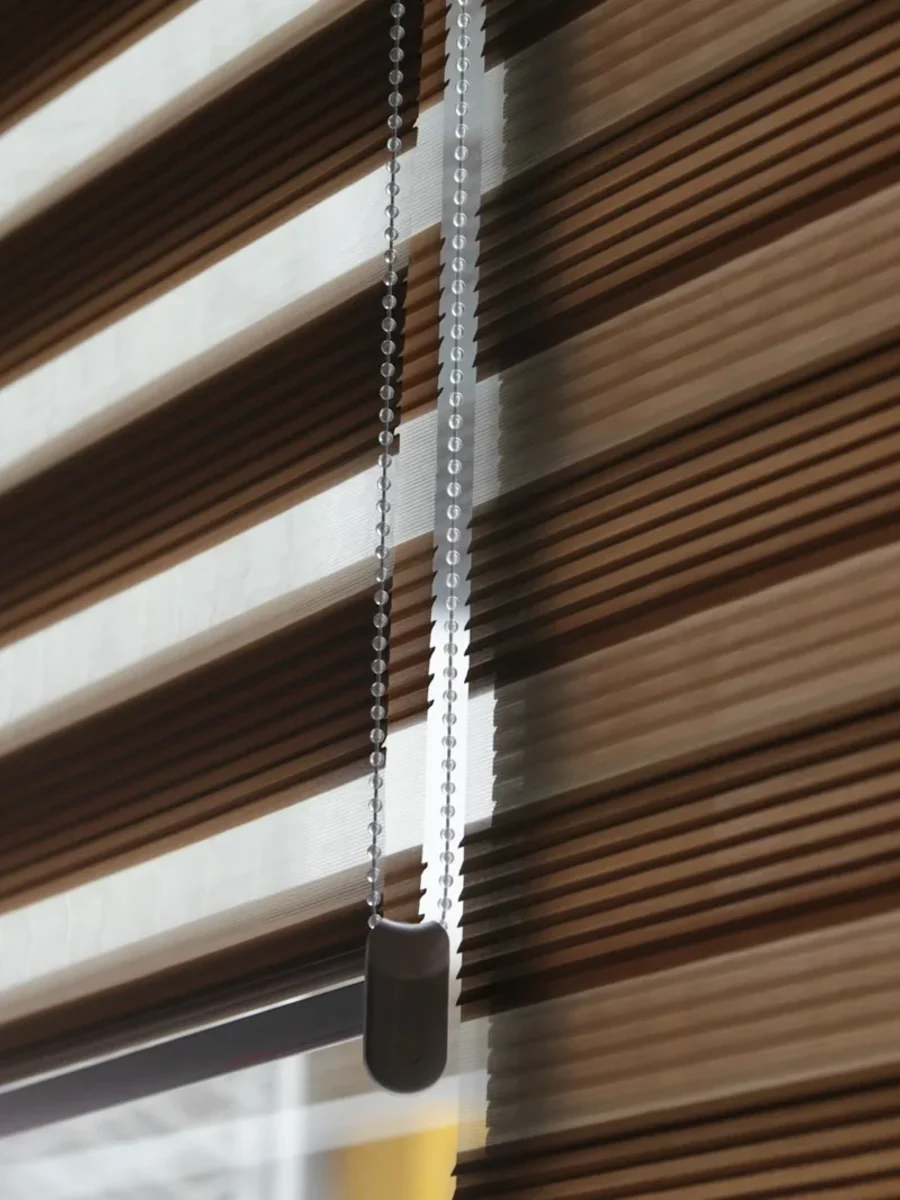
For glare without heat, a blind is often the neater tool. A zebra blind, with alternating sheer and solid bands, can be set to soften the sun while keeping the view, and a venetian can be angled to throw light at the ceiling. Our article explaining zebra blinds shows how the bands work. A sheer curtain softens glare too, but it is either across the window or not.
Using a blind and curtains on one window
Often the best answer is not curtains or blinds but both. A blind fitted inside the recess handles the working jobs: darkness in a bedroom, glare in a study, heat on a west window. A pair of curtains on a track outside the recess frames the window and softens the room. Each layer does one thing well, and each can be replaced on its own schedule.
In a bedroom, this is the most reliable way to get real darkness and a soft room at once: a blackout roller blind tight to the glass, with lined curtains outside it closing over the edges where light would otherwise get round. In a living room, a light-filtering roller or zebra blind can take the afternoon glare while sheer curtains stay open for the look.
It needs planning for depth. The blind, any sliding insect net, and the curtain track each need their own clear line, and the curtain must be far enough forward not to snag the blind or net. In older Goan houses with timber shutters folding into the reveal, check there is room for the blind before ordering. We plan both together on a home visit so the layers fit.
When one window has two jobs, give each job its own layer.
What drives the cost of each, without the price list
Curtains are priced mainly by fabric, and fabric is driven by fullness and drop. Take a 180 cm bedroom window with lined pinch-pleat curtains to the floor. Our curtain rod length planner gives a 330 cm track; at 2.25 times fullness that is 743 cm of gathered fabric, six widths of 137 cm cloth, each cut 290 cm for a 250 cm drop. That is 17.4 metres of face fabric before the lining, the making and the track. Shorter drops, plainer fabric and fewer windows bring it down; patterned fabric, longer drops and layered pairs push it up.
Blinds are priced mainly by mechanism and by the area of fabric or slat. A roller blind for the same window uses one piece of fabric roughly the size of the glass, with no fullness. Its cost comes from the fabric grade, the size and type of mechanism, and options such as a cassette, side channels or a motor. Wooden and honeycomb blinds sit higher; PVC and simple rollers lower.
So on a modest window, a blind usually uses less material than a pair of full curtains, and on a very tall or wide opening the comparison can swing the other way as blind mechanisms reach their limits. Motorising either adds a motor and, for wired versions, power at the window. Our fabric calculator shows the curtain side for your own windows.
Rentals, guest rooms and child safety
In a homestay or a let villa, what matters is what survives guests: sand, sun cream, wet towels on the sill, curtains yanked shut in a hurry. Blinds in PVC or aluminium shrug off most of that and wipe clean between stays. Curtains in a durable polyester or blend with a blackout lining also last well, and guests notice a dark bedroom far more than they notice the fabric. Our homestay blinds and homestay curtains pages set out what we specify for rentals.
Cords decide the safety question. America's product safety regulator records children strangled by the cords of blinds, shades and draperies alike, and its position is that going cordless is the only way to remove the risk. In Britain, RoSPA tells parents never to put a looped-cord blind in a child's bedroom, to secure any cord on a cleat mounted 1.5 metres or more above the floor, and to move cots and beds away from windows; it flags corded curtain tracks as a hazard too.
For children's rooms and family rentals, that points to cordless and wand-operated blinds, hand-drawn curtains, or motors. Our blinds range includes cordless and motorised options, and our curtains can be hung on hand-drawn or motorised tracks.