 Drape Haus
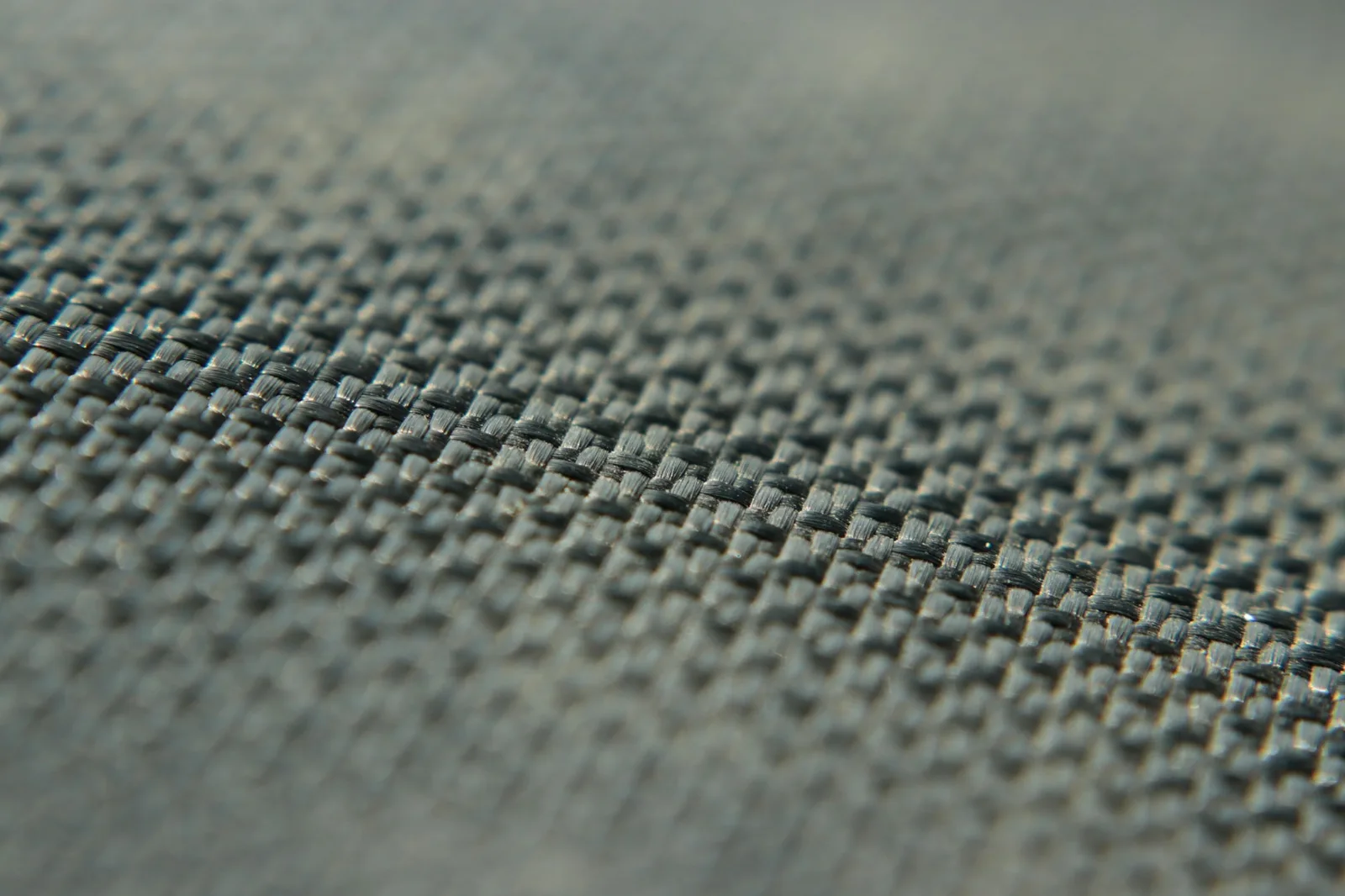
The Martindale test measures how much rubbing a fabric survives before it wears through. A small disc of the cloth is rubbed, under a set weight, against a standard abrasive fabric, and the machine counts the cycles until the sample breaks down: threads snap in a woven cloth, or the pile wears away on a velvet. The result is quoted as a rub count, such as 25,000 or 40,000, and it is the number most upholstery swatches in India and Europe carry.
Used well, it is a good filter. A fabric rated at 15,000 rubs is not made for a family sofa, and one rated at 40,000 has passed the level the contract trade asks of hotel and office seating. Used badly, it misleads. A high rub count says nothing about pilling, snagging, fading, mildew or how the cloth behaves when a wet dog jumps on it in July, and the people who write the guidelines say plainly that it is not a prediction of lifespan.
This guide explains the test itself, the two rating systems you will see quoted (the British classes and the American contract guidelines), the Wyzenbeek double-rub figure on imported fabrics, the rub counts we ask for by use, and how to read the rest of a specification sheet so the number sits in context.
How the Martindale test works
The method is set out in the international standard ISO 12947. A circular specimen of the fabric is clamped in a holder, backed with foam, and pressed against a standard abrasive cloth. The holder moves in a looping, figure-like path called a Lissajous figure and is free to rotate on its own axis, so the fabric is rubbed in every direction rather than along one line. That matters, because a cloth can be strong one way and weak the other.
The load depends on the end use. For upholstery, workwear and bed linen the standard specifies a total effective mass of about 795 grams, a nominal pressure of 12 kPa. Apparel and other household textiles are tested lighter, at about 595 grams or 9 kPa. When a rub count is quoted for sofa fabric, it should be at the heavier upholstery load; a figure tested at the lighter load is not comparable.
The machine is stopped at fixed intervals and the sample inspected. The test ends at what the standard calls specimen breakdown, judged by thread breakage on a woven or knitted cloth, or by the area of pile or flock worn away to expose the ground fabric. The figure reported is the last count at which breakdown had not yet happened. So a fabric rated at 30,000 rubs was intact at 30,000 and had failed by the next inspection.
A rub count is the number of cycles a small disc of fabric survived on a machine. It is a comparison between fabrics, not a number of years.
Two rating systems: the British classes and the contract guidelines
Most rub counts you meet are read against one of two ladders. The first is the British standard BS 2543, which classifies upholstery fabrics by intended duty. One UK fabric supplier's worksheet, quoting the standard, lists the classes as occasional domestic at 6,000 rubs, light domestic at 15,000, general domestic at 20,000, heavy domestic at 25,000, severe domestic or general contract at 30,000, and severe contract at 40,000. These are the bands our own sofa pages use.
The second ladder comes from the Association for Contract Textiles, an American trade body whose guideline marks appear on many contract fabric samples. It has just two levels for woven upholstery. Low traffic or private spaces asks for 20,000 Martindale cycles. High traffic or public spaces asks for 40,000. Its examples of heavy-duty use are single-shift offices, hotel rooms and suites, conference rooms and dining areas; it adds that constantly used spaces such as 24-hour terminals, emergency rooms, theatres and fast-food restaurants may need more.
The two ladders agree more than they differ. Both put ordinary home use at around 20,000 and demanding commercial use at 40,000. The British classes simply add steps in between, which is useful for a home, where the difference between a guest-room settee and the sofa the whole family lives on is real.
| Use | BS 2543 class (Martindale) | Contract guideline (Martindale) | Drape Haus planner |
|---|---|---|---|
| Cushions, occasional chairs | Light domestic, 15,000 | — | — |
| Occasional seating, guest room, formal room | General domestic, 20,000 | Low traffic, 20,000 | 20,000+ |
| Everyday family sofa | Heavy domestic, 25,000 | — | 30,000+ |
| Busy family room, homestay lounge | Severe domestic / general contract, 30,000 | — | 30,000+ |
| Rental villa, hotel, office reception | Severe contract, 40,000 | High traffic, 40,000 | 40,000+ |
Planning something like this?
We visit homes across North and South Goa, measure on site, and bring samples to see in your own light.
Why we ask for 20,000, 30,000 or 40,000
Our sofa fabric planner asks how the sofa will be used and gives one of three answers: 20,000 rubs or more for occasional seating, 30,000 or more for an everyday family sofa, and 40,000 or more for a rental. The first and last sit exactly on the published bands. The middle one is deliberately a step above the British heavy-domestic class of 25,000.
The reason is the gap between a laboratory and a Goan living room. The contract guidelines warn that repeat abrasion tests on some woven fabrics can vary by 60 percent or more. A cloth that tested at 25,000 once might test well below that on another day. Then add what the machine does not include: fine beach sand worked into the seat by people in shorts, damp clothes in the monsoon, children kneeling on the arms, a dog that circles before lying down. Asking for 30,000 on the sofa a family uses every evening buys a margin against all of that.
A villa let to a new group every week is a different case again. Many people, many sizes, luggage, sunscreen and very little of the care an owner gives. That is contract use in everything but name, which is why we specify it to the high-traffic figure. Beyond about 40,000, extra rubs bring little that you will notice; the contract guidelines go so far as to say that Wyzenbeek results above 100,000 double rubs have not been shown to mean a longer life.
Wyzenbeek double rubs and other numbers on imported labels
Fabrics made for the American market usually quote double rubs instead of Martindale cycles. These come from the Wyzenbeek method, ASTM D4157, a different machine altogether. The fabric is pulled tight in a frame under about 4 pounds of tension and rubbed back and forth, under about 3 pounds of pressure, by a cotton duck abradant on an oscillating cylinder. Specimens are cut along both the warp and the weft, and the count is taken when two yarns break or there is noticeable wear.
The contract guidelines set 15,000 double rubs for low traffic and 30,000 for high traffic. It is tempting to read that as a conversion: Martindale equals Wyzenbeek plus a third. It is not. The Association for Contract Textiles states that there is no correlation between the two tests, and that you cannot estimate one result from the other. The same fabric can do well on one machine and poorly on the other, because one rubs in a straight line and the other in every direction.
So compare like with like. If one swatch says 35,000 Martindale and another 50,000 double rubs, you have not learned which is tougher. Ask for the missing test, or judge both against their own guideline. You may also see the Martindale method quoted under its American number, ASTM D4966, again at 12 kPa; that is the same family of test as ISO 12947.
- Martindale cycles (ISO 12947 or ASTM D4966): 20,000 low traffic, 40,000 high traffic
- Wyzenbeek double rubs (ASTM D4157): 15,000 low traffic, 30,000 high traffic
- No conversion exists between them; compare each against its own scale
- Check the load: upholstery should be tested at 12 kPa, not the lighter apparel load
What a high rub count does not prevent: pilling, snagging and fading
Abrasion is only one way a sofa fabric gives up. Pilling is the formation of small balls of fibre that stay attached to the surface. It is tested separately, and the contract guidelines ask for at least Class 3 on either a brush pilling test (ASTM D3511) or a Martindale-type pilling test (ASTM D4970). The scale runs from 5, no pilling, to 1, very severe pilling. A fabric can survive 50,000 rubs without breaking a thread and still fuzz and pill within months, particularly where short or soft fibres sit loosely in the yarn.
The guidelines are candid that pilling is an aesthetic issue that does not affect durability, and that laboratory tests alone cannot predict how a fabric will behave in a real room. That is honest, and also cold comfort when the seat cushions of a new sofa look tired. If pilling matters to you, ask for the pilling grade alongside the rub count, and avoid loosely twisted, very soft yarns on the seats.
Snagging is not measured by either abrasion test. It happens when a claw, a buckle or a rough heel catches a loop or a long float of yarn on the surface and pulls it out. Bouclé, looped chenille, open basketweaves and slubby linens snag easily whatever their rub count, because the problem is their structure, not their strength. Our guide to sofa fabric for pets goes into which weaves resist claws.
Fading and mildew are separate again. A fabric's resistance to light is graded in its own test, and the contract guideline for woven upholstery is Grade 4 after 40 hours, with the caution that test hours do not translate into hours in a sunny room. Mildew depends on fibre, soiling and air, not abrasion. The best sofa fabric guide compares fibres on both counts.
Weave, fibre and weight matter as much as the number
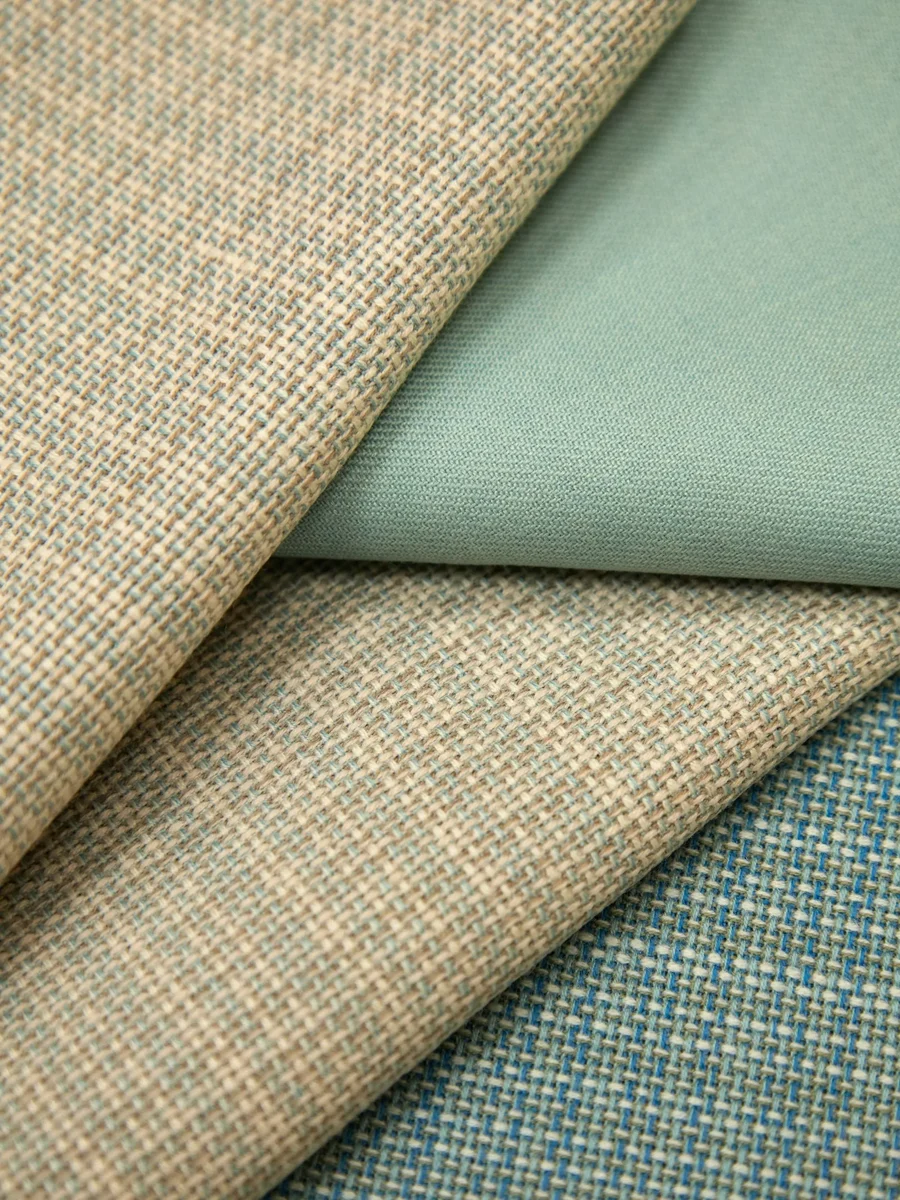
A rub count is the result of how a fabric is built, so it helps to know what builds it. One fabric supplier's designer notes list the main factors: stronger fibres make stronger yarn, very short fibres make a weaker one, more twist in the yarn adds strength, and the weave decides how well that yarn is protected. A tight weave of strong, well-twisted yarn usually does well; a loose weave of soft, lightly twisted yarn usually does not. The test exists because these things are hard to judge by eye.
Weight is a useful second clue. A heavier cloth in the same fibre and weave usually has more yarn per square metre to wear away, and it hides the foam and seams beneath it better. It is not a guarantee: a heavy, loose, slubby weave can be weaker than a lighter, tight one. Look at weight and rub count together, then hold the swatch to the light and press a fingernail into it. If light shows through freely, or the nail lifts a loop, that cloth will snag and shift on a seat.
Construction of the sofa matters too. Piped seams that take the rubbing at the cushion edges, seat cushions that can be turned and swapped, and a cut that keeps seams away from the front edge all spread wear. These are the details that let a 30,000-rub cloth outlast a 50,000-rub cloth on a poorly made sofa. If an older sofa's frame is sound and only the fabric has failed, reupholstery in a properly rated cloth gives it another life.
Leather, leatherette and pile fabrics: where the test does not apply
The standard is explicit that it does not cover coated fabrics, including laminated ones. PU and PVC leatherette, sold locally as rexine, is a coating on a textile backing, and the standard directs anyone testing a coated surface to a separate family of methods, ISO 5470. A Martindale figure printed on a leatherette swatch therefore needs a second question: which test, and on which side? Our page on leather and rexine explains how these materials age in a humid house.
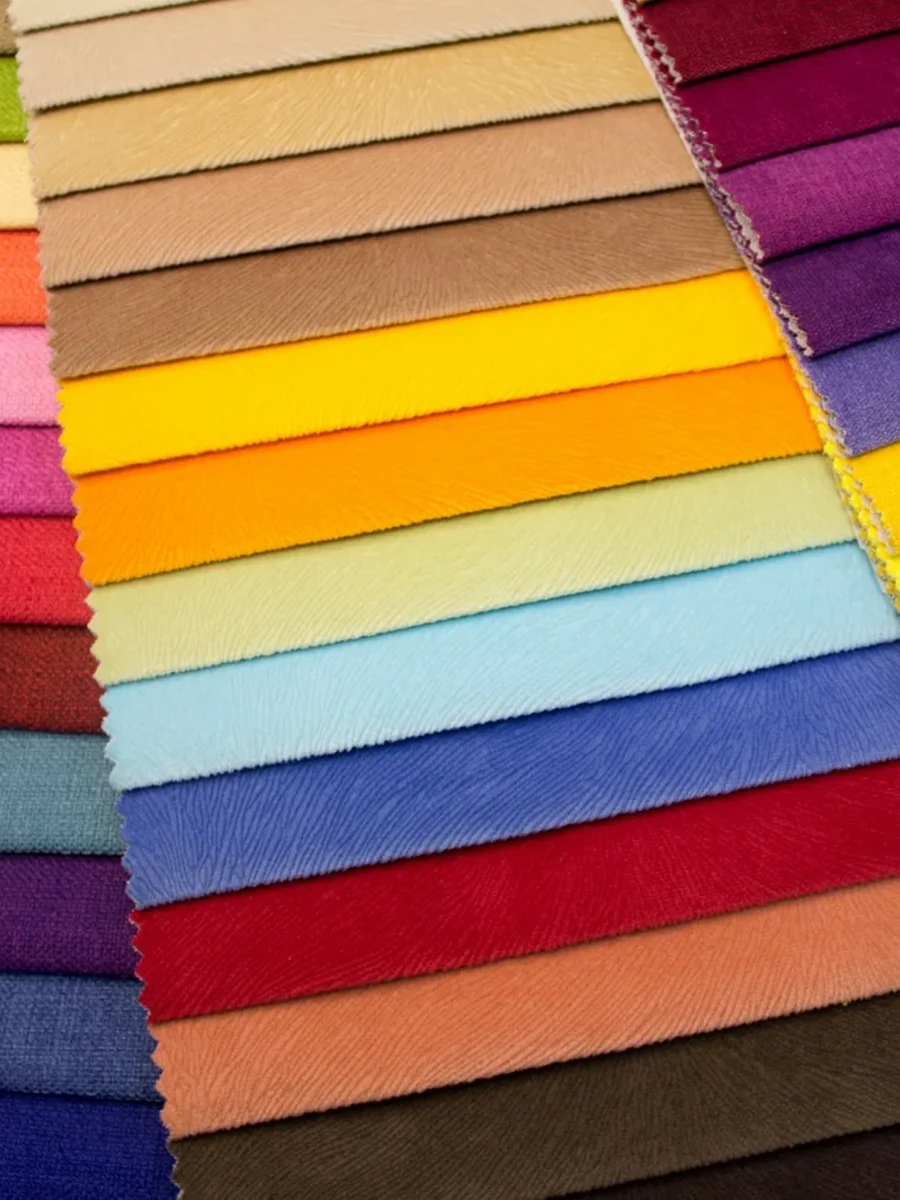
Real leather is not a textile and is not rated by rub count either; it is judged on other properties, and its finish matters more than any single number. Pile fabrics such as velvet are covered by the Martindale method, but their end point is different: the test stops when the pile is worn away and the ground cloth shows, not when threads break. A velvet with a high rating still marks, crushes and shows pressure, which is a matter of appearance rather than wear.
Choosing a rub count for the room
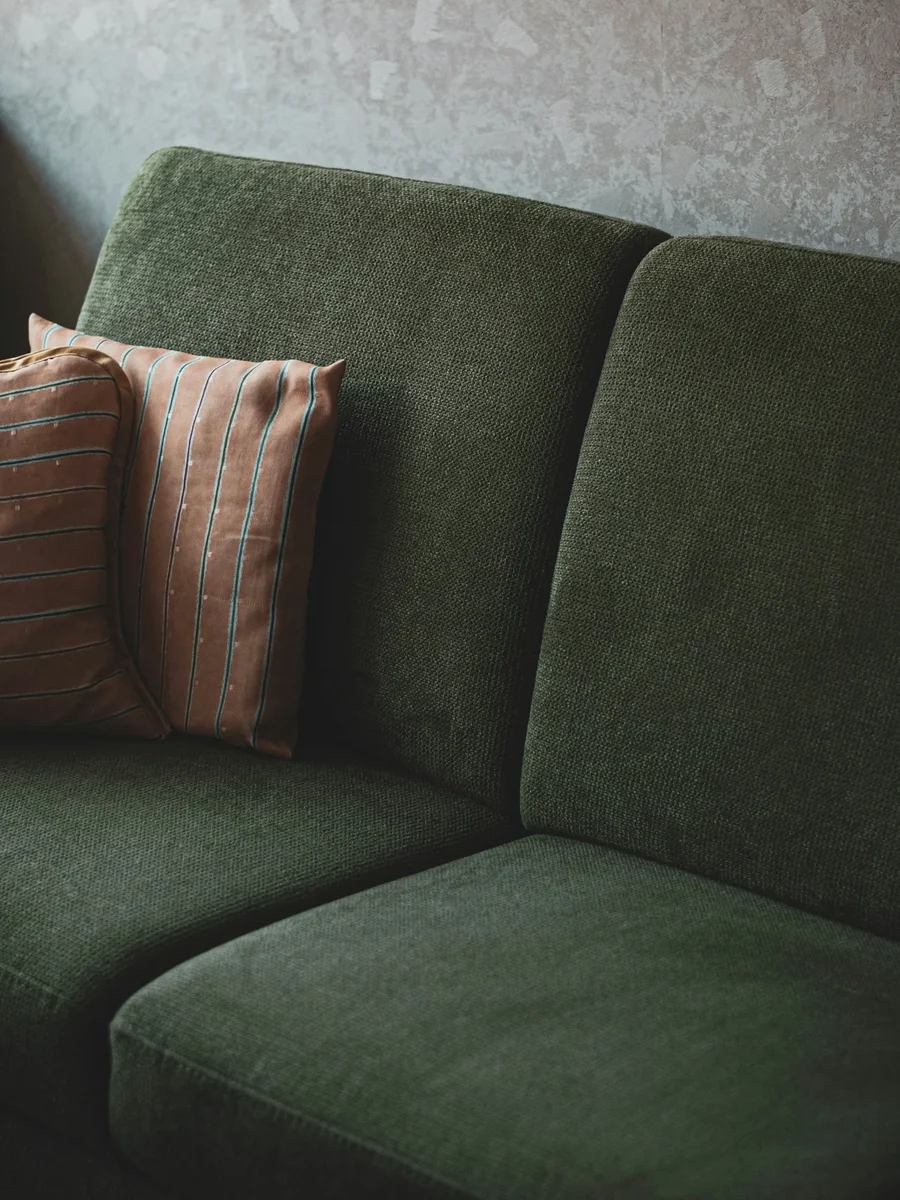
Start with who sits there and how often. A formal drawing room in an older Goan house, used for visitors a few times a month, can take a general-domestic fabric, which opens up beautiful but less robust cloths. The family sofa that faces the television every evening, with children, pets and sand, should meet our everyday figure of 30,000 or more. A homestay lounge, a rental villa, a hotel lobby or an office reception should meet the 40,000 high-traffic level.
Then look past the number. For a family room, pair the rub count with a tight weave, a pilling grade of 3 or better and a cleaning code that allows water-based spot cleaning. For a sunny room, add a lightfastness rating or choose solution-dyed fibre. For a rental, make the covers removable, so wear can be dealt with by washing or replacing covers rather than re-covering the sofa. Our custom sofas are specified this way, fabric first, and we can show you rated swatches from our upholstery range before anything is cut.
- Formal room, occasional visitors: 20,000+ Martindale
- Everyday family sofa, children or pets: 30,000+ Martindale, tight weave, pilling grade 3+
- Homestay, rental villa, hotel lobby, office: 40,000+ Martindale, removable covers
- Dining chairs used daily: treat as everyday seating; the seat front takes the rubbing