 Drape Haus
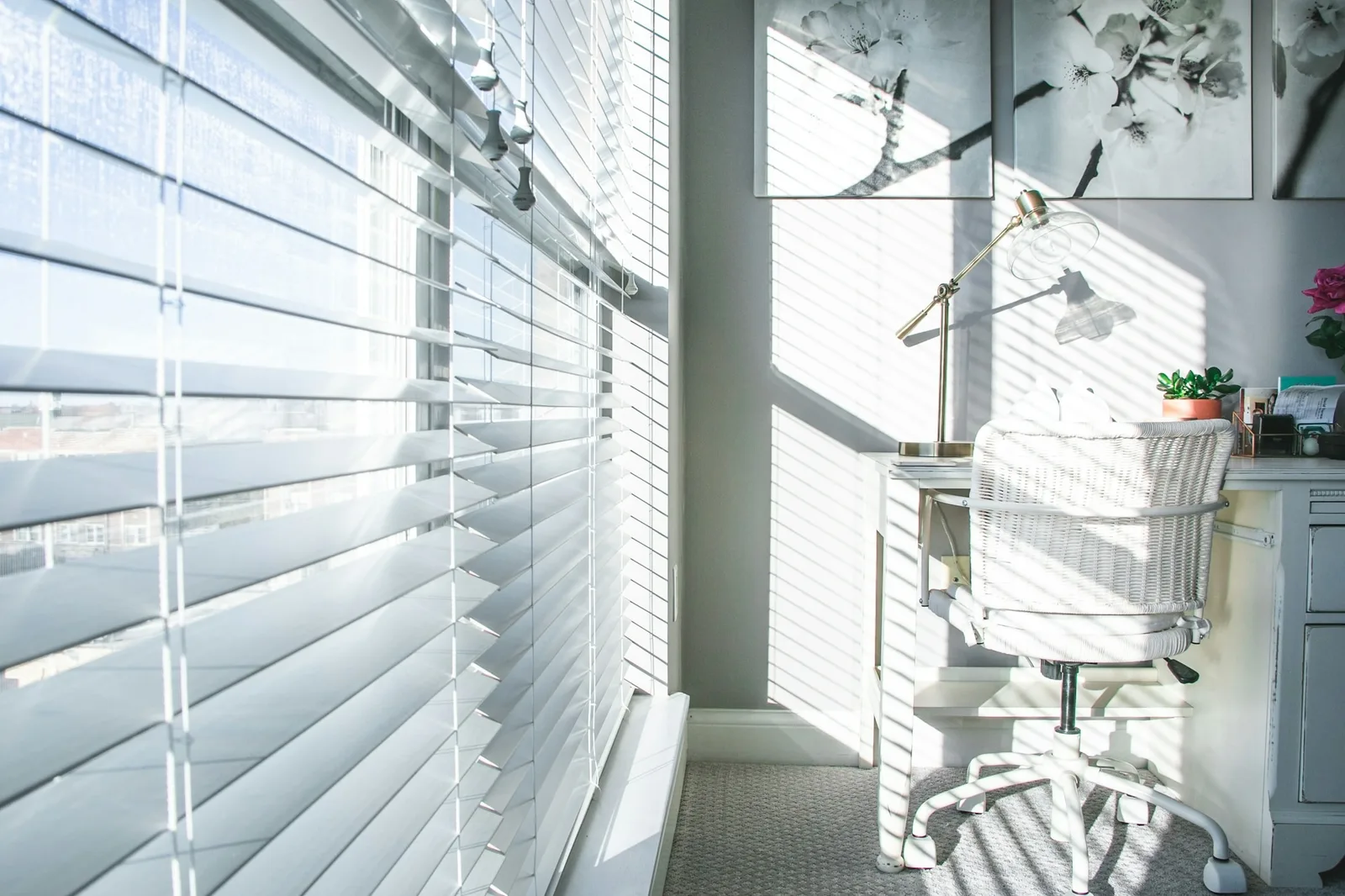
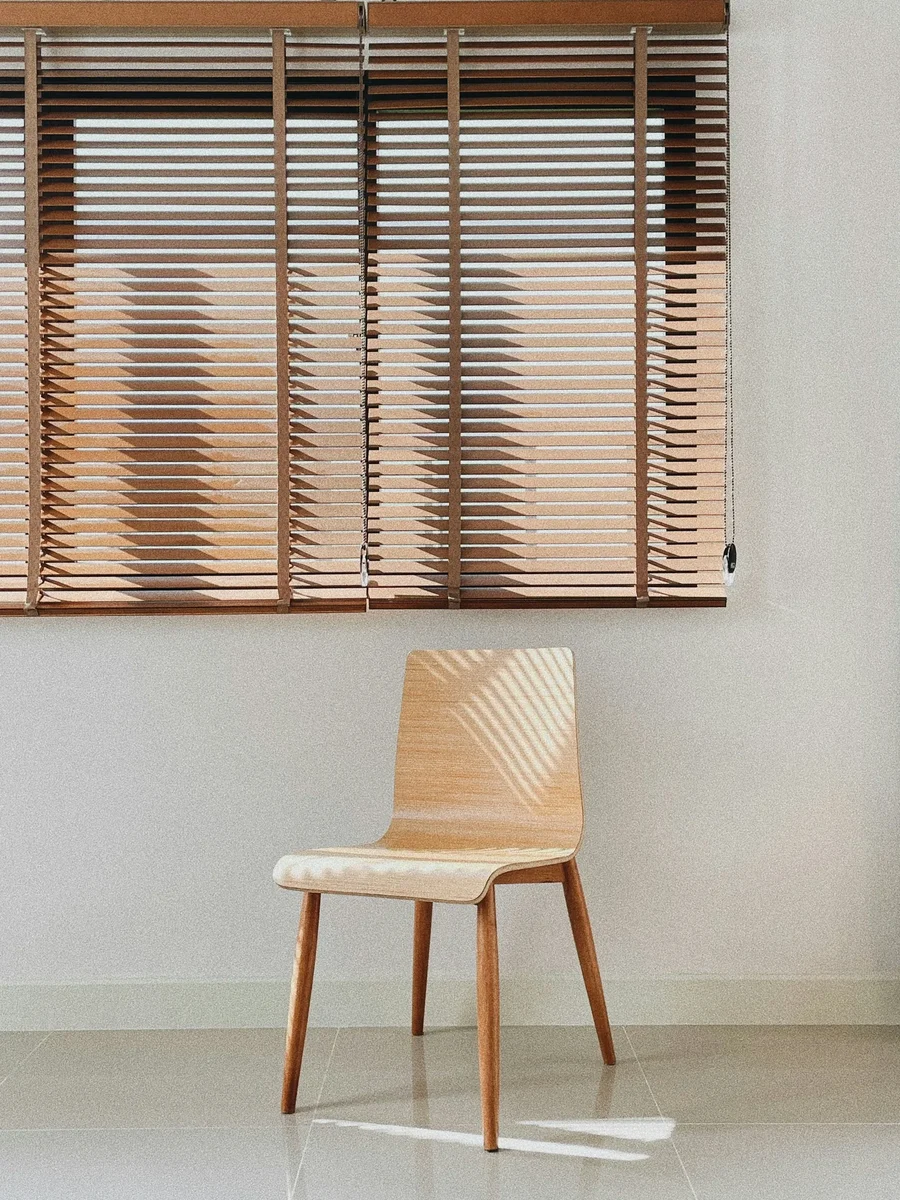
Venetian blinds have one great advantage and a handful of real drawbacks. The advantage is control: horizontal slats on ladder tapes tilt through about half a turn, so one blind can throw daylight up onto the ceiling, block a low afternoon sun while keeping a glimpse of the garden, or close almost flat. No roller, Roman or zebra steers light as precisely. The drawbacks are dust on dozens of horizontal surfaces, light that always leaks between the slats and at the cord holes, cords that need managing in a family home, and, near the sea, hardware that corrodes if it is the wrong kind.
In Goa the slat material decides most of the rest. Aluminium slats ignore humidity but need the right coatings and fittings in salt air. Real wood slats look warm and weigh little but move with monsoon damp. PVC and faux-wood slats shrug off steam but are heavier and can yellow in strong sun if poorly made. Pick the material for the room first, then the slat width and colour.
This article sets out the pros and cons honestly, with what corrodes near the beach, how each slat material copes with humidity, a realistic cleaning routine, light and privacy at the edges, and cord safety. Our Venetian blinds page shows the aluminium range, and our wooden blinds simulator lets you try slat angles on a drawn window.
The case for Venetian blinds: control no other blind gives
A Venetian is defined by its mechanism: slats hung on ladder tapes, a tilt rod in the headrail turned by a wand or cord, and lift cords that gather the slats at the top. A US federal guide specification for window blinds requires horizontal blinds to be capable of nominally 180 degrees of tilt, and asks for a tilter that holds the slats at any angle without vibration or movement changing it. That range is what makes the blind so useful.
On a west-facing Goan window in the late afternoon, the sun comes in low and hard. Tilt the slats so their room-side edges point down, and they block the direct sun while still showing the garden below. In a home office, tilt them the other way and daylight bounces off the slats onto the ceiling, lighting the room evenly while keeping glare off the screen. At street level, tilting the room side up lets you see the sky while passers-by see only slat faces. Our guide to west-facing glare explains why that elevation needs this kind of control.
Aluminium Venetians add practical virtues: slim headrails that fit shallow reveals, slats that do not absorb water, and a surface that wipes clean. That is why they are a long-standing choice for kitchens, bathrooms, clinics and offices.
| Pros | Cons |
|---|---|
| Finest light control of any blind, by tilt alone | Light always passes between slats and at cord holes |
| Privacy with daylight, slats angled upward | Dozens of horizontal slats to dust |
| Aluminium and PVC ignore humidity | Real wood moves in monsoon damp |
| Slim, fits shallow recesses | Raised slats stack into a band at the top |
| Wipe-clean in kitchens and bathrooms | Rattles if the window behind is open in a breeze |
| Wand tilt works without cords | Lift cords need managing around children |
Aluminium near the beach: what corrodes, and what to specify
Aluminium protects itself with a thin oxide film, which is why it lasts so well in ordinary air. Salt is the exception. A review of atmospheric corrosion research notes that the most important damage to aluminium is produced by chloride ions, which are absorbed into imperfections in that passive layer and form complexes that cause pitting. Near the sea, chloride arrives as fine salt on the breeze, settles on the slats and headrail, and the attack starts wherever the coating is scratched or thin, typically at slat ends, cord holes and cut edges. The visible sign is small pits and a dull whitish deposit.
Salt does not need rain to do this. The Australian Stainless Steel Development Association points out that sea-salt deposits start to dissolve once relative humidity rises above about 34 per cent, because of the magnesium chloride they contain, which turns them into a conductive film. In Goa that threshold is crossed almost every day of the year. The same body explains galvanic corrosion: where two different metals touch in a damp, salty film, the more active one corrodes, and aluminium is the more active partner beside steel or stainless steel. Plastic washers or sleeves that keep the metals apart prevent it.
In practice, the slats are rarely what fails first. It is the plated steel inside the headrail, the tilt gear, the cord lock and the screws in the brackets. The US federal specification itself warns against steel components in humid locations and in the more corrosive environmental categories, asks for corrosion-resistant finishes, and requires metal parts to be isolated from dissimilar metals. For a sea-facing room, ask for coated aluminium slats and headrail, non-metallic or stainless internals, stainless fixings with isolating washers, and a wand tilt rather than a cord lock that can seize. Our guide to salt air damage covers the rest of the house.
Near the sea, judge a Venetian by its headrail and screws, not its slats. Those are what rust and seize.
Planning something like this?
We visit homes across North and South Goa, measure on site, and bring samples to see in your own light.
Wood, PVC or aluminium slats in a humid house
The University of Kentucky Cooperative Extension's comparison of blind types rates moisture as not a factor for vinyl, mini and aluminium blinds and as a factor that must be considered for wood. The science behind that is straightforward. Oregon State University Extension's table shows wood in air at 90 per cent relative humidity settling at 20 to 21 per cent moisture content, against 9 to 10 per cent at 50 per cent humidity, and wood swells as it takes that moisture up. A varnished slat slows the exchange but does not stop it, and uneven swelling is what bows slats.
So real wood Venetians belong in dry, lived-in or air-conditioned rooms: a study, a bedroom with a fan running, a living room with cross-ventilation. In a bathroom or kitchen, or a room closed for the monsoon, they are the wrong slat. Our comparison of wooden and faux wood blinds goes into the numbers in detail.
PVC and faux-wood slats are the wet-room answer for people who want a wood look, but they bring their own limits. They are heavier, so wide blinds need splitting. And PVC that lacks enough stabiliser yellows in strong sunlight, as ultraviolet breaks down the polymer, so on a hot west-facing window choose a good-quality, pale slat. See our PVC and faux-wood blinds and wooden blinds pages for the two ranges.
Dust on the slats, and a routine you will actually keep
Every horizontal slat is a shelf. The US federal specification spaces ladder rungs at 15.2 slats per 300 mm of drop; on that spacing a blind with a 1.5 m drop carries about 15.2 × 5 = 76 slats, each with a top and a bottom face. In the dry season, fine road and laterite dust settles on all of them. Near the sea, a salty haze adds a slightly sticky film that holds the dust in place. This is the most common complaint about Venetians, and it is a fair one.
A routine that works is weekly and quick rather than monthly and thorough. Close the slats flat with the room side down and run a microfibre duster or a soft brush attachment on low suction across them from top to bottom; tilt them the other way and repeat. Every few weeks in a sea-facing room, wipe aluminium or PVC slats with a cloth wrung out in water with a drop of mild washing-up liquid, then dry them. Real wood gets only a dry cloth and, for marks, a barely damp one dried immediately.
Before the monsoon, give every Venetian a full clean, because dust holds moisture and the EPA's guidance is that mould control is moisture control. After the monsoon, check the slats nearest the glass, the cord holes and the bottom rail for spotting. If the routine sounds like more than you will do, a roller or zebra blind with a single flat face is the honest alternative.
Light leaks and privacy at the edges
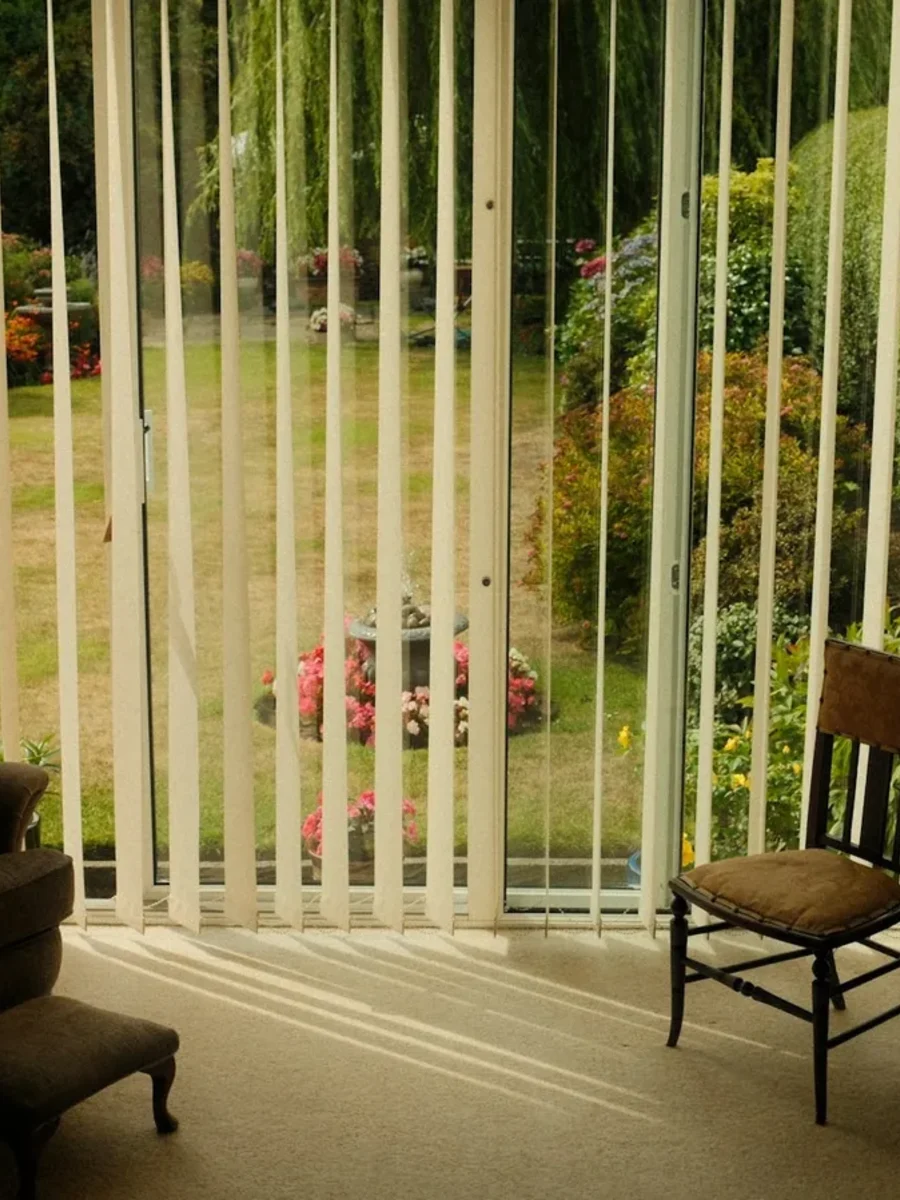
A closed Venetian is never dark. Light passes in three places: through the small gaps where slats overlap, through the holes punched in each slat for the lift cords, and round the ends of the blind, where an inside-mounted blind has a deliberate clearance from the reveal. The federal specification's typical figure for that clearance is 6 mm at each jamb, which is a strip of light down both sides on a sunny window.
Cord holes are the detail most people notice at night, because each one shows a pinpoint of a lit room. The same specification describes light-control and privacy blinds as a special type with hidden slat holes, for rooms that need more than average light blocking and privacy. Ask for that feature in an overlooked bathroom or bedroom. Fixing the blind outside the recess with an overlap closes the side gaps too.
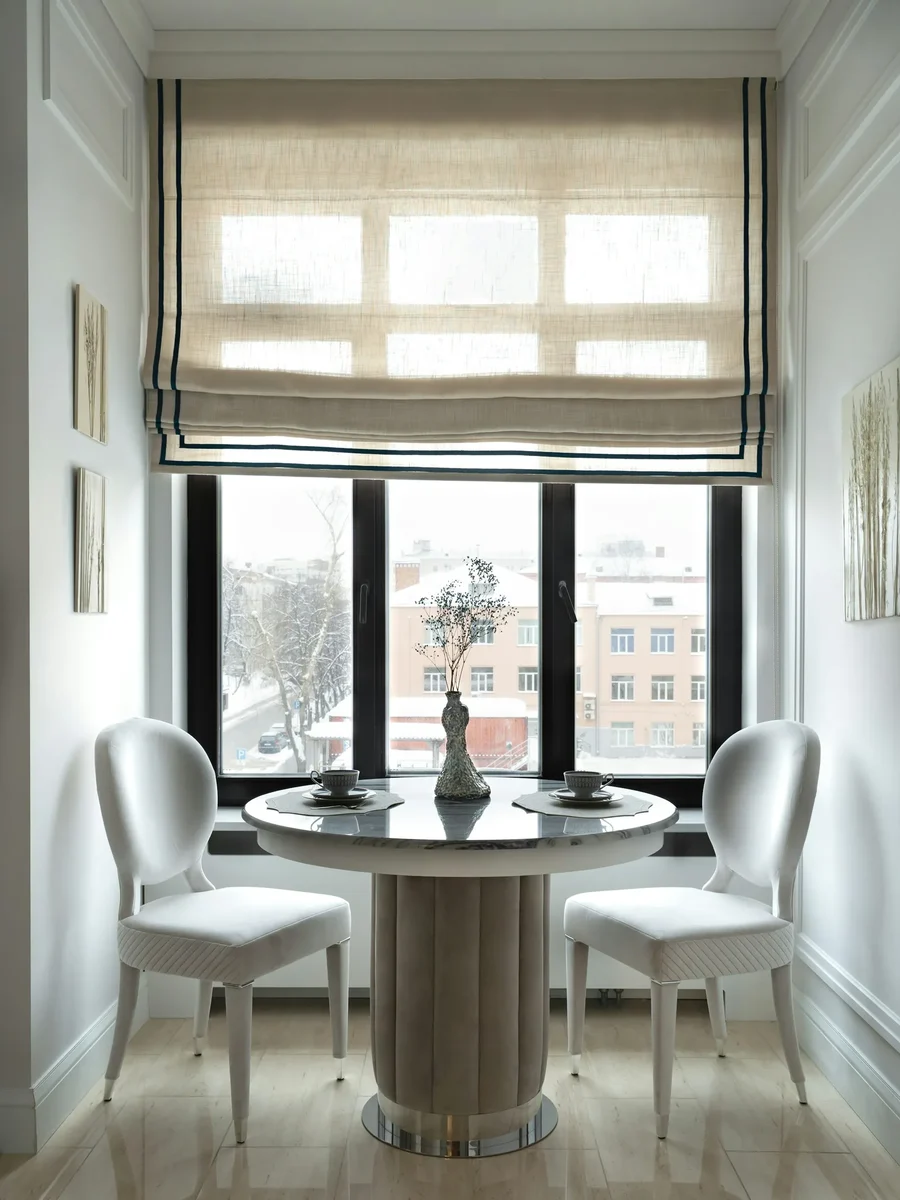
If a bedroom must be properly dark, a Venetian alone will not do it. Pair it with blackout curtains, or choose a blackout roller in side channels and keep the Venetian for rooms where control matters more than darkness. Our blackout blinds page explains the sealed options.
Breeze, rattle and the stack at the top
Goan houses rely on through-draught, and a Venetian hung inside an open window becomes a wind chime. The slats lift, swing and tap against the frame and each other. The federal specification provides hold-down brackets for exactly this, while noting they are only needed where air movement makes blinds sway excessively. On windows that stay open through the evening, ask for hold-downs at the bottom rail or side guide cords; on windows that are open all day in a sea wind, a fabric blind is the calmer choice.
When raised, the slats gather into a stack under the headrail, and the stack is deeper with wider slats and longer drops. Inside a short recess it can cover a noticeable part of the glass. Fixing the headrail above the opening lets the stack sit on the wall. Wide blinds also need intermediate brackets along the headrail, which the federal specification places at typical spacings for different slat widths, so check what sits above the window before ordering.
Cords, wands and children
Older Venetians are a known strangulation hazard. The US Consumer Product Safety Commission warns that most window blinds sold before November 2000 have inner cords, the ones that raise the slats, that a child can pull out to form a loop, and advises replacing that kind of blind immediately. It also states that cordless window coverings are the only way to eliminate the hazard; cord stops, short pull cords and anchored loops only reduce it.
In Britain, RoSPA advises never fitting a blind with a looped cord or chain in a child's bedroom, securing any cords on a cleat at least 1.5 metres from the floor, keeping cots and beds away from windows, and replacing blinds made before 2014, when standards changed, if they cannot be made safe. It also reminds holiday-home owners that guests' children are at the same risk, which matters for Goan homestays and rental villas.
Venetians are well suited to safer operation. A wand tilts the slats with no cord at all, the federal specification calls for a wand that reaches to within 1.5 metres of the floor, and cordless lift systems and motors remove the lift cords from reach. For family rooms and rentals, ask for those from the start rather than adding safety devices later.