 Drapehaus
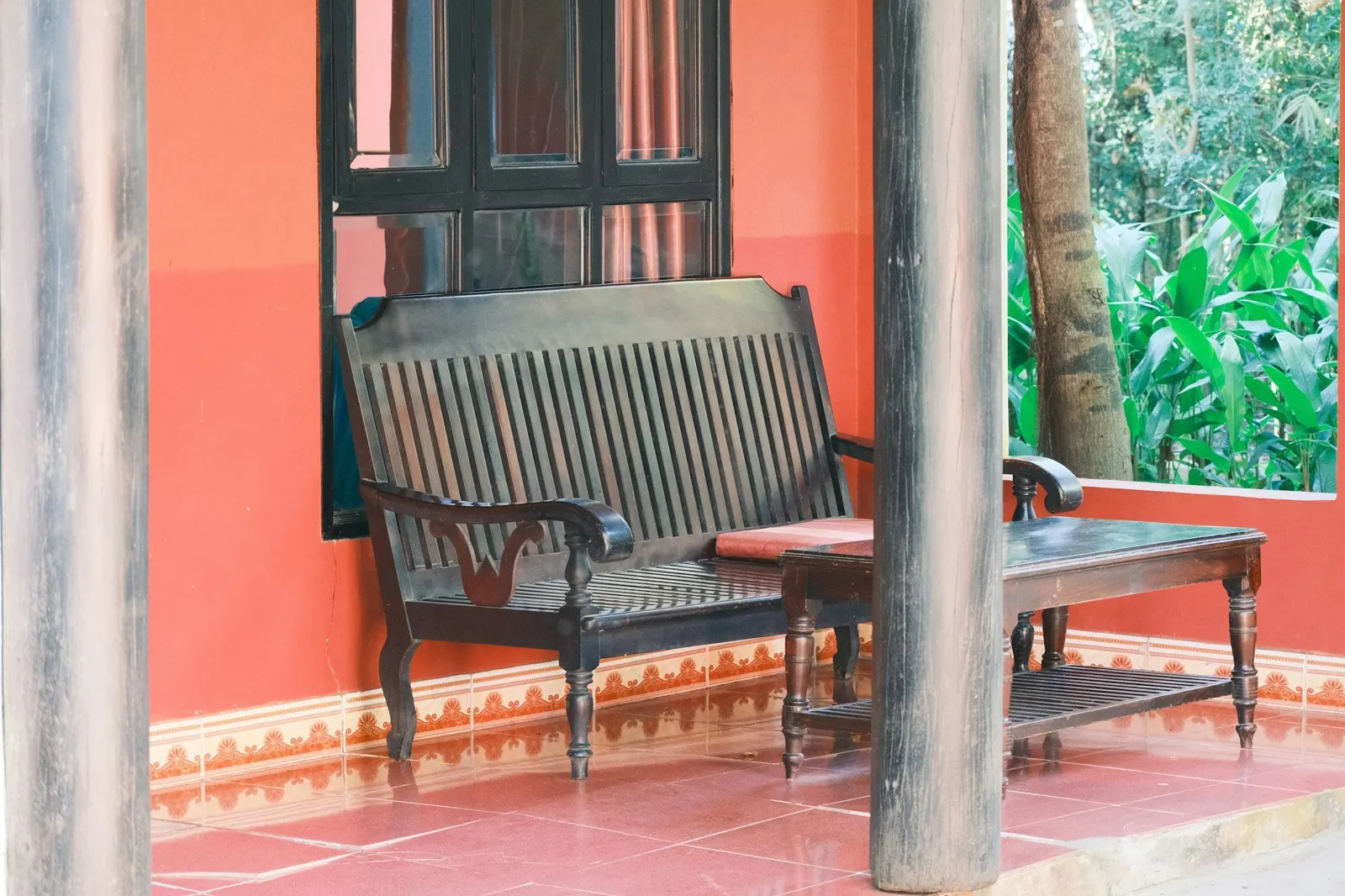
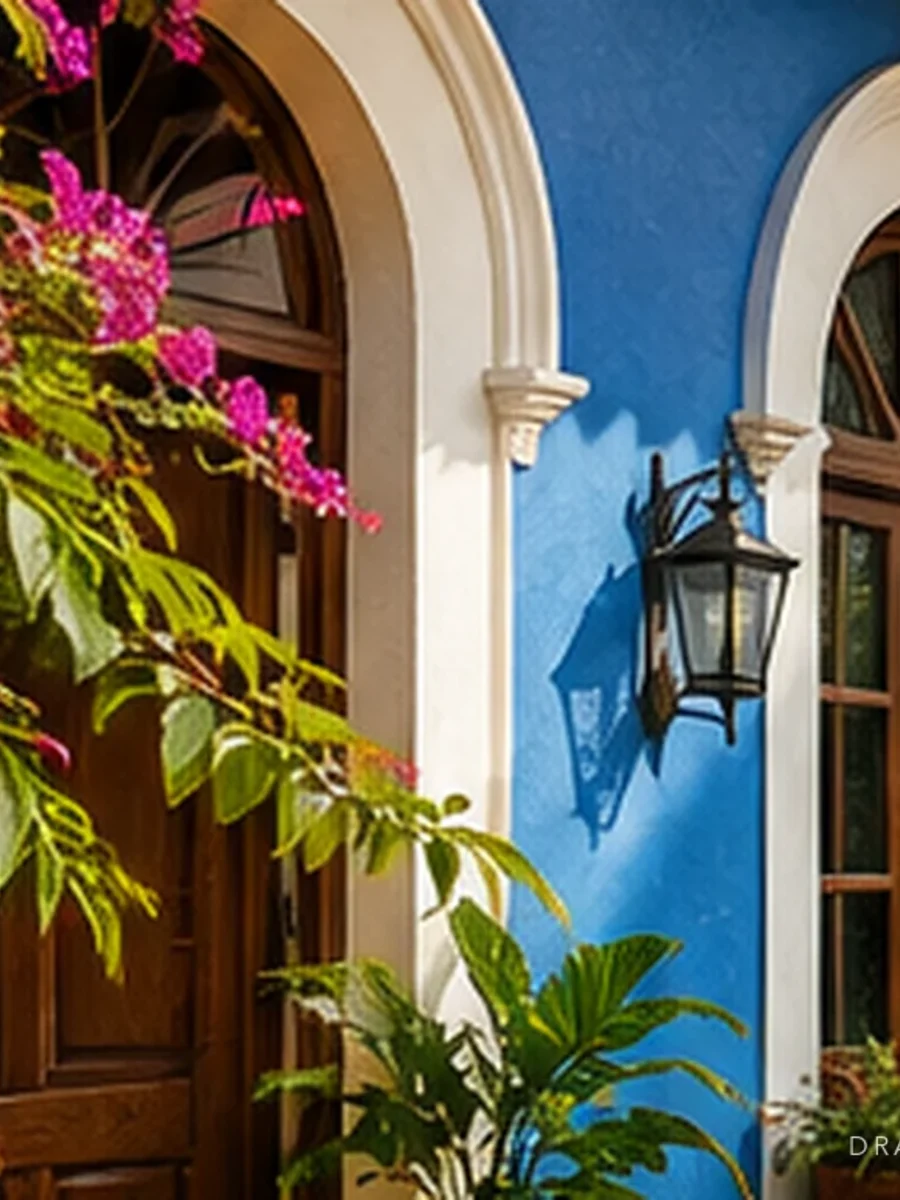
The balcão is the covered porch at the entrance of a traditional Goan house: a few steps up from the street, a roof on columns, and built-in masonry seats along its sides, usually facing each other. It is the most recognisable part of the Goan house and, for many families, still the most used — the place where evenings are spent, visitors are received and the street is watched.
It is also the hardest place in the house for textiles. The balcão is open to the weather on at least one side, it catches the afternoon sun, and in the monsoon it takes wind-driven rain off the sea. Cushions that would last years indoors can be faded, mildewed or waterlogged within a season here.
This article covers where the Goan balcão came from and what it was for, then the practical part: how to cushion its seats, which fabrics survive, how to handle the monsoon, and how to shade it without spoiling the front of the house.
What a balcão is, and where it came from
The word is Portuguese, and the form belongs to a particular period of Goan building. From the middle of the 18th century, Catholic houses that were built or remodelled turned outward toward the street, with balcões and verandas facing the road rather than an inward-looking plan. The balcão sits in front of the main door, raised on the plinth, with a roof carried on columns — often ornamental — and seats built into its low side walls.
Its purpose was social. The balcão let the family sit together in the open, see and be seen, talk to neighbours passing on the road, and take the evening breeze, while still being part of the house. In a village of balcões, the whole street became a kind of shared living room at dusk. Our overview of Portuguese houses in Goa places it in the wider plan of the house.
Why the balcão is hard on cushions and fabric
Three things work against textiles on a balcão. The first is water. Goa's normal July rainfall is over 1,100 mm, and the monsoon wind comes in from the west and south-west, off the sea, so rain does not just fall on a balcão — it is blown across it. Seats near the open edge get wet even under a roof.
The second is humidity. Even when it is not raining, monsoon mornings in Panjim run at around 90% relative humidity, so a cushion that gets damp stays damp. Foam that holds water, and fabric that holds it against the foam, is a recipe for mildew within days. The third is sun: outside the monsoon, a balcão facing west or south takes hours of strong afternoon light, and ordinary dyed fabrics fade quickly.
Near the coast there is a fourth factor: salt carried on the sea wind settles on fabric, foam and fittings, attracts moisture and corrodes metal zips, staples and fixings. A balcão cushion that looks clean can feel faintly damp on a dry day for exactly this reason. Rinsing covers in fresh water from time to time and choosing plastic or marine-grade zips help, as our guide to salt-air damage explains.
Assume every balcão cushion will get wet. Choose materials that dry, not materials that resist for a while.
Planning something like this?
We visit homes across North and South Goa, measure on site, and bring samples to see in your own light.
Cushioning the balcão seats
The seats are masonry, usually built in, and rarely standard in size, so cushions have to be made to measure. Take the depth at both ends, since old seats are often not square, and decide whether the cushion should include a back against the wall or leave the wall bare. A back cushion is more comfortable, but it holds moisture against the plaster; in the monsoon it is better removed.
The inside matters as much as the cover. Open-cell, quick-draining outdoor foam lets water run straight through and dries in air, where ordinary upholstery foam soaks it up like a sponge. Pair it with a mesh or drainage base on the underside so water can escape, and zipped, removable covers so they can be washed and dried separately. Ties or a discreet non-slip underlay stop cushions sliding on polished masonry seats, and a simple welt or piped edge wears better than an elaborate one.
For the covers, the usual answer is solution-dyed acrylic, where the colour is added to the fibre before it is spun rather than dyed on afterwards. That makes it far more resistant to fading than conventional dyed fabric, and it can be cleaned with a mild solution when mildew spots appear. Choose a fabric rated for heavy use: the British standard BS 2543 classes 25,000 Martindale rubs as heavy domestic. Our outdoor and marine upholstery is made on exactly these principles.
Getting the balcão through the monsoon
Even the best outdoor cushions do better if they are not left out through the whole monsoon. Before the rains arrive, clean the covers, let the foam dry fully in the sun, and store the cushions indoors somewhere ventilated, standing on edge rather than stacked flat. If the house is closed for the season, ask whoever looks after it to check them once or twice.
If the balcão is used through the rains, keep a smaller set of seat pads in service and bring them in at night or when heavy weather is forecast. Loose throws and small cushions in cushions and soft furnishings made from outdoor fabric can be rotated in and out easily. After the monsoon, wash everything, dry it thoroughly and check the masonry seats for damp before the cushions go back.
Keeping the Goan balcão authentic
The balcão is the most public part of the house, and the easiest to spoil with good intentions. Brightly patterned cushions, plastic chairs, fairy lights stapled to columns and a glass enclosure can each make it more usable for a season and less like itself for years. The balcões that look best are furnished lightly: cushions in one or two quiet colours drawn from the house's own palette, perhaps a single low table, and plants kept off the masonry seats.
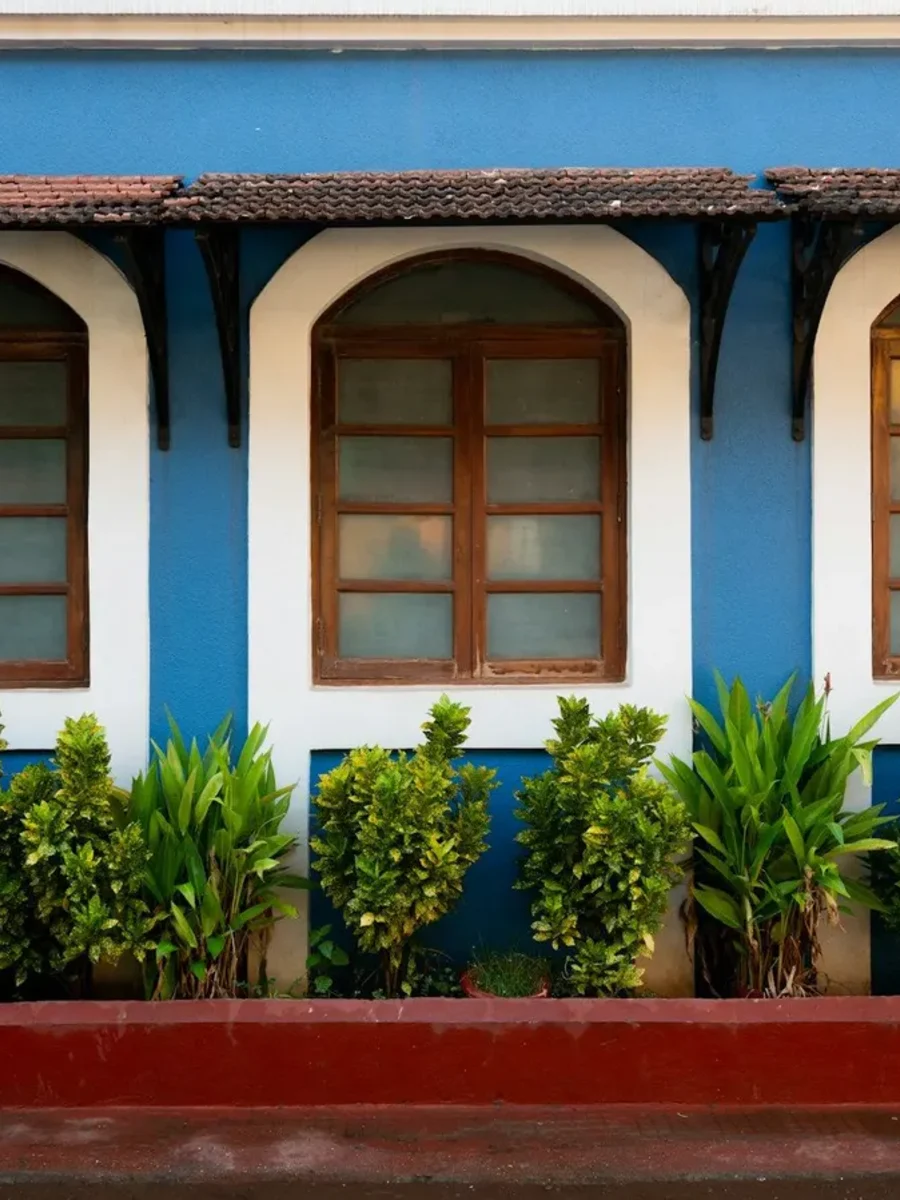
Colour is worth choosing with the facade in view, not just the cushion swatch. A cushion that picks up the white of the mouldings or the tone of the wall reads as part of the house; one that competes with it reads as an addition. Solution-dyed fabrics come in a wide range of plain and textured colours, so there is rarely a need to compromise on either durability or tone.
Shading the balcão without spoiling the facade
A balcão that faces west can be too hot to sit on in the late afternoon for much of the year, and one that faces the monsoon wind can be too wet. Shade and rain protection help, but the balcão is the face of the house, so anything added should be light, reversible and fixed with care.
Split-cane chiks are the traditional answer and still look right; they roll up out of sight when not needed, and can be taken down for the heaviest weather. Our bamboo and chik blinds are often used this way. Outdoor roller blinds in open-weave or solution-dyed fabric give more control, and a retractable awning can shade a balcão facing the afternoon sun. For a balcão that catches the monsoon wind, anything left down in a storm should be rated for outdoor use and fixed so it cannot flap against the columns.
Whatever is used, fix it to the timber of the roof structure or a discreet batten rather than drilling ornamental columns or lime-plastered mouldings. Anything that encloses the balcão permanently — glazing it in, for example — changes both the facade and the way the house breathes, and is worth thinking about very carefully, and discussing with a conservation architect, before doing.