 Drape Haus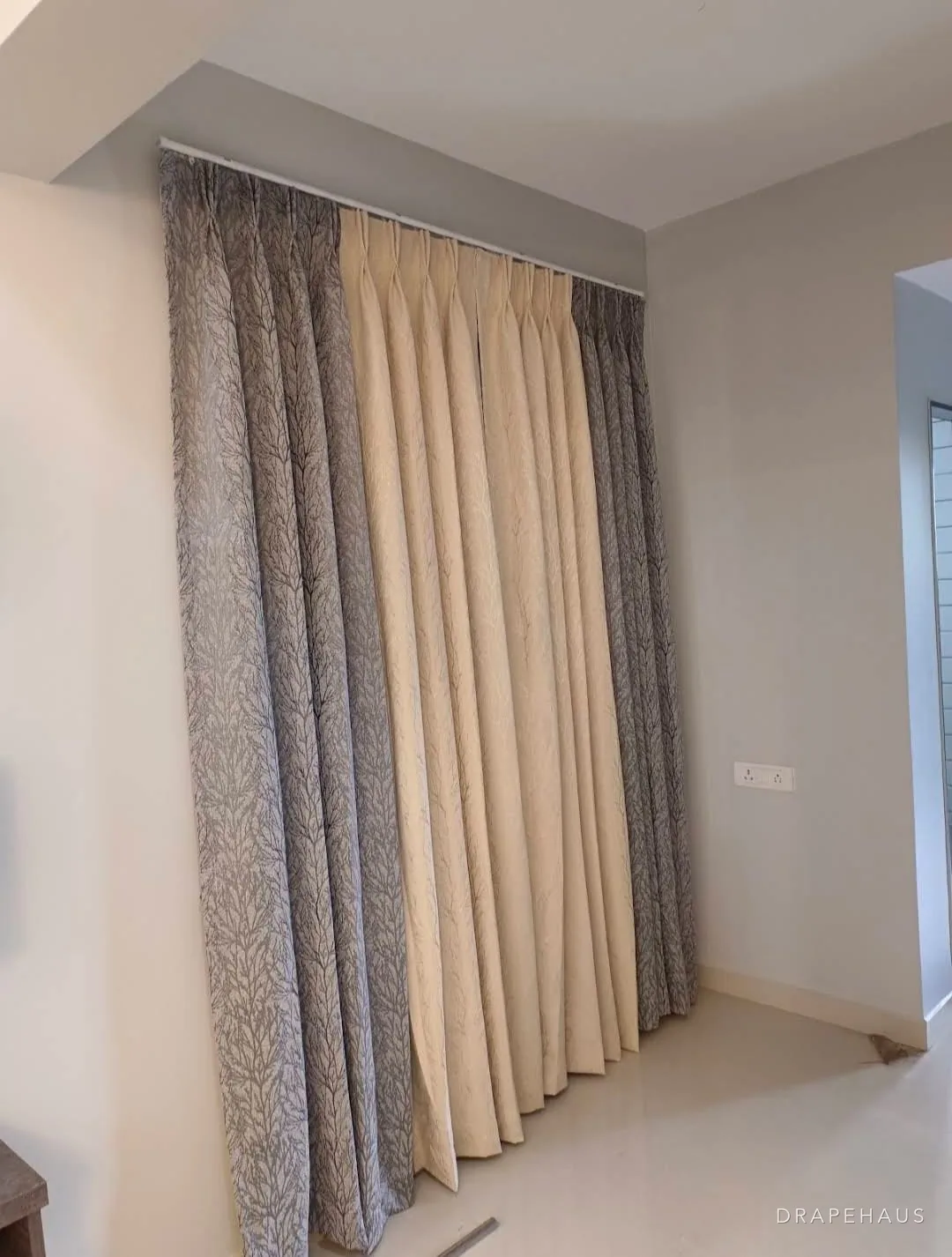

The quickest room decor ideas are almost all made of fabric. New cushion covers, a throw over the arm of the sofa, a sheer layer behind the curtains and a rug on a bare tiled floor will change how a room looks and feels in an afternoon, with no painter, no dust and nothing drilled. They are also the easiest things to change again when the season or your taste moves on.
In Goa there is a second reason to think in fabric. The India Meteorological Department records morning humidity of 87 to 91% across the June to September monsoon, and the Smithsonian's conservation scientists note that still air above about 80% will support mould on cotton and linen. So the same soft things that make a room welcoming in December can turn musty by August if they are the wrong fibre, packed too tightly, or left on a damp floor.
This guide goes through the main fabric changes in the order that gives the most effect for the least effort, then sets out a simple seasonal swap for a Goan house and the fibres that behave best in it. If you would rather see options in your own colours first, our cushions and soft furnishings page shows what we make to order.
Room decor ideas ranked by effort and effect
Before buying anything, stand in the doorway and decide what the room is short of. It is usually one of four things: colour, softness, light, or a sense of being finished. A room that feels flat needs colour and texture, and cushions and a throw supply both. A room that echoes and feels cold underfoot needs a rug. A room that is glaring or gloomy needs a change at the window. A room that looks unfinished usually lacks a repeated colour, so the eye has nothing to follow from one side to the other.
The table below lists the common fabric changes, roughly from quickest to most involved. The right-hand column is the one that matters in Goa: it notes what to watch for in a humid house so that a refresh made in November still looks right after the next monsoon.
Pick two or three of these rather than all of them at once. A new set of cushion covers plus a rug, or a sheer plus a throw, is usually enough to make a room feel new. Doing everything at once tends to produce a room that looks bought in one afternoon rather than lived in.
| Change | What it does | Effort | Goa caution |
|---|---|---|---|
| Cushion covers | Colour, pattern and texture at eye level | Minutes once made | Zipped, washable covers; inserts that dry |
| Throws and bedspreads | Texture, a block of colour, a softer edge | Minutes | Air them weekly in the rains; never store damp |
| Table runners and mats | Colour on a surface you see every day | Minutes | Wash after spills before oil and sugar attract mould |
| Sheer curtain layer | Softens glare, adds privacy, moves in the breeze | A fitting visit | Synthetic or blended sheers dry fastest |
| Rug or runner | Warmth on tile, defines a seating area, reduces echo | Delivery and placing | Flatweaves dry fastest; lift off floors that sweat |
| New main curtains | The largest block of colour in most rooms | Made to measure | Lined for sun; plan the monsoon take-down |
Cushion covers: the quickest refresh
Cushions are the most efficient piece of decoration in a room. They sit at eye level, they carry colour into the middle of the space, and changing a set of covers costs a fraction of what changing curtains or upholstery does. Keep good inserts and change only the covers, and the same sofa can look calm and pale in the hot months and richer in the festival season.
A simple way to build a set is to choose one main colour taken from something already in the room, such as a rug, a painting or the wood of the furniture, then add one accent and one plain texture. Vary the size and the surface: a linen, a woven texture and one pattern usually look more considered than three prints. Repeat the accent colour somewhere else in the room, on a throw, a vase or a runner, so the cushions look like part of a plan rather than an afterthought. Cushions made from the same cloth as the curtains do this automatically, and it is one of the most useful things a workroom can do for a room.
In Goa the inside of the cushion matters as much as the cover. Feather inserts are soft and shapely but slow to dry once they have taken up moisture, and in a closed monsoon house they can start to smell. Polyester fibre and foam inserts dry faster and keep their shape in humid air. Whatever the filling, make covers removable with a zip, wash them before they are stored, and give inserts a day in the sun and breeze in a dry spell. The American Lung Association notes that dust mites thrive in humid settings and live in upholstered furniture, bedding and curtains, which is another reason to choose covers you can wash easily.
Planning something like this?
We visit homes across North and South Goa, measure on site, and bring samples to see in your own light.
Throws and bedspreads for texture and colour
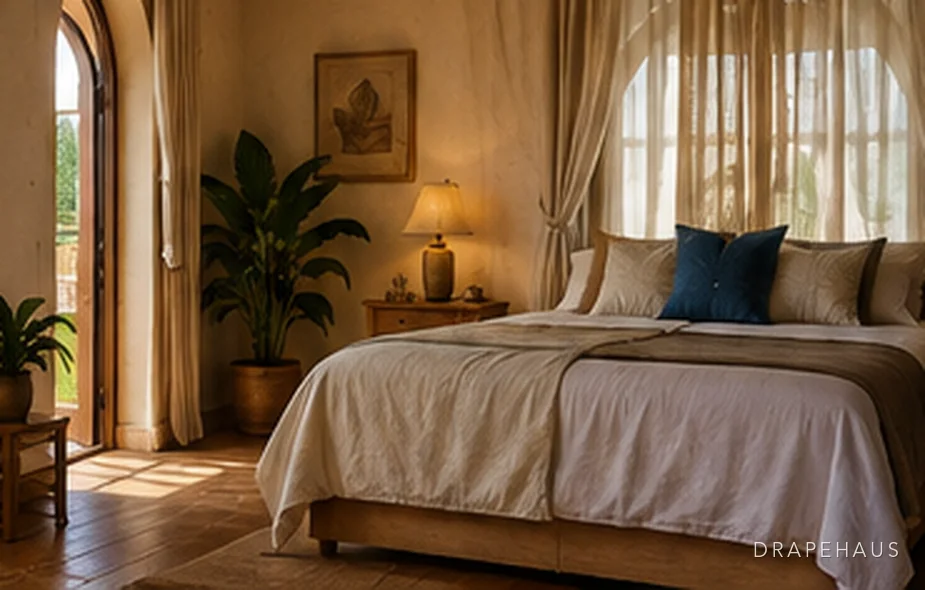
A throw does two jobs in decoration. It adds texture, a softer and more irregular surface against the smooth arm of a sofa or the flat top of a bed, and it adds a block of colour that can be moved in seconds. Folded over one arm or across the foot of a bed, it makes a room look used and comfortable rather than staged.
Choose throws for Goa's real temperatures. The India Meteorological Department gives January, the coldest month, a mean minimum of about 21°C and a mean maximum of about 32°C, so a heavy wool blanket is rarely needed except in a strongly air-conditioned bedroom. Cotton weaves, waffle and honeycomb textures, light linen and soft cotton blends earn their place all year. A heavier throw belongs where the air conditioning runs at night, and it should be easy to wash.
Bedspreads and quilts work the same way at a larger scale. A single change of bedspread can carry a whole bedroom from one colour scheme to another, especially if two or three cushions pick up its colours. In the monsoon, take quilts off the bed in the morning and let the mattress and the quilt air while the fan runs; a bed made up tightly all day in 90% humidity stays faintly damp.
Changing the light with sheers and curtains
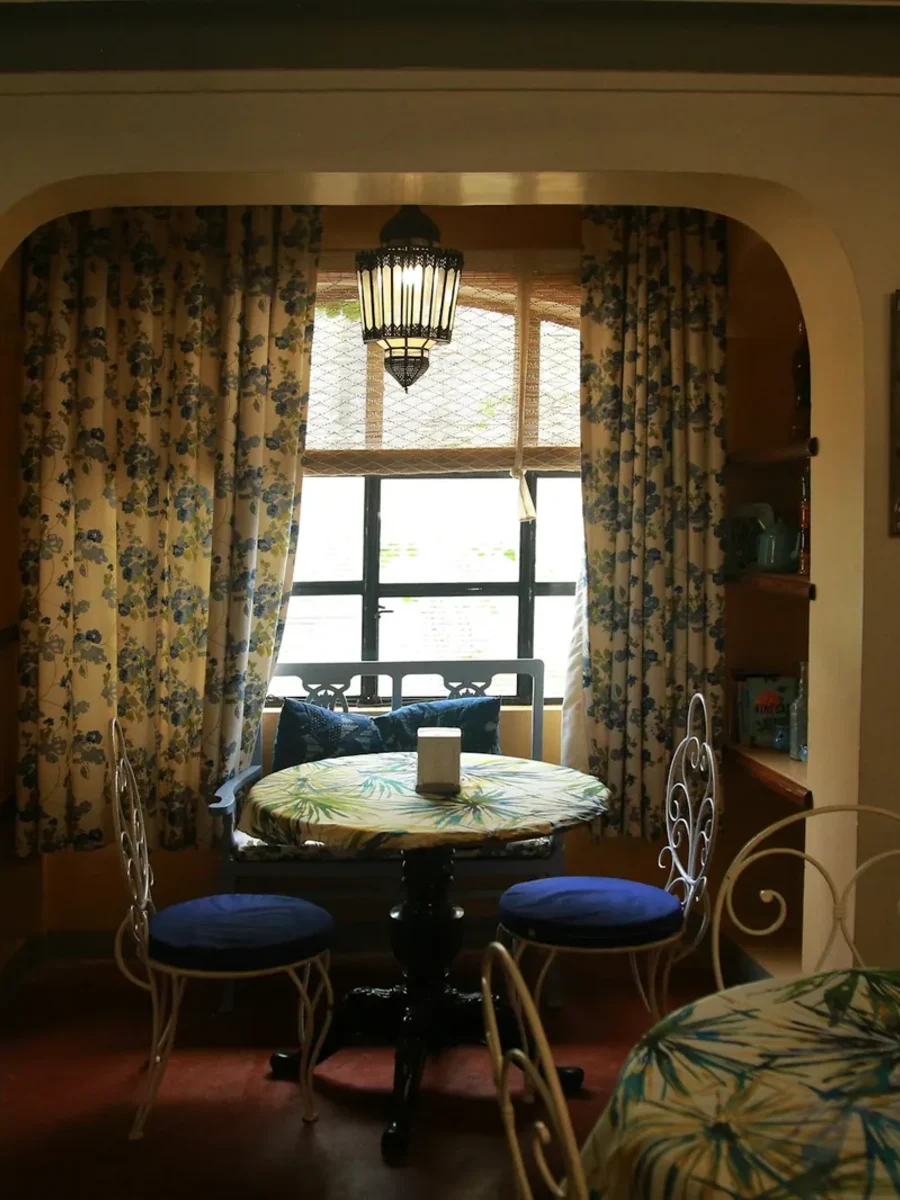
The window is where fabric changes a room most, because it changes the light that falls on everything else. Adding a sheer behind existing curtains is the gentlest version: it softens hard afternoon sun, gives daytime privacy from the lane, and moves in the breeze from the fan, which makes a room feel cooler even when it is not. Our sheer curtains are made to hang full and long, and they work on most existing tracks with a second channel.
Swapping the main curtains is the bigger move, and it repays thinking about colour in the room's own light. Cool colours read as restful and appear to recede, while warm colours are stimulating and make a room feel smaller, as the University of Kentucky's extension guide to wall coverings sets out; the same holds for a wall-sized curtain. In a west-facing room, a warm red or orange in full afternoon sun can feel hot before you have checked the thermometer. A mid-tone blue, green or sand looks calmer at four o'clock.
Sun is the other consideration. A second Kentucky extension guide, on window treatments, warns that some silks tear easily and fade in the sun, and notes that good rayon, wool, cotton and linen withstand sun exposure better. A lined curtain protects its face fabric from the full force of the light and lasts longer. You can try sheer, lined and layered combinations against your own window in our curtain simulator before deciding.
Rugs and runners on tiled floors
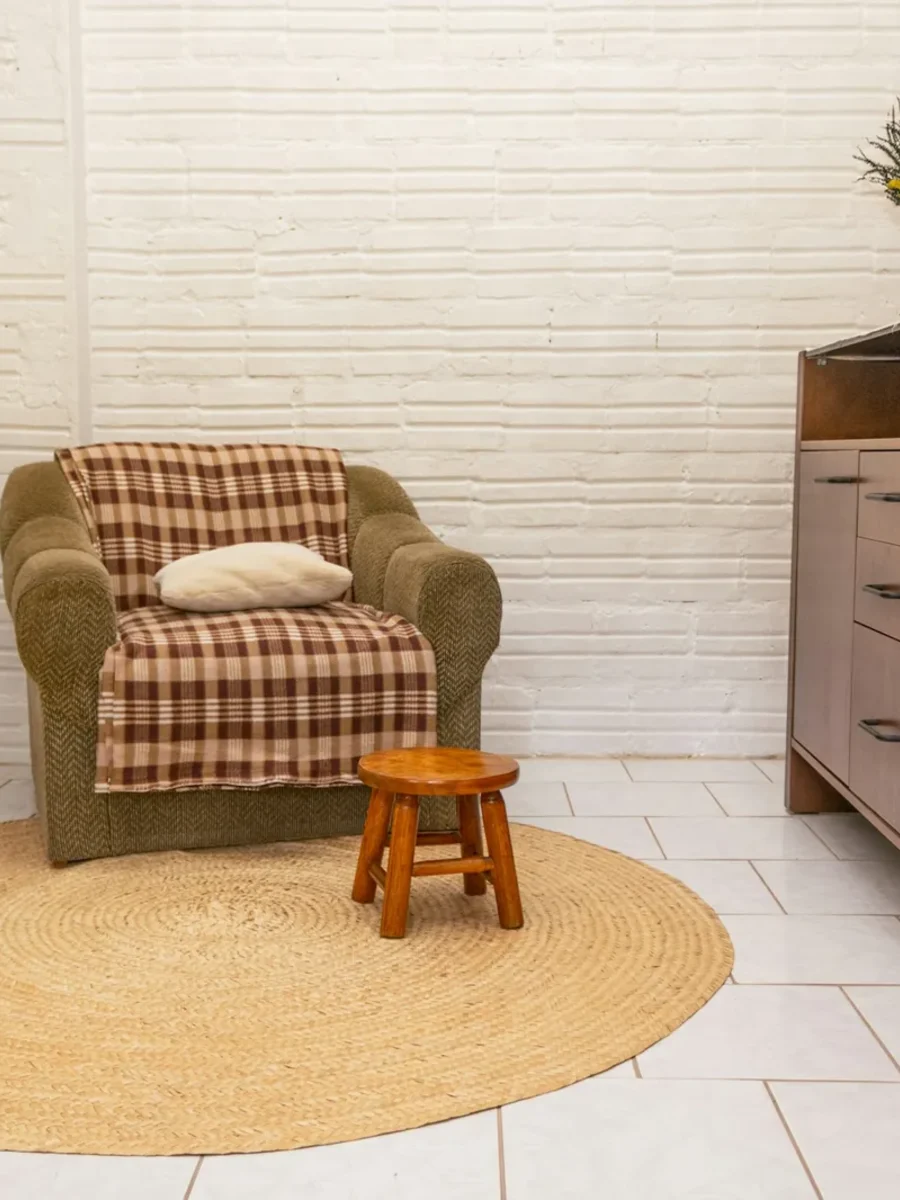
Most Goan floors are tile, stone or polished cement: cool underfoot, easy to mop, and hard on the ear. A rug fixes all of that at once. It defines a seating group, warms the look of a pale floor, and absorbs some of the echo that makes a tiled living room sound like a hall. A runner does the same for a corridor, or for the long walk from the front door to the sitting room in an older house.
Size the rug to the furniture rather than the room. In a living room, a rug large enough for at least the front legs of every seat to rest on it pulls the group together; a small rug floating in the middle of the floor makes the furniture look scattered. Our rug size simulator lets you test sizes against your own layout. For dining tables, the rug needs to run far enough beyond the table that chairs stay on it when pulled out.
Fibre and weave decide how a rug copes with the monsoon. Flatweaves and dhurries are thin, dry quickly and can be rolled away for the wettest weeks. Deep piles hold moisture longer and need a dry, aired room. On ground floors where tiles sweat during the rains, lift rugs or give them a breathable underlay, and never lay one over a floor that is visibly damp. Our guide to the best rugs for humid homes goes into fibres in more detail, and the dhurries and flatweaves range covers the lightest options.
Size a rug to the furniture group, not the room: the front legs of each seat should sit on it.
A seasonal swap plan for Goa
A Goan house has three seasons that matter for fabric rather than four. From about October to February the air is drier and the light is clear; this is the time for richer colours, layered cushions and the best rugs. From March to May the heat builds, and lighter, paler fabrics and bare feet on cool tiles feel right. From June to September the monsoon brings the 87 to 91% morning humidity that the India Meteorological Department records, and the aim shifts from decoration to keeping fabric dry, aired and fewer in number.
Plan the swap as two moments a year rather than a constant shuffle. In late May, before the rains, wash and thoroughly dry the cushion covers, throws and rugs you will not need for the monsoon, and store them clean. The Smithsonian's conservation guidance notes that soiling and organic residues let mildew grow at lower humidity, so dirt packed away in May is an invitation in July. In October, once the house has dried out, bring them back and put the monsoon set through the wash.
Storage is where most fabric is lost. Keep stored textiles in breathable cotton bags or wrapped in old sheets rather than sealed plastic, on a shelf in an internal cupboard rather than against an outside wall, and look at them once a month during the rains. Our guides to before the monsoon and after the monsoon set out the rest of the house routine, and if a property is closed for the season, our monsoon take-down and storage service handles the curtains.
| Months | Put out | Put away or reduce |
|---|---|---|
| October to February | Richer colours, wool or pile rugs in dry rooms, layered cushions, festive runners | Nothing essential; check monsoon storage for mould |
| March to May | Pale linens and cottons, sheers, light throws, flatweave rugs | Heavy throws and deep-pile rugs, cleaned first |
| June to September | A smaller set of washable covers, synthetic or blended fabrics, one flatweave | Feather inserts, delicate silks, rugs on ground floors that sweat |
Fabrics that resist damp, mildew and fading
Natural fibres take up moisture quickly and give it up slowly, which the Smithsonian's Museum Conservation Institute describes as being hygroscopic. Its guidance gives about 80% relative humidity in stagnant air as the point where mould can grow on cellulose fibres such as cotton and linen, and above 92% for wool and silk. Goa's monsoon mornings sit inside that range, which is why a cotton cushion left on an unused chair in a closed room is often the first thing to smell.
That does not mean avoiding cotton and linen; they are the most comfortable fabrics for a hot climate. It means using them where air moves, washing them often, and choosing synthetic or blended fabrics for the pieces that sit still: cushions on a verandah, a throw in a guest room that is shut for weeks, a rug on a ground floor. Polyester blends dry faster and take up less water. For anything exposed to strong sun, solution-dyed acrylic, where the colour is part of the fibre, holds its colour far longer than a printed cloth. Our coastal fabric advisor suggests fabrics for each spot in the house.
Air is the other half of the answer. The same Smithsonian guidance points out that humid air which is cooled without being dehumidified ends up with a very high relative humidity, which is what happens in a room where a fan runs but nothing removes the water. A dehumidifier or the dry mode of an air conditioner in the rooms with the best textiles, and open doors and moving air everywhere else, will keep a fabric-rich room fresh. Our article on humidity in Goa explains the numbers.
Wash before you store: dirt and food residue let mildew grow at lower humidity than clean fabric.