 Drapehaus
Drapehaus
Preparing the room
Drapehaus
Preparing the room
Free tool
Generic curtain advice is written for temperate climates. It does not account for salt crystals in the weave, a monsoon that runs for four months, or a house that sits shut for half the year. This does.
Elevated exposure
Manageable, but fibre choice still matters.
Standard poly-cotton lining. Interlining is fine here if you want the extra weight and fall.
Powder-coated or anodised aluminium. Avoid untreated mild steel brackets.
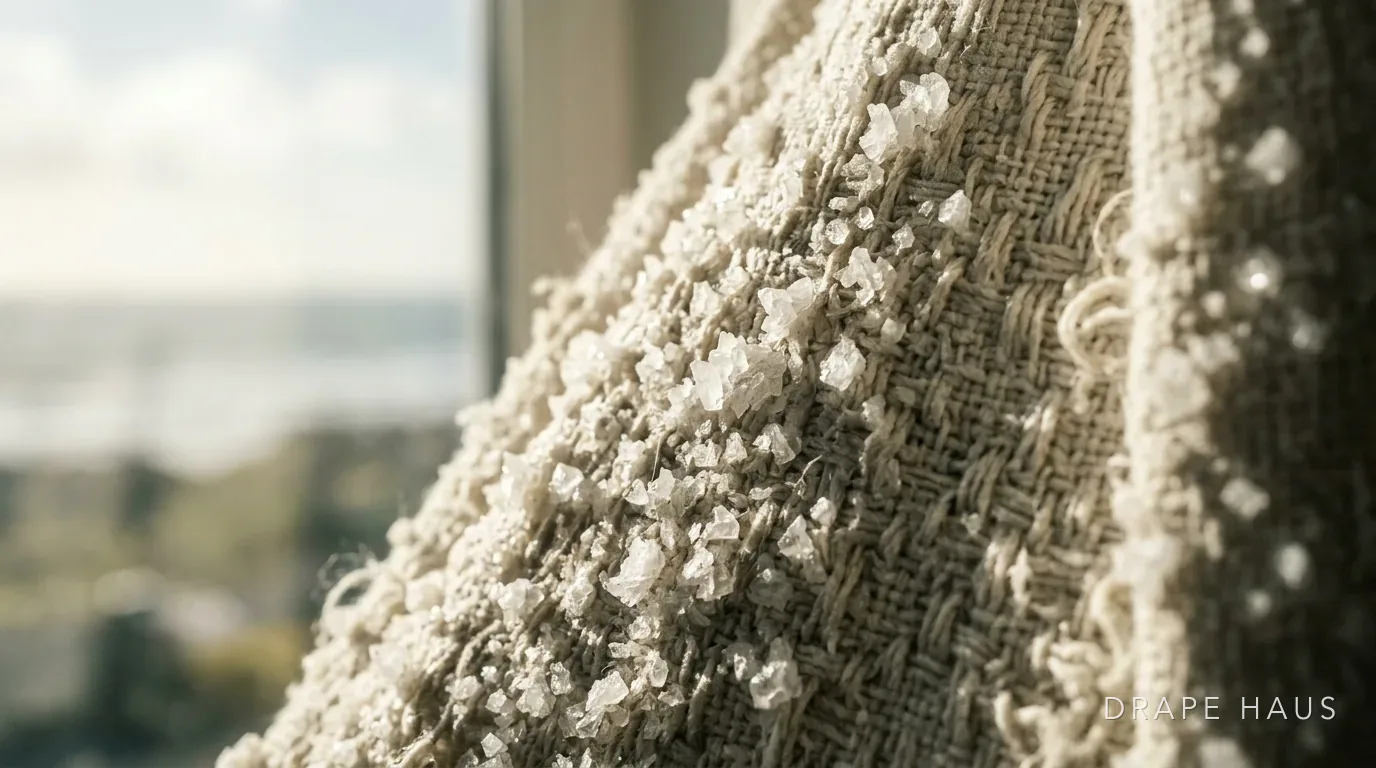
Salt does two things to fabric, and neither is obvious until the damage is done. Airborne salt crystals settle into the weave, and because they are hard and angular they abrade the fibres every time the curtain moves. At the same time salt is hygroscopic — it draws water out of the air and holds it against the cloth, so the fabric never fully dries even on a clear day.
That combination is why an expensive linen curtain can look tired within two seasons a few hundred metres from the beach, while the same fabric three kilometres inland is fine for years. It is not a quality problem. It is a specification problem.
The second factor is the closed house. A property shut up from June to September has no airflow, and humidity collects and condenses into soft furnishings. This is the most common cause of total write-offs we see — and it is almost entirely preventable by taking curtains down or tying them clear of the glass before the house is closed.
FAQ
Two things happen at once. Salt crystals settle in the weave and are abrasive, cutting fibres every time the fabric moves. And salt is hygroscopic — it pulls moisture out of the air and holds it against the cloth, which is what causes mildew spotting on natural fibres.
Solution-dyed acrylic. The colour is locked into the fibre rather than applied to the surface, so it does not bleach in strong sun, and acrylic does not absorb moisture the way cotton or linen does. Polyester blends are the next best option and usually cost less.
Further than about three kilometres inland, yes, particularly if the room is used daily and gets airflow. Closer to the sea, untreated natural fibres hold damp and will spot with mildew. A mildew-inhibiting finish helps but does not remove the problem.
Closed rooms have no airflow, so humidity sits at ceiling level and condenses into the fabric. This is the single most common cause of write-off damage we see. Take curtains down, or at minimum tie them clear of the glass and leave a gap for air to move.
Untreated mild steel will, usually within a season, and it bleeds rust down the wall. Within a kilometre of the sea, specify marine-grade stainless, anodised aluminium or powder-coated tracks.