 Drape Haus
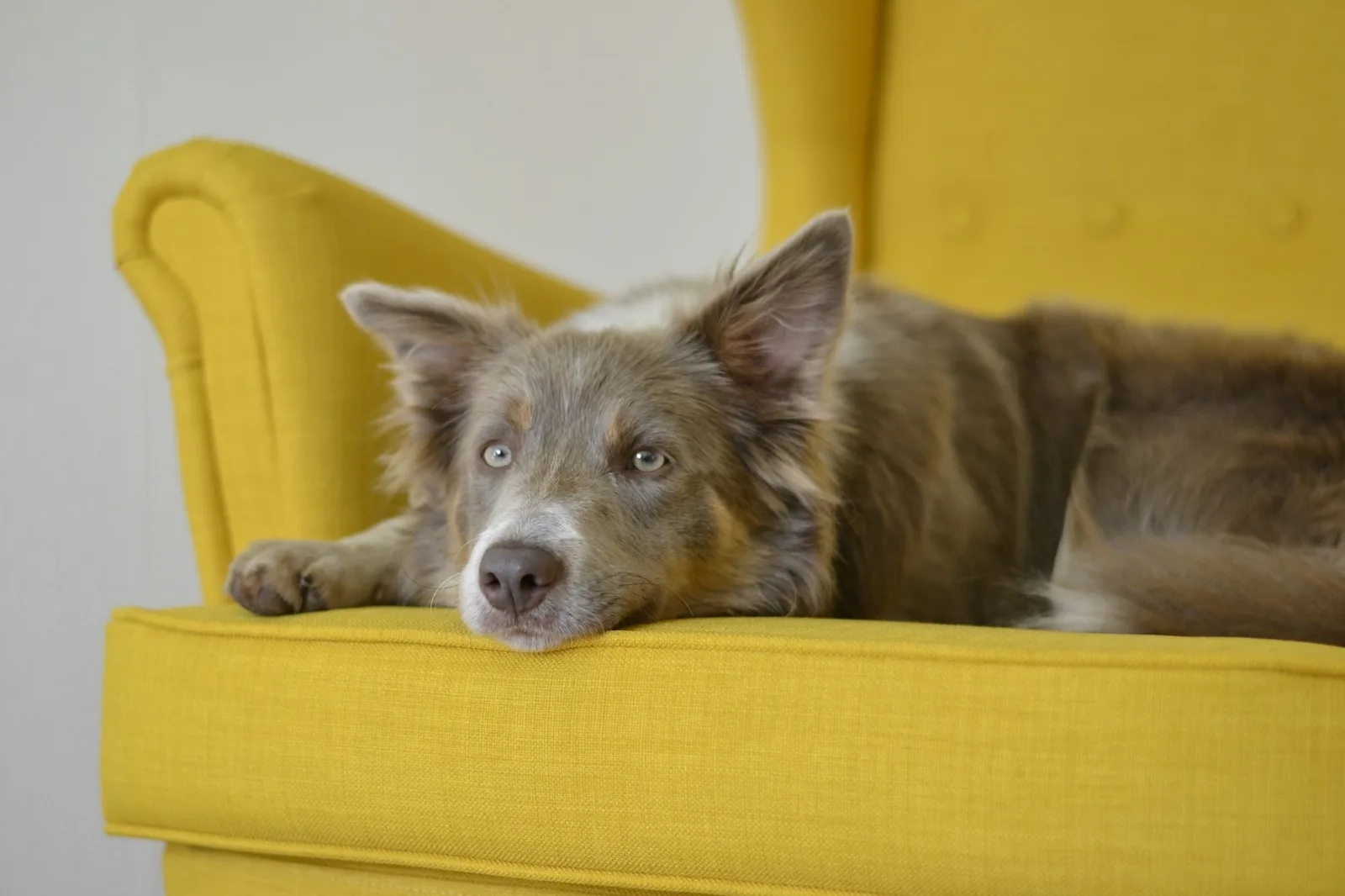
The best sofa fabric for pets is a tightly woven synthetic with a flat or very short, dense surface, in a mid-tone close to your animal's coat. In practice that means a performance polyester weave or a solution-dyed acrylic, ideally made up as removable covers. A tight weave gives claws nothing to hook, sheds hair when brushed, and takes water-based cleaning; a mid-tone hides both pale sand and dark hair; and covers let you wash the whole thing when the monsoon has done its worst.
The fabrics to avoid are the ones built from loops and loose yarns: bouclé, looped chenille, slubby open linens and nubbly weaves. They are lovely to touch and they snag the first time a cat stretches against them. Leather and leatherette are a special case, easy to wipe but unforgiving of claws.
Goa adds its own complications. Dogs come in soaked from monsoon walks, sand travels home from the beach in fur and on feet, and red laterite dust settles on everything in the dry months. This guide works through claws, hair, odour, colour and leather in turn, and ends with the covers and throws that make any good fabric last longer.
What pets actually do to a sofa
It helps to separate the damage, because each kind needs a different defence. Claws pull loops and floats out of the weave and, on coated fabrics, puncture the surface. Hair works into textured weaves and clings to pile. Oils from coats darken the spot where a dog always lies. Wet and dirt arrive on paws and fur, and in the monsoon they arrive daily. Accidents and the odours that follow are a fifth, separate problem.
Cats scratch for reasons that have nothing to do with bad behaviour. The ASPCA, the American animal-welfare society, lists several: they scratch while playing and stretching, to mark territory, and to remove the frayed, worn outer layer of their claws and expose the new ones beneath. A sofa arm is the right height and texture for all of those. Dogs do less deliberate damage, but a dog that digs at a cushion to settle, or circles three times before lying down, works its claws across the same patch of seat every day.
No fabric stops all of this. What the right fabric does is turn damage into wear you can live with, and make cleaning quick enough that you actually do it.
Tight weaves that resist claws, and loops that snag
The single most important property is the surface structure. A claw snags when it can hook something: a loop standing proud of the surface, as on bouclé and looped chenille, or a long float, where a yarn passes over several others before going back into the weave, as on many textured jacquards and basketweaves. Once a loop is pulled, it stays pulled, and one pulled thread often drags others with it.
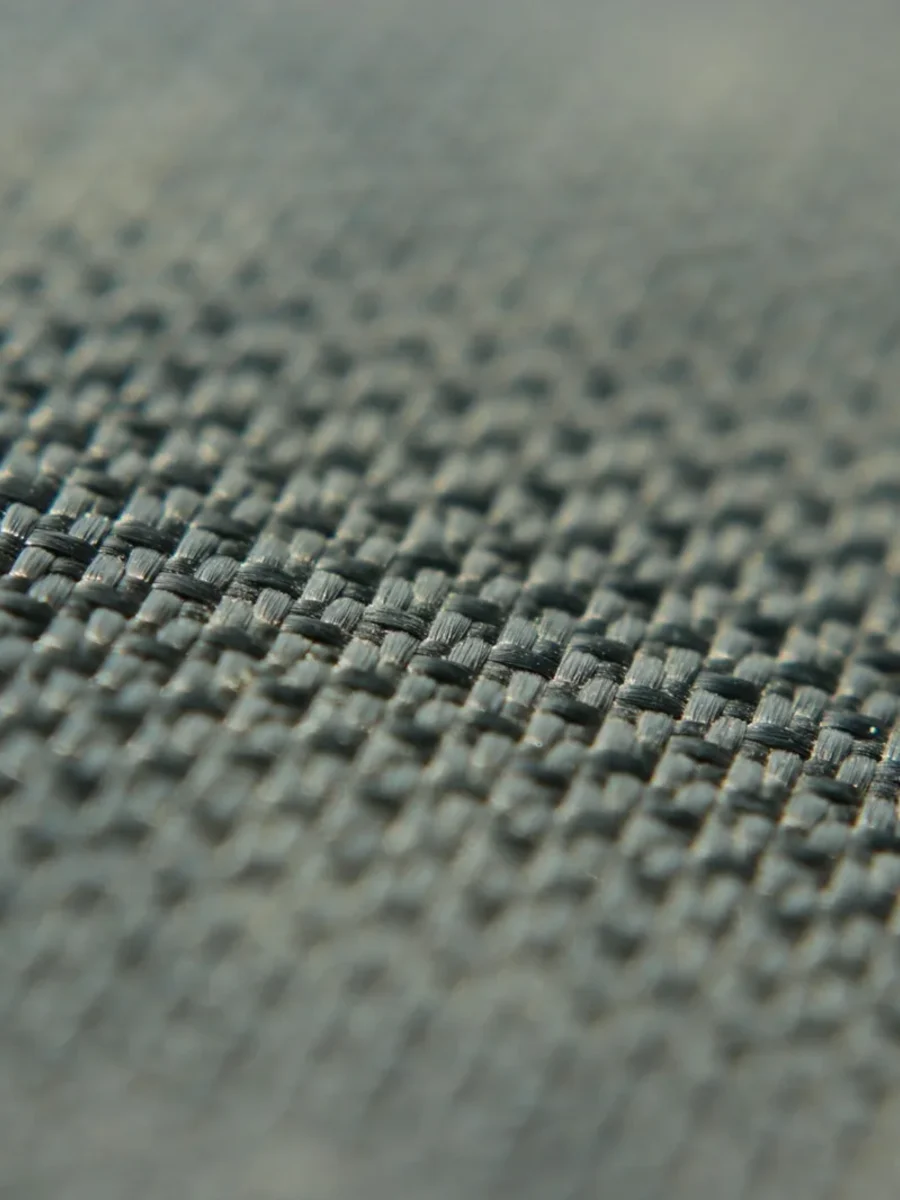
A tight plain or twill weave of smooth yarn gives a claw nothing to grip. It slides across the surface. You can test a swatch in seconds: press a fingernail into it and drag. If the nail lifts a loop or opens a gap between yarns, a claw will do the same. Hold it up to the light, too; a cloth you can see through easily is loosely woven and will shift and snag.
Abrasion rating matters as well, because a dog's claws wear the seat like coarse sandpaper. Our sofa fabric planner asks for 30,000 Martindale rubs or more on an everyday family sofa and 40,000 or more in a rental; with pets, treat your sofa as at least everyday use. Our guide to the Martindale test explains why a high rub count does not, on its own, protect against snags.
Short, dense pile is the one textured surface that does reasonably well. A polyester velvet has no loops to catch; the pile is cut, so a claw passes through it. Its drawbacks are hair, which clings, and pressure, which marks the pile where a dog lies. Our planner rates it as workable with care for homes with pets, not as a first choice.
Planning something like this?
We visit homes across North and South Goa, measure on site, and bring samples to see in your own light.
Fabrics that release pet hair easily
Hair sticks to fabrics in two ways: it works into textured surfaces mechanically, and it clings to pile by static and friction. The fabrics that release it best are smooth and tightly woven, so hair lies on top rather than threading into the weave. Microfibre, a dense polyester with a very fine, soft surface, releases hair for this reason, and a tight polyester canvas or twill behaves the same way.
Hair comes off these with a damp rubber glove or a slightly damp cloth wiped in one direction, then a vacuum. On textured weaves, chenille and velvet, it takes more work, and on bouclé it never quite all comes out. The Carpet and Rug Institute's advice for homes with pets on floors applies to sofas too: vacuum more often to capture hair and dander, because it is much easier to lift before it is worked in.
Sand behaves like hair, only harder on the fabric. Fine beach sand carried in on fur settles into the seams and between cushions, and every time someone sits it grinds against the yarns. Lift the seat cushions and vacuum the deck and crevices weekly in a house near the beach; the guide to cleaning a sofa at home covers the routine.
Odour and washability when dogs come in wet
A wet dog on a sofa is a moisture problem before it is a smell problem. Water that soaks through the cover into the foam can take a long time to dry in a Goan monsoon, when the India Meteorological Department records morning humidity of 87 to 91 percent. The US Environmental Protection Agency advises drying wet materials within 24 to 48 hours to prevent mould. A towel by the door, and a rule that the dog is dried before the sofa, does more than any fabric.
Fibre choice still matters. The Canadian Conservation Institute names cotton, linen and rayon as particularly vulnerable to mould, and warns that mould will grow even on synthetics such as polyester when they are soiled. Dog coats bring exactly that soiling. A synthetic sofa that is vacuumed and spot-cleaned stays fresher than a cotton one; a synthetic sofa that is not will still smell in October.
For accidents, the ASPCA's advice is to clean thoroughly with an enzymatic cleaner made to neutralise pet odours, and not to use ammonia-based cleaners, because urine contains ammonia and the smell can draw an animal back to the same spot. Always check the fabric's cleaning code and test on a hidden area first. If the smell has reached the foam, cleaning the cover is not enough; our guide to removing smells from a sofa explains how to find the layer it lives in.
Dry the dog, not the sofa. A towel at the door in the monsoon saves the foam from soaking up water it will take days to lose.
Colours and patterns that hide hair, sand and red dust
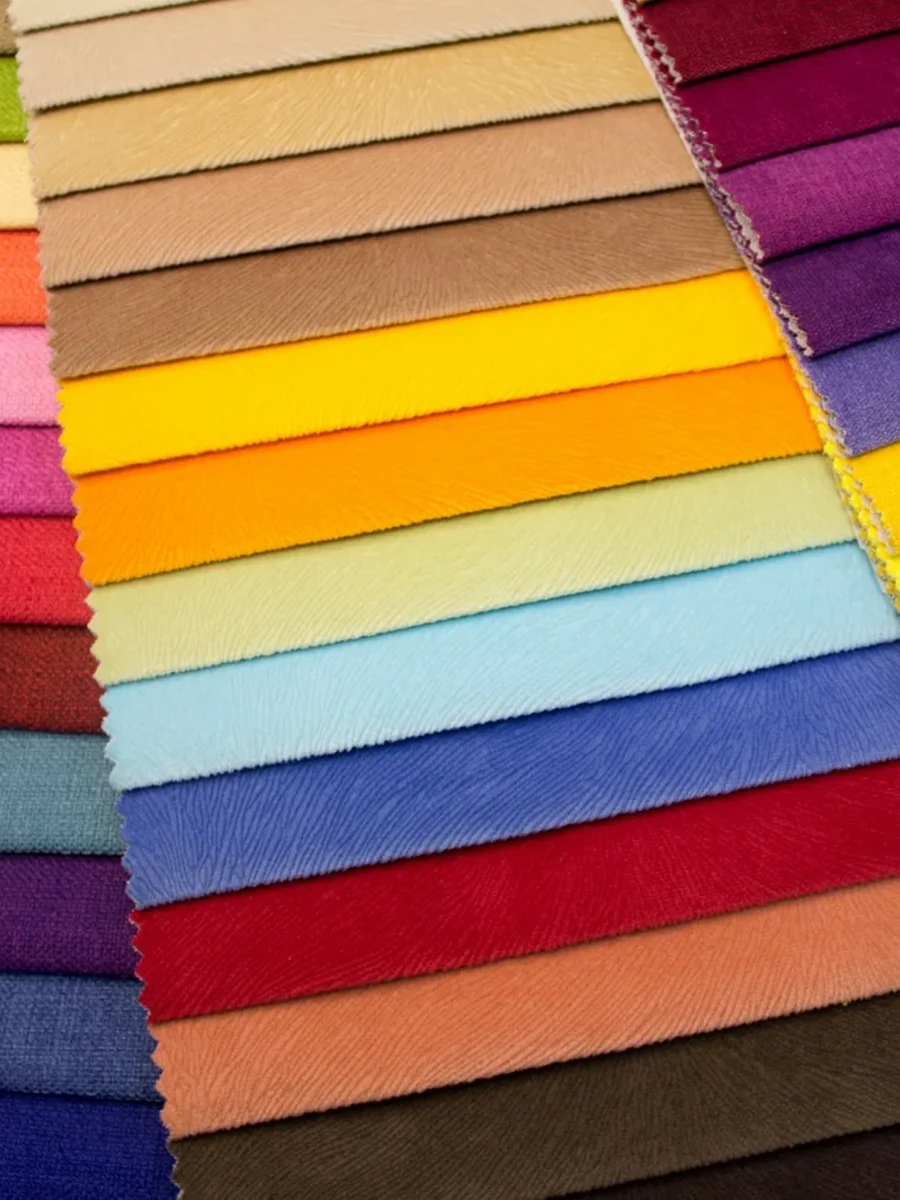
Colour is the least costly protection there is. A sofa close in tone to the animal that sleeps on it hides most of the hair between cleans. Very dark plains show pale hair, lint and sand; very pale plains show dark hair, muddy paws and the faint grey of body oils on the arm. Mid-tones are the safe ground: stone, taupe, olive, slate, warm grey and muted blues.
Goa has a particular enemy for pale fabric: red laterite dust, which drifts in through open windows in the dry months and settles as a pinkish film, and arrives in quantity on a dog that has been running on a laterite path. Warm mid-tones, rust, terracotta, ochre and brown-greys, absorb it visually. Fine beach sand is pale, so it shows most on charcoal and navy.
Texture in the colour helps more than texture in the weave. A heathered or melange cloth, woven from yarns of slightly different shades, or a small-scale pattern, breaks up the surface so hair and dust do not read as marks. That gives you the forgiving look of a textured fabric while keeping the tight, flat construction that claws cannot catch. Large, high-contrast patterns are less forgiving than they look; a single long white hair shows clearly on a dark stripe.
Pet-friendly sofa fabrics compared
The table follows the verdicts our sofa planner gives when you tell it the house has children or pets. It is a guide to tendencies; the weave and weight of the actual cloth can move a fabric up or down a row. Use it to shortlist, then test swatches with your fingernail and a damp glove.
The broad picture is simple. Tight synthetics win on claws, cleaning and damp; natural fibres lose on all three; pile and coated fabrics sit in between, each with one serious weakness. If you love the look of linen or bouclé, keep it to a chair the pets cannot reach, or use it on cushions you can replace.
| Fabric | Claws | Hair | Wet and odour | Verdict with pets |
|---|---|---|---|---|
| Performance polyester, tight weave | Slides off a flat weave | Releases easily | Spot-cleans well; keep it clean | Good |
| Solution-dyed acrylic | Good if tightly woven | Releases well | Cleans well; resists fading | Good |
| Polyester-cotton blend | Fair to good | Fair | Check the cleaning code first | Workable with care |
| Cotton or linen | Loose linen snags readily | Clings to slubs | Stains, holds damp, mildews | Avoid |
| Polyester velvet | No loops to catch | Clings to the pile | Pile marks where a dog lies | Workable with care |
| Bouclé, looped chenille | Snags almost at once | Traps hair in loops | Hard to clean deeply | Avoid |
| Leatherette (PU/PVC) | Punctures and tears | Wipes off | Wipes clean; backing can mould | Workable with care |
Leather and leatherette with pets
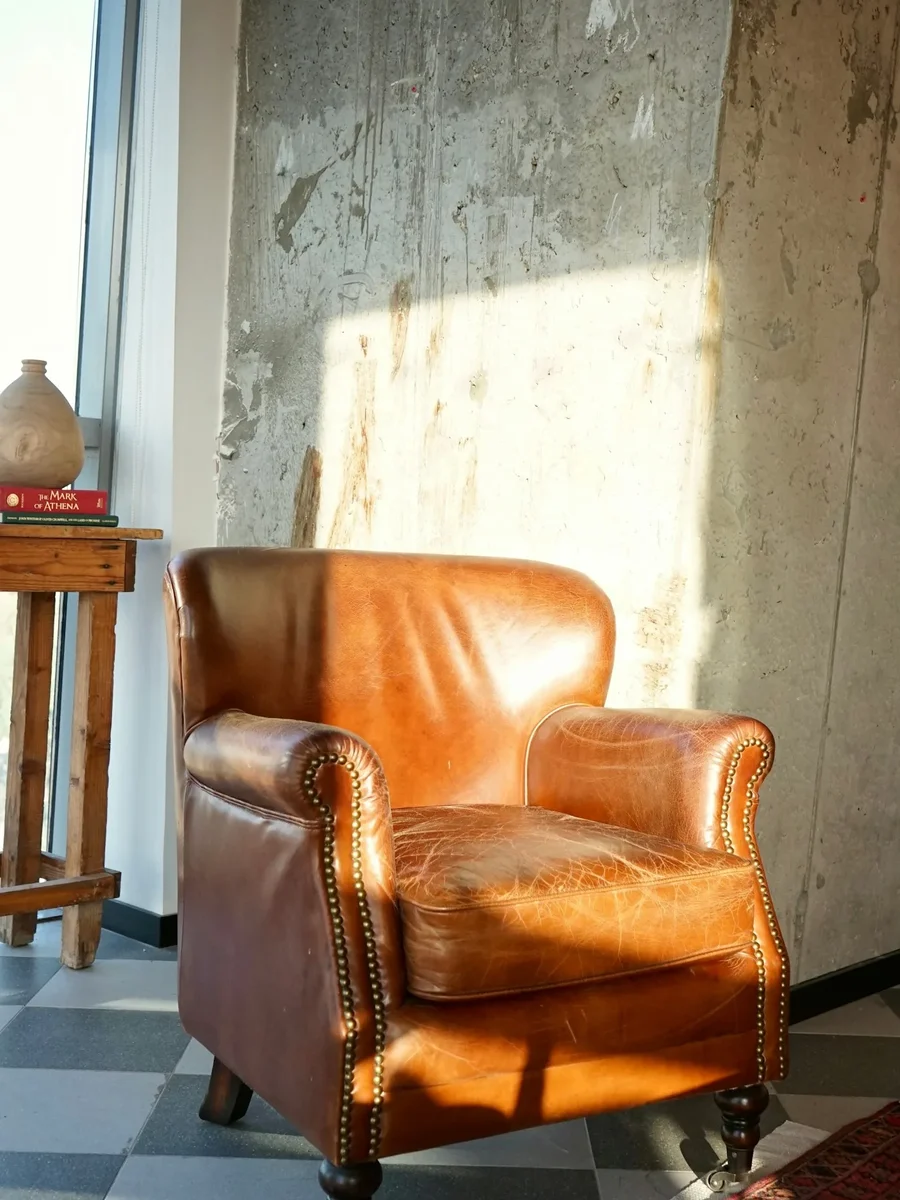
Leather's great advantage with pets is that hair does not cling and spills wipe off. Its weakness is claws. Every scratch shows, more on a soft, natural aniline leather and less on a leather with a pigmented protective finish, which hides light marks better. Some owners like the way scratches build into a worn patina; others are upset by the first one. A dog that jumps up and pushes off with its back legs can also puncture the hide on the seat edge.
Leatherette, the PU and PVC coated fabrics sold locally as rexine, is less forgiving still. Once a claw breaks the coating, the tear tends to spread and cannot be repaired invisibly, and in Goan heat and humidity the coating can crack or peel with age. It wipes clean, which is why it is chosen for dogs, but it is a poor match for cats. It is also hot and sticky on bare skin in a room without air conditioning.
Leather also needs care against mould in the monsoon, a problem covered in our guide to fungus on a leather sofa, listed below. If you want a leather look with pets, a tightly woven fabric with a leather-like colour and sheen is often the more practical answer. Our page on leather and rexine compares the options.
Removable covers and washable throws: the second line of defence
Even the toughest fabric does better with something between it and the dog. A throw folded over the animal's favourite spot takes the hair, oils and paws and goes in the washing machine weekly. Choose a tightly woven cotton or polyester throw rather than a loose knit, which claws will pull. Keep two, so one is always dry in the monsoon.
Removable covers are the bigger step. A sofa made with covers that unzip can be washed after a muddy month, and if a cat finally wins on one arm, a single panel or cover can be replaced instead of the whole sofa being re-covered. That is why our planner suggests covers whenever the house has children or pets, a rental or a monsoon closure. Our sofa covers are cut to the individual sofa, and the guide to sofa cover cloth explains which cloths survive repeated washing; the polyester and blends guide covers the fibre most of them use.
Give the animal somewhere better to scratch, too. The ASPCA recommends offering sturdy scratching posts in several textures, tall enough for a full stretch, placed right next to the furniture the cat has chosen as a legal alternative, and making the sofa less attractive in the meantime, for example with double-sided sticky tape on the arm. Regular claw trimming helps as well. A fabric that resists claws and a cat that has a better option is the combination that keeps a sofa looking new.