 Drapehaus
Drapehaus
Preparing the room
Drapehaus
Preparing the room
Upholstery
Leather and coated fabrics for heavy-use seating, headboards and wipe-clean applications — chosen with an eye on how each behaves in sustained humidity.
Durability scale (Martindale rubs, BS 2543)
15k
20k
25k
30k
40k
Who uses it
Where it lives
How it is used
Durability to ask for
30,000+ rubs
Severe domestic / general contract
Removable covers
Yes
zipped, washable, and a spare set
Fibres that suit
Avoid: Anything you cannot clean in place, on a piece used every day. Rub count is one number among several — weave, colour-fastness and how a fabric handles humidity matter as much. We bring samples to see in your room.
In short
By the Drapehaus studio · How we write
Is it right for you?
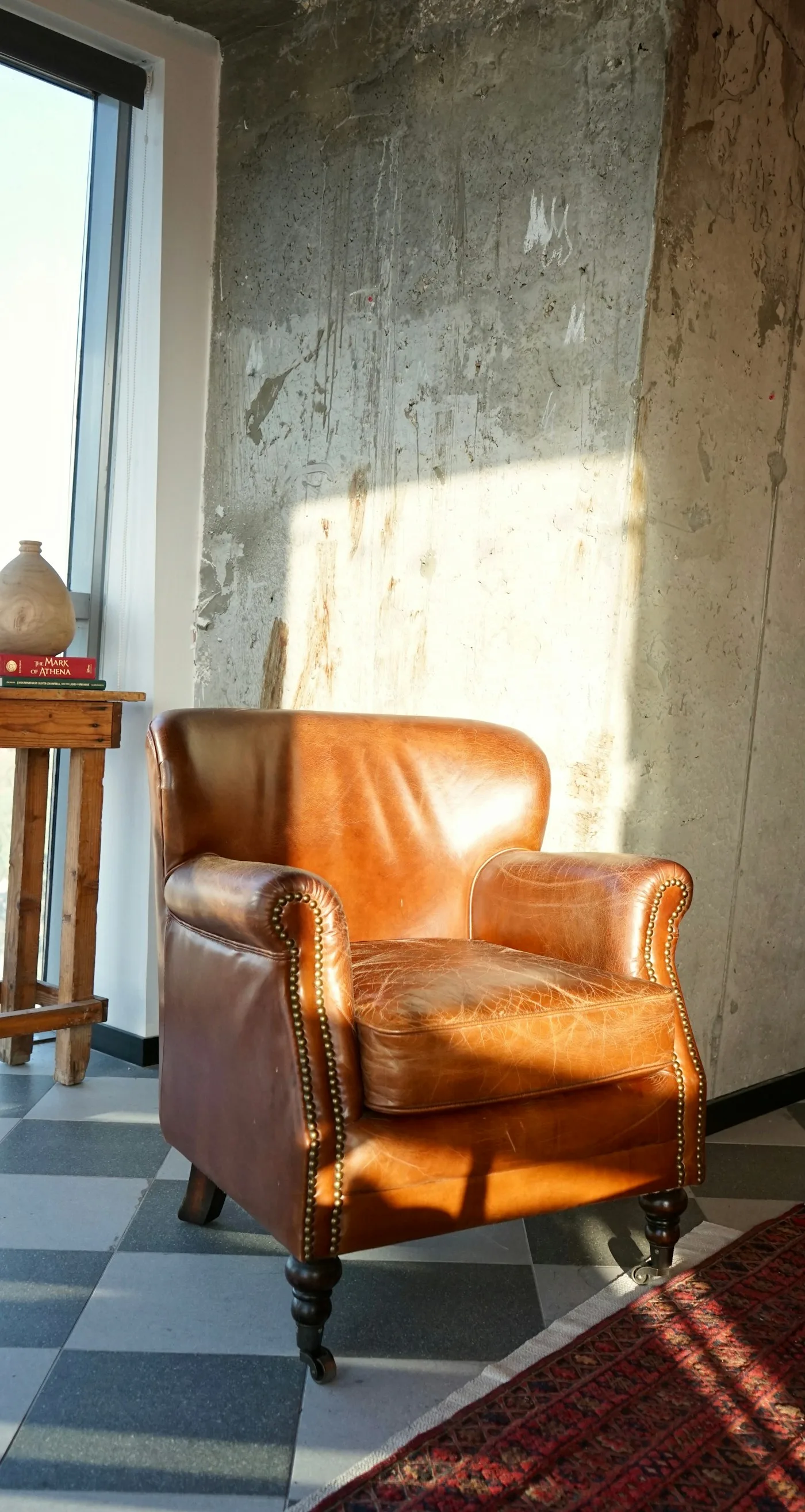
Leather and coated fabrics look alike from across a room and behave very differently up close. Leather is a natural hide, tanned and finished, that breathes, absorbs and gradually takes on a patina. Rexine, the name long used in India for leathercloth, is a woven or knitted fabric base carrying a plastic coating that imitates leather's surface. Modern faux leathers are the same idea, usually with a polyurethane coating rather than the older PVC.
Leather suits people who want a material that ages rather than wears, who can keep it in an air-conditioned or well-ventilated room, and who are willing to dust and condition it a few times a year. It is at its best in a study, a library, a bedroom or a formal sitting room, and on pieces with good lines that show off a hide.
Coated fabrics suit places where spills, sun cream and constant use are expected: dining chairs, breakfast banquettes, bar stools, children's rooms and the busier rooms of a rental villa. They wipe clean, cost less effort to keep, and do not need feeding.
Neither is the right choice for an unventilated room that is shut through the rains, or for seating in direct afternoon sun. For those positions, a performance woven fabric or outdoor upholstery will serve better.
The details
Real leather ages beautifully but needs airflow and feeding in a humid climate, or it can mould and crack. Rexine and faux leathers are wipe-clean and practical, though the backing can degrade if it traps moisture.
The right choice depends on the room: air-conditioned spaces suit leather well, while busy family rooms and restaurants often do better with a good coated fabric.
Your options
The word leather covers several very different products, and coated fabrics vary as much again. These are the materials we work with and the ones worth recognising on a label.
Swipe for all 6 →
The honest view
Leather ages well
Good leather softens, darkens and takes a patina over years of use. Scuffs and marks become part of its character, and it can be cleaned, recoloured and conditioned to extend its life considerably.
Coated fabrics wipe clean
Spills, food and sun cream sit on the surface and wipe away. For dining seating, children's rooms and rentals, this alone often decides the choice.
Neither traps dust mites
Smooth surfaces hold far less dust and fewer allergens than woven fabric. For allergy sufferers, a leather or coated surface is often more comfortable to live with.
Strong, crisp lines
Leather and coated fabrics hold tight tailoring, deep buttoning and sharp piping well. Chesterfield buttoning, channelled backs and slim modern profiles all suit them.
Leather needs airflow
In a closed, humid room leather absorbs moisture and becomes a host for mould. It needs ventilation, air conditioning or a dehumidifier through the monsoon, and occasional conditioning.
Sun is hard on both
Strong sun fades and dries leather and breaks down the coating on faux leathers, causing cracking. Keep both out of direct sunlight or under a throw during the brightest hours.
Warm against the skin
Coated fabrics in particular feel warm and can stick to bare legs in a hot, non-air-conditioned room. Leather is better but still warmer than a breathable woven fabric.
Low-grade coatings peel
Thin coated fabrics and bonded leather can peel or flake within a few years in heat and humidity. Specifying a quality grade matters more here than with most materials.
Side by side
How the three realistic choices for a heavily used seat compare in a coastal house.
| Real leather | Quality faux leather | Performance woven fabric | |
|---|---|---|---|
| Humidity | Needs airflow or AC | Tolerant | Tolerant if synthetic |
| Spills | Wipe quickly | Wipe clean | Blot, may stain |
| Comfort in heat | Warm at first | Warm, can stick | Cool and breathable |
| Sun exposure | Fades and dries | Can crack | Depends on dye |
| Ageing | Develops patina | Wears, then fails | Wears gradually |
| Care | Dust and condition | Wipe | Vacuum and spot clean |
| Repair | Recolour and restore | Replace the panel | Replace the cover |
Swipe to compare →
In a room without air conditioning, a breathable woven fabric is often more comfortable than either leather or faux leather through the hottest months.
Rather see it in your own room?
We bring samples to the house, measure every window, and specify for the light and exposure you actually have.
Room by room
Air-conditioned, gently used and often dark-panelled, a study is where leather is at its best. A club chair or a buttoned sofa in full-grain hide suits the room and ages with it.
Coated fabric or protected leather on dining seats makes cleaning after meals simple. Drop-in seats let the covers be replaced quickly when they eventually wear.
Leather works in an air-conditioned living room with shaded windows. In an open, breezy room, a protected leather with a pigmented finish copes better than aniline.
Leather or faux leather headboards and benches add texture. Keep them away from damp external walls, and prefer air-conditioned bedrooms for real hide.
Quality coated fabric is practical: it wipes clean after paint, food and felt pens. Avoid delicate aniline leather entirely.
Coated fabrics survive changing guests well. Specify a heavy grade with a strong backing so it does not crack after a few seasons of use and cleaning.
A leather piece in a room shut from June to October with no airflow is at real risk of mould. Arrange ventilation or dehumidification, or store it elsewhere.
In depth — tap a heading to read
The room decides more about leather's life than the hide does. An air-conditioned room with steady humidity is ideal: the leather stays supple and resists mould. A room that is open and breezy through the dry season and shut for the rains is the hardest case, because the leather swings between drying out and absorbing moisture. A ventilated room near the sea sits between the two.
For rooms without air conditioning, choose a protected or pigmented leather rather than aniline, and plan how the room will be aired or dehumidified through the monsoon. Keep the piece a little away from external walls, and avoid positions where afternoon sun falls directly on it. Our journal covers what to do if mould does appear; the aim here is to specify so that it is unlikely.
If a room will be shut through the rains without air conditioning or a dehumidifier, choose a coated fabric or a synthetic weave rather than real leather.
The difference between a good and a poor coated fabric lies mostly out of sight. A strong knitted or woven backing gives the material its tear strength and lets it stretch around curves without the coating cracking. A thicker, well-bonded coating resists abrasion and does not peel. Coatings formulated to resist hydrolysis, the slow breakdown of polyurethane in heat and humidity, last far longer in a coastal climate.
Reputable ranges publish abrasion results, often in rub counts, alongside colourfastness and hydrolysis resistance. We choose from ranges with this information and show you the backing as well as the face, so you can see what you are buying. As a rule, if a coated fabric feels thin and papery or its backing is loose and open, it will not last in daily use.
Leather and coated fabrics cannot be pinned and eased the way woven cloth can. Every needle hole is permanent, so patterns are cut precisely and seams are planned so stress falls along them rather than across a single panel. Double-stitched or top-stitched seams add strength and a tailored look. On deep-buttoned pieces, the pleats are folded by hand so they fall cleanly and do not crack at the folds.
Hides come in limited sizes and with natural marks, so large pieces need careful cutting to place the best leather on the seat and front, with minor marks on the back and sides. Coated fabrics come on rolls and are simpler to lay out, which is one reason they suit long banquettes and large sets of dining chairs where consistency matters.
In hospitality seating, coated fabric is usually the right call. It wipes clean between services, tolerates sun cream and food oils better than hide, and is less sensitive to the humidity swings of a building that is open to the air. Heavier grades with a woven backing are worth specifying for booth seating and stools, where edges and corners take the most wear.
Colour choice affects how long it looks good. Very dark coated fabrics show scuffs as pale marks; very light ones show denim transfer and stains. Mid-tones and textured finishes hide wear best. In a rental villa, consider coated fabric for dining chairs and bar stools while keeping woven fabrics on lounge seating, where guests spend long hours in warm weather.
Leather colour changes with time and light. Tan and cognac deepen with handling; dark browns and oxbloods stay rich; black holds its colour but shows dust. Light leathers look fresh in a white or lime-washed room but need more cleaning. Coated fabrics keep their colour more consistently, which suits a scheme where several pieces must match.
Leather and coated surfaces also need softening in a room. Linen cushions, a wool throw or a rug beneath help them feel warm rather than clinical, and give a place to sit on hot days without bare skin against the surface. A single leather armchair among fabric seating often looks more considered than a full leather suite.
Living with it
Wipe with a dry, soft cloth or a soft brush attachment. Dust and salt particles are abrasive and work into leather's grain and creases.
A leather conditioner a few times a year keeps hide supple. In humid months use very little, as excess oils can encourage mould rather than prevent it.
A cloth dampened with mild soapy water, then clean water, then dry. Avoid solvents, bleach and abrasive cleaners, which strip the coating.
Draw blinds or curtains during the brightest hours, or rotate the piece's position. Sun dries leather and degrades coatings.
Run fans or a dehumidifier in rooms with leather, and keep pieces off external walls. Check creases and undersides regularly through the rains.
Avoid these
Aniline marks with every touch and spill. For busy rooms, choose protected or pigmented leather, or a quality coated fabric.
It is often sold as genuine and peels in humidity. Ask exactly what the material is and how it is made.
A leather sofa in a room shut for the monsoon without air conditioning or a dehumidifier is likely to grow mould. Plan the room's air first.
Heavy conditioning in humid months leaves a layer of oil for mould to feed on. Condition lightly, and mainly in the dry season.
Thin, lightly backed faux leather cracks and peels quickly. For seats, insist on a heavy grade with published performance.
Checklist
More in upholstery
Reupholstering a well-built frame costs less than replacing it and keeps a piece you already love.
From the Journal
All articlesOur process
One team from the first visit to the last bracket, so nothing is lost between the person who specified it and the person who fits it.
FAQ
It can in a damp, unventilated room. Airflow, regular feeding and keeping it out of closed-up spaces through the monsoon prevents it.
Usually a good-quality coated fabric — it is wipe-clean, hard-wearing and less sensitive to humidity than real leather.
A good faux leather tolerates humidity with less attention, because its coating does not absorb moisture. Real leather can do very well in an air-conditioned or well-ventilated room, and it lasts longer and ages better. In a room that is shut through the monsoon, faux leather or a synthetic weave is safer.
Usually because the coating was thin or the polyurethane has broken down through hydrolysis, a reaction with heat and moisture over time. Sun, body oils and harsh cleaners speed it up. Heavier grades formulated to resist hydrolysis last far longer. Once peeling starts, the affected panels need replacing.
Leather feels cool at first and warms to the body, and without air conditioning it can feel warm on long afternoons. It breathes better than coated fabric, which can stick to bare skin. A linen throw or cushions help. In rooms without air conditioning, a breathable woven fabric is often more comfortable.
Often, yes. Worn leather can be cleaned, recoloured and conditioned, and damaged panels replaced. If the hide is cracked through or the filling has collapsed, the piece may need full reupholstery in new leather or another material. We assess the frame and the hide together.
Both are coatings on a fabric backing. PU is softer, more supple and breathes slightly, making it more comfortable for lounge seating. PVC is tougher and more resistant to heavy commercial use and cleaning, but feels firmer and warmer. Quality grades of either can last well.
Next step
We come to your home, look at the pieces and the room around them, and check the airflow, sun and humidity that will shape the choice. We bring leathers and coated fabrics to see in the room's own light, and explain the grades and finishes honestly. Then we specify, make or recover the pieces, and deliver them finished, with care guidance for the climate. Book a home visit and we will arrange a time that suits you.