 Drapehaus
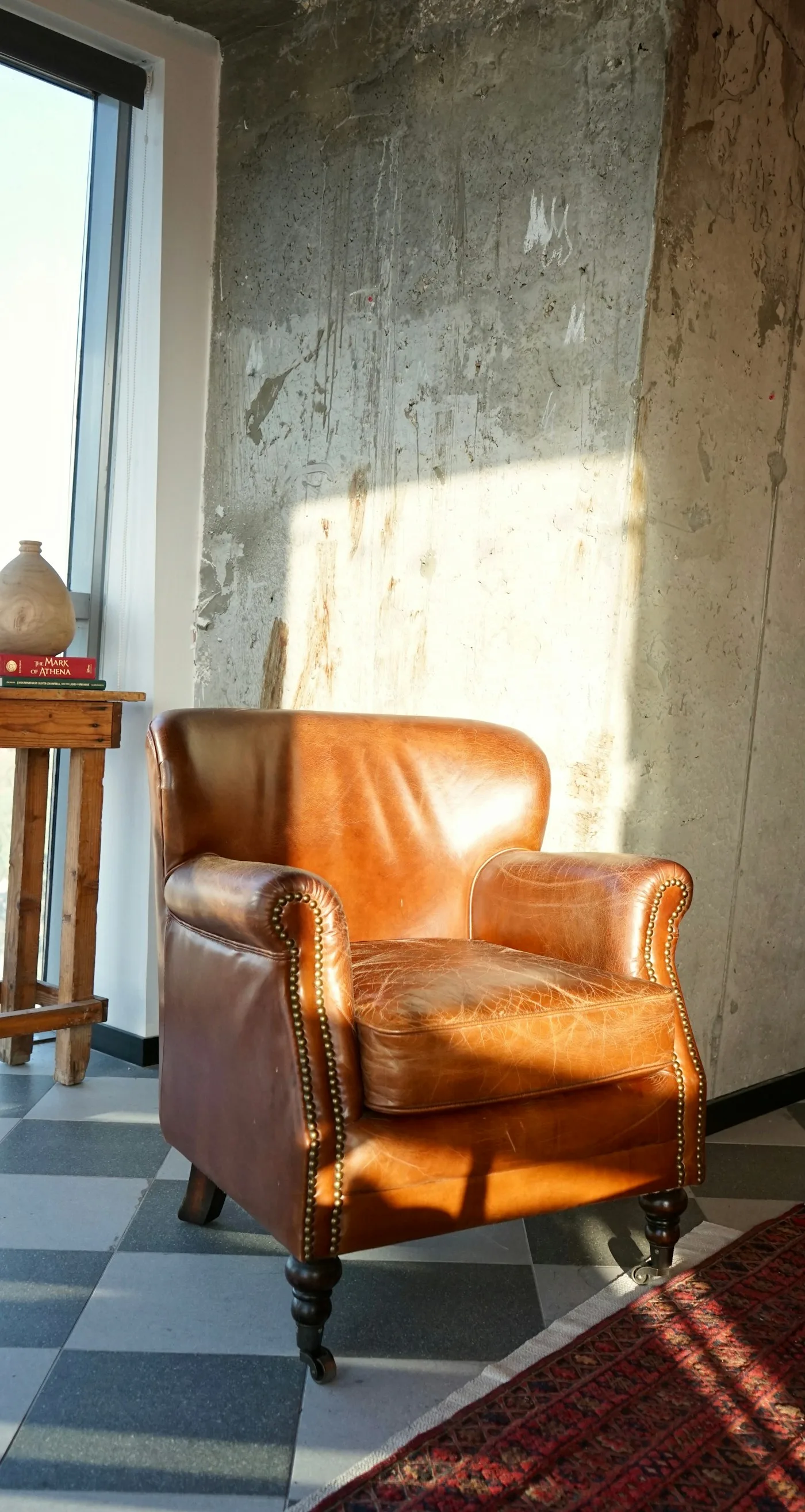
Fungus on a leather sofa is one of the more dispiriting things to find when a Goan house is opened after the rains: a white or greenish bloom across the seat, dark spots along the piping, a musty smell when you sit down. Leather is especially vulnerable. It is a protein material, and conservators rank it among the materials most susceptible to mould, while the oils and conditioners worked into it, and the body oils and dust it collects, give mould still more to feed on.
The Canadian Conservation Institute puts the range in which mould grows readily on leather at 65% to 100% relative humidity. At 90–100%, visible growth can appear in two days. Panjim's monsoon mornings average 88–91%.
Most surface mould on a sound, finished leather sofa can be cleaned at home with patience and gentle methods. The more important work is keeping the sofa in air that doesn't let it return.
Fungus on leather sofas: why the monsoon brings it
Leather is skin, tanned and finished, and it holds moisture much as it did before. In humid air it takes up water, softens and loses some of its stiffness, and its surface becomes a hospitable place for mould spores that are always present. Protected areas go first: the creases where seat meets back, piping and seams, the underside of cushions, and the back of the sofa where it stands against a wall.
The type of leather matters. Aniline and semi-aniline leathers have little or no protective surface coating, so they absorb moisture and oils readily and mark easily; they need the most care in cleaning. Pigmented or protected leathers have a coloured surface coating that resists moisture better and can take gentle wiping. Rexine and similar leathercloths are a plastic coating on a fabric backing: mould grows on the dirt on the surface and in the fabric and foam beneath, and the coating itself can crack or peel in sustained heat and humidity.
Placement is the other half. A sofa pushed flat against an external wall, in a room closed from June to October, is sitting in the dampest, stillest air in the house. Our guide to humidity in Goa explains why those back walls stay so damp.
Mould on leather furniture: what the guidance says
Guidance on cleaning mould off leather comes from two directions, and it is worth knowing both. University extension services, writing for everyday household furniture, suggest brushing the mould off with a soft brush or cloth, then wiping with a cloth moistened with a mild detergent solution or with equal parts alcohol and water, drying the leather in circulating air, and conditioning it once it is fully dry. NDSU Extension adds a caution that alcohol can affect dyes, so test first.
Conservators, writing for historic leather, are more cautious. The Canadian Conservation Institute's method relies on drying and careful vacuuming, with a HEPA-filtered vacuum and, on fragile surfaces, a nylon screen over the nozzle, rather than liquids or leather dressings. It also recommends an N95 respirator, disposable gloves and unvented goggles.
The practical reading: for a modern, pigmented leather sofa in sound condition, the extension method is appropriate, tested on a hidden area first. For aniline leather, a valuable antique, or anything with a fragile or flaking surface, stop at dry cleaning with a brush and vacuum, and ask a specialist before anything wet touches it.
Planning something like this?
We visit homes across North and South Goa, measure on site, and bring samples to see in your own light.
Leather sofa care in humidity
Airflow first. Pull the sofa at least a few centimetres away from external walls, and don't push it flush against a cold wall for the monsoon. Lift and turn loose cushions every week or two so their undersides get air, and vacuum the creases, where dust and crumbs collect and hold moisture.
Then humidity. A leather sofa is one of the clearest cases for a dehumidifier or air conditioning in the room during the monsoon, with the room closed while it runs and the level held around 50–55%. In an occupied house, AC dry mode in the evenings is often enough. The Canadian Conservation Institute's timings, ten days at 80% and two at 90–100%, show why a few dry hours a day are not always sufficient in July and August.
Keep it clean, and condition sparingly. Wipe the sofa regularly with a soft, dry or barely damp cloth to remove dust and body oils. Use a conditioner only as the leather's maker recommends, applied thinly, because heavy dressings leave a residue that holds dust. For a closed house, cover the sofa with a cotton sheet, never plastic, which traps moisture against the leather.
Off the wall, cushions turned, room closed and dehumidified: a leather sofa rarely grows mould in dry, moving air.
When to reupholster rather than clean
Sometimes cleaning is not enough. If mould returns within weeks despite good conditions, if it has stained into the colour of an aniline leather, or if the smell comes from inside the cushions rather than the surface, the growth is in the foam, fibre wrap or frame, and surface cleaning will not reach it. Rexine that is cracking or peeling cannot be repaired convincingly either.
In those cases the practical answer is to strip the sofa back, replace the fillings, check the frame and webbing, and re-cover it. That is what our reupholstery work involves, and a good frame is usually worth keeping. We can advise on leather and leathercloth that suits a Goan room, and on constructions and fillings that dry out rather than hold moisture.
If the frame itself is soft or the joints have failed, a replacement may make more sense; our custom sofas are made with the climate in mind. Wooden frames and legs can carry mould of their own, which our guide to fungus on wooden furniture covers.
How to clean fungus off a leather sofa
For surface mould on a finished leather sofa in sound condition. Test every liquid on a hidden area first.
Ventilate and protect yourself
Open the windows, or move cushions outside on a dry day. Wear disposable gloves, an N95 respirator and goggles, as the Canadian Conservation Institute recommends even for small outbreaks, because brushing and vacuuming release spores.
Let the leather dry
If the sofa feels damp, dry it first with fans and a dehumidifier in a closed room. Dry mould is powdery and lifts off more easily; damp mould smears and can be pushed into the grain. Don't use direct sun or a heater.
Vacuum the loose growth
Use a vacuum with a HEPA filter on low suction and a soft brush attachment, holding the nozzle just above the surface. Work into creases, seams and piping, then vacuum the frame and floor beneath the sofa.
Brush gently
For growth that remains, use a soft-bristled brush to lift it towards the vacuum nozzle, working outdoors if the cushions are removable. Avoid hard scrubbing, which can abrade the finish.
Wipe with a mild solution
On pigmented leather, wipe with a soft cloth moistened, not wet, with a mild detergent solution or equal parts rubbing alcohol and water, as extension guidance suggests. Test on a hidden area first, as alcohol can lift dye. Skip this step on aniline or antique leather.
Dry in moving air
Wipe away residue with a cloth dampened in clean water, then let the sofa dry in circulating air, with fans running and the room dehumidified. Keep it out of direct sun, which can dry and fade leather.
Condition once fully dry
When the leather is completely dry, apply a small amount of a conditioner suited to the leather type, thinly and evenly, then buff off the excess. Don't over-apply: residue attracts dust.
Change where it lives
Cleaning without changing the conditions only buys a few weeks. Move the sofa off the wall, turn the cushions regularly, and keep the room closed and dehumidified through the monsoon. Check creases, seams and the back each month until October.