 Drape Haus
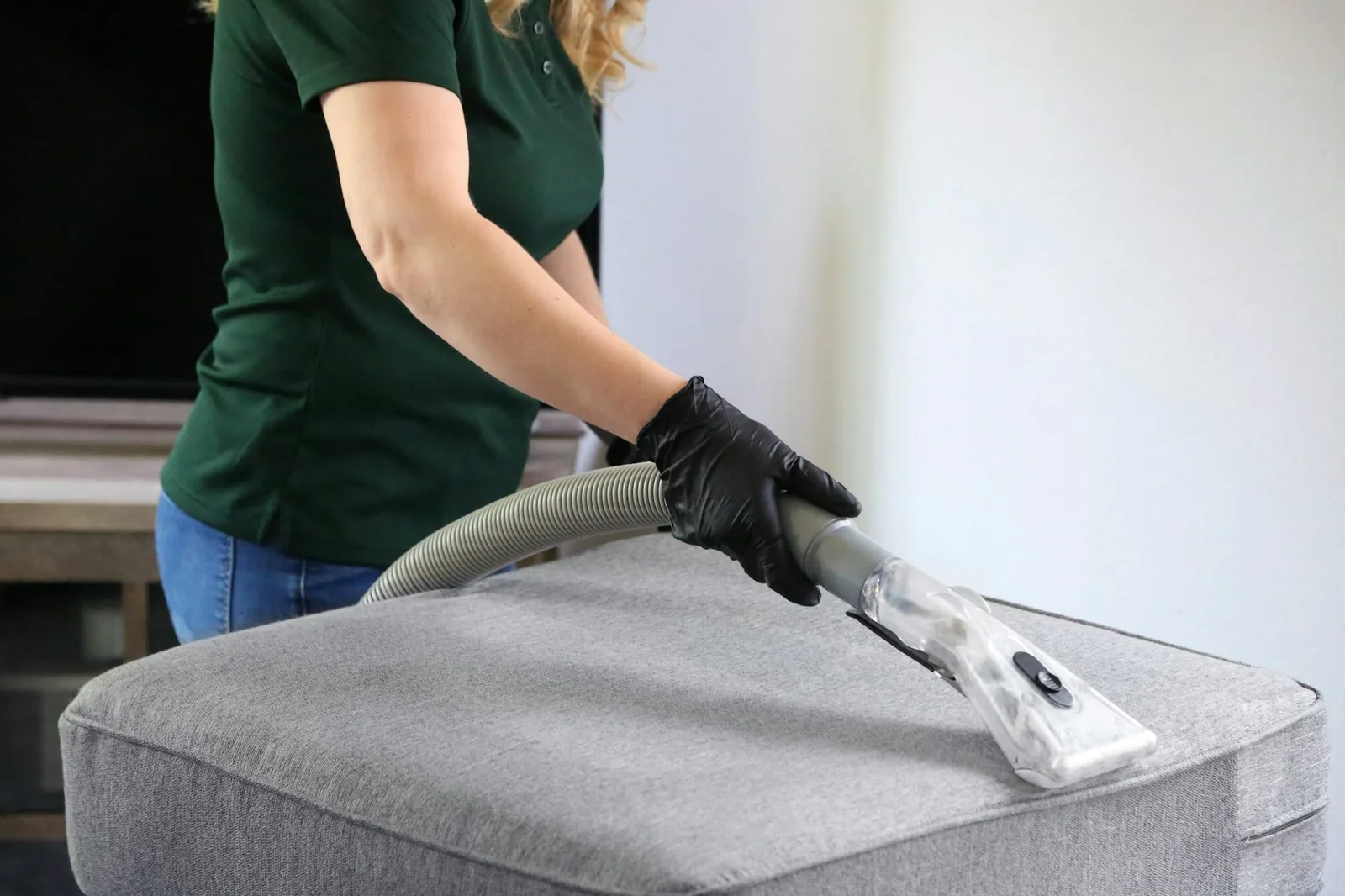
Cleaning a sofa at home comes down to four things: knowing what your fabric can take, removing dry dirt before using any liquid, using as little liquid as possible on the marks that need it, and drying the sofa completely. In most climates the last step looks after itself. In Goa, for four months of the year, it does not.
A damp patch on a sofa cushion is a small, warm, enclosed pocket of moisture inside foam. The US Environmental Protection Agency says that if wet materials are dried within 24 to 48 hours, mould usually will not grow. The Canadian Conservation Institute's figures show why that window matters here: at 90–100% relative humidity, visible mould can appear in about two days. Monsoon mornings across Goa average 87–91%. A well-meant clean with too much water, left to dry on its own in July, can do more harm than the stain did.
This guide gives a routine you can follow safely on most fabric sofas. It is deliberately conservative: always test first on a hidden area, and when the label or the fabric says no, stop. For leather, see our separate guide to fungus on a leather sofa.
Reading the fabric cleaning code (W, S, WS, X) and patch-testing first
Look for a tag under the seat cushions, on the deck of the sofa, or underneath the frame. Many upholstery fabrics carry a one- or two-letter code, and the Association for Contract Textiles summarises what each means. W: spot-clean only with a water-based upholstery shampoo or foam, without over-wetting and without solvents. S: spot-clean only with a water-free solvent, and use no water at all. WS: either a mild detergent foam, upholstery shampoo or a mild solvent. X: vacuum or brush only, with no water or solvent cleaner of any kind.
Even with a code, test first. The same guidance tells you to pretest every cleaner on a small, hidden area, and records that the furniture industry's own fabric standards committee considers the codes valuable but not, on their own, enough information for safe cleaning. Good test spots are the back of the skirt, the inside of the deck under a cushion, or the outside back near the floor. Apply a little, blot, let it dry fully, and look for colour change, a ring, shrinkage or a change in texture.
If there is no tag, which is common on older and locally made sofas, treat the fabric cautiously. Vacuum and brush first; then test plain water on a hidden spot before anything else. If even water leaves a ring or lifts colour, treat the sofa as code S or X and leave anything more than vacuuming to a professional.
No code, no test, no cleaner. A hidden-spot test is the one step that can't be skipped.
The weekly vacuum: crevices, under the cushions, sand and red dust
Most sofa dirt is dry, and dry dirt should be removed dry. The trade guidance on routine upholstery cleaning puts vacuuming with an upholstery attachment, prompt attention to spills and rotating cushions at the top of the list. In Goa, the dry dirt is unusually abrasive: beach sand, red laterite dust that blows in through open windows in April and May, and salt that settles from sea air. Each grain works into the weave and cuts fibres a little every time someone sits.
Take every loose cushion off. Vacuum the deck, then run the crevice tool deep into the joins between seat and back and between seat and arms, where sand and crumbs collect. Vacuum both sides of each cushion and the seams and piping, where dust lodges. Brush pile fabrics in the direction of the pile with a non-metallic upholstery brush, which also lifts pressure marks.
Weekly is right for a family or rental sofa; fortnightly is enough for a sofa that is rarely used. After a beach day, a quick vacuum of the seat is worth more than any cleaner. Turn and swap seat cushions at the same time, so wear and sun fade are shared.
Planning something like this?
We visit homes across North and South Goa, measure on site, and bring samples to see in your own light.
Spot-cleaning water-safe fabrics versus solvent-only fabrics
Act fast and blot, never rub. Rubbing pushes a spill deeper into the fibres and into the foam beneath, and roughens the surface. Lift any solid matter with a spoon or blunt knife, then blot with a clean white cloth, pressing rather than scrubbing.
On W and WS fabrics, use a little upholstery shampoo or the foam from a mild detergent solution, not the liquid itself: you want suds on the surface, not water in the cushion. Work from the outside edge of the mark towards the middle, as the trade guidance advises, so the stain does not spread into a ring. Turn the cloth often so you are not wiping lifted dirt back on, which the guidance calls redeposition. Then rinse: blot with a cloth barely dampened in clean water to lift the cleaner. Detergent left in the fibre attracts dirt and leaves a sticky patch that soils faster than the rest of the seat.
On S fabrics, use no water. Use a water-free upholstery solvent, following its label exactly, in a well-ventilated room, with windows open and no flame nearby. Apply it to the cloth rather than the sofa, test it on a hidden area first, and blot sparingly. Never mix cleaning products. On X fabrics, stop at vacuuming and brushing. Anything wetter needs a professional.
When a whole seat is evenly grubby rather than spotted, resist the urge to clean the entire sofa with buckets of water. That is where the guidance points to a professional cleaner, and where a removable cover, washed off the sofa, is the better long-term answer.
Drying properly in monsoon humidity
This is the step that decides whether cleaning helps or harms. In a dry month, a lightly cleaned patch dries in an hour or two. In July, with outdoor air near saturation, it can sit damp overnight, and the foam underneath dries far more slowly than the surface. The aim is to beat the 24-to-48-hour window the EPA gives, and in practice to have the sofa dry the same day.
Pick your moment. Clean on a dry spell or a morning without rain, not on an afternoon when the clouds are building. Then move air across the damp area: a pedestal or table fan pointed at the patch, the ceiling fan on, and, if you have one, air conditioning on dry mode or a dehumidifier running with the doors and windows closed so it is drying the room rather than the outdoors. Stand loose cushions on edge, unzipped if the covers open, so air reaches both faces and the foam.
Avoid direct heat. A hair dryer or heater can shrink fabric, set some stains and harden foam, and full sun on a damp cushion fades it; the Canadian Conservation Institute describes light fading as cumulative and irreversible. Check dryness by pressing a dry paper towel firmly onto the spot and by smelling the cushion seam the next morning. A musty smell means moisture is still in the foam.
- Clean in the morning of a dry day
- Fan on the damp area; ceiling fan running
- AC dry mode or a dehumidifier, with the room closed
- Cushions on edge, covers unzipped if possible
- No hair dryers, heaters or direct sun
- Do not put cushions back or sit on the spot until it is dry right through
What not to do: soaking foam, steam on velvet, bleach
Don't soak the foam. Foam acts like a sponge: once water passes through the fabric, it spreads sideways inside the cushion and drains to the bottom, where it is slowest to dry and where mould starts. Every liquid step should leave the surface barely damp.
Don't steam or hot-water-extract without checking. Trade guidance for both W and WS upholstery fabrics states that hot water extraction and steam cleaning are not recommended cleaning methods. Steam is particularly hard on velvet and other pile fabrics, where heat and moisture can flatten or permanently distort the pile, and it drives moisture deep into the cushion in a climate that is already struggling to dry it.
Don't use bleach. Chlorine bleach strips colour from dyed upholstery and weakens many fibres. The EPA also warns never to mix chlorine bleach with cleaners containing ammonia, because the fumes are toxic. Use only the mildest cleaner the fabric allows.
Don't unzip fixed cushion covers and machine-wash them. It is tempting when a cover has a zip, but the zip is there so the foam can be fitted, not so the cover can be laundered. The trade guidance says covers on upholstered cushions should not be removed and laundered or dry-cleaned. Many shrink, fade unevenly or lose their backing, and a cover that no longer matches the rest of the sofa, or no longer fits the foam, is hard to fix.
If the sofa has mould or a musty smell
Surface mould on a fabric sofa shows as small grey, green or black spots, often on the underside of cushions, along piping, or on the back of a sofa pushed against an external wall. For a small area, the Canadian Conservation Institute's approach for mouldy textiles applies well: wear at least an N95 respirator, disposable gloves and goggles; move cushions outside on a dry day if you can; and vacuum closely with a HEPA-filtered vacuum, keeping the nozzle just above the surface. Then clean according to the fabric code and dry thoroughly.
If the smell comes from inside the cushion rather than from the surface, or the spots return within weeks, the mould is in the foam or the fibre wrap, and surface cleaning will not reach it. The lasting fix is new foam in the cushions, which our sofa cushions service covers, and better air in the room. Our guide to monsoon damp and mildew covers the room-level causes.
When to call a professional, or switch to removable covers
Call a professional upholstery cleaner when the whole sofa is evenly soiled, when the fabric is coded S or X and needs more than spot work, when a stain has survived one careful attempt, or when the sofa is valuable or the fabric delicate. The trade guidance itself recommends professional cleaning once an overall soiled condition is reached. Ask the cleaner which method they will use and how they will dry the sofa, and avoid booking the job on a wet monsoon day.
If you find yourself cleaning the same sofa again and again, especially a family or rental sofa, the better answer is to stop cleaning it in place. Drape Haus makes and fits sofas, covers and upholstery rather than offering a cleaning service, and that is the long-term route we suggest: made-to-measure sofa covers in a washable, quick-drying cloth that come off and go through the machine, or, where the original fabric is worn out, reupholstery in a fabric chosen for how the sofa is used. For a new piece, choose the cloth with cleaning in mind from the start; our sofas are specified that way.
How to clean a fabric sofa at home, step by step
For a routine clean of a fabric sofa in sound condition. Test every liquid on a hidden area first, and stop if the fabric reacts.
Check the code and the weather
Find the cleaning tag under the cushions or the frame: W, S, WS or X. Plan any wet cleaning for the morning of a dry day, so the sofa can dry before evening.
Strip and vacuum
Remove all loose cushions. Vacuum the deck, the crevices between seat, back and arms, both sides of each cushion, and the seams and piping. Brush pile fabrics gently with a non-metallic upholstery brush.
Patch-test the cleaner
On a hidden area, apply a little of the cleaner allowed by the code. Blot, let it dry completely, and check for rings, colour loss, shrinkage or texture change before going near a visible mark.
Blot and spot-clean
Blot the mark with a clean white cloth. On W or WS fabric, apply foam rather than liquid; on S fabric, a water-free solvent on the cloth. Work from the outside of the mark inwards, turning the cloth often.
Rinse away residue
On water-safe fabrics, blot the area with a cloth barely dampened in clean water to lift leftover cleaner, then blot with a dry cloth to take up as much moisture as possible.
Dry it fast
Point a fan at the area, run the ceiling fan, and use AC dry mode or a dehumidifier with the room closed. Stand cushions on edge. No heaters, hair dryers or direct sun.
Check before reassembling
The next morning, press a dry paper towel onto the spot and smell the cushion seams. Reassemble only when everything is dry right through, then brush pile fabrics to restore the surface.