 Drape Haus
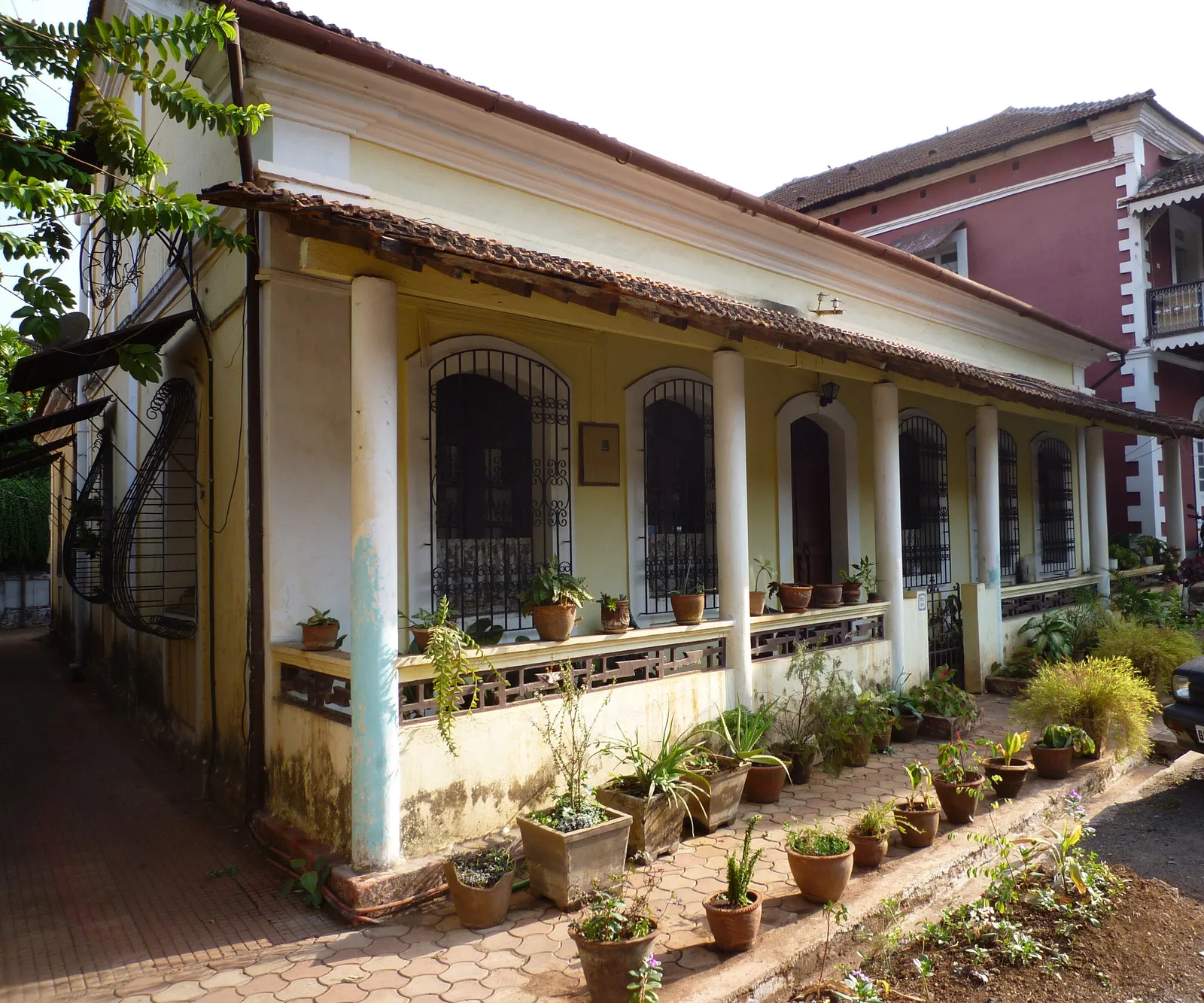
The Goan verandah is a roofed, open-sided room along the outside of the house, raised on the plinth and carried on columns. Writing on Goan houses, drawing on the book Houses of Goa, describes how the Catholic houses built or refurbished from the middle of the 18th century turned outward, with balcões and verandas facing the street, and how large ornamental windows open onto them. Many houses have more than one: a front verandah along the facade, side verandahs, a rear verandah by the kitchen, and in courtyard houses an internal verandah around the open centre.
For the people who live in them, verandahs are not decoration. They are where the afternoon is spent, where visitors are met before they come inside, where children play in the rain and where the house dries its washing. They are also the part of the house that takes the weather first, which makes them the hardest place to furnish well.
This guide treats the verandah as a room. It covers the different kinds and how pillars and plinths define them, how the verandah protects the walls and windows behind it, what to look after in the columns and railings, which furniture and fabrics survive the year, how to screen it, and a monsoon routine for what to bring in. The entrance porch with built-in seats has its own article: see the Goan balcão.
Front, side and rear: the verandahs of a Goan house
The front verandah is the public one. It runs along the street side, a few steps above the road on the plinth, with the main rooms' windows opening onto it. An essay on Goa's architecture in the journal Question of Cities names verandahs with decorative railings and columns, high plinths and entrance balcões with built-in seats as the elements now synonymous with Goan architecture. Where a house has a balcão, the verandah often runs either side of it, so the porch is the centrepiece of a longer covered gallery.
Side and rear verandahs are working spaces. They shade the bedrooms and the dining room, link the house to the kitchen yard and the well, and give somewhere dry to work and store things in the rains. Some houses wrap the verandah right round. A study from Government Polytechnic Panaji describes the colonial bungalow as having massive roofs with verandahs all around, and the Government of Goa describes the 19th-century Costa mansion in Loutolim as Indian in style, with a low-pitched tiled roof and wide verandas, dressed with European details such as cluster columns.
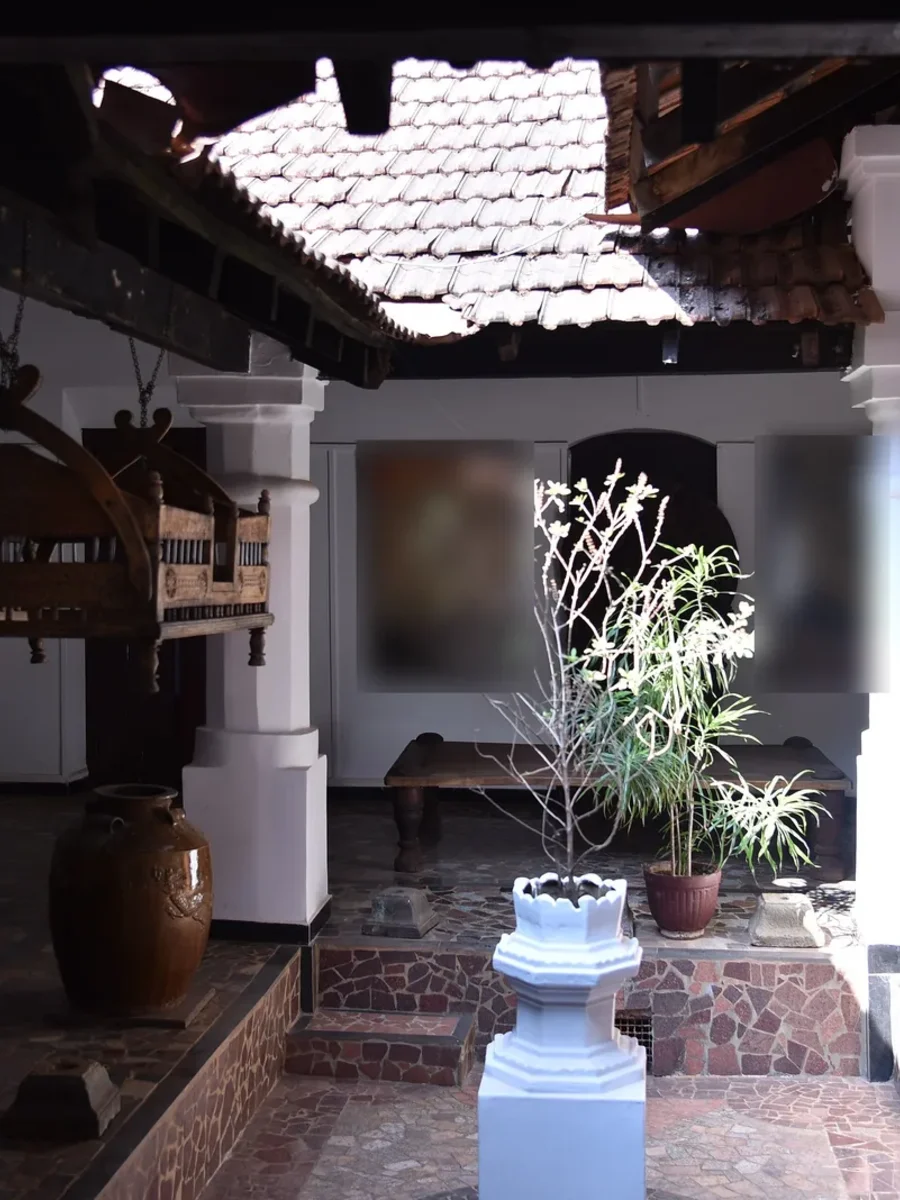
Courtyard houses have a fourth kind: the internal verandah around the open centre, called the chowki in the Hindu tradition, which is covered in our guide to the Goan courtyard house. Whatever the type, the verandah is defined by three things: the plinth it stands on, the line of columns along its open side, and the roof overhang above. Change any of them and the space behaves differently.
How the verandah protects the house behind it
The verandah's first job is shade and shelter for the house itself. The Government Polytechnic study describes traditional Goan roofs as simple, sloping two or four ways, with huge overhangs shading the verandah spaces. That overhang keeps the high sun off the walls and windows for much of the day, and throws rain clear of the main walls, so the laterite and lime behind stays drier than an exposed wall would. Question of Cities sums up the template of high ceilings, verandahs and raised plinths as protecting houses from heat and dampness.
The rain it shelters against is heavy and sideways. The India Meteorological Department records that the southwest monsoon usually sets in over Goa in the first week of June and withdraws by about the third week of September, that about 91% of the year's rain falls in that season, and that from June to August the winds are mostly westerly to south-westerly. A west- or south-facing verandah takes the full force; the outer metre of its floor is wet for weeks at a time, and spray reaches further in during squalls.
There is a cost, and it is light. The same Government Polytechnic study notes that the verandahs all around the colonial bungalow made the internal living areas quite dark. Owners who enclose a verandah to gain a room often find the rooms behind become darker and hotter still, and the walls start to take rain they were never meant to take. If you want more use from a verandah, it is usually better to screen it seasonally than to glaze it in.
A verandah is the house's raincoat. Enclose it permanently and the walls behind lose their protection.
Planning something like this?
We visit homes across North and South Goa, measure on site, and bring samples to see in your own light.
Pillars, plinths and railings: what to look after
The Government of Goa's overview of the heritage mansions says their walls and pillars were built of red laterite stone and local wood, under roofs of terracotta tiles. Most verandah columns you see are laterite, plastered in lime and painted, or timber posts on stone bases. Question of Cities notes that arches, corbelling and columns once crafted from laterite are increasingly replaced with plywood moulding and concrete in new building, which is a reason to repair old columns rather than swap them.
Plastered laterite columns tend to fail at the base first, where rain splashes off the plinth and the plaster stays damp. Look for blown or cracked plaster at the foot, cement patches that trap moisture, and plant growth in the joints. Repairs belong in lime, done by a mason familiar with old work; our article on laterite houses explains why cement makes laterite damp. Timber posts fail where they meet stone; check the foot for softness and termite tubes.
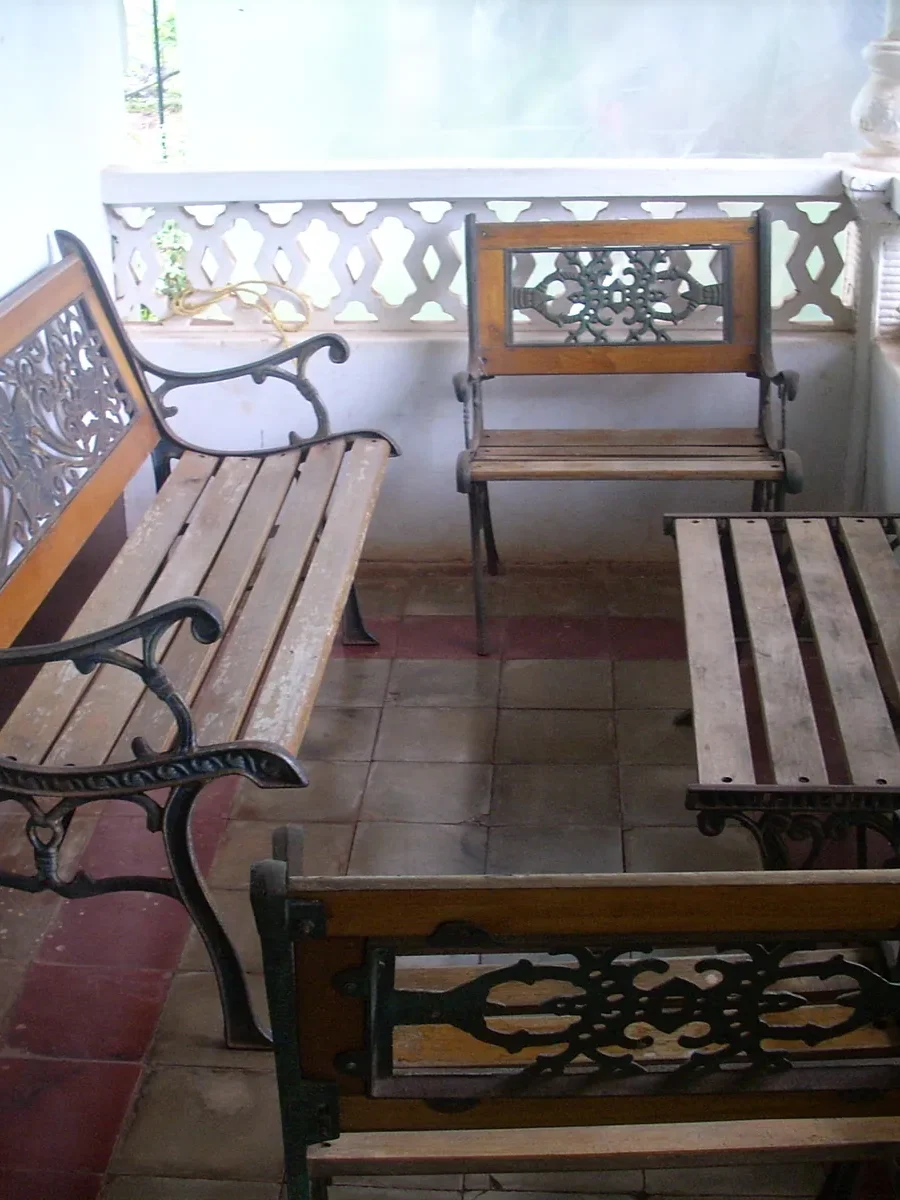
Railings are the most decorated part of many verandahs, and writing on Goan houses calls them the most intricate embellishment of the house. Gomantak Times notes that railings were made of wood, cement and cast iron, and that wooden railings, once common, did not suit the weather, which led to a shift towards cast iron. Iron needs unbroken paint and quick attention to rust, especially where the rail is set into masonry. For blinds, awnings and nets, fix into the timber of the roof structure or a discreet batten, never into ornamental columns, capitals or plaster mouldings.
Furniture for a verandah: chairs, benches and daybeds
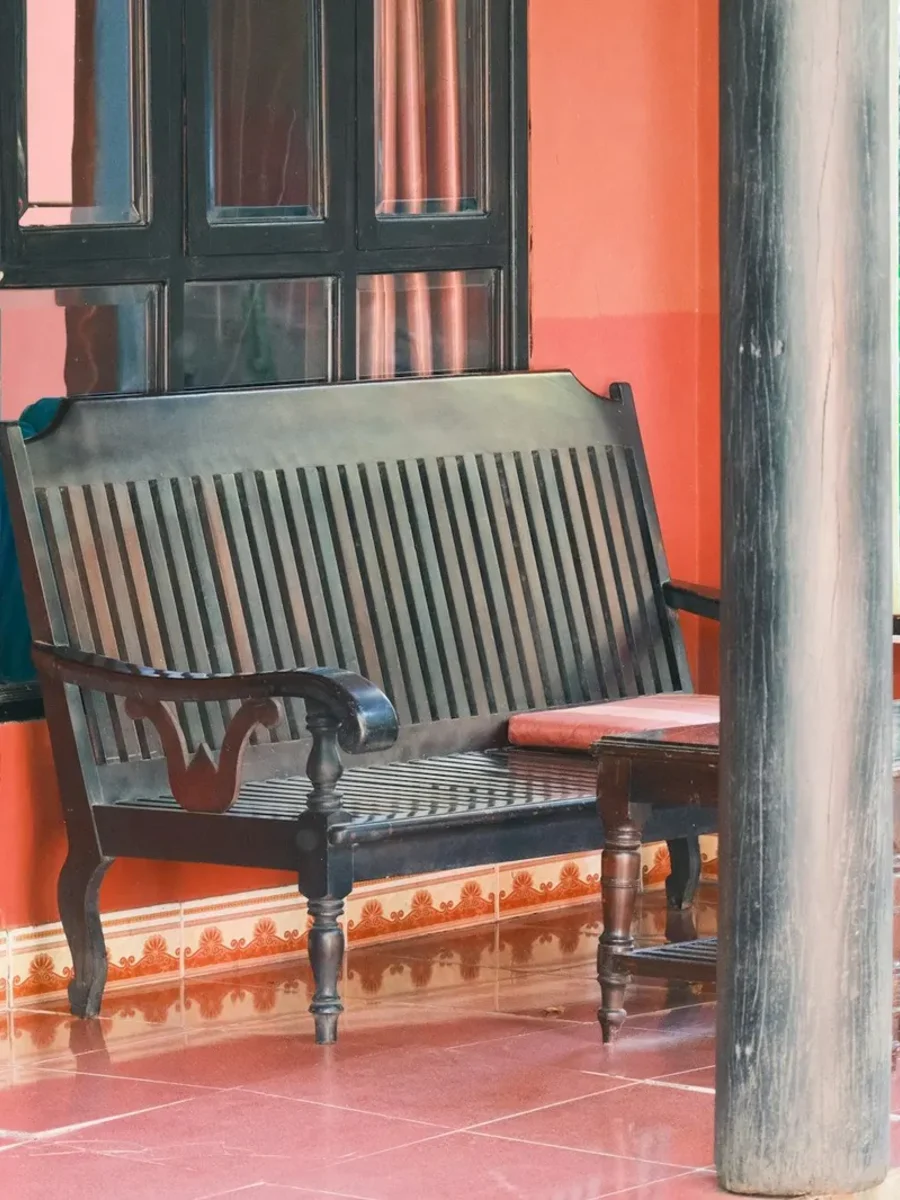
Verandah furniture has to cope with heat, humidity, blown rain and salt, and be comfortable for long afternoons. The traditional Goan answer is a mix of built-in masonry seats, a long bench or two, cane and rattan chairs, and the reclining planter's chair. Built-in seats cannot rot or blow over and need only cushions; benches and chairs in durable hardwood or cane can be moved back from the edge when the rain comes in sideways.
A daybed or wide bench with a mattress-style cushion turns a verandah into a place for an afternoon rest. The cushion is what fails, not the frame. Use quick-draining open-cell outdoor foam that lets water run straight through, wrap it in an outdoor fabric with a removable zipped cover, and give the base a mesh panel so water can escape. Ordinary upholstery foam holds water like a sponge and grows mould within days in monsoon humidity. Our outdoor and marine upholstery is made this way, and outdoor sofas suit larger, deeper verandahs.
Leave some floor bare. A verandah crammed with furniture becomes hard to sweep, traps leaves and water in corners, and blocks the breeze reaching the rooms behind. A few good pieces arranged along the wall, with the outer edge clear, look better and last longer.
Screening options: chiks, roll-downs, awnings and nets
Most verandahs need some screening for part of the year: shade from low sun on the west side in the afternoons, shelter from blown rain in the monsoon, and protection from mosquitoes in the evenings and, for dengue mosquitoes, during the day as well, as the World Health Organization notes. The right choice depends on which of those you need most and which side the verandah faces.
Bamboo and chik blinds are the traditional screen: they filter light, let air through, look right between columns, and roll up out of sight. Roll-down outdoor blinds in open-weave or solution-dyed fabric give stronger shade and can keep blown rain off for an evening. A retractable awning extends the shade past the eaves on a verandah facing the afternoon sun; our awnings and outdoor shade service covers these. For insects, balcony mosquito nets can close the open side of a verandah used in the evenings, while door and window nets protect the rooms behind.
Fittings deserve care on a verandah. The Australian Stainless Steel Development Association notes that rain-sheltered areas under roofs and eaves are among the most aggressive places for salt corrosion, because salt settles and is never washed off, and recommends grade 316 stainless or equivalent within about five kilometres of surf. Brackets and fixings under a verandah roof near the coast should be marine-grade, and rinsed with fresh water from time to time.
| Option | Best for | Limitations | In the monsoon |
|---|---|---|---|
| Chik or bamboo blinds | Filtered light, privacy, air | Little protection from driving rain | Roll up in storms; dry before storing |
| Outdoor roller blinds | Low sun, glare, partial rain cover | Need secure fixing; can flap in wind | Use in moderate weather; retract in squalls |
| Retractable awning | Extending shade beyond the eaves | Not for strong wind or heavy rain | Keep retracted through the heavy months |
| Balcony and door nets | Mosquitoes, evening use | Do not shade or keep rain out | Can stay up; rinse and check fixings |
Fabrics that handle sun and driving rain
On a verandah, fabric has two enemies that take turns. From October to May it is sun, which fades ordinary dyed fabric quickly on a west-facing verandah. From June to September it is water and humidity, with morning relative humidity of 87% to 91% according to the India Meteorological Department, so a wet cushion stays wet.
Solution-dyed acrylic handles both well. The colour is added to the fibre before it is spun, so it resists fading far better than a fabric dyed after weaving, and it dries quickly and can be cleaned with a mild solution when mildew spots appear. Our guide to solution-dyed acrylic explains the difference, and outdoor canvas covers the heavier cloths used for awnings and roll-down blinds. Whatever the cover, the filling matters as much: quick-draining foam or fibre that does not hold water.
Colour is part of the facade. A verandah is seen from the road with the house behind it, so cushions and blinds in one or two quiet colours drawn from the house's own palette read as part of the building. Pale colours show less fading; very dark ones show mildew spots less but fade sooner and get hot in the sun.
The monsoon routine: roll up, bring in, leave out
A verandah set up well for March will not survive July unchanged. The simplest approach is to decide, piece by piece, what rolls up, what comes indoors and what stays out, and to do it before the first heavy rain rather than after it. The table gives a starting point; adjust it for which way your verandah faces and how close you are to the sea.
If the house is closed for the season, as many Goan second homes are, do the routine fully before leaving: wash and dry every cover, store cushions indoors on edge in a ventilated room, roll and tie blinds, retract awnings, and ask whoever keeps an eye on the house to open up and air it once or twice. Our monsoon take-down and storage service exists for exactly this, and our guide to the closed-house season covers the rest of the house.
| Item | Before the monsoon (late May) | During (June to September) | After (October) |
|---|---|---|---|
| Seat and daybed cushions | Wash covers, dry foam fully | Bring in, or keep a small set in use and bring in at night | Wash, dry in sun, check for mildew before replacing |
| Chik and bamboo blinds | Check cords and fixings | Roll up on the weather side; lower only in dry spells | Unroll, dry, brush off mould spots |
| Outdoor roller blinds | Check brackets for rust | Use in moderate weather; retract in squalls | Rinse off salt and grime |
| Awnings | Service and check fabric | Keep retracted | Re-open, rinse, inspect stitching |
| Cane and hardwood furniture | Oil timber where appropriate | Move back from the edge | Clean and let dry before use |
| Nets | Check mesh and frames | Leave up | Rinse and repair any tears |