 Drape Haus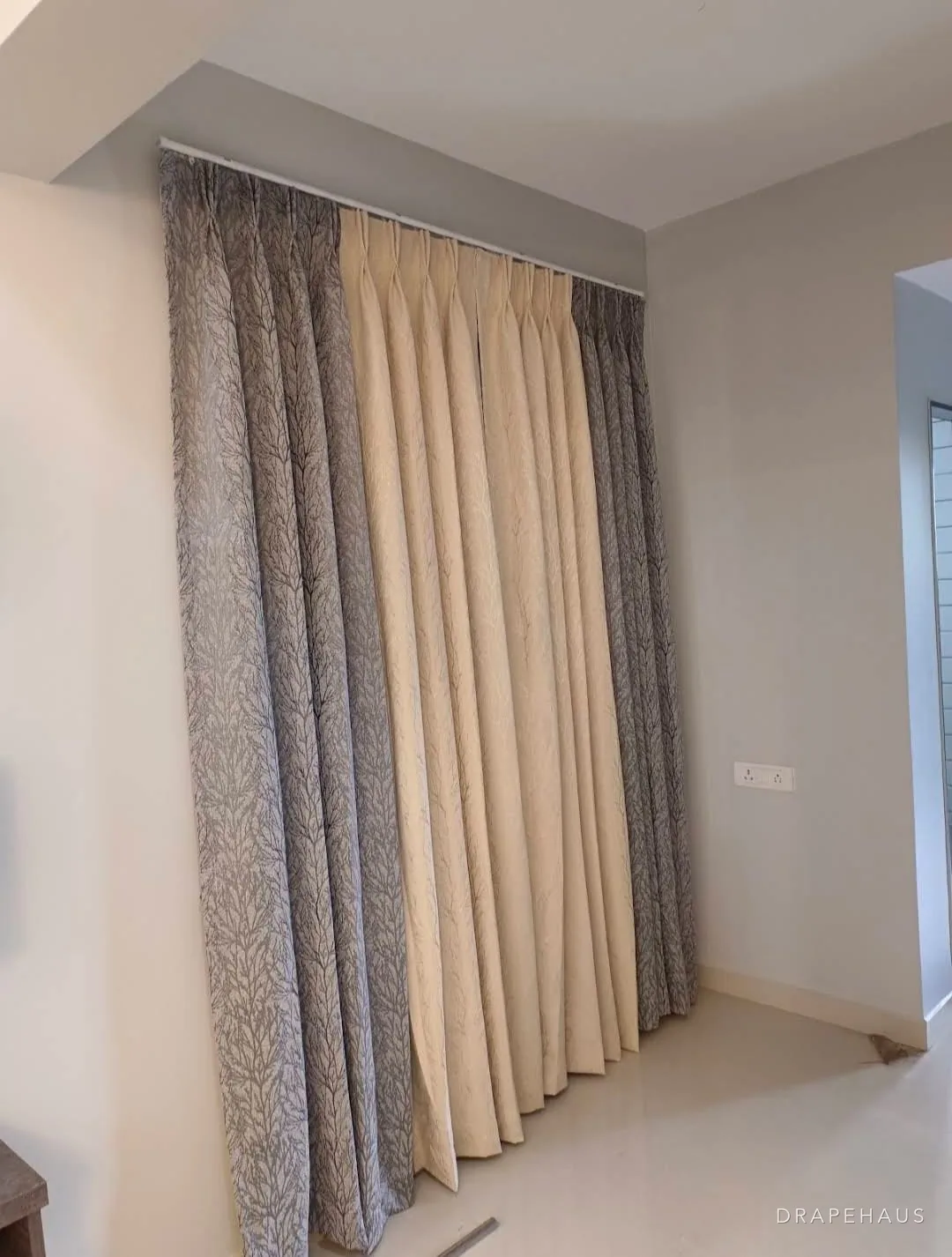

Goan door design starts at the front of the house. Writing on Goan houses, drawing on the book Houses of Goa, describes most of them as symmetrical, with the entrance door in the place of honour and front doors flanked by columns or pilasters. A study of Indo-Portuguese houses adds that in Goa the surrounds of doors and windows were painted white. The door, in other words, is the centre of the facade, framed in plaster and colour, a few steps up from the road behind the balcão.
Inside, the doors do a quieter job. In a house built for air rather than air conditioning, doors are left open for much of the day so breezes can pass from room to room. That is why the doors of an old house take more wear than almost anything else in it: daily opening, monsoon swelling, termites coming up from the ground, and fittings corroded by salt.
This guide is for owners deciding what to do with old doors. It covers how to read a door, why ground-floor doors in Goa swell and attract termites, what a good carpenter can save, when a new door or a wood-plastic composite frame is the sensible answer, how to keep doors open on hot afternoons with curtains and nets, and which hardware survives the coast. We make door curtains and nets; we are not carpenters, so the joinery advice here comes from conservation bodies and should be carried out by a skilled joiner.
Where the door sits in a Goan house
The main door is planned, not placed. In the symmetrical Catholic house it sits on the centre line, with the same window repeated either side and the balcão in front, so the whole facade is organised around it. Plastered columns or pilasters frame it, and the white surround sets it off against the wall colour. An essay on Goa's architecture in the journal Question of Cities lists stone arched lintels and wooden shutters among the elements that gave the houses their layered look, and laments that arches, corbelling and columns once crafted in laterite are now often imitated in plywood moulding and concrete.
The traditional Hindu house organises its doors differently. A study from Government Polytechnic Panaji describes the padvi or sopo, an entrance seat that forms the transition between inside and outside, and the house beyond turns inward to its courtyard. Writing on Goan houses records the name of one particular door in these houses: the kitchen, raanchi kood, has a door of its own, called the magil daar. Doors here are about movement through a sequence of spaces as much as about display.
Either way, the door and its frame are part of the wall, not an add-on. The surround, the pilasters and the lintel above were built with it, and changing the door's size or shape almost always means cutting into the facade. That is the strongest practical argument for keeping the opening as it is and repairing or replacing only what fills it.
Reading an old door before deciding anything
Look at the door as a set of parts. The frame is fixed into the wall; the leaf hangs in it on hinges; the leaf itself is usually a framework of upright stiles and cross rails, with panels set into grooves between them. Above the door there may be a fixed glazed or barred fanlight, and on arched doors the head of the frame follows the arch. Internal doors in old houses vary more: solid panelled, part-glazed and louvred leaves are all found, often added or swapped over the decades.
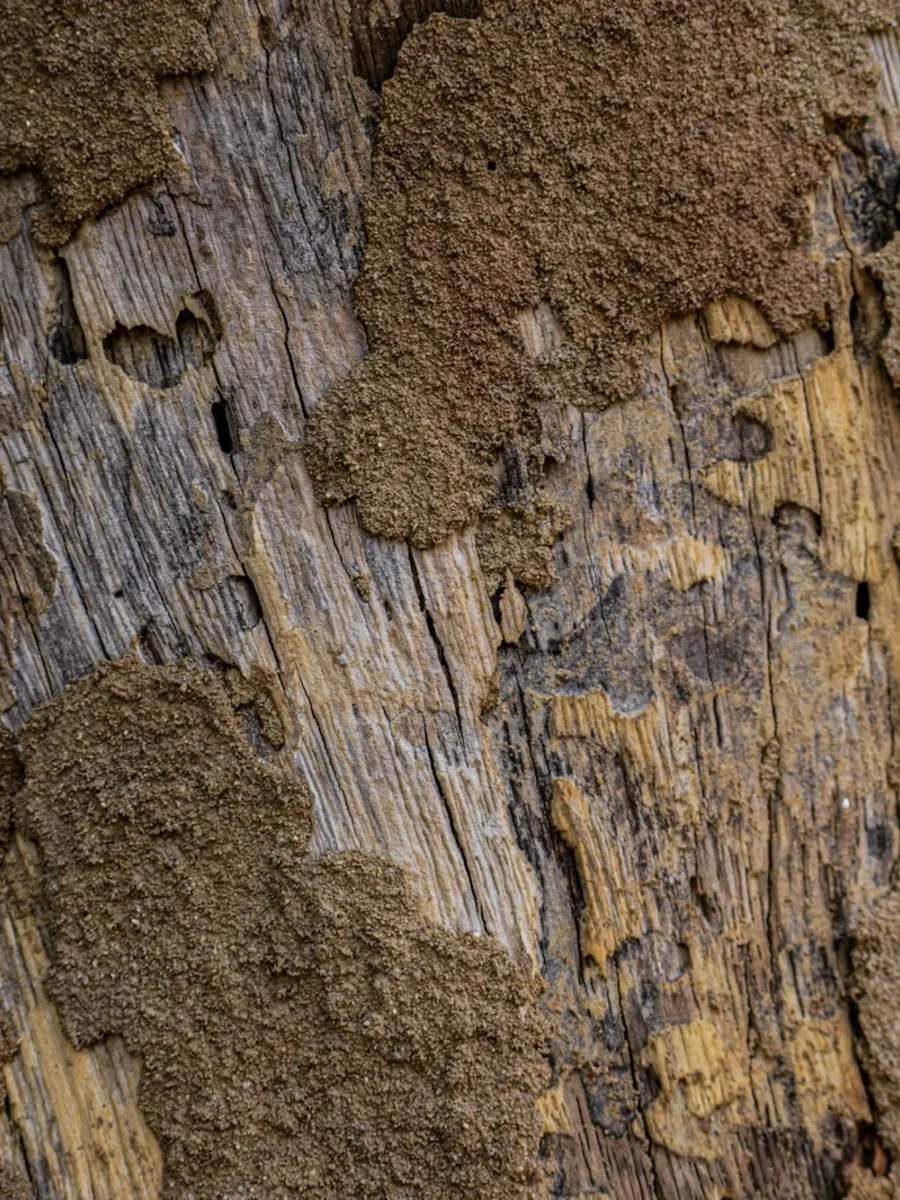
Then check each part for the problems that matter. Is the foot of the leaf or the bottom of the frame soft? Does the door bind all round or only at one corner? Are panels split? Are hinges loose in their screw holes? Is there powdery dust or earthen tubes near the threshold? Each points to a different cause and a different repair, and very few point to throwing the door away.
Photograph the door front and back before any work starts, and keep the old ironmongery even if it is not going back on. Conservation advice from the Society for the Protection of Ancient Buildings is that old knockers, knobs and locks make a small but valuable contribution to a building's character, and that maintaining them involves little more than occasional oiling.
Planning something like this?
We visit homes across North and South Goa, measure on site, and bring samples to see in your own light.
Why ground-floor doors swell, stick and attract termites
The climate does most of the damage. The India Meteorological Department records morning relative humidity of 87% to 91% across June to September in Goa, with about 91% of the year's rain falling in those months. Timber takes up moisture from humid air and swells, so a door that closes sweetly in February can bind against its frame in August. That alone is not a fault.
Water at the bottom of the door is a fault. Rain blown under the balcão roof, a threshold that slopes the wrong way, a floor mopped wet every day, or a garden bed against the outside wall can keep the foot of the door and the bottom of the frame damp for months. That is where wet rot starts, and it is also what draws termites. Subterranean termites travel from the soil to timber in contact with damp masonry, and a door frame bedded into a ground-floor wall is often their first meal. Our guide to termites and timber and our article on termites in wooden furniture cover the signs and why a licensed professional should treat them.
The order of work matters. Find and stop the water, have any termite activity treated, and only then repair the timber. A new piece of wood spliced into a door foot that still sits in a wet threshold will rot again within a few monsoons.
A door that binds in August and closes freely in February is behaving normally. A door that is soft at the foot is telling you about water.
Restore or replace: what a good carpenter can save
SPAB's advice on old doors is direct: existing doors can frequently be repaired, replacement is a last resort, and where it happens it should usually be like for like in style and materials. Commonly only a small area is affected, such as wet rot at the door foot, and a skilled carpenter can splice in well-seasoned matching timber. Minor areas of decay can simply be filled. But the cause of the decay must be dealt with first.
Several common problems have simple fixes. Seasonal binding from humid-weather swelling should be tolerated rather than planed away. A slightly distorted frame can be cured by carefully planing and sanding the door; severe distortion may mean wall movement or a failed lintel, which needs an engineer. Loose hinges can be re-fixed by gluing dowels into the enlarged screw holes and re-drilling. A warped leaf can sometimes be pulled into line with an extra hinge or a bolt. Panels usually split because layers of paint have locked them in their grooves so they cannot move with the seasons; freeing and gluing them, or splining the split, is the repair.
SPAB also warns against two well-meant treatments. Sandblasting spoils the surface of timber, and dipping a door in an acid bath to strip paint may raise the grain and soften the glue in the joints. Its advice was written for British doors, many of them painted softwood, so take it as a principle rather than a rule for every Goan door: whatever the original finish, keep it, and strip only as much as a repair needs.
| What you see | Usual cause | Usual repair |
|---|---|---|
| Door binds only in the monsoon | Humidity-driven swelling | Tolerate; ease in the dry season only if it still binds |
| Soft wood at the foot of the door or frame | Wet rot from a damp threshold or splashing | Stop the water, then splice in seasoned timber |
| Door drops and catches at one corner | Loose hinges in enlarged screw holes | Glued dowels in the old holes, hinges re-fixed |
| Leaf twisted out of line | Warp | Extra hinge or bolt; trim the stop on the frame |
| Split panels | Panel locked by paint and unable to move | Free and glue, or glue a timber spline into the split |
| Earthen tubes, hollow-sounding timber | Termites | Professional treatment first, then timber repair |
When a new door or a WPC frame is the wiser choice
Not every door in an old house is historic. Bathroom doors, service doors and doors in later extensions are often modern, poorly made, and in exactly the wettest places. There, replacing a rotten door and frame with one designed for wet conditions can be the sensible decision, and it protects the original doors elsewhere by reducing the termite food supply at ground level.
Wood-plastic composite, or WPC, is the usual option. It is made from wood fibre or flour bound in plastic. The evidence on termites is encouraging but thin. A US Forest Service study notes that there is little published scientific testing of WPC against termites, and in its own trials blends of 50% wood flour and polyethylene lost between 0.1% and 0.7% of their weight in a ten-week laboratory test, against 9.1% for untreated pine. That is far better than plain timber. It is not a promise that termites will never touch a composite, and the study found treatments made a difference, so ask any supplier what their product has been tested against.
Keep the front door and the principal internal doors in timber wherever they can be saved. A composite door with a printed grain will never read like an old panelled leaf at close quarters, and the main door is the one everyone sees close up. Where a frame must be replaced at the foot only, a carpenter may be able to cut out the rotten section and splice in a durable timber or composite foot block, keeping the rest of the original.
Door curtains and nets for open-door afternoons
Goan houses are lived with their doors open, and the best way to keep a door open is to give it something else to do the closing. A curtain across a doorway gives privacy and shade while letting air move; a net keeps insects out while the door stands wide. The World Health Organization notes that the mosquitoes that spread dengue are active during the day, so a door left open through the afternoon needs a screen as much as a window does.
For doors onto a balcão, verandah or garden, mosquito nets for doors come in several forms. Pleated mosquito nets fold to a slim stack at the side of the opening and leave a very low threshold, which matters on old doorways with a step or a stone sill. Sliding door nets suit wide double doors. In an old house, fix the net frame inside the reveal or onto the timber frame, so it does not cut into the plaster surround, and check that both door leaves can still close fully with the net in place.
Inside, a door curtain can replace a door that is always open anyway, or sit beside one. Hung from a pole above the frame and held back with a tieback, it closes a bedroom off for an afternoon rest without shutting off the breeze. Our article on door curtains covers fabrics that hang still in a draught, rods for tall doorways and the portière tradition of curtaining a doorway, and our cotton curtains wash easily if they hang where people brush past them.
- Front and garden doors: pleated or sliding nets set inside the reveal.
- Bedroom doors: a lined cotton curtain on a pole, drawn at night with the door left open for air.
- Kitchen and service doors: a washable curtain plus a net, since these doors open most often.
- Bathroom doors: no fabric; use a well-sealed door suited to wet rooms.
Hardware near the sea: hinges, bolts and handles
Salt air is hard on metal, and door hardware sits in the worst place for it. Guidance from the Australian Stainless Steel Development Association, a trade body that has researched coastal staining, is a useful reference. It says the brown surface corrosion called tea staining occurs most commonly within about five kilometres of surf, recommends grade 316 stainless steel or an equivalent as a minimum within that distance, and warns that lower grades such as 304 will probably stain or corrode in a marine environment. Many of Goa's coastal villages sit well inside that distance.
Two of its other findings apply directly to Goan houses. Rain-sheltered places, such as the underside of roofs and eaves, are among the most aggressive, because salt settles there and is never washed off; a front door under a deep balcão roof is exactly such a place. And high humidity with high temperatures, as in tropical climates, makes staining worse. Its practical advice is light, regular washing with fresh water, and never using hydrochloric acid, which is sometimes used to clean cement off new work, near stainless fittings.
Old brass and iron fittings deserve keeping where they still work. Clean and oil them rather than swapping them for new; SPAB notes that maintaining old ironmongery usually needs little more than occasional oiling. Where new hinges or bolts must go in, choose a marine-suitable grade, fix them into sound timber rather than into plaster, and match screws to the hinge metal so the two do not react. Our guide to salt-air damage covers fabrics and fittings together.
Wipe door hardware under a covered porch with fresh water every few weeks near the coast. Rain never reaches it to do the job for you.