 Drape Haus
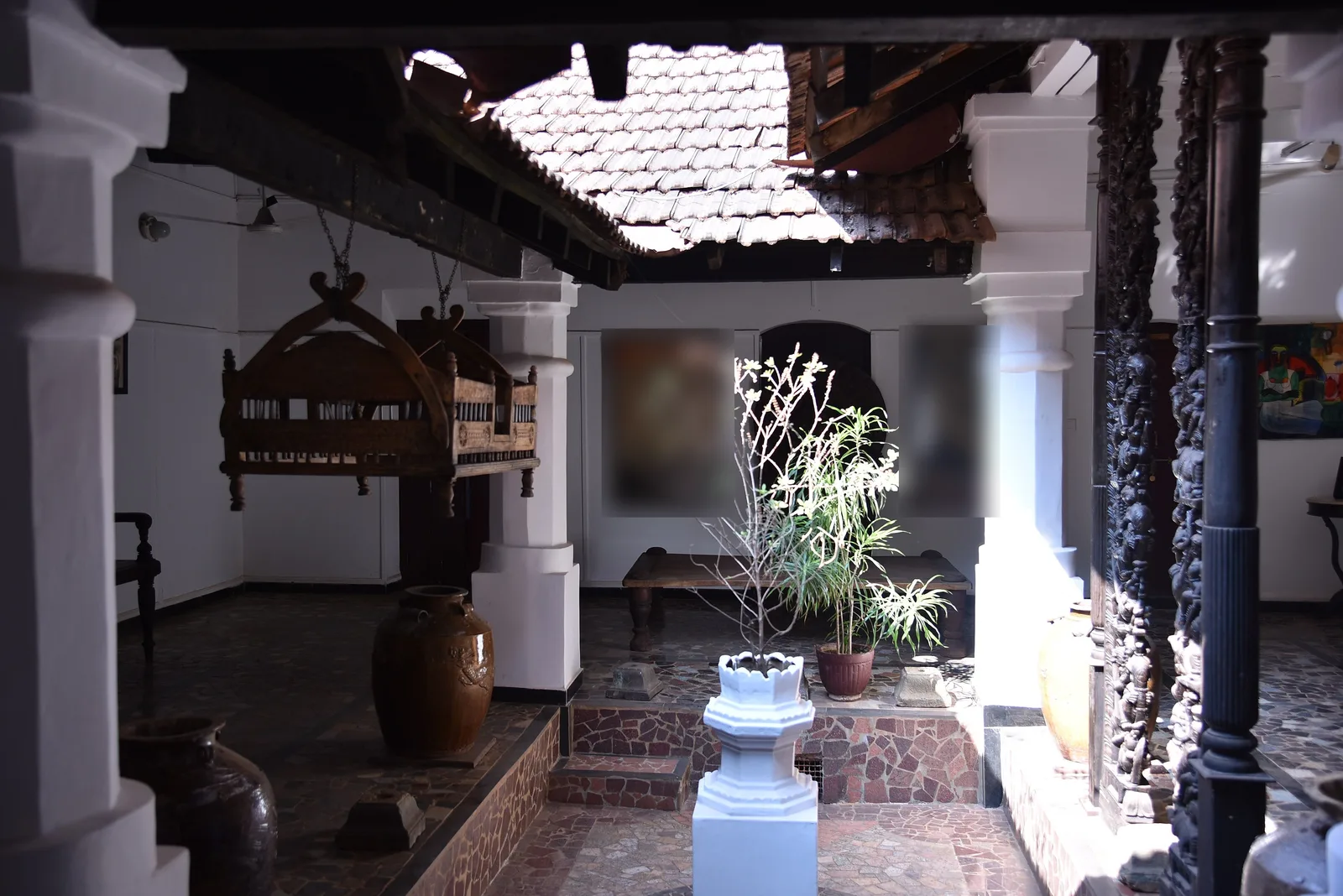
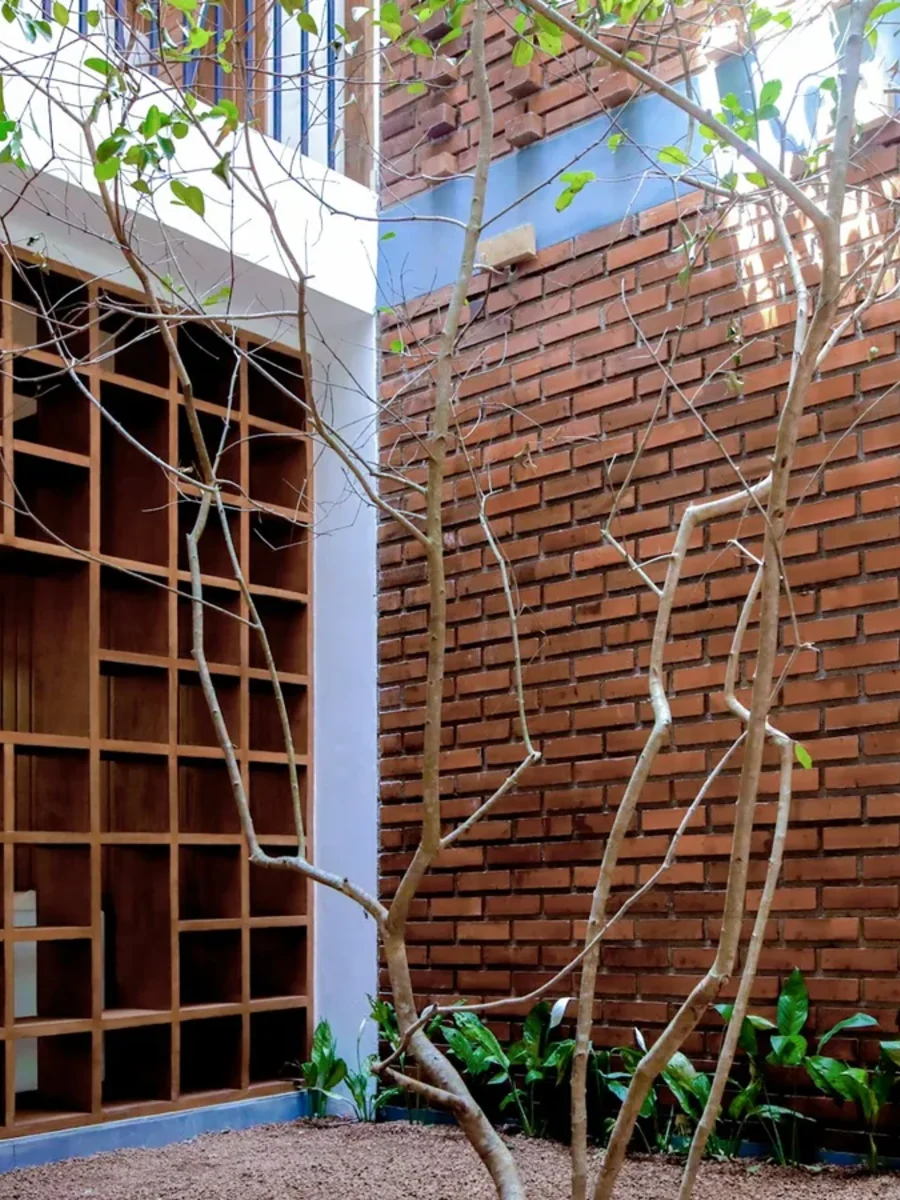
A courtyard house is a house built around an open space at its centre, with rooms on several sides and the sky above. In Goa the form is old and strongly rooted. Writing on Goan houses notes that pre-Portuguese homes were inward-looking and opened into courtyards rather than onto streets, and that most of the large traditional Hindu houses have a courtyard called the rajangan, with a tulsi vrindavan, the raised planter for sacred basil, as its focus. Many Catholic houses kept courtyards too, behind their outward-facing fronts.
Living in one is different from living in an ordinary house. The courtyard is a source of light, air and calm, and it is also an opening in the middle of the roof through which Goa's monsoon pours straight into the house. The rooms around it are exposed to rain on one side, to the morning sun on another, and to whoever is crossing the verandah outside their doors.
This guide explains what the courtyard does and how the two main traditions use it, then turns to the practical side: rain and damp at the courtyard edge, how to screen the internal verandah, and how to furnish the rooms that face it. If you are building new around a courtyard rather than living in an old one, our article on the modern courtyard villa covers that case.
What the courtyard does: light, air, rain and family life
A study from Government Polytechnic Panaji describes the traditional Goan rajangan house as designed for a joint family around an internal courtyard with a tulsi plant at its centre, and says the arrangement came about both to let morning light illuminate and ventilate the inner rooms and to suit the family's social and cultural life. Social spaces gathered around the courtyard, while private rooms were tucked away more secluded. The courtyard was the room everyone shared.
It also handled water. A survey essay on the Hindu courtyard houses of Goa describes the rajangan as open to the sky, with the roofs from all sides of the house draining into it, and its four sides open as an internal verandah, the chowki, often with ornate columns, brackets and beams. The chowki served as a gathering place and, on festive occasions, as a dining area for large numbers of guests. Rain falling on the house came down into its centre, which is why courtyard drains matter so much.
It is worth being honest about the climate effect. Research on courtyard houses in Kerala, a similar warm and humid coast, published in the ISVS e-journal, finds that courtyards ensure ventilation and daylight, but notes the view that in a humid climate with abundant vegetation their cooling value is smaller than in dry regions, and that they remain vital mainly for symbolic, social and religious reasons. In other words, the courtyard brings light and moving air into a deep plan; it does not make a Goan house cool by itself. The deep eaves, thick walls and shaded verandah do much of that work.
Hindu and Catholic houses: two ways of using the centre
In the Hindu house, the courtyard is sacred as well as practical. The tulsi vrindavan stands at its centre, and the Government Polytechnic study records the practice of diyalagan, lighting lamps around the tulsi, which turns the courtyard into a ceremonial space. Around it, writing on Goan houses lists the spaces of a traditional home: the deva kood for daily prayer, the saal or hall, the raanchi kood or kitchen, a store room called the kothar, and in larger houses a hall for celebrating Ganeshotsav. The same study notes that the prayer room was given the highest platform in the house.
The Catholic house turned its public face to the street, with a balcão and verandas at the front, but the courtyard often survived behind. Writing on Goan houses describes the rooms beyond the formal sala as usually revolving around a courtyard, with bedrooms flanking it and the kitchen and service areas at the rear. The survey essay puts it more bluntly: the best of the Catholic houses retain the courtyard. In these houses it tends to be a private garden and circulation space rather than a ritual one.
For anyone furnishing either kind of house, the practical difference is what sits in the middle. A tulsi vrindavan, lamps and festival use call for clear space around the centre and fabrics kept well away from flames. A garden courtyard with planting holds more moisture and invites more insects, and its edges are often used for sitting. Both drain the roof into the same square of ground.
Planning something like this?
We visit homes across North and South Goa, measure on site, and bring samples to see in your own light.
Rain and damp at the courtyard edge
The India Meteorological Department records that about 91% of Goa's rain falls in the southwest monsoon and that July alone brings a third of the year's total. From June to August the winds are mostly westerly to south-westerly, and monsoon thunderstorms are sometimes accompanied by squalls. In a courtyard house all of that comes down inside the plan. Even under the chowki roof, rain blows in across the first metre or more of the verandah floor, and splash from the courtyard paving wets the base of walls, doors and anything standing near the edge.
Humidity does the rest. Morning relative humidity in the monsoon months runs between 87% and 91%, so a cushion, rug or curtain that gets wet at the courtyard edge does not dry by itself. The US Environmental Protection Agency advises that wet materials should be dried within 24 to 48 hours to prevent mould growth. In practice, anything at the courtyard edge in the monsoon should either be made to dry fast or be easy to move indoors.
- Survives at the edge: teak or other durable hardwood benches, cane and rattan with an open weave, masonry seats, outdoor-fabric cushions on quick-draining foam.
- Survives one step back: cotton dhurries that can be rolled and lifted, washable cotton slipcovers, light chik blinds.
- Keep away from the edge in the monsoon: upholstered sofas, pile rugs, jute, paper and photographs, lined curtains that touch the floor.
Screening the chowki: chik blinds, roll-downs and nets
The internal verandah is the most useful space in a courtyard house and the hardest to protect. It needs shade from the morning or afternoon sun on one side, shelter from blown rain in the monsoon, and some defence against mosquitoes, without losing the openness that makes it the heart of the house. Fixed glazing does all of that and destroys the courtyard in the process; light, removable screens are the better answer.
Split-cane chik and bamboo blinds are the traditional choice. Hung between the columns of the chowki, they cut glare and give privacy while letting air through, and they roll up under the eaves when not needed. For the heaviest weeks of rain, roll-down outdoor blinds in an open-weave or coated fabric can close one or two sides of the verandah against blown rain, and roll back up when it passes. Where people want a fully clear screen against rain, transparent PVC rain curtains are an option for the monsoon months only. Whatever is used, fix it to the timber beam or a discreet batten, never into ornate columns or brackets.
Mosquitoes follow water, and a courtyard has plenty: planter saucers, a tulsi vrindavan, drains and gutters. The World Health Organization notes that the mosquitoes that spread dengue are active during the day and advises covering, emptying and cleaning water containers weekly, along with window screens. In a courtyard house the most practical screens are on the doors and windows of the rooms rather than across the courtyard itself: sliding door nets on the openings from the chowki into bedrooms, and window nets where the rooms have them.
| Option | Does well | Watch for |
|---|---|---|
| Chik or bamboo blinds | Glare, privacy, air flow; look right in old houses | Not rainproof; roll up in storms and dry before storing |
| Roll-down outdoor blinds | Blown rain, low sun, partial privacy | Need secure fixing and a way to hold them in wind |
| PVC rain curtains | Clear protection from driving rain | Monsoon only; trap heat and humidity if left down |
| Door and window nets on the rooms | Insects, while doors stay open | Must fit the old frames without blocking doors or shutters |
Furnishing the rooms that face the courtyard
Rooms around a courtyard get their daylight second-hand, through the verandah, and many owners find them dim. The Government Polytechnic study notes that the later colonial bungalows, with verandahs all around, made internal living areas quite dark, and courtyard rooms share some of that. So the first rule for their curtains is to avoid taking light away by day. Light, breathable sheer curtains give privacy from the verandah while letting the courtyard light through, and they dry quickly if rain reaches them.
Bedrooms need more at night, and lined or blackout curtains are fine there as long as they hang clear of the floor and of any wall that gets damp. Keep them a hand's width from external walls so air can move behind, and hem them a centimetre or two above the floor in rooms where the courtyard floods the verandah. In very low-sill rooms, an inside-reveal blind may suit better than a curtain.
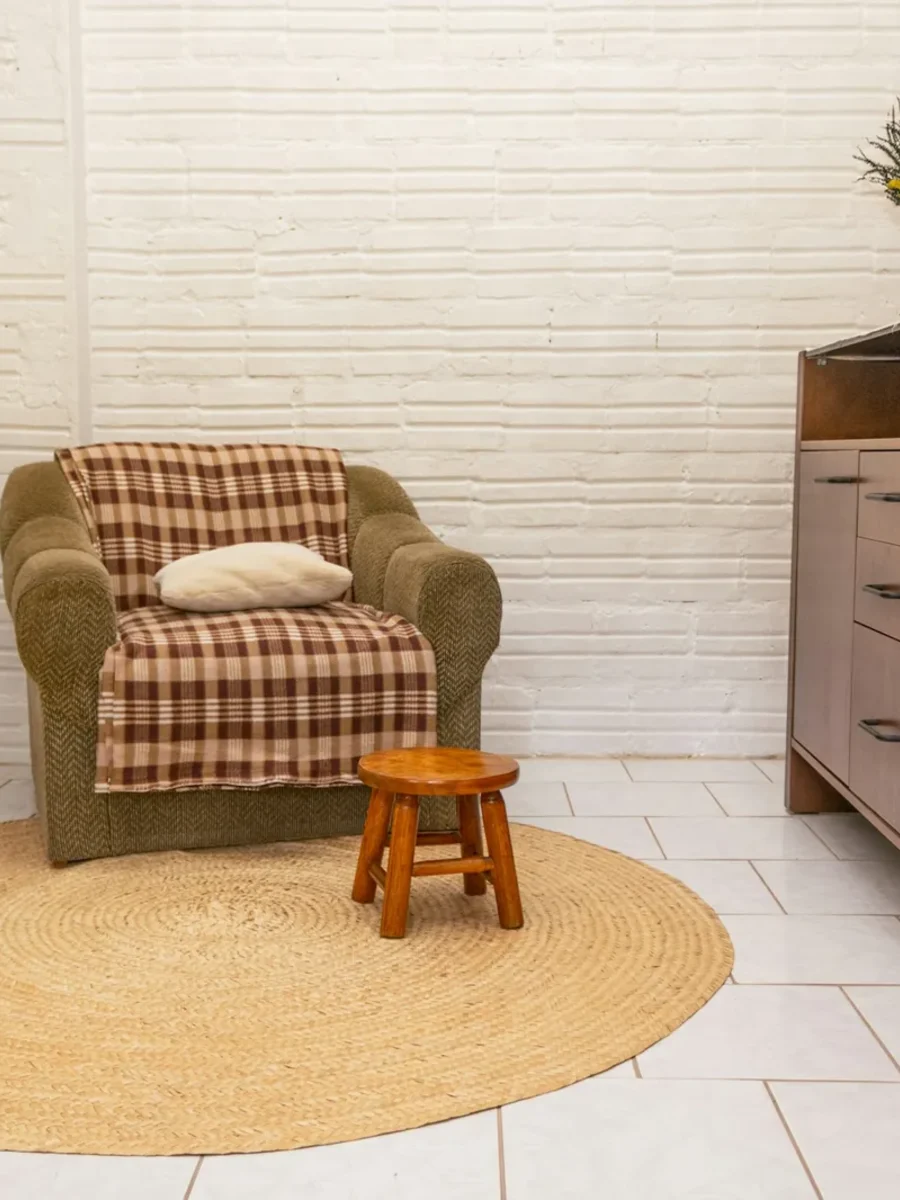
Seating and rugs should expect to be moved. Cane and rattan chairs suit the verandah and courtyard rooms, take a damp season in their stride if they can dry out, and are light enough to pull back from the edge. On the floors, flat-woven cotton rugs are the practical choice, because they can be rolled up and lifted when rain blows in and washed afterwards. Our dhurries and flatweaves are made for exactly this kind of floor, and our guide to the best rugs for humid homes compares fibres.
| Space | Exposure | What usually works |
|---|---|---|
| Courtyard edge of the chowki | Blown rain, splash, sun | Masonry or hardwood seats, outdoor cushions, nothing upholstered |
| Back of the chowki | Occasional rain, shade | Cane seating, dhurries rolled up in storms, chik between columns |
| Rooms opening off the chowki | Second-hand light, verandah traffic | Sheers by day, lined curtains in bedrooms, door nets |
| Prayer room or deva kood | Lamps and incense | Minimal fabric; anything near flames should be kept well clear |
Keeping the courtyard working through the year
The courtyard's one non-negotiable job is draining the roof. Before the monsoon, clear the gutters, valleys and courtyard drains, and check that the paving falls towards the outlets rather than towards the rooms. Debris that blocks a courtyard drain in a July downpour can put water across the chowki and under bedroom doors in minutes. After the monsoon, lift and wash anything that sat near the edge, check the base of walls and door frames for damp and termite tracks, and let rugs and cushions dry fully in the sun before they go back down.
The temptation in a wet courtyard house is to roof the courtyard over. An essay in Question of Cities observes that courtyards and high openings once pulled air through Goan houses, and laments that new buildings so often rely on plastic sheeting in the monsoon instead of design that drains the rain. A roofed-over courtyard loses both its light and its airflow, and the rooms around it become darker and damper. Seasonal screens, good drains and furniture that can move are a better answer than a permanent roof.
A courtyard is a drain with a garden in it. Clear its outlets before the first rain, not after the first flood.