 Drape Haus
Drape Haus
Preparing the room
Drape Haus
Preparing the room
Sliding Nets
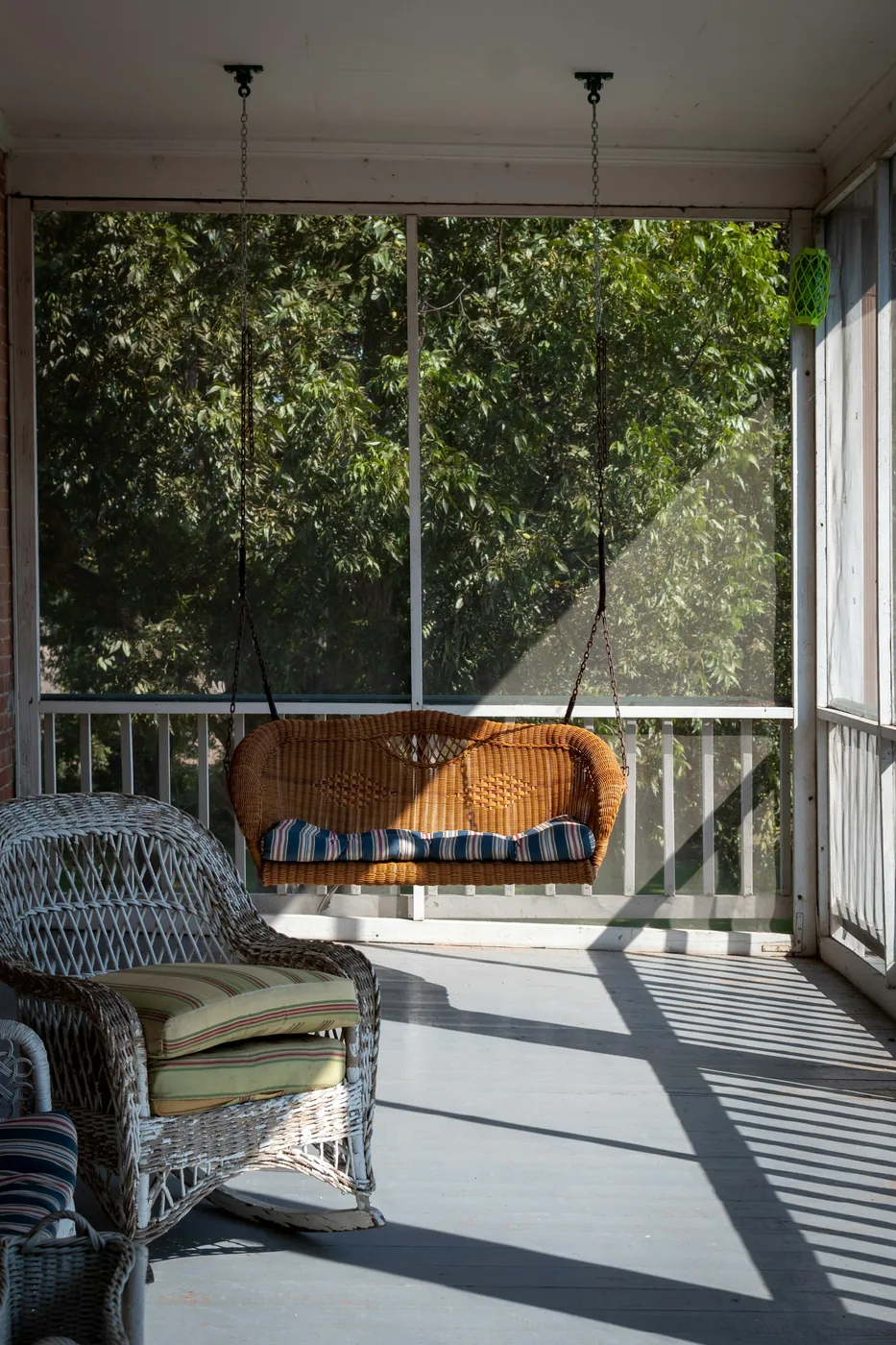
Mesh that closes the open sides of a balcony itself, so the balcony becomes a screened room you can sit in at dusk — safe for cats, closed to pigeons and built to stand up to sea wind and salt.
The opening
What matters most
Setting
System
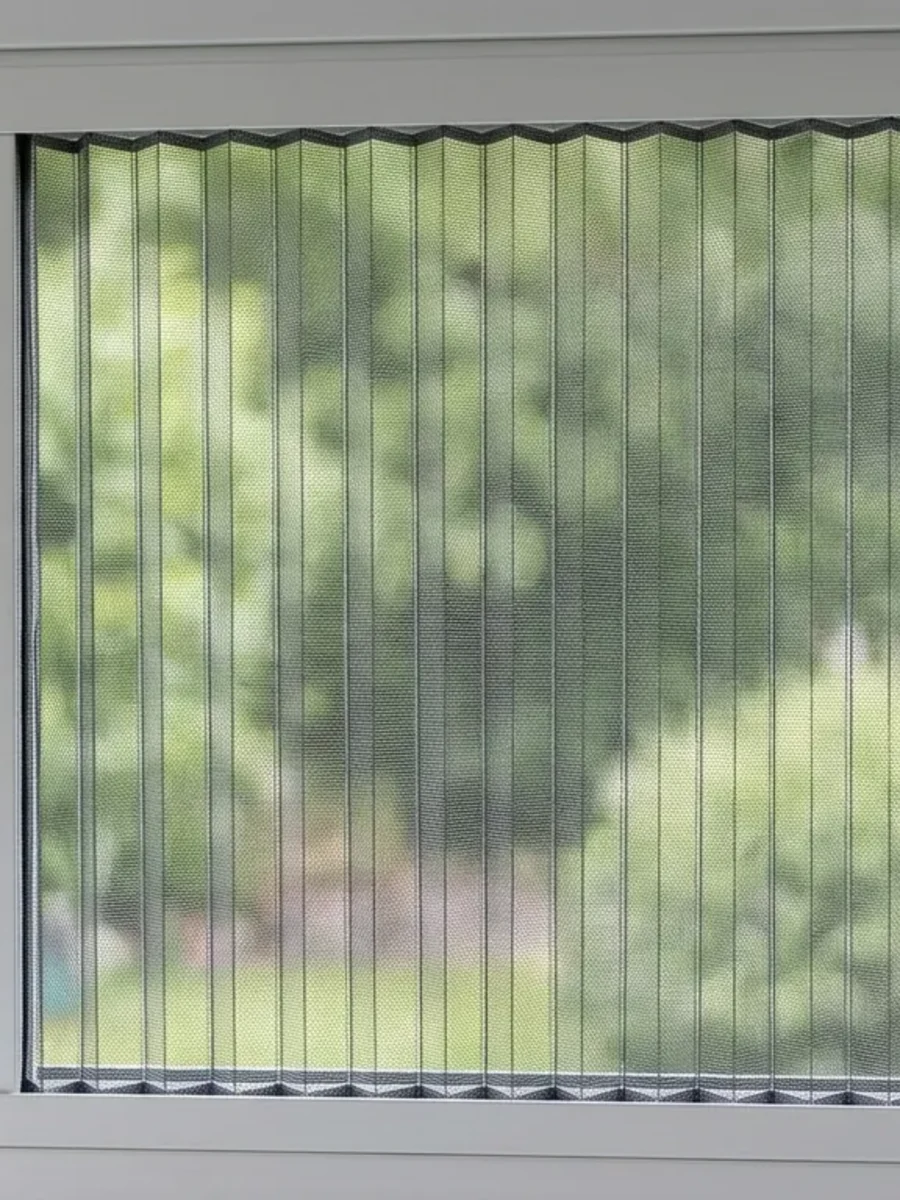
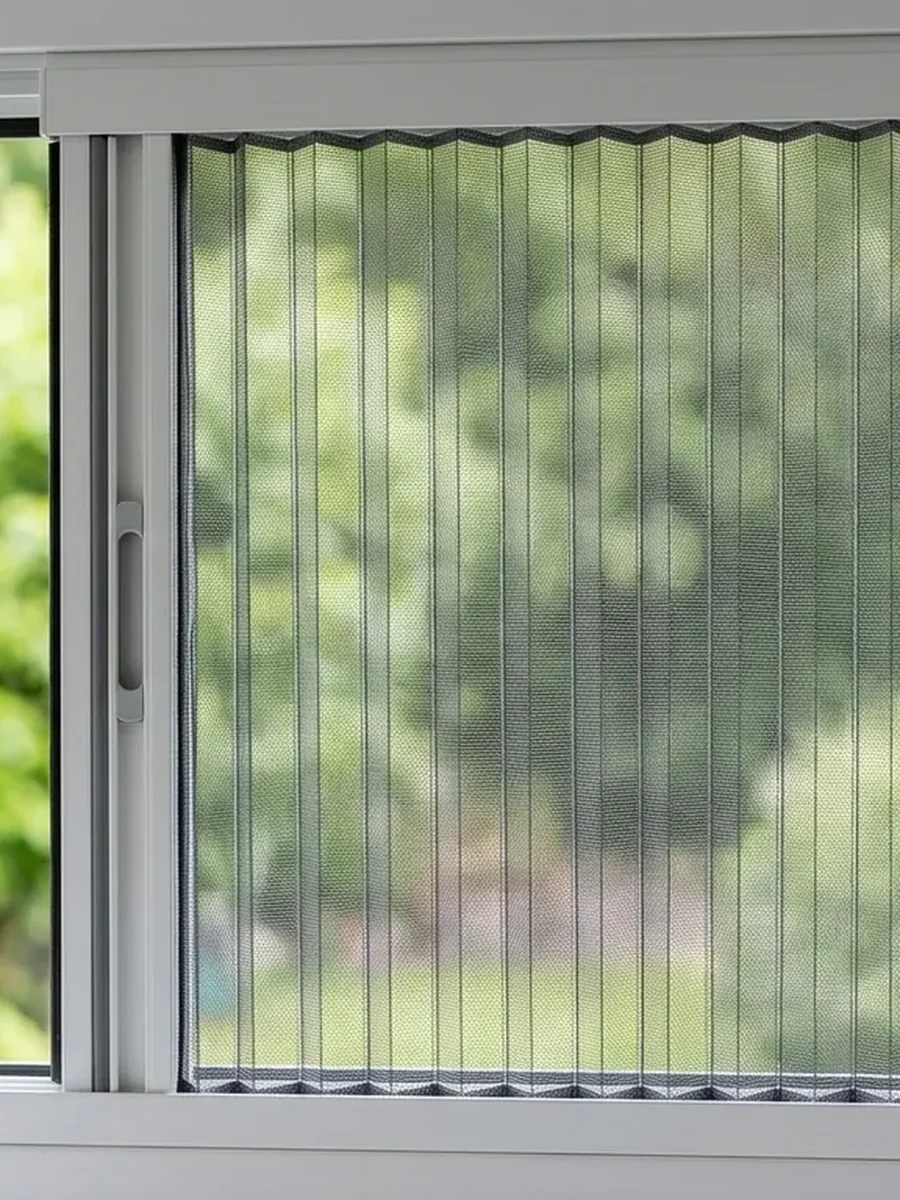
Pleated screen, side-opening
Mesh
Coated fibreglass or polyester mesh
Frame
Powder-coated aluminium, stainless fixings
Pleated mesh folds into a slim stack, so a wide opening needs no heavy panel and no bottom lip to trip on. Near the sea, plain steel screws and untreated mesh corrode within a season or two. Rinse mesh and track with fresh water after the monsoon.
In short
By the Drape Haus studio · How we write
Is it right for you?
There are two ways to keep mosquitoes away from a balcony. One is to screen the door between the balcony and the room, which keeps the room clear but leaves the balcony itself to the insects. The other is to screen the balcony: close its open sides with framed mesh so it becomes a screened room of its own, open to air and light but closed to insects and birds.
Enclosing the balcony suits people who want to use it, not just look at it. Sitting out at dusk without coils, keeping plants without pigeons nesting among them, drying clothes without bird droppings, letting a cat out safely — each of these is a reason to net the balcony rather than its door.
It is a bigger and more exposed job than a door net. The panels face the full weather, the fixing is into concrete or masonry at height, and in a flat the external look may be governed by the housing society. Planned properly, though, a balcony enclosure is unobtrusive and lasts.
If you only want to keep insects out of the room behind, a door net is simpler; our sliding door nets and mosquito nets for doors pages cover those options.
The details
Netting the door to a balcony keeps insects out of the room behind it. Netting the balcony itself keeps them out of the balcony, which is a different job. The open sides between the parapet, the columns and the slab above are closed with framed mesh panels, some fixed and some sliding or hinged, so you can still reach the view, water the plants and clean.
Many people want this for reasons beyond mosquitoes. Flat owners want pigeons kept off the ledge and out of the drying area. Cat owners want a balcony the cat can use without the risk of a fall. Families want the evening on the balcony without coils and repellents.
A balcony is the most exposed position we screen. It takes the full monsoon wind, driving rain and, near the coast, salt that settles on everything. Frames are sized stiffer, fixed into concrete with stainless anchors, and the mesh is chosen to resist corrosion and claws. Large panels are divided so they do not drum or bow.
In a flat, check whether your housing society has rules about the external look before work begins; a slim frame in a colour matched to the railings usually meets them. The mosquito net chooser at /simulator/mosquito-nets helps you see how fixed and sliding panels would work.
Your options
Every balcony is different — open on one side or three, with a solid parapet or railings, under a slab or open above. These are the building blocks we combine to close it.
Swipe for all 5 →
The honest view
Use the balcony at dusk
An enclosed balcony is usable at exactly the time insects make an open one unbearable, without repellents or smoke.
Birds kept out
Pigeons have nowhere to land, nest or roost, which keeps the balcony, the AC unit ledge and the washing clean.
Safer for cats
A properly fixed enclosure with pet-resistant mesh lets a cat use the balcony without the risk of a fall or an escape.
Air and light kept
Unlike glazing, mesh lets the breeze through and does not trap heat. The balcony still feels outdoors.
Maximum weather exposure
A balcony takes full wind and rain. Panels must be stiffer and fixings stronger than inside the house, which shapes the design.
Society approval
In many apartment buildings, changes to the external look need permission. Slim frames in a matching colour usually meet the rules, but check first.
Mesh in the view
Even dark mesh puts a fine screen between you and the view. Most people stop noticing it, but on a prime sea view it is a real trade-off.
Side by side
Mesh is not the only way to close a balcony. Here is how it compares with the realistic alternatives.
| Framed mosquito mesh | Bird netting only | Glazed enclosure | Door net only | |
|---|---|---|---|---|
| Keeps out mosquitoes | Yes | No | Yes | Room only |
| Keeps out pigeons | Yes | Yes | Yes | No |
| Airflow on the balcony | Good | Full | None when closed | Full |
| Safe for cats | With pet mesh | Partly | Yes | No |
| Copes with monsoon wind | Good, if built for it | Good | Good | Good |
| Visual impact | Low with dark mesh | Low | High | None outside |
Swipe to compare →
If you want the balcony to stay a balcony — breezy, open, outdoors — mesh is the right enclosure.
Rather see it in your own room?
We bring samples to the house, measure every window, and specify for the light and exposure you actually have.
Room by room
The balcony used most in the evenings. Enclosing it adds a usable outdoor room, as long as the society's rules on external appearance are followed.
Lets you leave the balcony door open at night. Combined with a door net, the bedroom stays insect-free even when guests forget to close the door.
Keeps pigeons and their droppings away from washing and the washing machine.
Full wind exposure and salt. Possible, but the frame, mesh and anchors must be specified heavily, and the view trade-off considered.
Large open terraces are usually better screened at the doors into the house, with the terrace left open.
In depth — tap a heading to read
We start by drawing the balcony's openings: the clear height from parapet to slab, the widths between columns, and the position of anything that must stay reachable — an AC outdoor unit, a tap, a plant ledge, a window to be cleaned. Fixed panels fill most of the space; access panels go where you need to reach out.
Large openings are divided by vertical mullions and sometimes a horizontal rail, so that no panel is so large it drums in the wind or bows inward. Panels line up with existing columns and railings where possible, so the enclosure looks like part of the building rather than an addition.
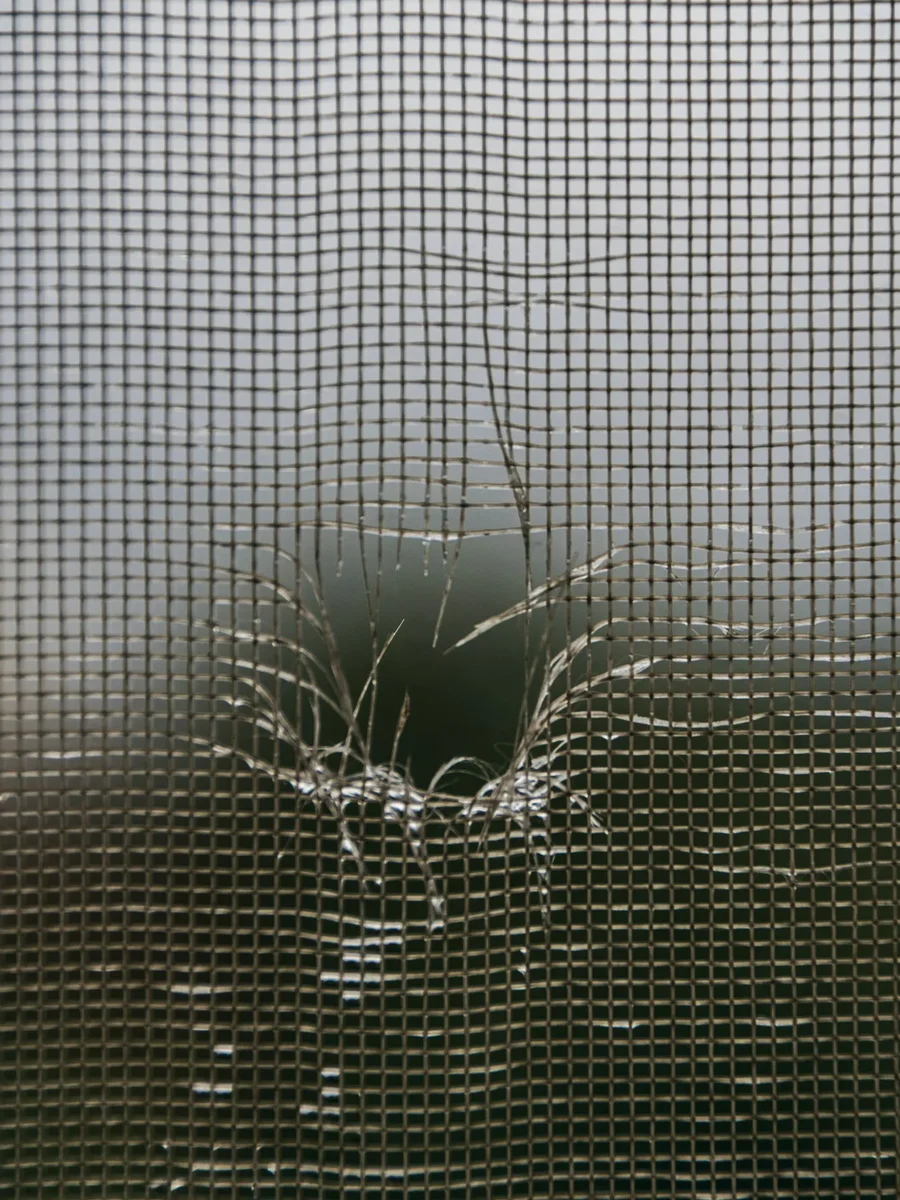
Standard fibreglass mosquito mesh is fine on a window, but a cat's claws go through it quickly, and a cat leaning on it can push it out of its frame. For a cat enclosure we use a pet-resistant mesh, which is several times thicker and resists tearing, held in frames with a secure spline and no gaps at the edges, especially at the bottom where cats test first.
Bird-proofing is mostly about leaving no landing gap. Pigeons will use any opening a hand's width wide, so the enclosure must meet the slab, the walls and the floor fully. Gaps around pipes and AC brackets are closed with fitted mesh pieces.
An enclosure is a screen, not a safety barrier. Never rely on mesh to stop a child or a person falling.
During the monsoon, balconies on exposed elevations face strong onshore winds and horizontal rain. Panels are fixed with stainless anchors into concrete or solid masonry, never into plaster alone. Frames are a heavier section than window screens, and mesh is chosen to resist corrosion: polyester or coated fibreglass, or stainless near the sea.
Rain will pass through mesh, so the balcony's own drainage must stay clear. We keep the bottom of the enclosure clear of the floor drain and avoid ledges that trap water. Salt deposits are rinsed off with fresh water every few weeks on sea-facing balconies.
In apartment buildings, balconies are part of the building's elevation, and many housing societies set rules on what can be added. A slim frame in a colour matched to the railings or window frames, with dark mesh, is the least visible addition and is usually acceptable. Check before work starts, and we can provide a drawing for approval.
To see how fixed and sliding panels might combine across a balcony opening, the mosquito net chooser on this page is a useful starting point before the visit.
Living with it
Hose or sponge the mesh with fresh water every few weeks, especially on sea-facing balconies and after dry, dusty spells.
Leaves and debris collect at the base of the enclosure. Keep the balcony drain clear, especially before the monsoon.
After heavy wind, check that no panel has moved and no fixing has loosened.
Cat owners should check the lower mesh monthly and repair small tears before they grow.
Clean and lightly lubricate the access panel's track so it slides freely.
Avoid these
Light frames bow and flap in monsoon wind. Balconies need heavier sections.
Anchors must go into concrete or solid masonry, or the panels can pull out in a storm.
Cats tear standard fibreglass mesh. Use pet-resistant mesh.
A small gap at the slab or around a pipe is all a pigeon needs. Close every gap.
An enclosure that breaks the building's rules may have to come down. Check first.
Checklist
More in sliding nets
Sliding mosquito nets for windows, doors and balconies, planned alongside your curtains so the two work together — the window opens for air, the net stays closed, and the curtain still draws.
From our guides
Our process
One team from the first visit to the last bracket, so nothing is lost between the person who specified it and the person who fits it.
FAQ
Yes. The open sides are closed with framed mesh panels between the parapet, columns and slab, with at least one opening panel for access. The balcony becomes a screened space.
With a pet-resistant mesh, firmly fixed frames and no gaps at the edges, yes — it is one of the main reasons people enclose balconies. Ordinary fibreglass mesh is too easily torn.
Yes. A fully enclosed balcony gives pigeons nowhere to land or nest, and keeps them out of drying areas and AC unit ledges.
If they are built for it: stiff frames, divided spans, stainless anchors into concrete and a corrosion-resistant mesh. Lightweight window-grade screens are not enough on a balcony.
Yes. Access panels — sliding or hinged — are placed where you need to reach out, including in front of windows that must be cleaned from outside.
Slightly. Dark mesh reduces light only a little and is the least visible from inside. Most people notice the absence of insects far more than the change in light.
Yes. Panels are fixed with anchors and can be taken down, leaving only small fixing holes to fill.
No. Mesh keeps out insects and birds and holds a cat in, but it is not designed to stop a person falling. Railings and grilles do that job.
Next step
We visit, measure every opening on the balcony, note where access is needed and look at how exposed it is to wind and salt. We bring mesh samples — standard and pet-resistant — and frame colours to see against your railings. You get a drawing of the proposed enclosure, which also helps with any society approval, and then we make and fit the panels. Book a home visit to plan your balcony.