 Drape Haus
Drape Haus
Preparing the room
Drape Haus
Preparing the room
Blinds
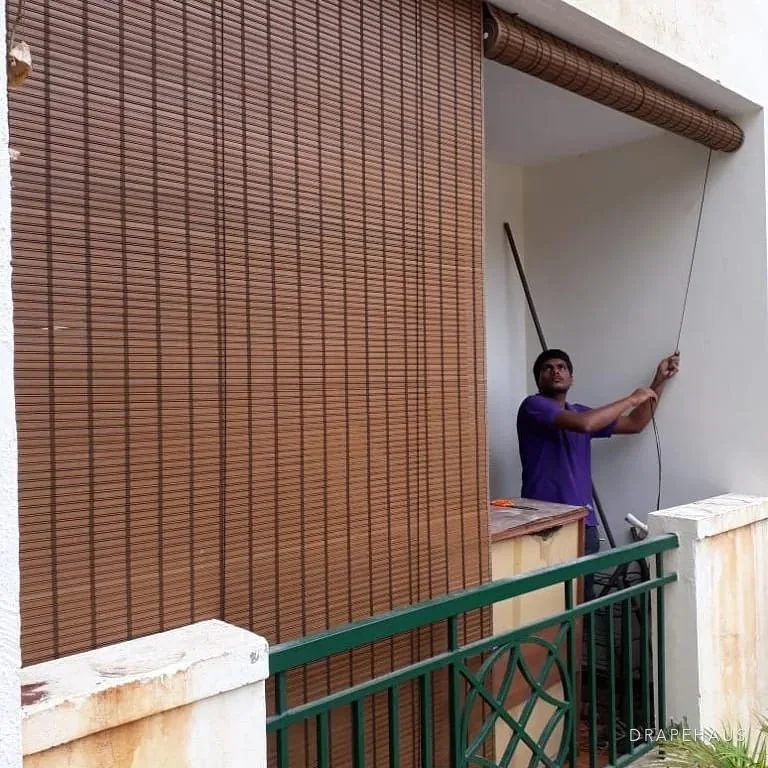
Vertical drop blinds that close the open side of a verandah, balcony or balcão against afternoon sun, sideways rain and the gaze of the lane — and lift out of the way when the evening breeze comes in. Outside, the fixings and the guidance matter as much as the fabric.
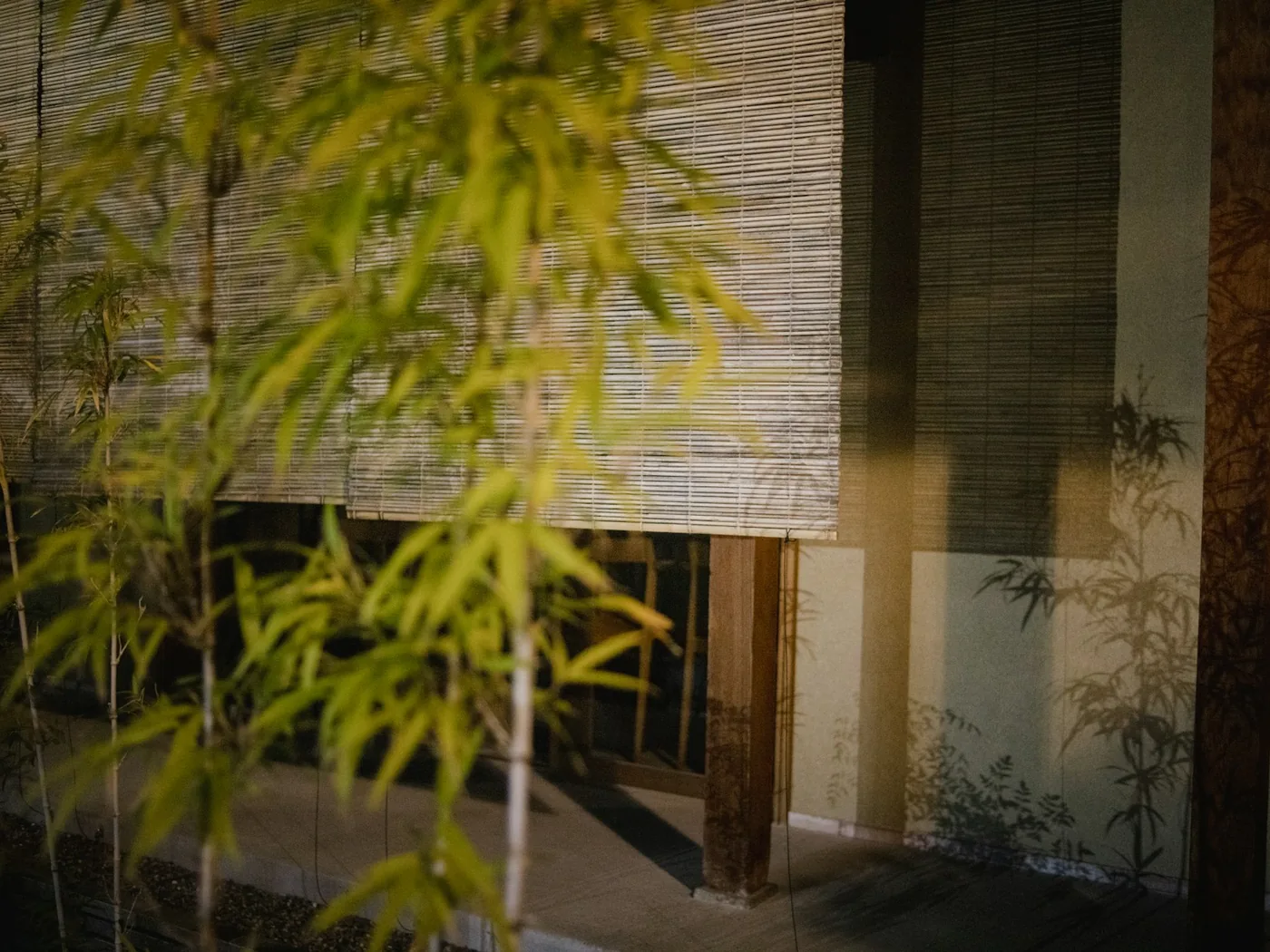
Bamboo chik · Midday
Treatment
Time of day
Split bamboo: you see out but not in by day, and the breeze still moves. At night, lamps on, the view reverses.
In short
By the Drape Haus studio · How we write
Is it right for you?
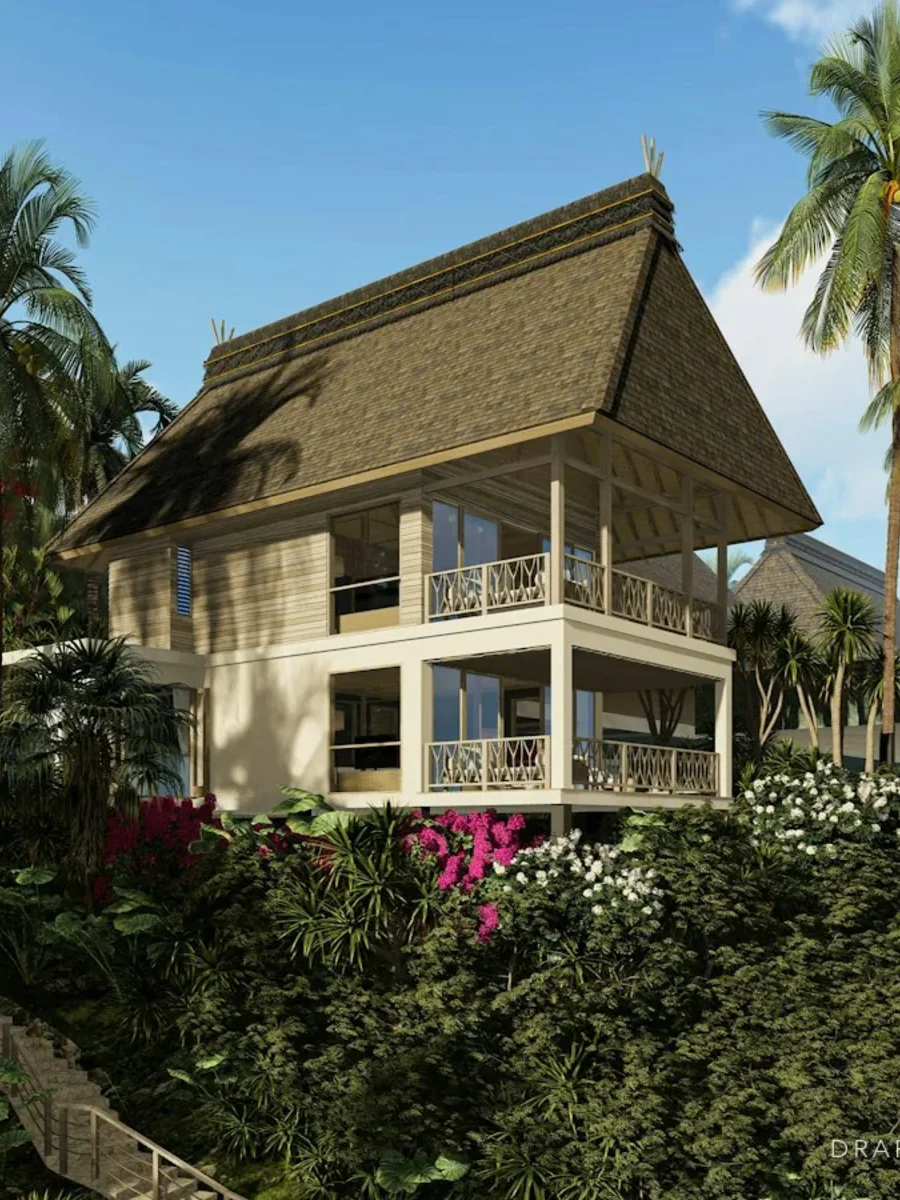
Most Goan houses have at least one space that is neither inside nor out: a front balcão with its built-in seats, a long verandah on the garden side, a flat's balcony that catches the four o'clock sun. These are the places people actually live in for much of the year, and they are the places most at the mercy of the weather. An outdoor blind is a vertical screen that drops across the open side to tame them.
Lowered, it cuts the low western sun that a roof overhang cannot reach, softens glare off a pool or the sea, keeps a passing shower off the cushions and gives privacy from the road. Raised, it disappears into a slim headbox and the space is open again. Unlike an interior blind, it stops the heat before it reaches the wall or the glass of the room behind, which is why a shaded verandah keeps the living room cooler too.
The details
An outdoor blind hangs from a beam or lintel and drops straight down across the opening. In Goa we make them in three materials: PVC-coated polyester mesh, which cuts sun and glare while keeping the view and the air; solution-dyed acrylic canvas, which gives full shade and privacy; and clear PVC, which keeps driving rain off a seating area without hiding the garden.
What separates a blind that lasts from one that tears itself apart is how it is held at the sides. A loose blind on an exposed balcony becomes a sail in the first squall. We guide every outdoor blind, with zip-edge side channels, tensioned stainless cables or a bottom bar that hooks down, chosen by how much wind the opening takes.
Near the sea, every metal part is a decision. Headboxes and channels are powder-coated aluminium, brackets and screws marine-grade stainless, and wherever the two meet we isolate them so the aluminium does not corrode around the fixing. Into laterite we use anchors sized for soft, porous stone; into old timber beams we check the wood before we load it.
These blinds sit between two other ways of shading outside. A bamboo chik is the traditional, natural answer and has its own page under Bamboo & Chik Blinds. A projecting awning, which throws shade out over a terrace, is covered under Awnings & Outdoor Shade in Other Services. An outdoor blind closes the opening itself, vertically.
Your options
Two choices decide the result: what the blind is made of, and how it is held at the sides. The fabric sets the shade, view and rain protection; the guidance decides whether it survives the wind.
Swipe for all 5 →
The honest view
Stops heat before the glass
Shading the outside of an opening keeps the sun off the wall and windows behind it. The verandah becomes usable in the afternoon and the room behind it gains less heat than it would with an interior blind alone.
Shade without losing the view
Mesh fabrics block glare and much of the heat while you can still see the garden, the sea or the street from the shaded side. In daylight, people outside see much less of you than you see of them.
Extends the usable season
A clear PVC screen lets a family eat on the verandah through a rainy evening, and canvas makes a sun-trap balcony comfortable in April. The outdoor space works for more months of the year.
Durable synthetic materials
PVC-coated mesh, acrylic canvas and clear PVC do not rot or harbour mould the way bamboo or cotton do. With good fixings, a guided outdoor blind outlasts a chik in the same position by a wide margin.
It must be raised in high wind
No drop blind is a storm shutter. Even zip-guided blinds should be raised in strong wind, and someone has to do it, or a motor with a wind sensor has to.
Not a sealed enclosure
Rain driven sideways will still find its way past the top and bottom of most blinds. They reduce the weather on a verandah; they do not turn it into a room.
Visible hardware
Headboxes and channels are part of the façade. On an old house with carved pillars or a lime-plastered front, they need careful placement and colour matching to sit quietly.
Side by side
For an open verandah or balcony, the realistic choices are a guided outdoor blind, a bamboo chik, a projecting awning or simply leaving the opening open and furnishing it for the weather.
| Outdoor drop blind | Bamboo chik | Projecting awning | Open, no shading | |
|---|---|---|---|---|
| Low western sun | Blocks it fully | Filters it | Misses it when low | None |
| Rain on seating | Clear PVC stops most | Little protection | Overhead rain only | None |
| Wind resistance | Good when zip-guided | Poor, must be tied | Must be retracted | Not applicable |
| View from inside | Kept with mesh | Partly kept | Fully kept | Fully kept |
| Life outdoors | Long with care | A few seasons | Long with care | Not applicable |
| Look | Clean, contemporary | Traditional, natural | Architectural | Unchanged |
Swipe to compare →
Rather see it in your own room?
We bring samples to the house, measure every window, and specify for the light and exposure you actually have.
Room by room
The classic use. Mesh blinds between the pillars cut the afternoon sun and let the breeze through; a clear PVC blind at the dining end keeps evening meals going through the rains.
Gives privacy from the road and shade on the seats, but the façade is on show. Use slim headboxes tucked under the eave, cable guidance rather than bulky channels, and colours matched to the walls.
A zip-guided blind turns a sun-baked balcony into somewhere to sit. Check the society's rules on external fittings first, and fix into the slab soffit rather than a thin parapet.
Possible, but the wind and salt are at their worst. Only fully zip-guided blinds with motorised wind sensing, all-stainless fixings, and a plan to store the fabric for the monsoon.
Clear PVC and mesh extend the season for guests. Choose motorised or simple hook-down operation that staff can manage, and a routine for raising blinds at night.
In depth — tap a heading to read
Wind is what destroys outdoor blinds, not rain or sun. A lowered blind presents a large flat surface to the wind, and the load on it rises sharply with wind speed. Pre-monsoon squalls in Goa arrive quickly, often in the late afternoon, and a blind left down and unguided will flog, tear at the edges or pull its brackets out of the wall.
Guidance is the first defence. A zip-edge blind spreads the load along the full height of both channels, so the fabric bows but does not escape. Cable-guided blinds hold the bottom bar but let the fabric move at the edges, so they belong in more sheltered openings. A blind that is only hooked down at the bottom should be treated as a fair-weather blind.
If you cannot be sure someone will raise the blind before a squall, it needs either a motor with a wind sensor or a sheltered position.
On the coast, outdoor blinds fail first at the metalwork. Plain steel brackets rust within a season, zinc-plated screws streak the wall, and bare aluminium pits and grows a white powder. We specify powder-coated aluminium for the headbox, channels and bottom bar, and marine-grade stainless steel for brackets, screws, cables and hooks.
The less obvious problem is contact between different metals. Where a stainless screw passes through an aluminium channel in salty, damp air, the aluminium corrodes around the fixing. We isolate the two with nylon washers or sleeves and seal the holes, so the coating is not breached.
What the blind hangs from matters as much as the blind. Laterite is strong in a block but porous and soft at the surface, so an ordinary plug can pull out under wind load. We use longer anchors set well back from edges, chemical anchors where the stone is crumbly, or a timber or aluminium batten that spreads the load across several fixings.
In older houses, the verandah often has a timber beam or wall plate across the opening. That is a good place to hang a blind if the wood is sound, but beams in Goan houses can hide termite damage or rot from leaking roofs. We probe the timber before we commit to it. In concrete flats, we fix into the slab soffit rather than a thin parapet or a brick infill wall.
Mesh fabrics are specified by openness, the share of the weave that is open. A tighter mesh blocks more sun and glare but shows less of the view; a more open one keeps the view and lets more heat through. For a west-facing verandah that takes the full sun from mid-afternoon, a tighter mesh is usually worth the trade.
Colour changes how the mesh behaves. Dark mesh is easier to see through and cuts glare well, because it absorbs light rather than glowing; light mesh reflects more heat but looks brighter and is harder to see through from inside. For daytime privacy from a lane, mesh works because the outside is brighter than the inside. At night, with lamps on, the effect reverses, and canvas is the material for privacy after dark.
Manual outdoor blinds use a crank, a spring or a pull-down with hooks. A crank suits wide, heavy blinds; a spring suits small ones. Motors make sense on wide spans, high openings and any blind that will be left unattended. Pair them with a wind sensor and a manual override or battery option for power cuts, so a blind is never stuck down in a storm.
Living with it
Every few weeks near the sea, hose the fabric and channels gently with fresh water to wash off salt and dust. Let the blind dry fully down before raising it.
Canvas and clear PVC rolled up wet will mildew or stick to themselves. After rain, leave the blind down in calm weather until it is dry.
Leaves, sand and insects collect in the side channels and bottom track. Brush them out so the zip runs freely and the blind does not jam half-way.
On exposed fronts, have the fabric taken down, cleaned, dried and stored for the wettest weeks. The headbox and channels stay in place.
Avoid these
A drop blind hung with nothing at the sides will flog in the first strong gust. Every outdoor blind needs channels, cables or at least a hook-down bar.
Plated steel brackets and ordinary screws rust quickly in salt air and stain the façade. Specify powder-coated aluminium and marine-grade stainless from the start.
Solid canvas on a windy balcony carries far more load than mesh and closes off the breeze. Choose canvas only where privacy truly needs it.
A clear rain screen lowered in April turns a verandah into a greenhouse. Keep it for the monsoon and evenings.
Checklist
More in blinds
Blinds do what curtains cannot: tight light control in a shallow recess, a clean line on a busy window, and genuine blackout when they run in side channels.
Our work
Our process
One team from the first visit to the last bracket, so nothing is lost between the person who specified it and the person who fits it.
FAQ
Only a fully zip-guided blind in a sheltered position, and only in moderate weather. In a storm every outdoor blind should be raised. On exposed sea-facing balconies we usually plan for the fabric to come down and be stored for the heaviest weeks.
They take the force out of light rain and spray but do not stop a downpour. For a seating area that must stay dry, a clear PVC drop blind is the material to choose.
Chiks are split bamboo, natural and breezy, but they weather quickly and are not guided against wind. Outdoor blinds use synthetic mesh, canvas or PVC on guided systems, so they last longer in exposed positions and can be motorised.
Standard sun mesh does not. A zip-guided blind with a fine insect-grade mesh, closed at the sides and bottom, can enclose a verandah well enough to sit out in the evening.
Yes, with anchors suited to porous stone, set well back from edges and corners. Where the laterite is crumbling or plastered thinly, we fix to a beam or add a mounting batten instead.
Yes, and they are often the only way to make a west-facing flat balcony usable in the afternoon. Fix into the slab above rather than the parapet, use zip guidance on higher floors where the wind is stronger, and check the society's rules about external fittings.
Yes. A tubular motor in the headbox raises and lowers the blind, and a wind sensor can raise it automatically in a squall. Choose a motor with a manual override or battery backup so a blind is never stuck down during a power cut.
Choose powder-coated aluminium for the headbox and channels, marine-grade stainless for every bracket, screw and cable, and isolate stainless from aluminium where they touch. Then rinse the blind and its channels with fresh water regularly.
Next step
Every opening is different: the wind it takes, what it hangs from, where the sun comes round. We visit, look at each opening at the time of day it gets the sun, check the beam or lintel, and measure for the guidance it needs. We then bring mesh, canvas and clear PVC samples to hold up in place, specify the fabric, guidance and fixings, make the blinds to measure and fit them. Book a home visit and we will start with the opening that troubles you most.