 Drapehaus
Drapehaus
Preparing the room
Drapehaus
Preparing the room
Sliding Nets
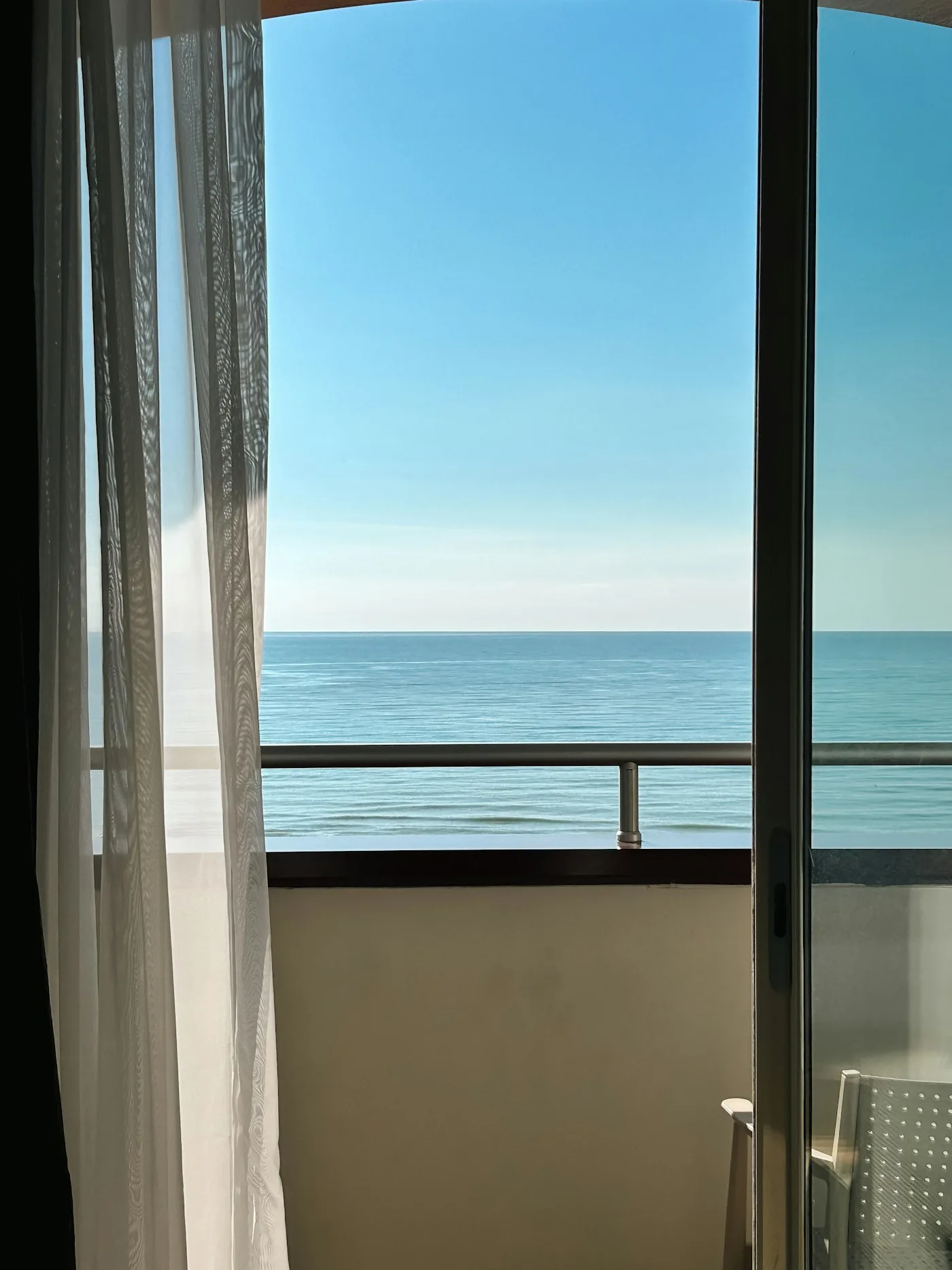
A full-height sliding net for balcony doors, French windows and sliding glass doors — the openings you most want to leave open on a warm evening.
The opening
What matters most
Setting
System
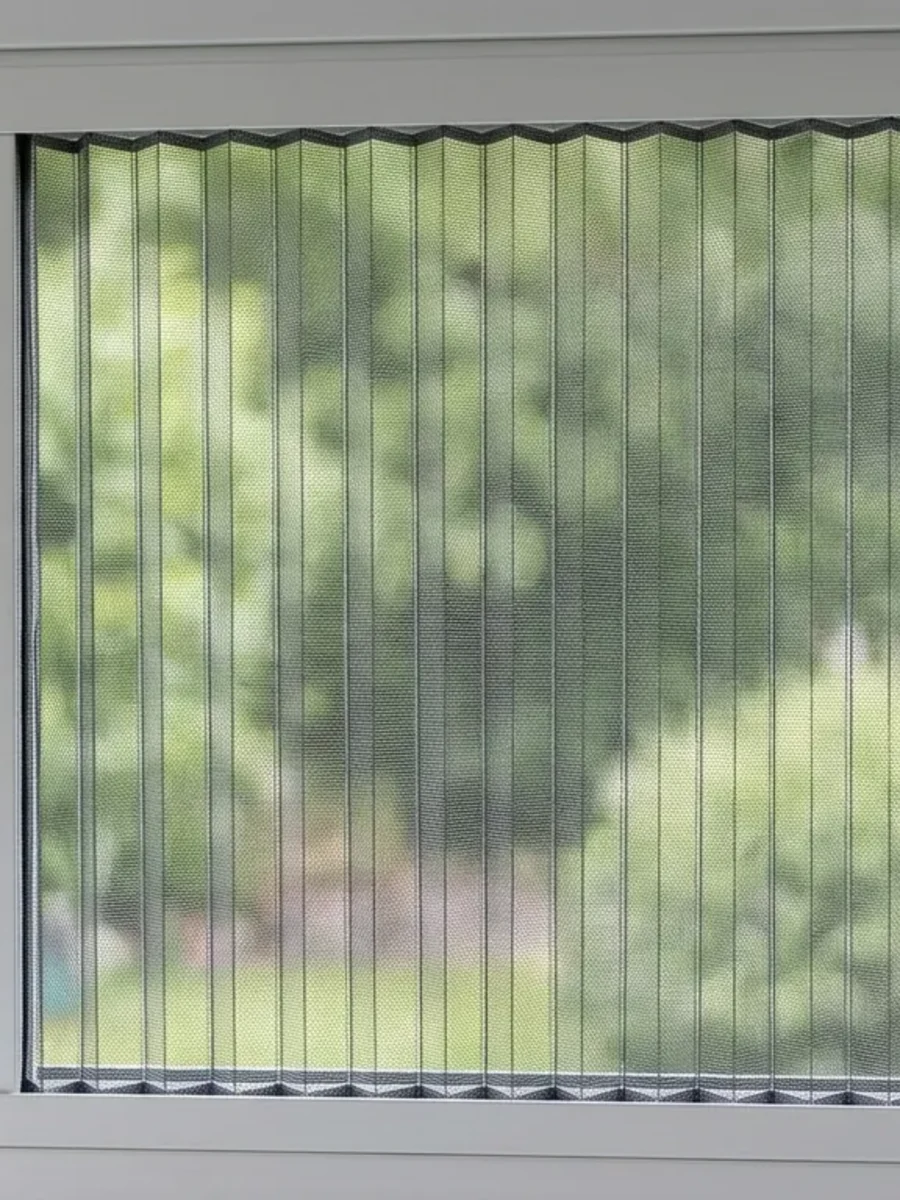
Pleated screen, side-opening
Mesh
Coated fibreglass or polyester mesh
Frame
Powder-coated aluminium, stainless fixings
Pleated mesh folds into a slim stack, so a wide opening needs no heavy panel and no bottom lip to trip on. Near the sea, plain steel screws and untreated mesh corrode within a season or two. Rinse mesh and track with fresh water after the monsoon.
In short
By the Drapehaus studio · How we write
Is it right for you?
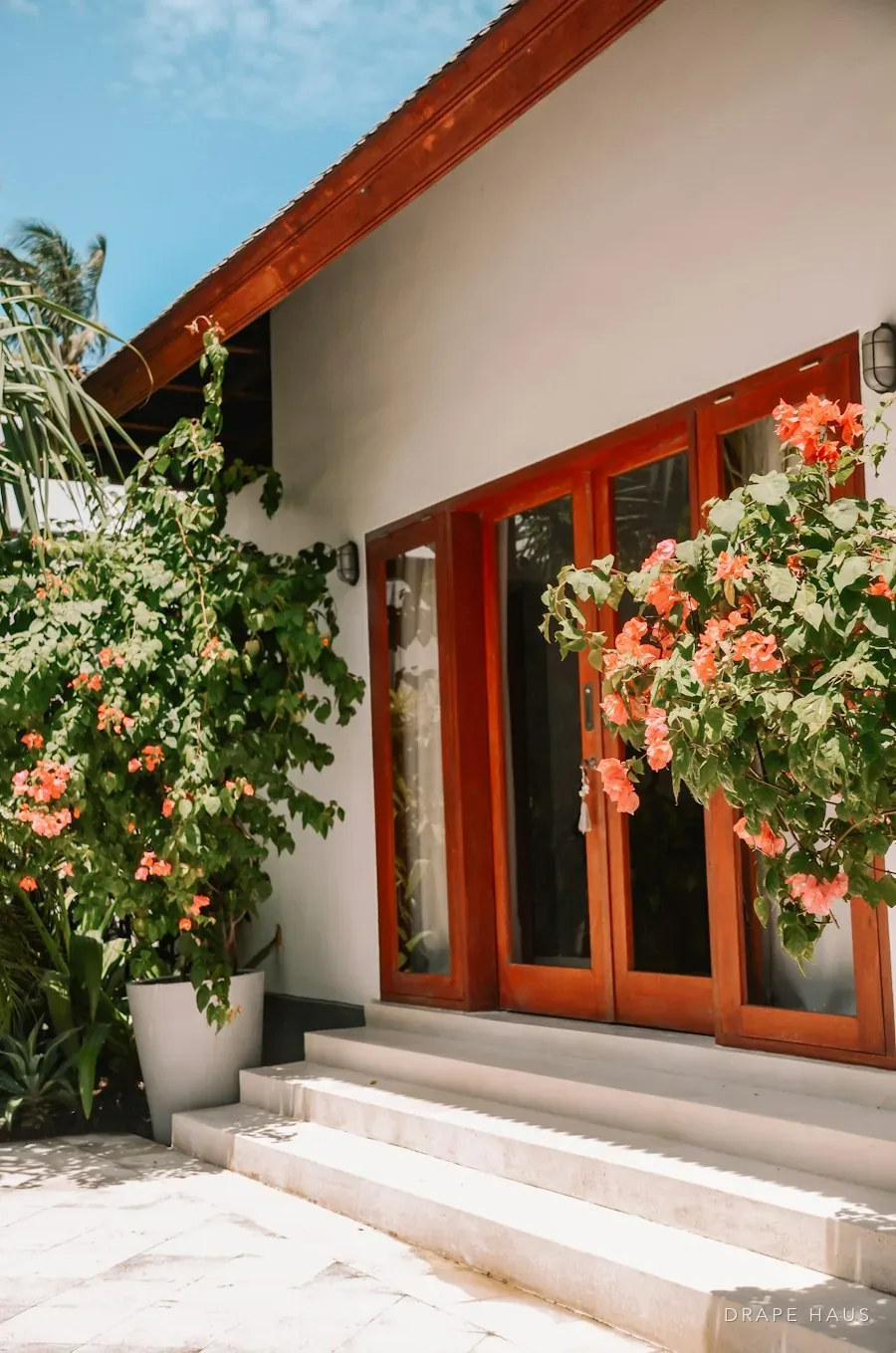
The doors of a villa are where the house meets the evening: the wide glass to the verandah, the door to the pool deck, the bedroom's balcony. They are also the openings people most want to leave open and the ones insects find first, drawn in by the lamps inside. A sliding door net lets you leave them open from sundown without the moths, mosquitoes and beetles following you indoors.
A door net is a different piece of engineering from a window net. It is taller and often wider, it is walked through dozens of times a day, it is pushed by wet hands, pets and luggage, and on a sea-facing elevation it takes the full monsoon wind. The frame, rollers, track and mesh are all specified heavier as a result.
It suits sliding glass doors of any width, including multi-panel verandah doors, and hinged French doors where there is room for a track in front of them. If you want the opening to look completely clear when the net is not in use, or the span is very wide and the use gentle, a pleated door screen may suit better. For a door used only occasionally, a simple hinged screen door can be enough.
The details
Door nets run in a top and bottom track and slide across the opening, with a low threshold so you can step through without tripping. On wide openings we split them into two leaves.
Balcony and sea-facing doors take the full force of the wind and salt, so we specify robust frames and mesh, and plan the net so it does not clash with the curtains or the door itself.
Your options
The glass door decides the layout. These are the arrangements we specify most often in villas, from a single balcony door to a wall of sliding glass.
Swipe for all 5 →
The honest view
The house stays open at dusk
The best hours on a verandah are the ones insects like most. A door net keeps the connection to the garden or pool without inviting the lamp-drawn swarm in.
Sturdy enough for daily traffic
Heavier frames, rollers and mesh stand up to people walking through all day, which matters most in a rental or a family house.
Handles very wide openings
Stacking leaves let a net cover a wall of glass, where a single screen would bow and drag.
Pets and children manageable
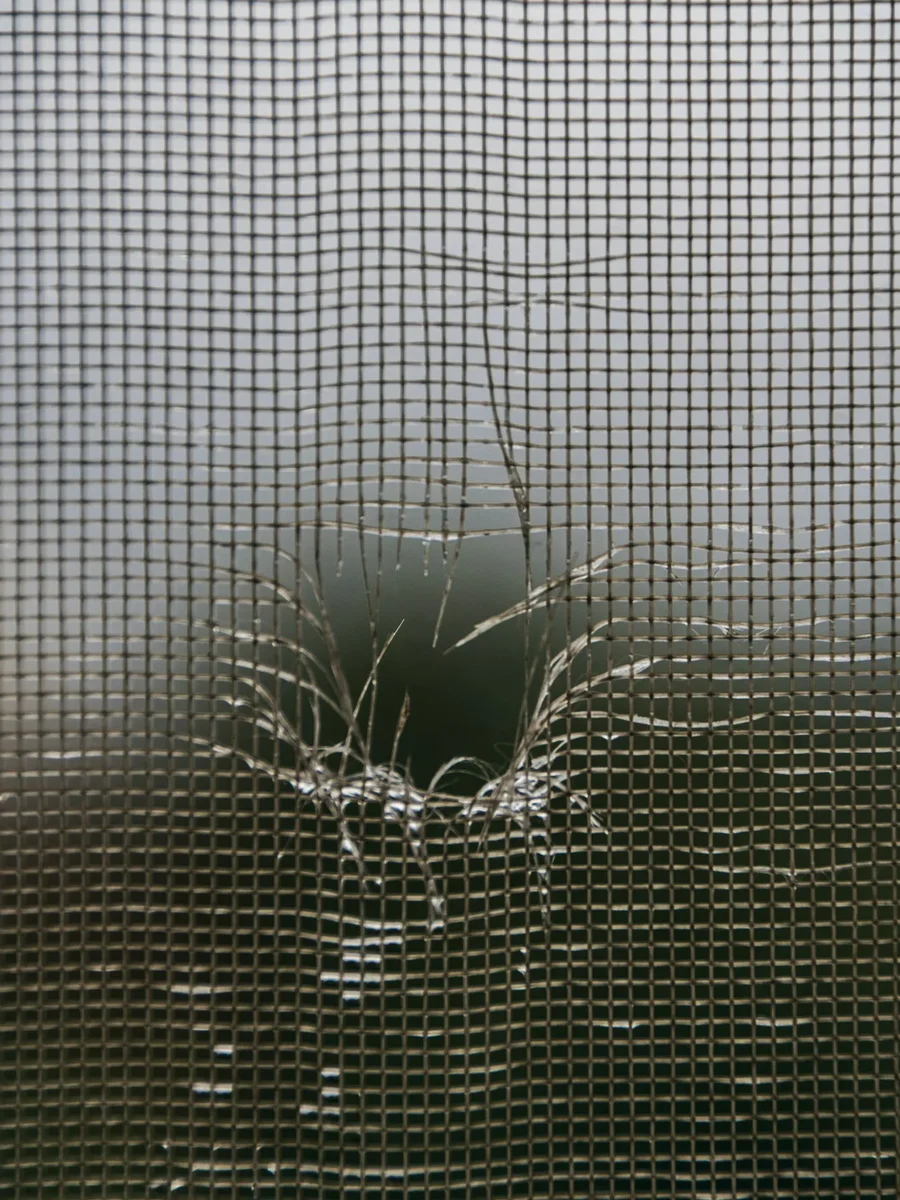
Pet-resistant mesh and mid-rails mean a dog's nose or a child's push does not end in a torn panel after the first week.
A track on the floor
Unless it can be recessed, the bottom track is a small step. On a door used constantly, with trays, children and luggage, that is worth planning around.
Opening and closing twice
You slide the glass and then the net. Most people stop noticing within days, but guests may leave the net open, so a rental needs clear, simple handles.
Wind demands good hardware
Tall mesh leaves act like sails in the July wind. Light frames bow, jump the track or rattle, so exposed doors need stiffer sections and deeper tracks.
Parked leaves cover glass
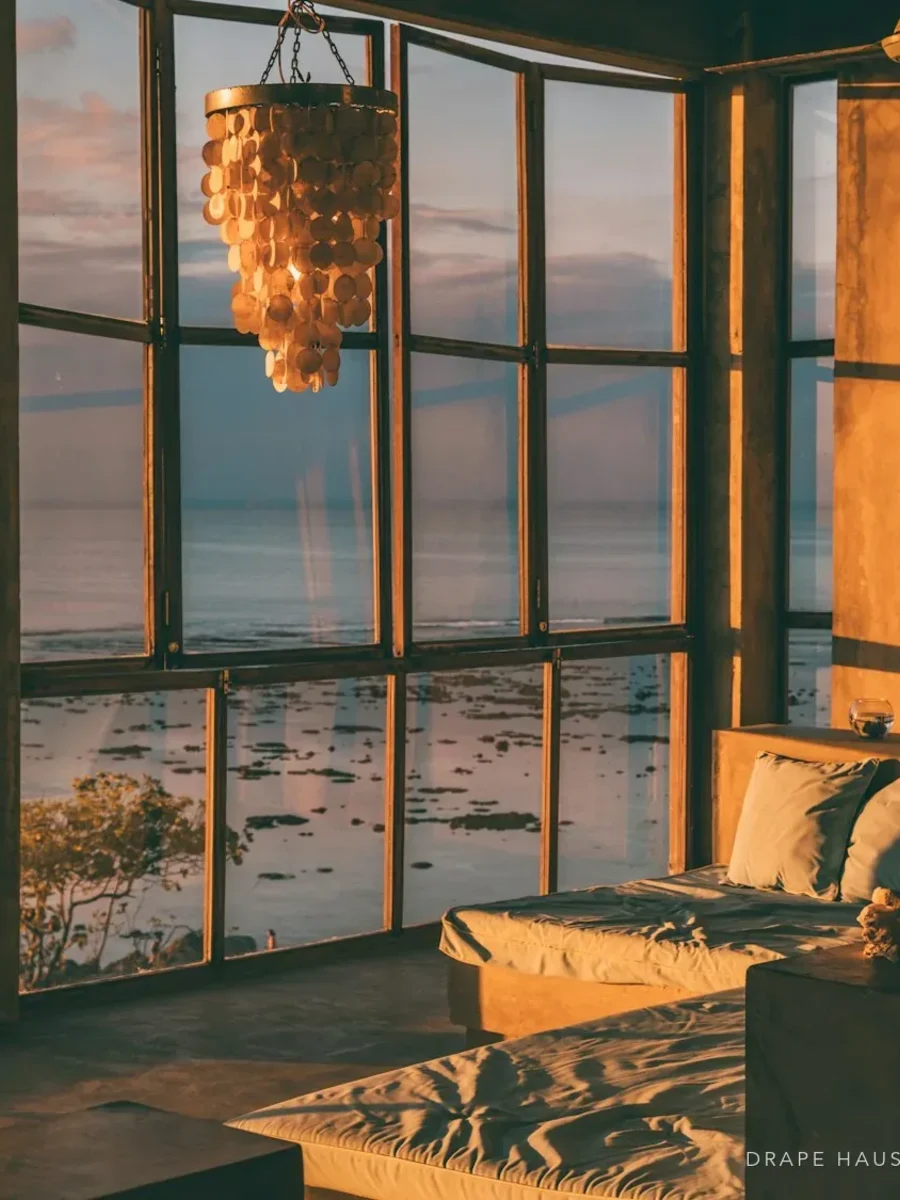
When open, the net stacks over the fixed panes, which puts mesh in front of part of the view. On a sea-view wall, that is a real trade-off.
Side by side
For a door that people walk through, the choice comes down to strength, threshold, how the screen closes behind you, and how much of it you see when open.
| Sliding door net | Pleated door screen | Hinged screen door | Magnetic curtain | |
|---|---|---|---|---|
| Threshold | Low or recessed track | Very low | Frame sill | None |
| Traffic tolerance | High | Moderate | High | Low |
| Pets | Good with pet mesh | Pleats scratch | Good | Pushed through easily |
| Very wide openings | Stacking leaves | Very good | Pairs only | Not practical |
| When not in use | Stacks over fixed glass | Folds into cassette | Swings open | Always hanging |
| Monsoon wind | Good, heavy frame | Fair | Needs a closer | Blows open |
| Look in a villa | Architectural | Nearly invisible | Traditional | Temporary |
Swipe to compare →
Magnetic curtains close by themselves, which appeals, but they rarely seal well on large doors and look out of place in a finished room.
Rather see it in your own room?
We bring samples to the house, measure every window, and specify for the light and exposure you actually have.
Room by room
The widest glass in the house and the lamps that draw insects. Stacking leaves across the verandah doors keep the evening air moving through the whole ground floor.
A balcony door net lets you sleep with the door open. Pair it with a curtain track set forward so blackout curtains still close fully across the net frame.
Net the doors into the house rather than the verandah itself. The sit-out stays open to the garden, and the rooms behind it stay free of insects.
Use pet-resistant mesh, a mid-rail at hand height and a lockable net handle. A balcony door net is never a substitute for a proper balustrade or lock.
Guests leave balcony doors open. A robust net with a simple handle and a visibility band holds up to luggage and unfamiliar hands better than any lighter screen.
Very tall glass doors push a single mesh leaf to its limit. Expect transoms, mid-rails or fixed mesh above a sliding lower section.
In depth — tap a heading to read
A mesh leaf is a light, thin frame, and the taller and wider it gets the more it flexes. A flexing leaf drags on its rollers, jumps the track and leaves gaps along its edges. On large verandah doors we therefore divide the net to match the glass, each leaf sized so it stays square, and add a horizontal mid-rail on tall leaves. The mid-rail doubles as a place to push the net without touching the mesh.
Where leaves meet, an interlock or overlapping brush seal closes the joint. Where a leaf meets the wall, a brush seal in a side jamb does the same. The measure of a good door net is that when closed there is no line of light around any edge.
The bottom track carries the weight and takes every footstep, so it matters most. Where a new floor is being laid, recessing the track is the best answer: it is nearly flush and easy to sweep. Where the floor is finished, a low bevelled track is the next best. Either way, the track needs drainage slots, because wind-driven rain and pool splash will reach it.
Pool doors bring chlorinated water, sunscreen and wet sand. We specify sealed rollers, stainless fixings and a mesh that shrugs off wet hands, and we place the pull handle where someone with a towel over one arm can reach it. A rinse of the track with fresh water every week or two keeps the rollers turning.
The monsoon wind comes onshore from the west and south-west and is strongest in July. A tall mesh leaf in that wind behaves like a sail. Door nets on exposed elevations need deeper top tracks so the leaf cannot lift out, anti-lift blocks, and a frame section stiff enough not to bow. Mesh on these doors should be coated or marine-grade, never plain steel.
Most owners close the glass during storms and leave the net parked, which is the right habit. Where the house is shut for the season, parking every leaf behind closed glass keeps salt and driven rain off the mesh and rollers, and the net comes out of the monsoon in the same state it went in.
On a sea-facing door, specify for the worst week of July, not an average evening in February.
Dogs learn quickly that a door net gives way to a nose, and a cat can climb fibreglass mesh. Pet-resistant polyester across the lower half, or the whole leaf, prevents most damage, and a mid-rail at dog height stops the mesh being pushed out of its spline. Children push on nets at hand height, which the same mid-rail protects.
In bright sunlight a clean charcoal mesh can almost vanish, and guests walk into it. A subtle band or a mid-rail at eye level makes the net visible without spoiling the view, and is worth including on any door used by visitors.
Large glass doors usually carry full-height curtains or sheers, and the curtains must stack clear of the door, the net and the handles. We plan the net first, then set the curtain track forward of it with enough return that the stacked curtain does not sit over the parked mesh leaves. A shared head detail or pelmet across the top hides both tracks on the widest openings.
Living with it
Doors collect sand, grass and grit far faster than windows. A weekly vacuum of the bottom track keeps the rollers turning and the net from jumping out.
Rinse chlorine, sunscreen and salt from mesh and tracks with fresh water every week or two in use. Dry residue is what stiffens rollers and marks the mesh.
Teach the household to slide the net by its handle or mid-rail. Pressing on the mesh stretches it and eventually pulls it from the frame.
After the rains, check brush seals and interlocks are still in place and the leaves still close without gaps. Replace worn seals before the insects return.
Stack all leaves behind closed glass before leaving for the monsoon. It protects the mesh from wind and the rollers from standing water.
Avoid these
It bows, drags and gaps at the edges. Divide wide openings into leaves that match the glass.
A tall track with square edges trips people and catches luggage wheels. Recess it or use a low bevelled profile.
Light rollers and thin frames suited to windows fail quickly on doors. Specify door-grade frames and rollers.
Guests walk into clean mesh in bright light. A mid-rail or band at eye level avoids the collision and the torn panel.
If the curtain parks over the net handle, one of them stops being used. Plan the curtain return and stack space with the net.
Checklist
More in sliding nets
Sliding mosquito nets for windows, doors and balconies, planned alongside your curtains so the two work together — the window opens for air, the net stays closed, and the curtain still draws.
From our guides
From the Journal
All articlesOur process
One team from the first visit to the last bracket, so nothing is lost between the person who specified it and the person who fits it.
FAQ
Yes — the net runs in its own track alongside the door, so the door and the net slide independently.
With a corrosion-resistant frame and coated or stainless mesh, yes. Exposed positions need sturdier hardware than sheltered ones.
Yes. Because the doors swing into the room, the net runs on a sliding frame across the outside face of the opening, parking against the wall on either side. It needs a little clear wall beside the opening, which we check on the visit.
There is no practical limit to the opening, because wide spans are divided into several leaves. Each leaf is kept to a size that stays stiff and square, so the net slides properly and seals at the edges however wide the glass is.
Not by itself; dogs will push a closed net. Pet-resistant mesh and a mid-rail stop damage, and some owners simply leave one leaf open for the dog during the day. A pet flap in mesh rarely seals well enough to keep insects out.
Poorly fitted ones do. A stiff frame, deep top track, brush seals and anti-lift blocks keep a leaf quiet. In the strongest monsoon winds, closing the glass and parking the net is the sensible habit.
Often, if the floor is being laid or relaid. The bottom track is recessed so it sits nearly flush with the tile or stone, with drainage below. On a finished floor, a low bevelled surface track is used instead.
Next step
On the visit we open each door, measure the glass and the space around it, and look at the floor, the wind, the pool and how the door is used every day. We bring mesh samples to see against the view in the room's own light, and plan the net together with any curtains or sheers. You receive a clear specification for each door before anything is made, then we make and install. Book a home visit to begin.