 Drape Haus
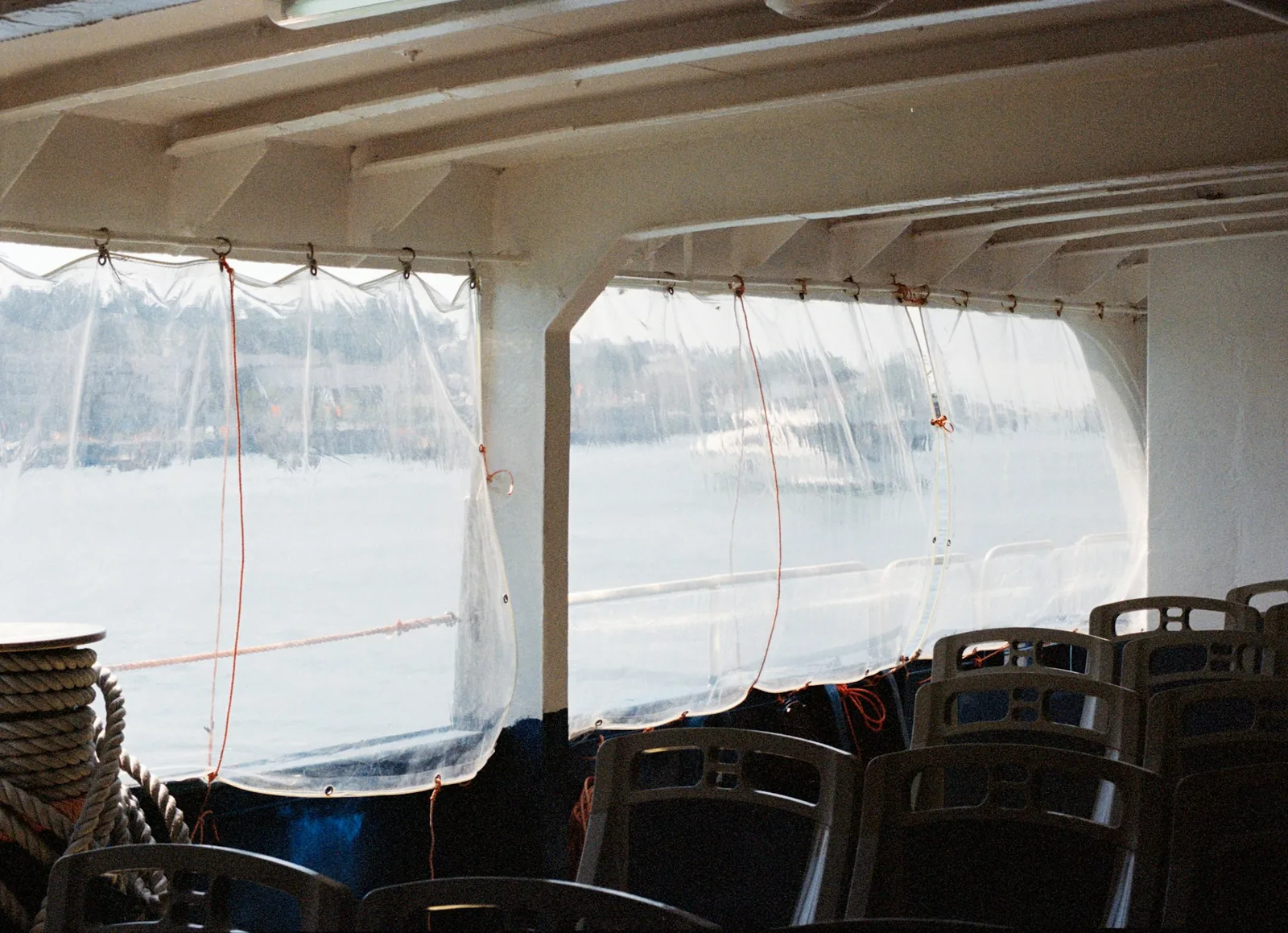
Plastic curtains for a balcony are clear, flexible PVC sheets hung across the open sides of a balcony, verandah or sit-out to keep the rain off while you can still see out. In Goa they go up in late May or June on flats, homestays and old houses alike, because a covered balcony that is perfectly dry in the dry season can be soaked to the back wall by the first westerly downpour.
They do one job well: they stop wind-driven rain reaching the floor, the cushions and the furniture, and they keep the space usable on a wet evening. They do not make a balcony into a room. Sealed too tightly they trap humid air and grow mould; left down in a squall they tear or pull their fixings out; and thin, unstabilised sheet goes yellow and brittle in a season or two of sun.
This guide covers what to buy, how to fix it, how to keep the space behind it dry, and how to put it away so it is still clear next June. At Drape Haus we make clear PVC drop blinds as part of our outdoor blinds, so we also say where a guided blind is worth the extra and where a simple curtain is enough.
Why Goan balconies need rain curtains
The rain in Goa is heavy and it arrives at an angle. The India Meteorological Department's climate summary for the state records about 91 per cent of the annual rainfall in the south-west monsoon, with July alone bringing about a third of the year's total, and winds strengthening from the west and south-west between June and August. A roof overhang or the slab above a flat's balcony keeps off rain that falls straight down. It does very little against rain driven in sideways by a sea wind.
The result is familiar. The balcony floor stays wet for weeks, water creeps under the door into the room, cushions and rugs mildew, cane and timber furniture swells and greys, and plants are battered. Many households simply clear the balcony from June to September, which means losing one of the most pleasant spaces in the home for a third of the year.
A clear curtain changes that. It takes the force out of the rain, keeps the floor mostly dry, and lets you sit out and watch the weather. On a traditional balcão, a front verandah or a homestay sit-out, it can keep the space in use through the season. Just as important, it is temporary: it comes down in October, and the balcony goes back to being open. Order and fit it in April or May, alongside the other jobs in our before the monsoon guide, rather than in the first week of rain.
Sheet thickness, clarity, and why some PVC turns yellow
Not all clear PVC is alike, and the differences show within a season. Thicker sheet hangs straighter, wrinkles less, resists tearing at the eyelets and stays clearer for longer. Thin sheet is light and easy to handle but crinkles, flaps noisily in wind and tears at its fixings. Ask the supplier for the thickness and compare samples in your hand; if two quotes differ greatly, this is often why.
The bigger issue is sunlight. PVC degrades under ultraviolet light: research on PVC photodegradation describes how UV exposure strips hydrogen chloride from the polymer and leaves chains of conjugated double bonds, which absorb light and show as yellowing, along with photo-oxidation that weakens the material. Manufacturers add stabilisers to slow this down. A sheet sold as UV-stabilised will still age, but far more slowly than one without, so ask whether the sheet is UV-stabilised and get the answer in writing.
Flexible PVC is also softened with plasticisers, and as a sheet ages in heat and sun it can stiffen and crack, usually along fold lines and around eyelets. That is why how the curtains are stored matters as much as which sheet you buy, and why a curtain left lowered against strong sun through the dry months will not last long.
Ask for the sheet thickness and whether it is UV-stabilised. Those two answers decide most of how long a clear curtain stays clear.
Planning something like this?
We visit homes across North and South Goa, measure on site, and bring samples to see in your own light.
Fixing options compared: eyelets, straps, zips and side tracks
How the curtain is held matters more than the sheet. The simplest is a row of eyelets along the top edge, hung on a taut wire or a rod, with ties at the sides and bottom. It is easy to fit and easy to take down, but the edges move, rain blows in around them, and in a gust the sheet billows and pulls at every eyelet. It suits a sheltered sit-out more than an upper-floor flat.
Roll-up curtains with straps are fixed permanently at the top and rolled up by hand, held with buckled straps when not in use. They are practical for spaces you want open on dry days and closed when it rains. A curtain with zips between panels, or with zipped side edges, seals better and lets you open one section as a door.
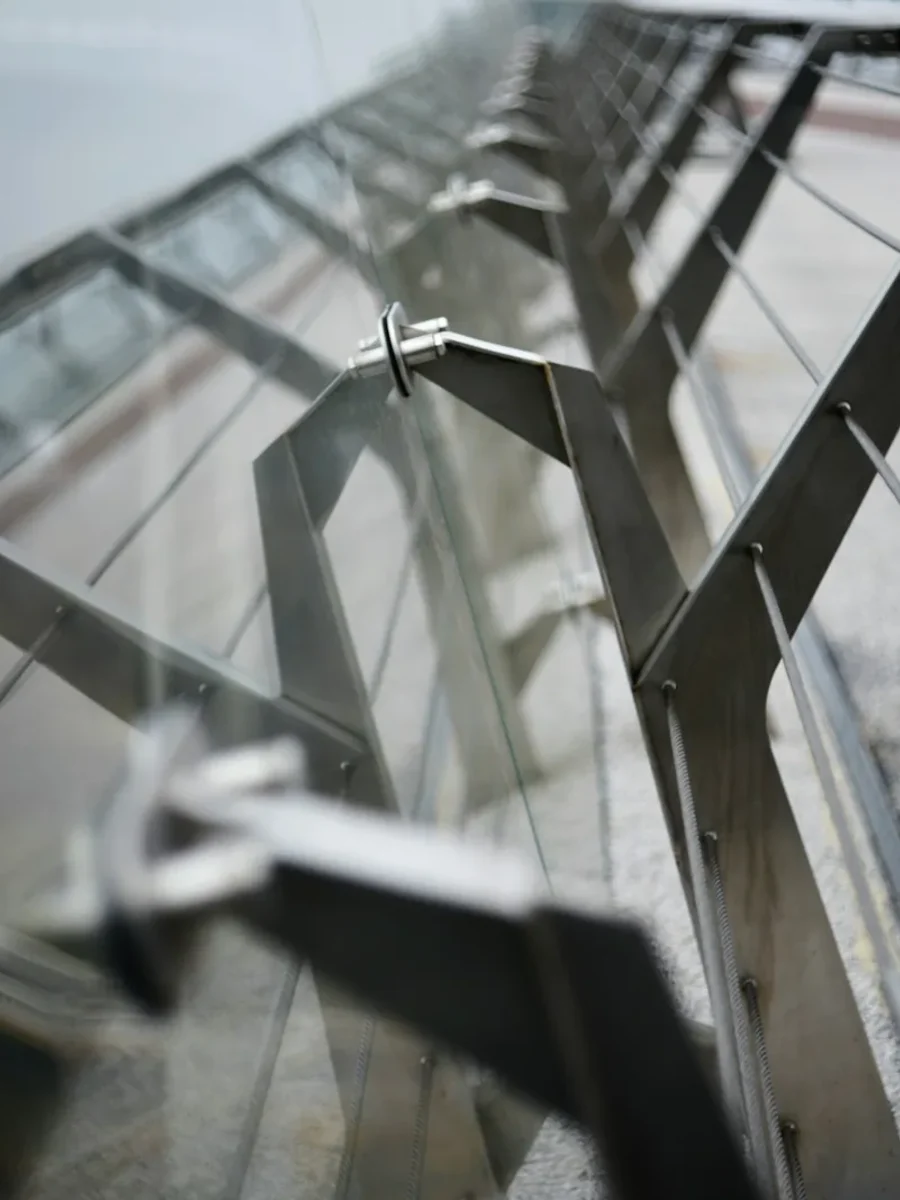
The most robust option is a drop blind with its edges held in side channels or on tensioned cables, and a weighted bottom bar that hooks down. That is how our outdoor blinds in clear PVC are made, and it is the system to choose for an exposed or upper-floor balcony, because the sheet is held along its full height instead of hanging free. It costs more and needs a solid surface or a beam to fix to, but it survives wind that would wreck a hung curtain.
| Eyelets on wire or rod | Roll-up with straps | Zipped panels | Guided drop blind | |
|---|---|---|---|---|
| Rain sealing | Fair, edges move | Fair | Good | Good |
| Wind tolerance | Poor | Fair when tied down | Fair | Best |
| Opening part of it | Push aside | Roll one panel | Unzip a panel | Raise the blind |
| Taking down for storage | Easy | Easy | Moderate | Fabric can be removed |
| Best for | Sheltered sit-outs | Verandahs used daily | Balconies needing a door | Exposed or upper floors |
Ventilation and condensation: avoiding a damp, mouldy box
The common mistake with plastic curtains is to seal every edge. A balcony closed in with PVC on all sides, in the most humid months of the Goan year, becomes a box of warm, wet air. When the air inside meets the cooler sheet, especially at night, water condenses on the inside face and runs down to the floor. Cushions, rugs and timber furniture behind the curtain then sit in damp, still air for weeks, which is exactly how mould starts.
The US Environmental Protection Agency's guidance is that the key to mould control is moisture control, that condensation should be dried quickly and the moisture source reduced, and that wet materials dried within 24 to 48 hours generally do not grow mould. On a balcony that means letting air through. Leave a gap at the top or the bottom of the curtain, or both, so air moves even when the rain is kept out. Roll up a panel on any dry spell. Do not run a clothes-drying rack behind closed plastic, and do not store soft furnishings on the balcony for the whole season just because it is covered.
Mind the sun as well. A clear PVC sheet lowered in sunshine turns the space behind it into a greenhouse, and the trapped heat speeds the ageing of the sheet itself. Treat the curtains as a rain screen: down when it rains or blows, up when it is dry.
Wind: tie-downs, weighted hems and when to roll up
Wind, not rain, is what ruins plastic curtains. A sheet hung across an opening collects the full force of a gust, and an unrestrained curtain will flog, rip at its eyelets or tear its rail off the wall. The IMD records that thunderstorms in Goa are most frequent in May, June, September and October, and that monsoon thunderstorms sometimes come with squalls, so the riskiest weeks are the start and the end of the season, not only the wettest.
Restrain every curtain at the bottom as well as the top. A weighted hem, a pocket with a rod, or hooks into eyes on the parapet keeps the sheet from billowing. Side ties or cables stop the edges whipping. Near the sea, every metal part, from eyelets and hooks to cables and screws, should resist corrosion; the stainless steel trade body advises grade 316 or equivalent as a minimum within five kilometres of the surf, as lower grades stain and corrode in marine air.
Then have a rule for storms. When a squall is forecast or the wind is clearly rising, roll curtains up and tie them, or raise guided blinds. If the house is often empty, as many Goan second homes are in the rains, either choose a guided system designed to stay down in moderate wind or take the curtains down altogether while you are away.
What plastic curtains do well, and the alternatives
It helps to be clear-eyed about the trade-offs before ordering. Clear PVC does a specific job very well and a few others poorly, and for some balconies a different answer is better.
If the problem is sun rather than rain, a clear sheet is the wrong material; a mesh outdoor blind or a projecting awning shades without trapping heat, and our awnings and outdoor shade service covers the second. If privacy is the aim, clear PVC offers none. If the balcony is so exposed that nothing should stay down in the wind, the honest answer may be to furnish it for the weather, bring cushions in, and keep the doors screened and closed until October.
- Good at: keeping sideways rain off floors and furniture while keeping the view
- Good at: making a sit-out usable on wet evenings
- Good at: coming down after the season, leaving the balcony open again
- Poor at: shade, because clear sheet traps heat in sunshine
- Poor at: privacy, especially at night with lights on
- Poor at: strong wind, unless guided at the edges and raised in storms
- Poor at: lasting, if thin and unstabilised, or stored creased and damp
Taking curtains down, cleaning them and storing them flat
When the rains ease, usually in October, take the curtains down on a dry day. Wash both faces with a soft cloth or sponge and mild soapy water to remove salt, dust and bird droppings, then rinse with fresh water. Avoid abrasive pads, scouring powders and solvent cleaners, which scratch and cloud the surface, and never scrape off dried dirt; soak it loose instead.
Dry the sheets completely before storing. A clear curtain rolled or folded damp will mildew and the layers can stick together, leaving cloudy patches that do not come out. Lay each panel flat or hang it in the shade until both faces are bone dry.
Then store them flat if you have the space, or rolled loosely around a large tube, never folded. Folds become creases and creases become cracks, especially as the sheet ages. Keep them out of sunlight and away from heat, with a sheet of paper or cloth between layers if they are stacked. Label each panel with its position so June's rehanging is quick. If you would rather not do it yourself, our monsoon take-down and storage service handles outdoor blinds and soft furnishings for houses that are closed for part of the year.