 Drape Haus
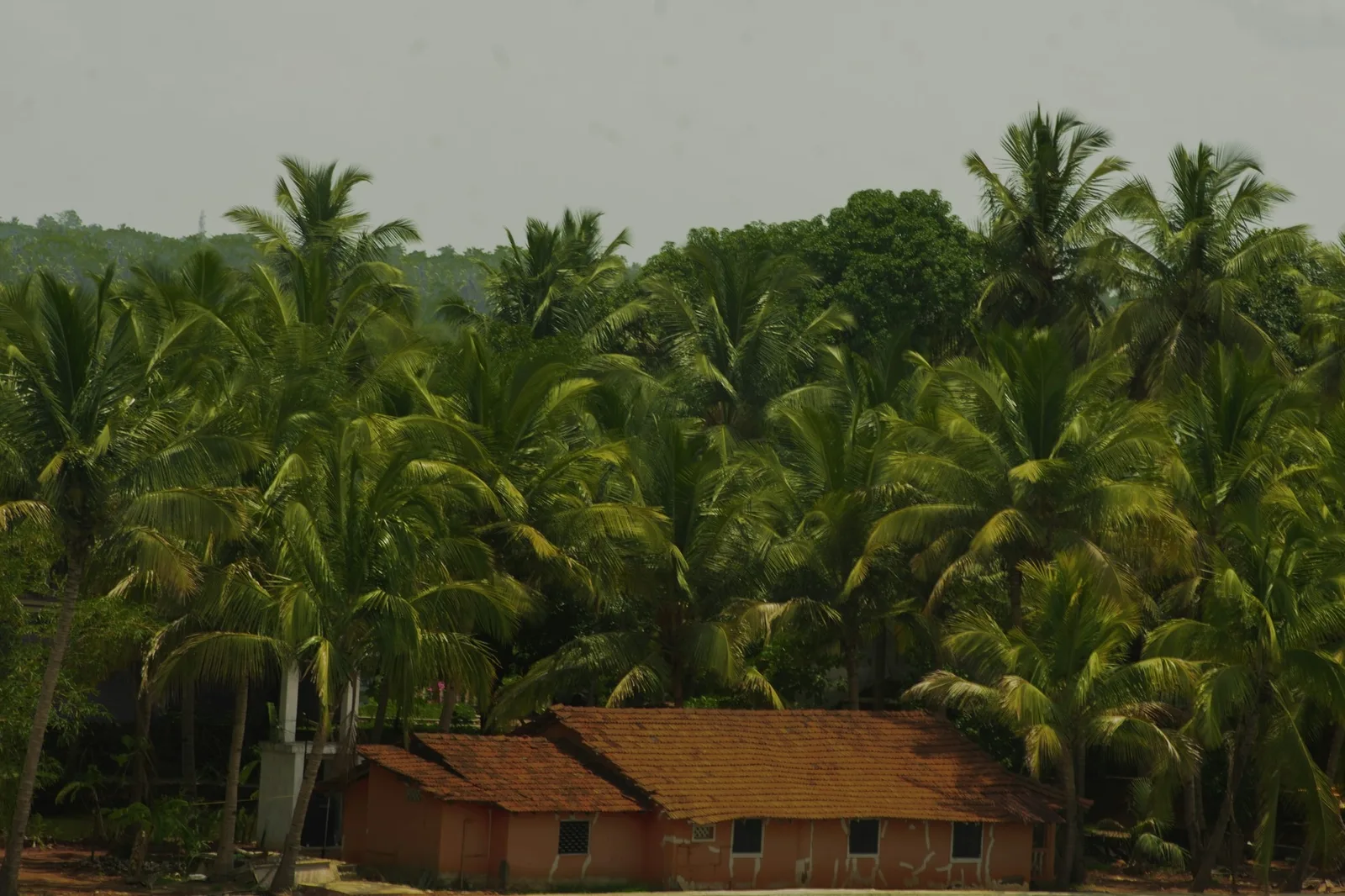
Divar island sits in the Mandovi river upstream of Panjim, with Old Goa across the water to the south-east and Chorao to the north. No bridge reaches it. People, scooters, groceries and furniture all cross by ferry, and that single fact shapes life on the island more than anything else. So does the river itself, which surrounds the island's paddy, mangroves and villages with tidal water for every month of the year.
The island's houses range from large, colour-washed family homes to small village houses and roofless shells. They are less documented than the mansions of Chandor or the town houses of Fontainhas, and most are private. This guide sets out what the published record says about Divar, how to read its houses from the road, what the river does to walls, timber and fabric, and the practical side of furnishing and maintaining a house that can only be reached by boat.
If you are new to the vocabulary of plinth, balcão and sala, our field guide to Goan architecture is the place to start. For the wider list of villages where old houses can be seen, see where to see old Goan houses.
Where Divar is, and what the island is made of
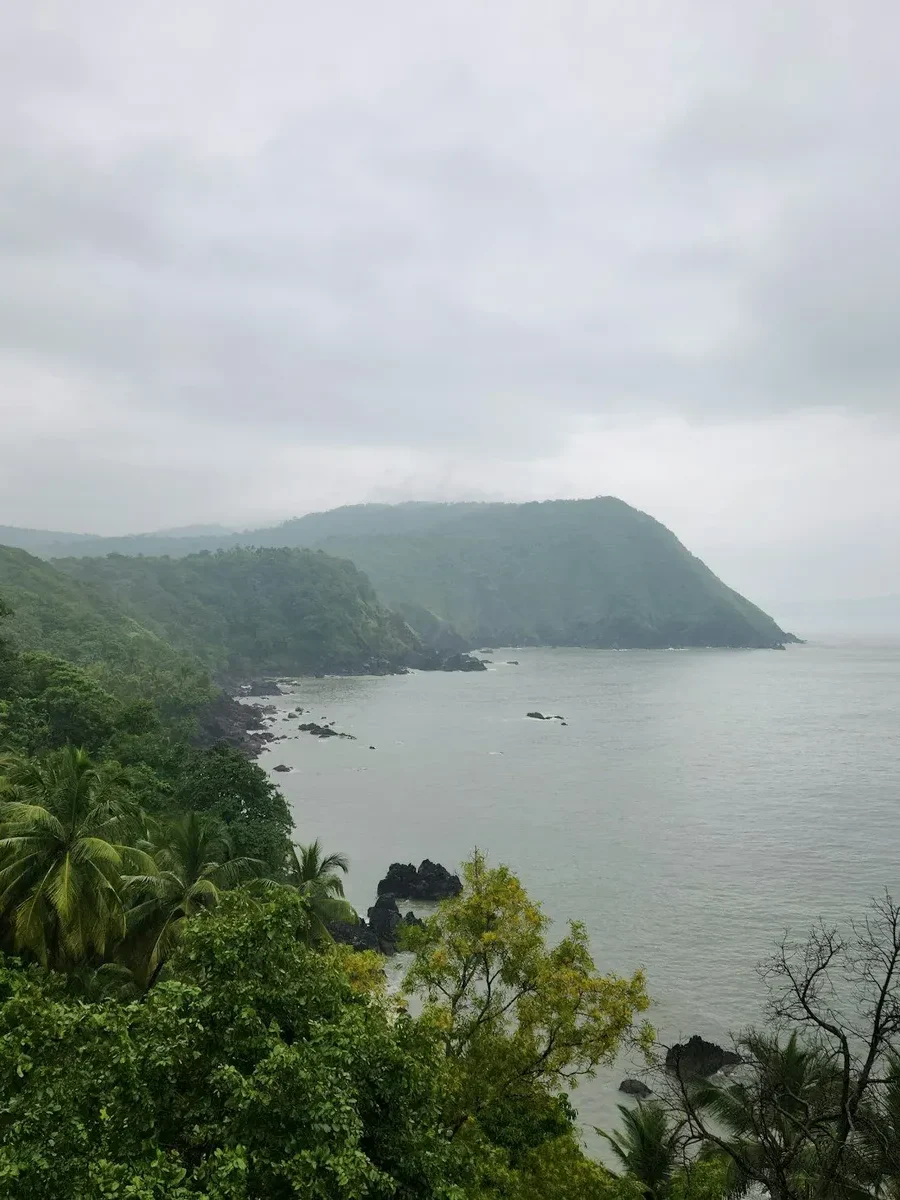
The 1979 District Gazetteer of Goa describes the lower Mandovi as a drowned landscape, with the island of Divadi, as it calls Divar, standing prominently in mid-river and Chorao as its northern counterpart. Both, it explains, are rocky cores of basalt whose edges have been extended over time by heavy siltation, producing level alluvial ground out to the present edge of the water. The same volume calls the island by the older name Divapati.
That geology is visible on a walk. There is high ground, crowned by the church at Piedade on what the Gazetteer's road list simply calls the Divar Hillock, and there is low, flat land around it given over to paddy, channels and mangrove. Much of the low land is khazan: fields reclaimed over centuries from mangrove swamp and protected from salt water by bunds, sluice gates and canals. Mongabay-India, reporting from the island in 2019, described how that community-managed system has partly broken down, with breached embankments letting salt water over large stretches of paddy.
Administratively the island is small. Mongabay put its population at close to 5,000 in 2019, governed by two village panchayats, Goltim-Navelim and São Matias. Rui Gomes Pereira's survey of Goa's temples, which is arranged village by village, lists four villages: Navelim and Goltim, which together make up the parish of Piedade, Malar, which is the parish of São Matias, and Naroa. You will hear all of these names used, sometimes for the same place, which is worth knowing before you ask for directions.
A long history in a small place
Divar's recorded history is far older than any house now standing on it. The Gazetteer records that the image of Saptakoteshwar, the family deity of the Kadamba kings, stood in a temple at Naroa on Divar, was hidden in the rice fields during the 14th-century persecutions, and was reinstated in 1391 by Madhava, the minister of the Vijayanagara kingdom. The temple was later destroyed under Portuguese rule, and in 1563 a chapel dedicated to Nossa Senhora da Candelária was built on its site, where the Gazetteer notes that some remains of the old temple could still be seen. The deity's present temple stands across the river at Narve.
Pereira's survey, now digitised on the Internet Archive, adds the rest of the picture. It quotes a letter of 6 January 1515 in which the Italian traveller Andrea Corsali described an ancient temple on 'a small island near the city, called Divari', which, he wrote, the Portuguese had destroyed in order to build the city. It records that the destruction of temples in the Ilhas began in 1540 or 1541, that 1,510 converts from Divar were baptised on 15 August 1560, and that the island's Ganesha was carried to the mainland, eventually to Candola in Ponda. Carved black stone from the old temples survives in a cemetery chapel at Navelim and in the Archaeological Museum at Old Goa.
For anyone looking at Divar's houses, the point is one of age. The island's sacred history runs back to the Kadamba period, but its houses are much younger. Most surviving old Goan houses were built or remodelled between the 18th and the early 20th century, and Divar's appear to follow the same pattern. A stone threshold, a reused carved block or a name on an old document can be far older than the walls around it.
Divar's churches and stones are centuries older than its houses. Date a house by its plan and materials, not by the island's history.
Planning something like this?
We visit homes across North and South Goa, measure on site, and bring samples to see in your own light.
Reading Divar's houses from the road
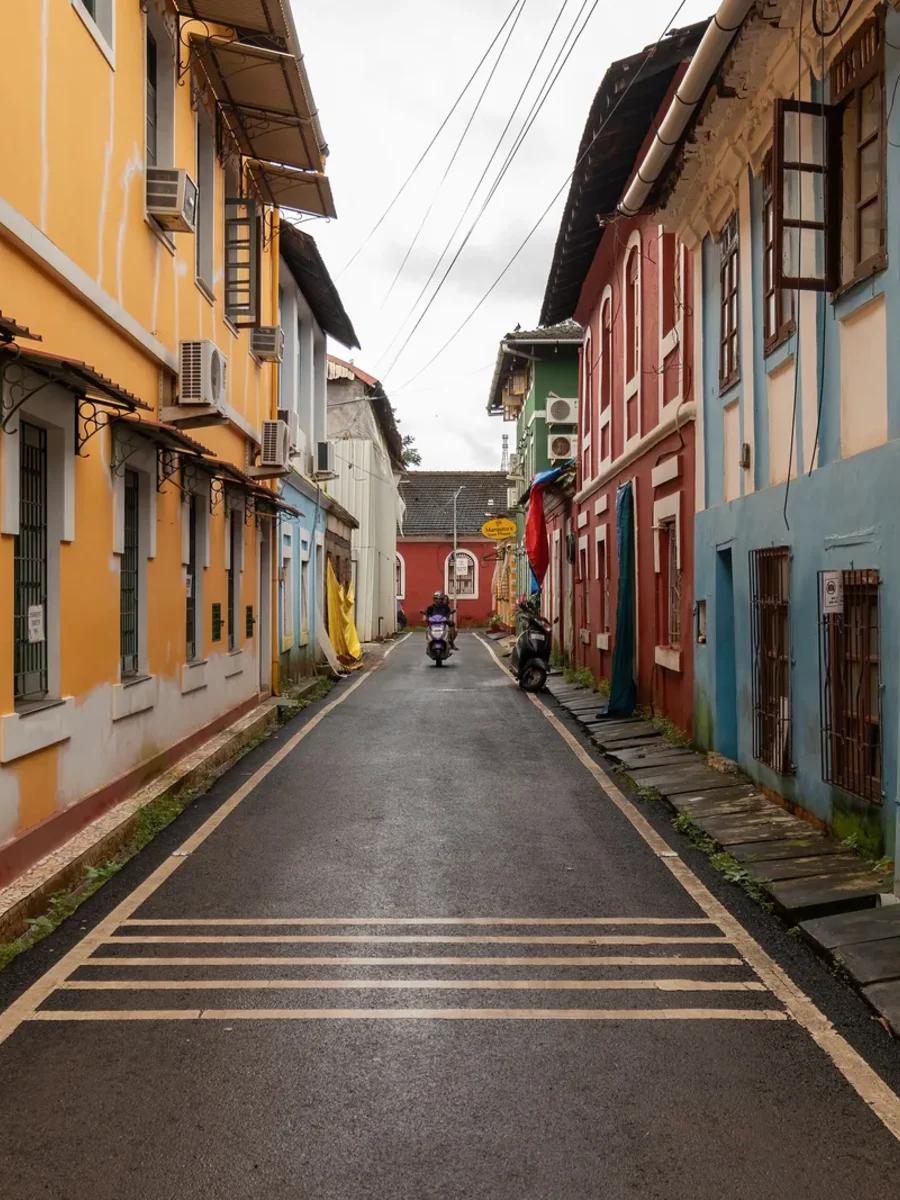
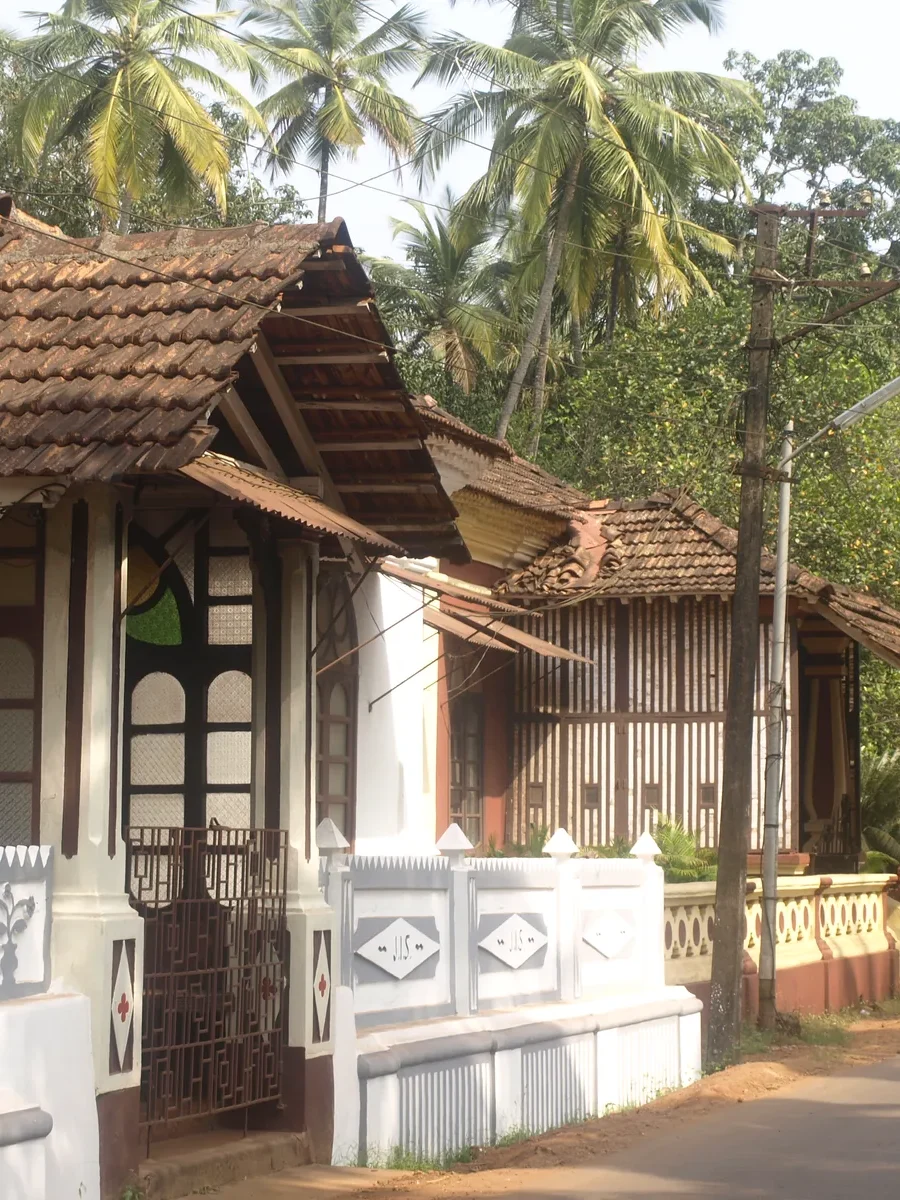
Mongabay's reporter summed up the island in one line: elegant Portuguese-style houses, imposing Baroque buildings and mangrove-fringed shores. That is fair, but the houses are more varied than the phrase suggests. Large houses with a raised plinth, a balcão and a long front of tall windows stand near smaller single-storey homes with a porch, a hall and a yard behind, and plenty of houses have been extended, re-roofed or rebuilt in concrete over the decades.
The way to read them is the same as anywhere in Goa, with one island habit to add: look at where each house sits relative to the high ground and the fields. Houses on the slopes stay drier; houses at the edge of the low land are closer to the water table and the monsoon flooding of the fields, and their plinths and drains matter more. Our guide to the Goan village house explains the plan of the modest house, and our article on Portuguese house plans explains the larger one.
- Plinth height: how many steps rise to the door, and whether the ground around has been raised over the years
- Roof: pitch, tile condition, and whether the eaves still project far enough to throw water clear of the walls
- Front: balcão or simple porch, window rhythm, shutters, and any shell panes
- Walls: lime-washed and breathing, or patched in cement and plastic paint
- Setting: high ground or field edge, and the distance to the nearest channel or mangrove
Ruins, restorations and what survives
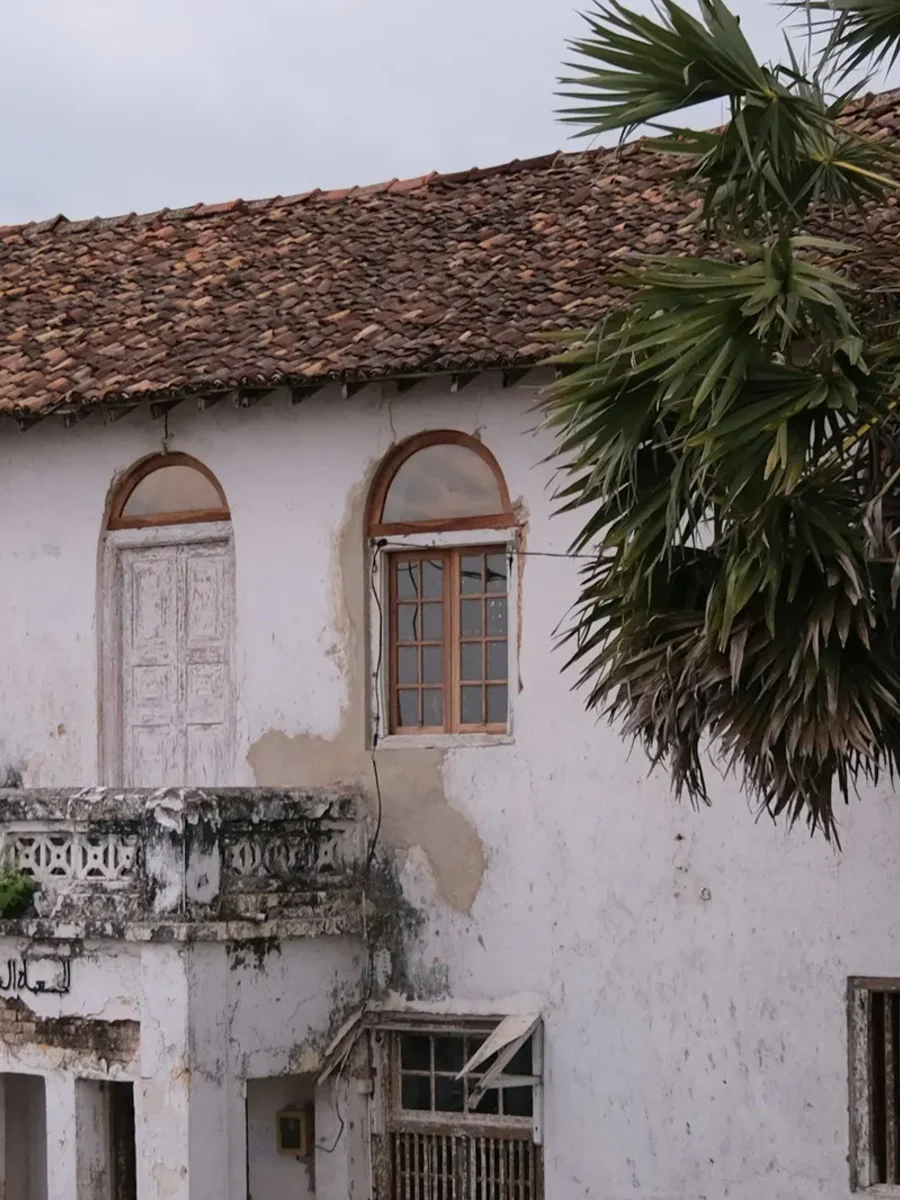
Every Goan village has its empty houses, and an island has more reasons than most. A family that has moved to Panjim, Mumbai or abroad has to organise repairs across a river; materials, workers and supervision all arrive by ferry; and a large house can need roof work every few years. When a roof is left, the decline follows a familiar order. Slipped tiles let water onto the rafters, the timber rots and the roof sags, rain then soaks the tops of the walls, and mud or laterite masonry that was sound while dry begins to slump. A roofless house can lose more in three monsoons than in the previous century.
Restoration runs the same order in reverse, which is why the sound houses on Divar are usually the ones where somebody kept the roof going. Our guide to restoring an old Portuguese house sets out the sequence: survey, roof and rainwater, walls in lime, structure and timber, services, windows, and only then interiors. On an island, plan every stage around the ferry and the season, because a half-finished roof in June is far harder to protect here than on the mainland.
If you are thinking of buying a ruin, assume nothing about its legal or heritage status, its title, or how much of the original can be saved. Our guide to buying an old Portuguese house lists the checks that matter. Drape Haus does not survey or restore buildings; we come in at the end, for curtains, blinds, screens and upholstery, and we will tell you plainly when a house is not yet dry enough for them.
| What you see | What it usually means | What to ask first |
|---|---|---|
| Dark streaks below the eaves | Gutters or tiles failing; water running down the wall | When was the roof last relaid? |
| White salt bloom inside | Moisture moving through the wall and drying on the inner face | Is there cement render or plastic paint outside? |
| Sagging ridge line | Rafters or wall plates decayed | Has a carpenter checked the roof timbers? |
| Ground level near the window sills | Ground or paving raised around the plinth over time | Where does rainwater go in July? |
| Roofless rooms | Walls exposed to rain for at least one monsoon | What can be capped and protected this season? |
River damp: what the island does to fabric, wood and walls
Divar shares Goa's climate, but with water on every side. The nearest observatory is at Panjim, downriver, where the India Meteorological Department records morning relative humidity of 88% in June and 91% in July, August and September, and evening humidity between 82% and 87% through the wettest months. Around 91% of Goa's annual rain falls between June and September. On an island of channels, flooded fields and mangrove, still evenings feel as damp as those figures suggest, and a closed room loses any chance of drying out.
For the house, that means three things. Lime-plastered walls take on moisture through the season and need dry months and moving air to give it back, so cement patches and sealed paints do more harm here than almost anywhere. Timber at ground level, in door frames, cupboard bases and the feet of furniture, sits in that damp longest and is where rot and termites start. And fabric, which holds moisture in its fibres, stays damp in a shut room for weeks. The US Environmental Protection Agency advises keeping indoor humidity below 60%, ideally 30–50%, and drying anything wet within 24 to 48 hours to prevent mould. Through a Divar monsoon, only a room with a dehumidifier and closed windows will get near that.
Practical habits follow. Keep curtains clear of external walls and choose unlined or lightly lined natural fabrics for living rooms, so they dry between showers. Reserve coated blackout linings for bedrooms that are air-conditioned or dehumidified. Lift rugs and roll them for the wettest weeks. Keep wardrobes and upholstered pieces a hand's width off the walls. Brackish river air is also hard on bare steel: choose aluminium tracks, stainless or coated fittings, and check them after each monsoon. Our guide to monsoon damp and mildew and the riverside home guide go further.
On Divar, assume every room will be damp from June to September. Choose fabrics that dry, and hang them where air can reach both sides.
Ferries, deliveries and furnishing an island home
Divar has been served by river ferries for a long time; the 1979 Gazetteer lists Old Goa to Piedade among the perennial ferry services run by the River Navigation Department. Today the island is linked by ferry to the Old Goa side, the Ribandar side and Naroa in Bicholim. Services change. Daijiworld reported in November 2025 that the Old Goa–Divar ferry had been suspended from 6 October that year for urgent ramp repairs, and that a roll-on roll-off service was promised for 2026. In September 2026 The Navhind Times reported that two new roll-on roll-off ferries for the Divar–São Pedro route were expected to start in early 2027, once the São Pedro ramp, delayed by the monsoon, was finished.
For furnishing, the lesson is to plan as if every trip costs time, because it does. Measure everything in one visit, including every window, door and the turn of every staircase, so that sofas and long curtain tracks are made to fit what can actually be carried in. Group deliveries and fitting into as few days as possible, and keep them to the dry months; a sofa crossing in an August downpour is not something anyone should arrange. Check the current ferry arrangements and the vehicle access to the house before booking anything bulky.
Design for fewer service visits, too. Washable, removable covers mean upholstery can be cleaned on the island rather than taken away. Simple, robust hardware needs less adjustment. If the house is closed for the monsoon, arrange for textiles to be taken down, cleaned and stored before the rains, rather than rescuing them in October; our monsoon take-down and storage service exists for exactly this. When you are ready, we can visit Divar, measure the whole house and plan the work around the ferry; get in touch with the village and the rough number of windows.
Visiting Divar respectfully
Divar is a place where people live, farm and fish, and almost every house on it is a private home. Walk or cycle on the road, photograph façades from public ground, keep off steps and balcões, and do not go through gates or into roofless ruins, which can be dangerous as well as private. If someone is sitting on their porch, ask before you raise a camera. Churches and chapels have their own hours and customs, and village chapels are often locked outside services.
The island's best-known public day is Bonderam, the festival of flags. The Government of Goa explains the name as coming from the Portuguese bandeira, flag, and traces the festival to flags used to mark disputed boundaries, which villagers pulled down in protest; it is now celebrated with flag parades, floats and music. The Department of Tourism notes that the main festival is usually held in the last week of August, with Malar holding its celebrations a week earlier. It draws large crowds and long ferry queues, so it is a day to see the island in festival mode, not to study its houses.
For the houses, come early on a dry-season morning, when the light is low, the roads are quiet and the ferries are easy. In the heaviest monsoon weeks, crossings can be disrupted and low roads near the fields can flood. Our guide to old Goan houses, linked above, pairs Divar with Fontainhas for a full day.