 Drapehaus
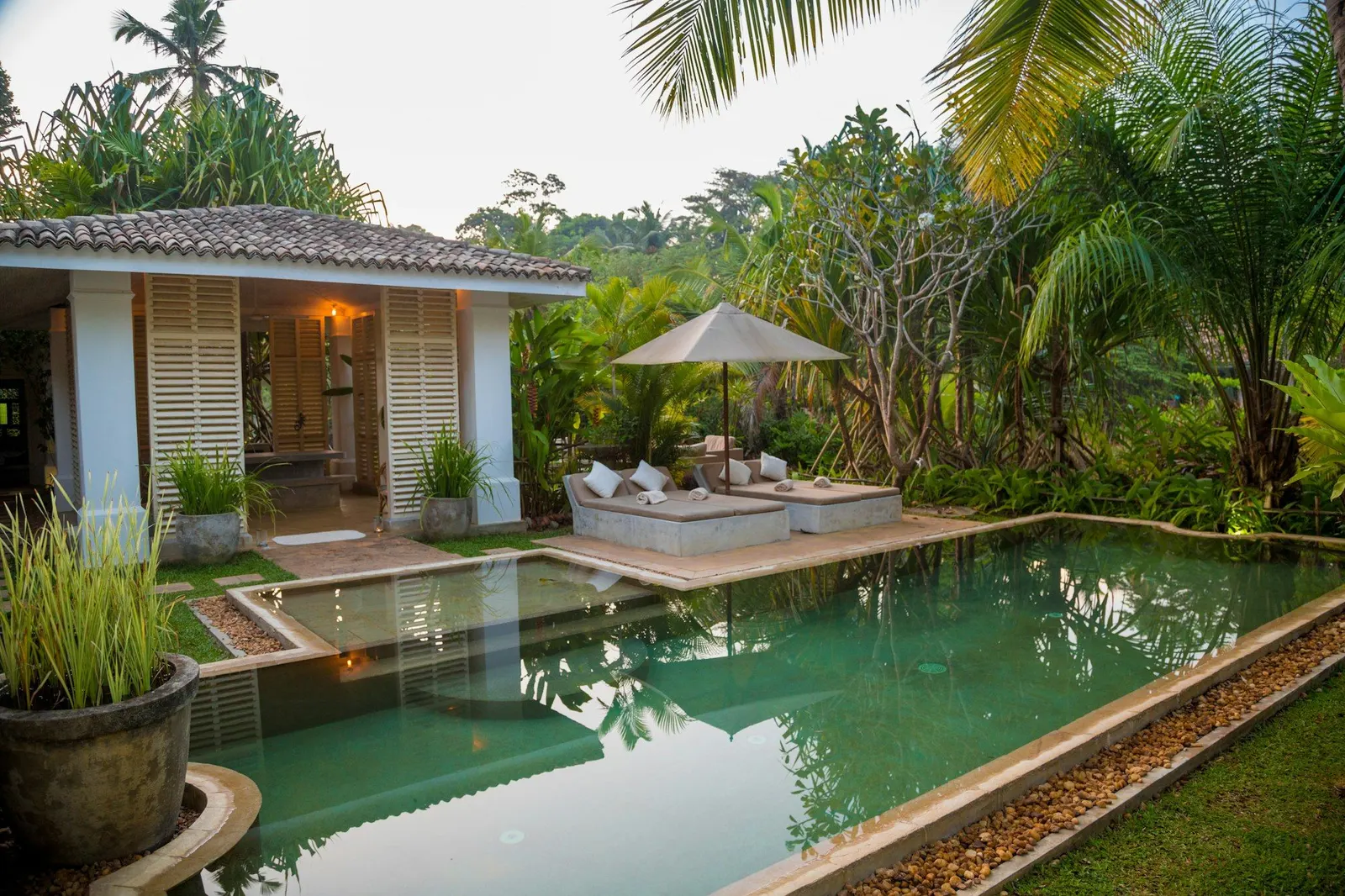
A private pool villa in Goa is designed as much around the water as around the rooms. The pool sets the view, the orientation of the living spaces, the route people take through the house, and the conditions every nearby material has to tolerate: bright reflected light, wet feet, chlorine or salt, sun cream, and a great deal of time spent sitting on fabric in swimwear.
Most of the advice about pool villas concerns the pool itself — size, finish, filtration. This piece is about everything around it, from the deck to the room that opens onto it: controlling glare, managing wet traffic, choosing outdoor upholstery and shade, screening for privacy, and keeping the indoor room connected to the pool without letting the pool take it over. It applies to a family villa with a private pool as much as to a pool villa run for guests.
Glare off water in a private pool villa
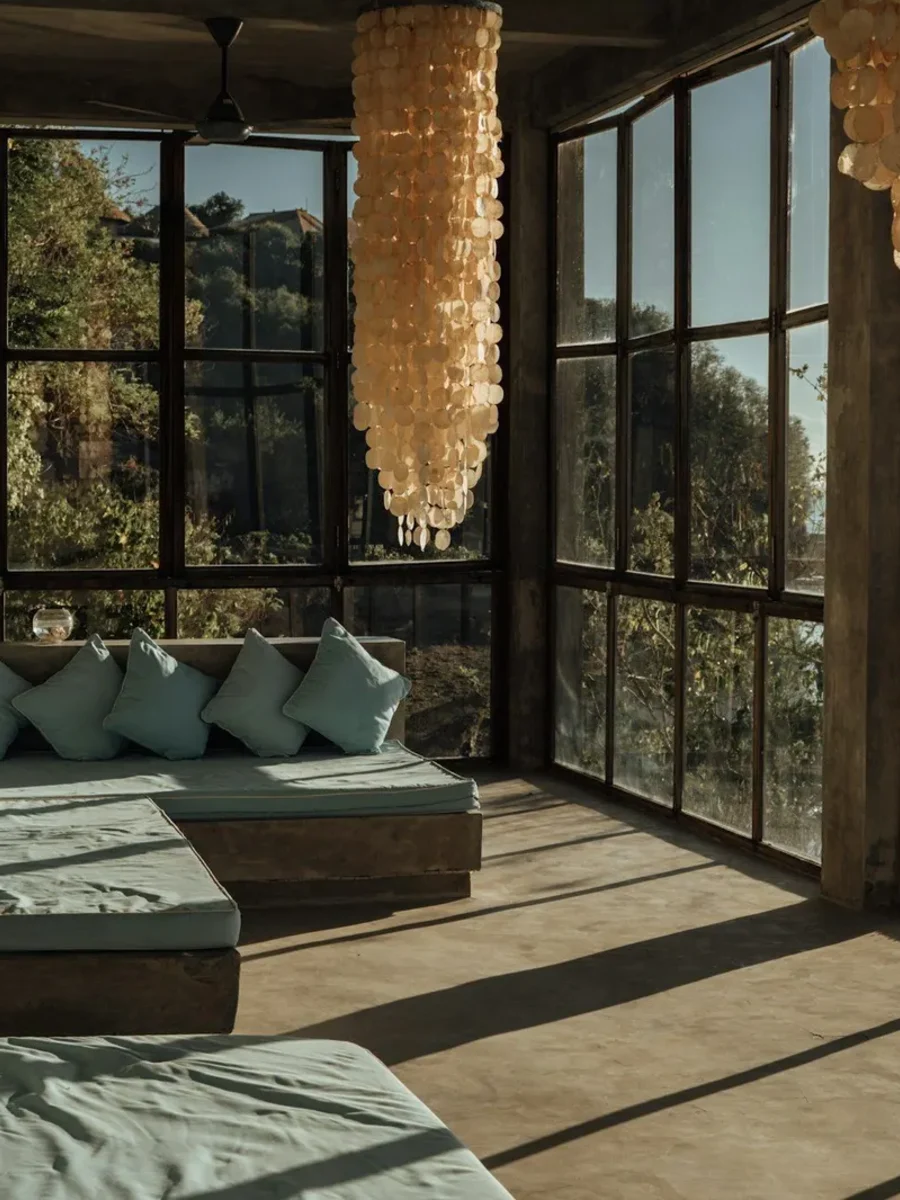
Water reflects sunlight, and a pool turns the ground plane into a mirror at exactly the angles that are hardest to shade. Light bounces up off the surface and into the room beyond, under verandah roofs and eaves that were designed to block sun from above. Rooms that face a pool across a west or south-west deck can be bright and hot even when the sun itself is shaded.
Two things help most. Shade over the water's edge nearest the house — a pergola, a sail, a deep roof overhang — reduces what reaches the pool surface in the first place. And interior treatments on the pool-facing glass should be chosen for glare, not only for privacy: a solar screen or dense sheer that can be down for the brightest hours while the view stays open. Exterior shade is far more effective than anything behind the glass. US DOE figures put the reduction in solar heat gain from awnings on west-facing windows at up to 77%, and PNNL's review found exterior shades cut heat-danger hours by about 55% in extreme heat. Our page on awnings and outdoor shade covers the options for these positions.
Pool deck design and wet traffic
Every pool generates a wet route: from the water to the loungers, to the outdoor shower, to the kitchen for a drink, and inevitably into the living room. Good pool deck design plans that route. It puts the shower and towel storage between the pool and the house, uses a slip-resistant finish that sheds water, and falls the deck away from the doors so water drains outward.
Inside the threshold, allow a band of hard, washable floor before any rug begins, and choose furniture near the door that tolerates damp swimwear. A wool rug just inside a pool door will be wet for most of the season. Hardware at the pool edge — gate latches, shade fittings, lighting, curtain track on the pool-side glass — should be stainless of a suitable grade or coated aluminium. Pool chemicals and, near the coast, salt air both attack plated metal, and the rust runs onto stone and fabric.
Planning something like this?
We visit homes across North and South Goa, measure on site, and bring samples to see in your own light.
Chlorine, salt and fabric
Pool water, whether chlorinated or salt-chlorinated, bleaches and weakens many fabrics. Swimwear carries it onto cushions; splashing and wind carry it further. Sun cream adds oily stains, and the Goan sun fades whatever is left. Natural fibres such as cotton and linen suffer on all three counts. Near the coast, salt carried on the onshore wind adds its own deposit, stiffening fabric and dulling colour over a season.
Solution-dyed acrylic is the usual answer for anything near the water. Because the colour is part of the fibre rather than printed on its surface, it resists fading, and it generally tolerates regular cleaning well. Outdoor-rated polyester and specialist marine vinyls are alternatives for positions that get soaked. The outdoor canvas guide covers the options. Whatever the fabric, rinse cushions with fresh water after heavy use, stand them on edge to drain, and bring them in or cover them before the monsoon. The US EPA notes that wet materials dried within 24–48 hours will, in most cases, not grow mould; a cushion left saturated through a week of rain will not dry in time.
Outdoor upholstery and shade structures
Outdoor upholstery is judged on drainage as much as fabric. Quick-dry reticulated foam lets water run straight through; standard upholstery foam holds it like a sponge. Covers should have zips for removal and washing, and frames should be aluminium, stainless or a durable hardwood with open joints that do not trap water. The outdoor and marine upholstery page sets out these choices.
In a villa run for guests, loungers and daybeds take heavy use. BS 2543 classes severe domestic and general contract upholstery at 30,000 Martindale rubs, and outdoor fabrics for rental villas should meet at least that level of abrasion resistance. Shade structures need to be designed for the monsoon as well as the sun. The monsoon wind at Panjim blows onshore from the west and south-west, and storms bring gusts far stronger than its monthly mean. Retractable awnings, removable sails and fabric roofs should be taken in or down for the monsoon, and fixed pergolas should be engineered for wind load by the appropriate professional.
Privacy screening around the pool
A private pool is only private if it cannot be overlooked, and in many Goan settings — a villa cluster, a village lane, a neighbour's upper floor — it can. Planting is the most pleasant screen but takes years to grow and thins in places. Fixed screens of timber, metal or masonry give instant privacy but can block breeze, which matters around a pool on a still April afternoon.
Fabric screening sits between the two. Outdoor curtains on a stainless track around a pavilion or verandah, vertical drop shades on a pergola, or roll-down screens with an open weave give privacy when needed and disappear when not. They let air through and soften the hard surfaces around the water. Our guide to privacy on narrow lanes covers screening in tighter settings. Think about the view from inside, too. Guests in the pool room see the pool and whatever lies beyond it; neighbours see the pool room. Sheers on the pool-facing glass maintain privacy in the evening, when the lit interior becomes visible from outside.
The room that opens onto the pool
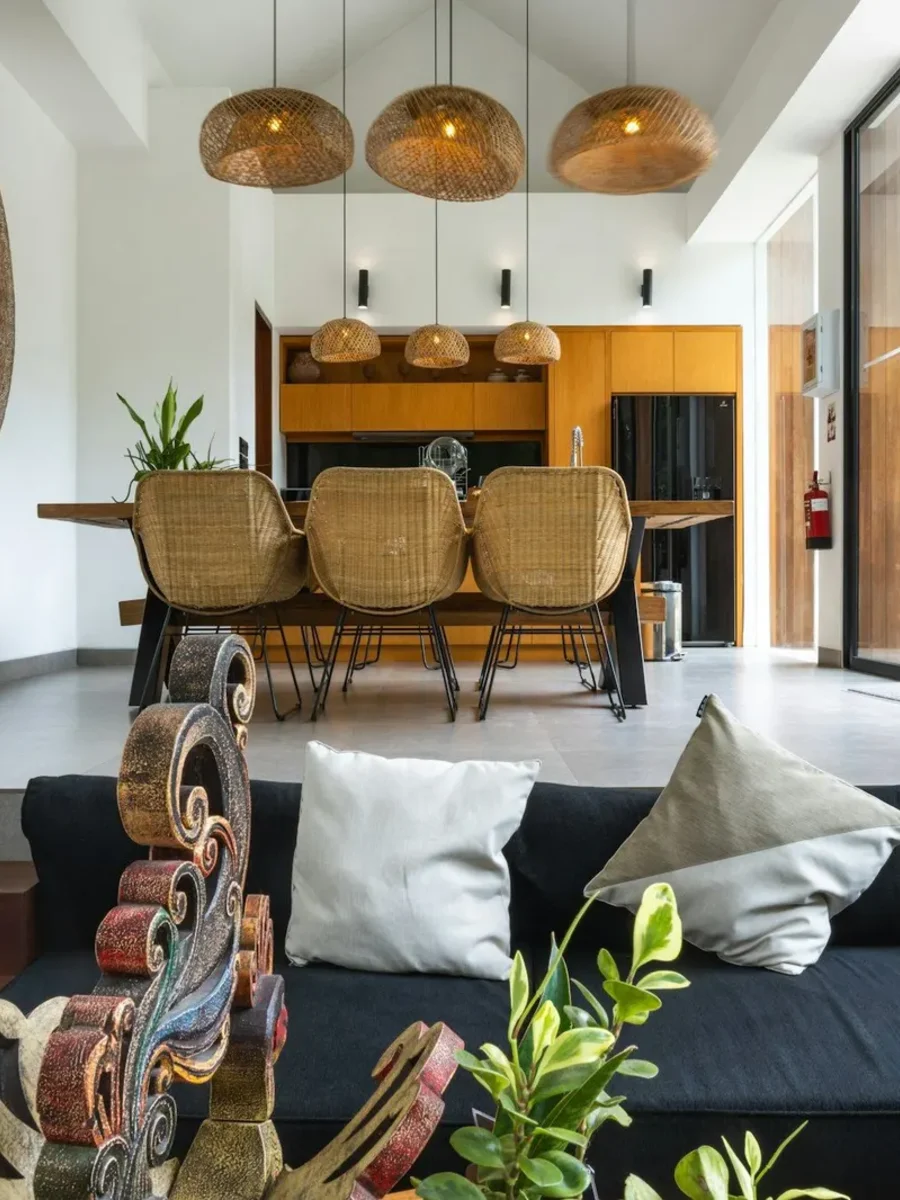
In most pool villas, one room — the living room, a pool lounge or a bedroom — opens directly onto the water through wide sliding or folding doors. It needs to work as both an indoor and a semi-outdoor space. Upholstery in it should be closer to outdoor specification than to the rest of the house: performance fabrics, removable covers, cushions that can be wiped down.
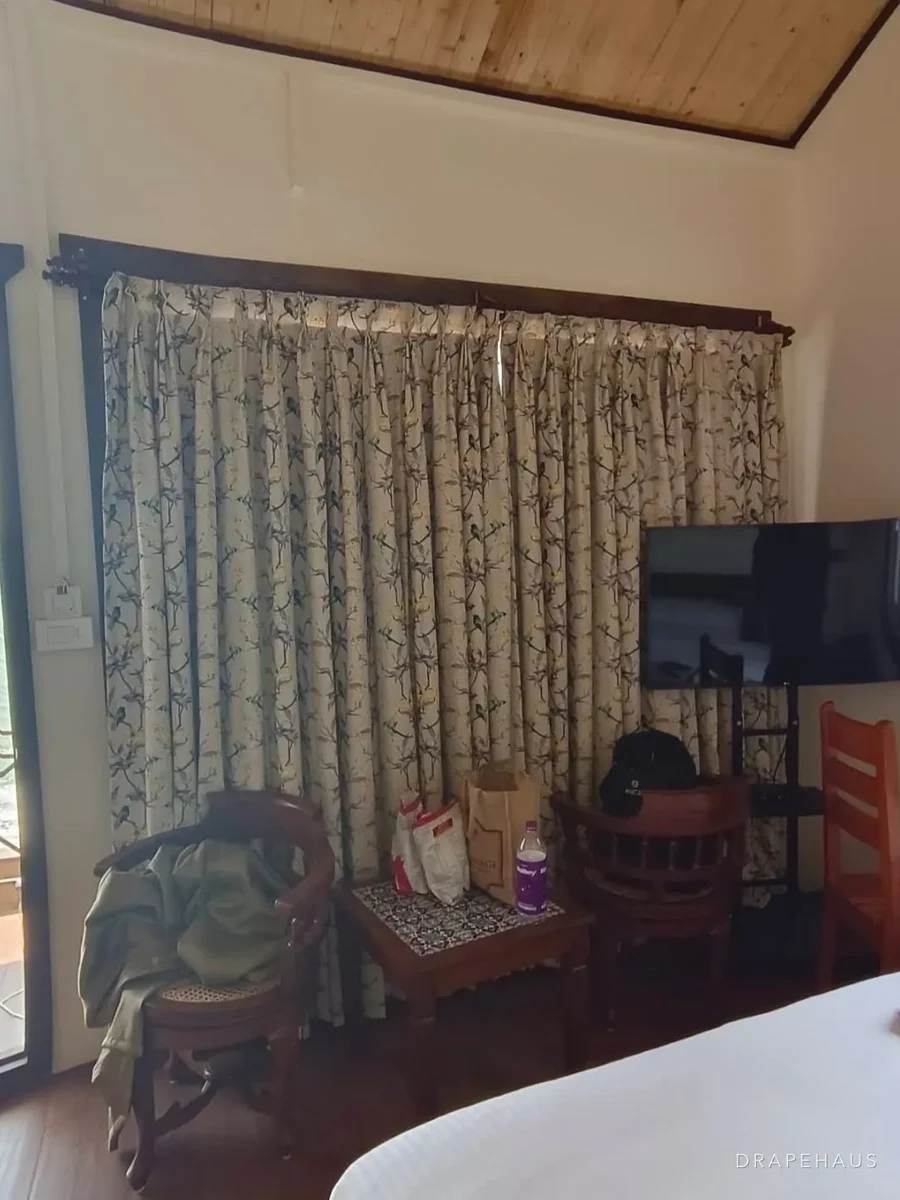
The window treatment for that room has several jobs: cutting reflected glare, providing evening privacy, keeping insects out when the doors are open, and closing up for the monsoon. Sliding insect screens on the doors, a sheer or solar screen for the day and a heavier lined curtain for the evening together handle all of them. Motorising the curtains on wide pool doors avoids the daily struggle with long, heavy panels. For a broader view of how pool rooms fit a villa scheme, see our pieces on tropical interior design and the villa living room.
Design the pool room for someone walking in wet; everything else follows.