 Drape Haus
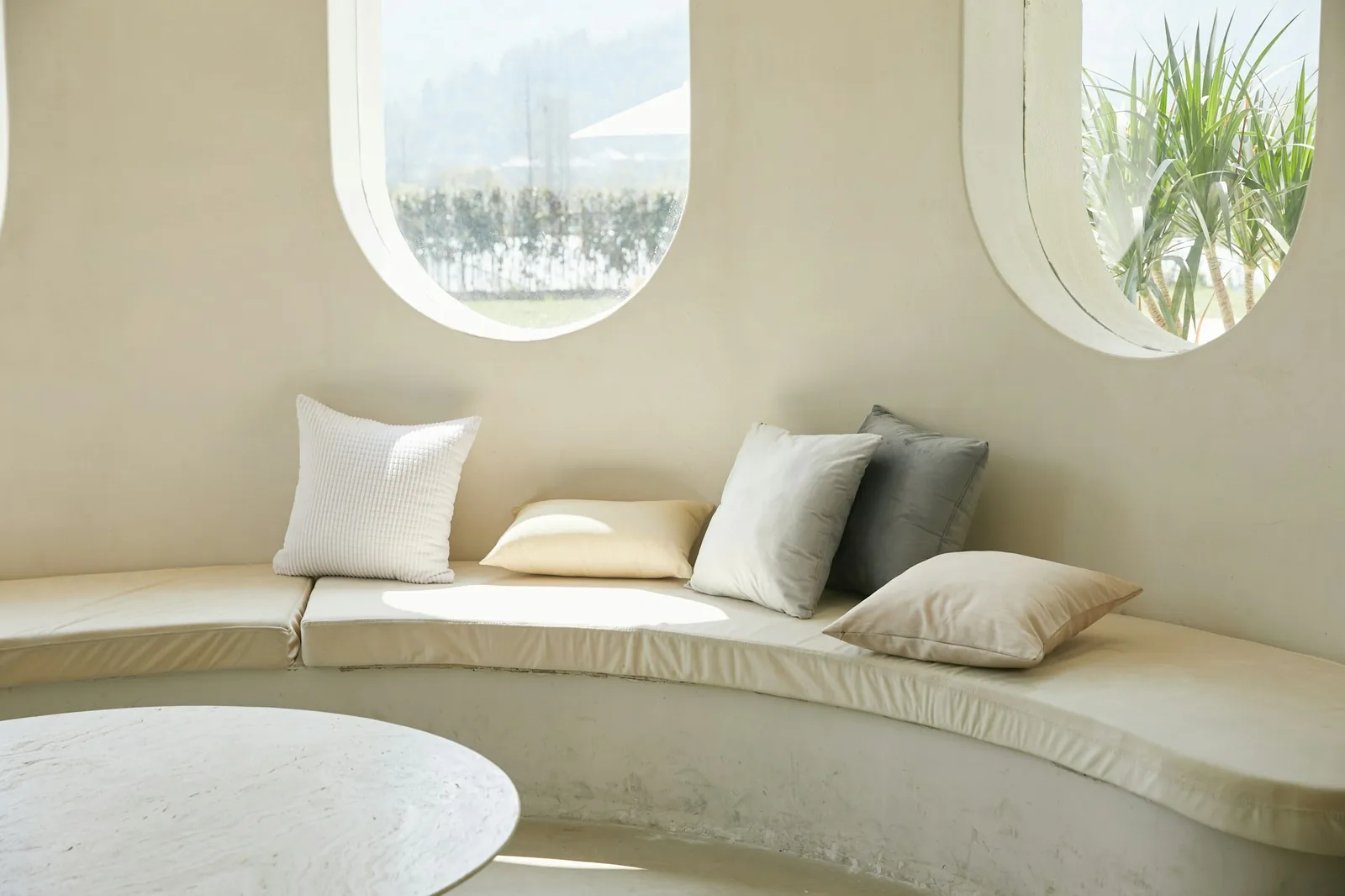
A white villa interior is one of the most requested looks in Goa, and it is easy to see why. White walls bounce the soft light of a shaded verandah deep into a room, white curtains glow when the afternoon sun comes through them, and white upholstery makes a high-ceilinged room feel cooler than it is. In photographs, nothing looks calmer.
It is also the most demanding palette you can choose here. Laterite country puts a fine red dust on every surface in the dry months. Beach houses track sand indoors. The monsoon brings mould spots that would be invisible on a mid-grey sofa and are obvious on a white one. And white fabric yellows: from light, from skin oils, from the wrong bleach, from being stored damp. None of this is a reason to give up on white. It is a reason to choose your whites carefully and to plan the upkeep before the first sofa arrives.
This guide covers both halves: which whites behave well in strong coastal light, how to build an all-white room that is not flat, and the routines that keep white sofas, curtains and walls white through a Goan year.
Why a white villa works in Goa, and why it is demanding
White interiors have a long local logic. Accounts of traditional Goan houses describe exteriors in strong colour, with white reserved under the old custom for churches and chapels and used on houses mainly as trim around windows, while interiors were usually kept in paler colours or white with solid colour highlights. Pale walls inside a house with deep verandahs and shaded openings make the most of the light that does get in. That still holds in a villa with a covered sit-out and tall windows.
White also changes how a room feels in heat. It reads as cool, it hides nothing about the architecture, and it lets wood, plants and the view do the decorating. Visitors to Goa often choose white villas because they look restful after a day in the sun, which is one reason so many homestays and rental homes are finished this way.
The trouble is that white shows everything that a Goan year throws at a house. Dust from laterite is iron-rich and reddish, so it tints rather than greys. Sand gathers in the weave of a rug and the seams of a sofa. Monsoon mould begins as small dark spots, which on white are visible from across the room. Skin oil darkens the arms and headrest of a sofa within weeks. A white room is a room that asks to be cleaned more often, and the design should make that cleaning easy.
Choosing your white: optic, warm or natural
There is no single white. Paints and fabrics run from a cold, blue-leaning optic white through soft warm whites to natural, unbleached shades such as ecru and oatmeal, and on to ivory and cream. In Goa's strong light the differences are exaggerated. An optic white on a west-facing wall can glare at four in the afternoon and look grey and chilly on a dark monsoon morning. A white with a little warmth in it holds up better across both.
For fabrics, the choice has a technical side. Many bright white textiles are treated with optical brighteners, which absorb ultraviolet light and give it back as visible blue-white light, which is why they look whiter than white. The Drycleaning and Laundry Institute notes that these agents can break down, so the fabric reverts to its natural off-white or yellowish colour, and that light breaks them down in exactly the areas that are exposed. A brightened white curtain facing a sunny window can therefore turn faintly yellow in bands, while the folds stay brighter. A natural, unbrightened white or ivory has nothing to lose, so it ages more evenly.
That points to a useful rule. Use the brightest whites where light is controlled: bedlinen, cushion covers and anything that is washed often. Use soft or natural whites for curtains, sheers and upholstery that sit in daylight for years. Always look at samples in the room itself, at morning, midday and late afternoon, before you commit. Paint makers publish a light reflectance value for each colour, a measure of how much light the surface sends back; the highest values look brightest, and they also glare most where the sun hits them directly.
| White | In strong light | How it ages | Best used for |
|---|---|---|---|
| Optic or brilliant white | Crisp, can glare on west walls; cold on grey days | Brightened fabrics can yellow where light falls | Bedlinen, towels, washable cushion covers, ceilings |
| Soft warm white | Calm, holds up morning to evening | Even; shows dust less than optic white | Walls, curtains, main upholstery |
| Natural (ecru, oatmeal, undyed linen) | Warm, slightly textured look | Very even; no brightener to lose | Sheers, linen curtains, slipcovers, rugs |
| Ivory and cream | Rich in daylight; can look yellow beside optic white | Even, but clashes if mixed with brighter whites | Upholstery in rooms that avoid optic white entirely |
Planning something like this?
We visit homes across North and South Goa, measure on site, and bring samples to see in your own light.
White sofas and upholstery that survive real life
A white sofa in a Goan villa should almost always have removable covers. Fixed white upholstery has to be cleaned in place, which is slow, rarely perfect, and in the monsoon risks leaving the filling damp. Loose covers come off, go through a wash or to a cleaner, and go back on. Having a second set made at the same time means the sofa is never bare while one set is drying, which in July can take days. Our sofa covers are made to the frame for exactly this reason, and they can be added to a sofa you already own.
Fabric choice matters as much as the cover. Pure cotton and linen look beautiful in white, but they hold moisture, crease and can shrink, so they should be pre-washed or made with shrinkage allowed for if they will be laundered. Polyester and blended fabrics shed water, wash at lower temperatures and keep their shape. Solution-dyed acrylic, where the colour is in the fibre, is the toughest option for a white seat near a pool or on a verandah, and it tolerates the cleaning it will get. Our sofa fabric simulator shows how different weaves read on a frame before you order.
Design details help white upholstery last. A slightly textured weave hides the first marks better than a flat, smooth one. Arm caps and a headrest cover take the worst of the skin oil and are easy to wash on their own. A loose-cushion back can be turned and swapped so wear spreads evenly. And a white sofa should sit off the wall: the back that touches a cool external wall in the monsoon is where mould starts.
Why white fabrics turn yellow, grey or spotted
Yellowing usually has one of four causes. The first is the breakdown of optical brighteners in light, described above. The second is chlorine bleach: the Drycleaning and Laundry Institute warns that it makes brighteners break down faster, so the household habit of bleaching whites can make them yellower over time, not whiter. The third is body oil and sweat on arms, headrests and pillow covers, which darken slowly and set if left. The fourth is storage: white textiles put away damp or sealed in plastic yellow and develop mildew spots.
Greying is different. The same Institute notes that greying is most often caused by soil that has not been fully removed over many washes. White curtains and covers washed on short, cool cycles with too little detergent gradually turn dull. The fix is a proper wash at the hottest temperature the care label allows, enough detergent, and, for brightened fabrics, drying out of direct sun.
Mould spots are the monsoon problem. The US Environmental Protection Agency advises keeping indoor humidity below 60%, ideally 30–50%, and notes that materials dried within 24–48 hours of getting wet will usually not grow mould. White cushions left on a damp verandah, a wet sheer that stays bunched against a window, or a slipcover put back on before it is fully dry are the usual culprits. In a closed house over the rains, white textiles do better taken down, cleaned and stored dry; our monsoon take-down and storage service exists for owners who are away.
Bleach is not a whitening routine. On most white fabrics it speeds up the yellowing it is meant to cure.
Red dust, sand and the entry problem
Laterite, the stone under much of Goa, is reddish brown to dark red because it is rich in iron oxides. In the dry months its dust comes in on shoes, on the breeze and on anything carried in from outside, and on white it shows as a pink or rust tint at floor level, along curtain hems and on the lower edge of a sofa skirt. Near the beach the equivalent is sand, which wears fabric as it is rubbed in.
Most of it can be stopped at the door. Plan an entry zone with a coarse mat outside and a washable mat inside, and keep a place for shoes before the white rooms begin. Choose a darker, patterned or natural-fibre runner for the main walkway rather than a white rug. Hem curtains so they clear the floor by a centimetre or so instead of puddling, because a hem that drags collects dust and gets mopped. Sofas with exposed legs and no skirt are easier to keep clean underneath.
Windows matter too. Fine insect mesh on openings is there to keep mosquitoes out, not dust, but it does stop the leaves and insects that blow in, and it lets you keep windows open without the room filling with them. Our sliding window nets slide aside when you want the full view. Expect to vacuum white upholstery weekly in the dry season, shake out or vacuum curtains every couple of weeks, and wash sheers at least twice a year, typically before the monsoon and again when the house opens up after it.
Texture, so an all-white room is not flat
The commonest disappointment with white interior design is a room that looks flat and clinical in real life. The cure is texture, because in a single colour the eye reads surfaces instead of hues. Mix at least three textures in each room: a matt wall, a woven fabric, and something with depth or shadow.
Walls can carry texture themselves. A limewashed or mineral-painted finish has a soft, uneven depth that flat emulsion lacks, and on older walls it has the advantage of letting the wall breathe. White fluted wall panels behind a bed or a television throw thin vertical shadows that change through the day. In fabric, slubbed linen, cotton waffle, a heavier basket weave on upholstery and a fine voile sheer all read differently even when they are the same shade. Rugs add the most: a hand-loomed wool or cotton rug in natural white has a pile and a pattern in its weave that no flat surface can match.
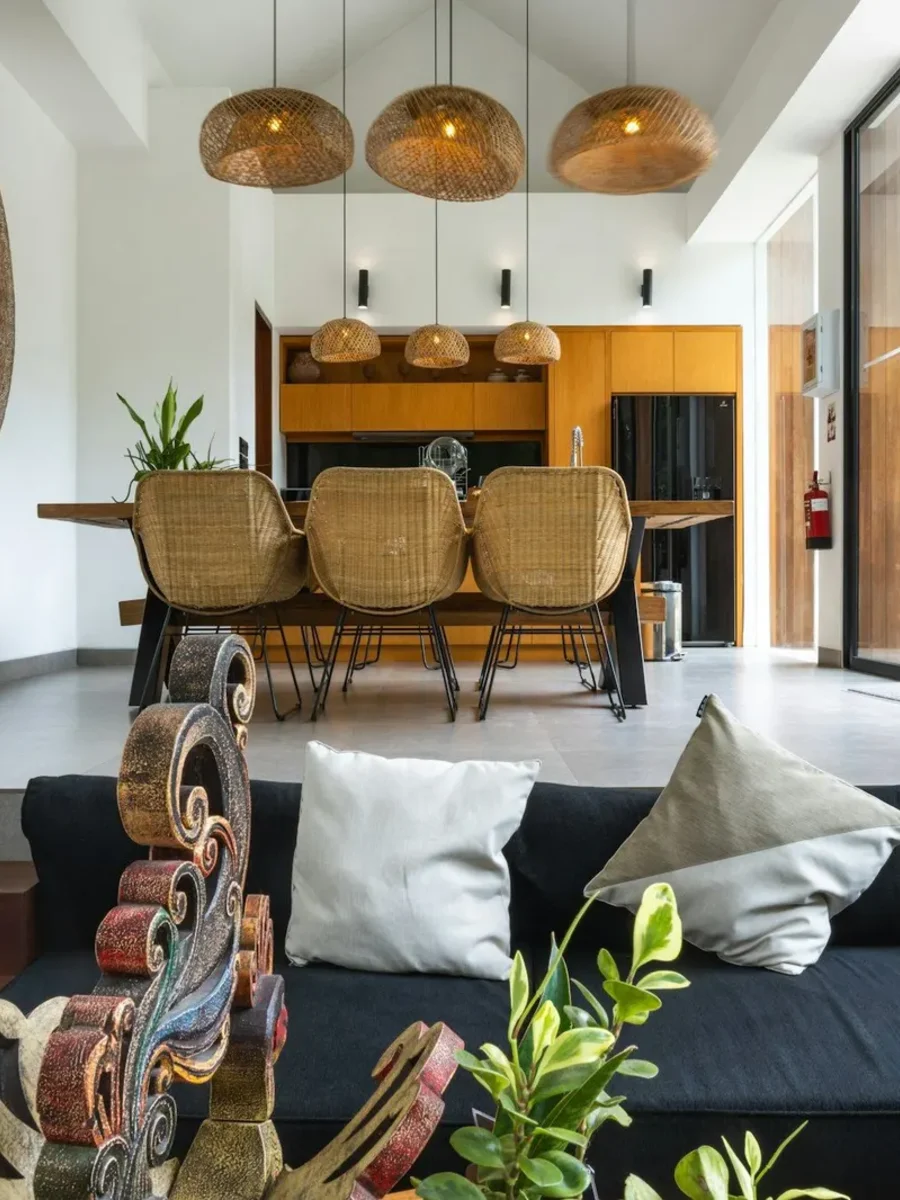
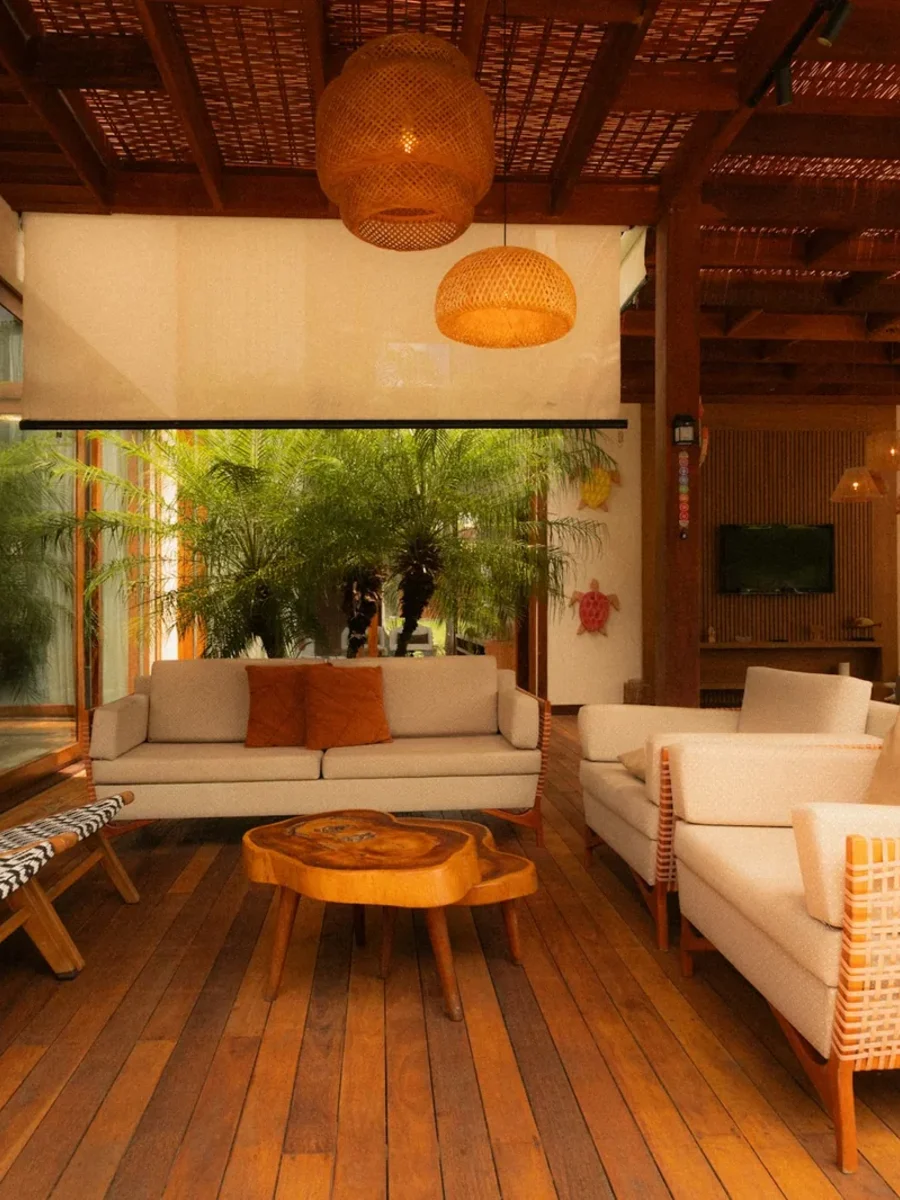
Finally, let something that is not white into the room on purpose. Dark timber, cane, terracotta and plants all look more vivid against white, and they give the eye a resting place. Light through a bamboo or chik blind laid over a white wall is texture of its own, and it takes the glare out of the afternoon.
Where white works best, room by room
Not every room is equally suited to white. White is easiest where traffic is low, where hands and feet do not reach, and where the house is used gently. It is hardest at the entrance, in children's rooms, on the verandah and anywhere food is eaten. A villa can be white in spirit without being white on every surface.
In rental homes the question is how fast textiles turn over. White bedlinen and towels are standard in hospitality partly because they can be washed hot and replaced easily. White upholstery in a rental is a different commitment, and it usually needs two sets of covers and a cleaning slot built into every changeover.
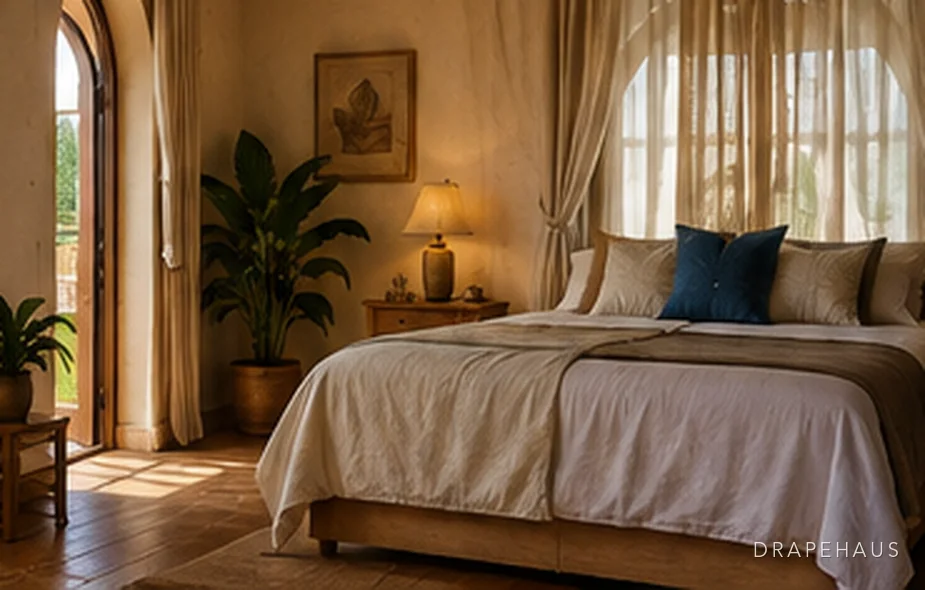
- Bedrooms: the easiest white rooms; white sheers with a lined blackout behind them, washable white bedlinen, a natural rug at the bedside
- Living room: soft white walls and curtains, upholstery in natural white with removable covers, a mid-tone rug in the walkway
- Dining: white walls and curtains work; chair seats are better in a darker or patterned fabric that can be wiped
- Verandah and pool area: white only in outdoor-rated fabric, and expect cushions to come in for the monsoon
- Entrance and passages: a darker floor runner and a wipeable finish on the lower wall
- Children's rooms: white walls if you like, but washable mid-tone fabrics on anything they sit on