 Drape Haus
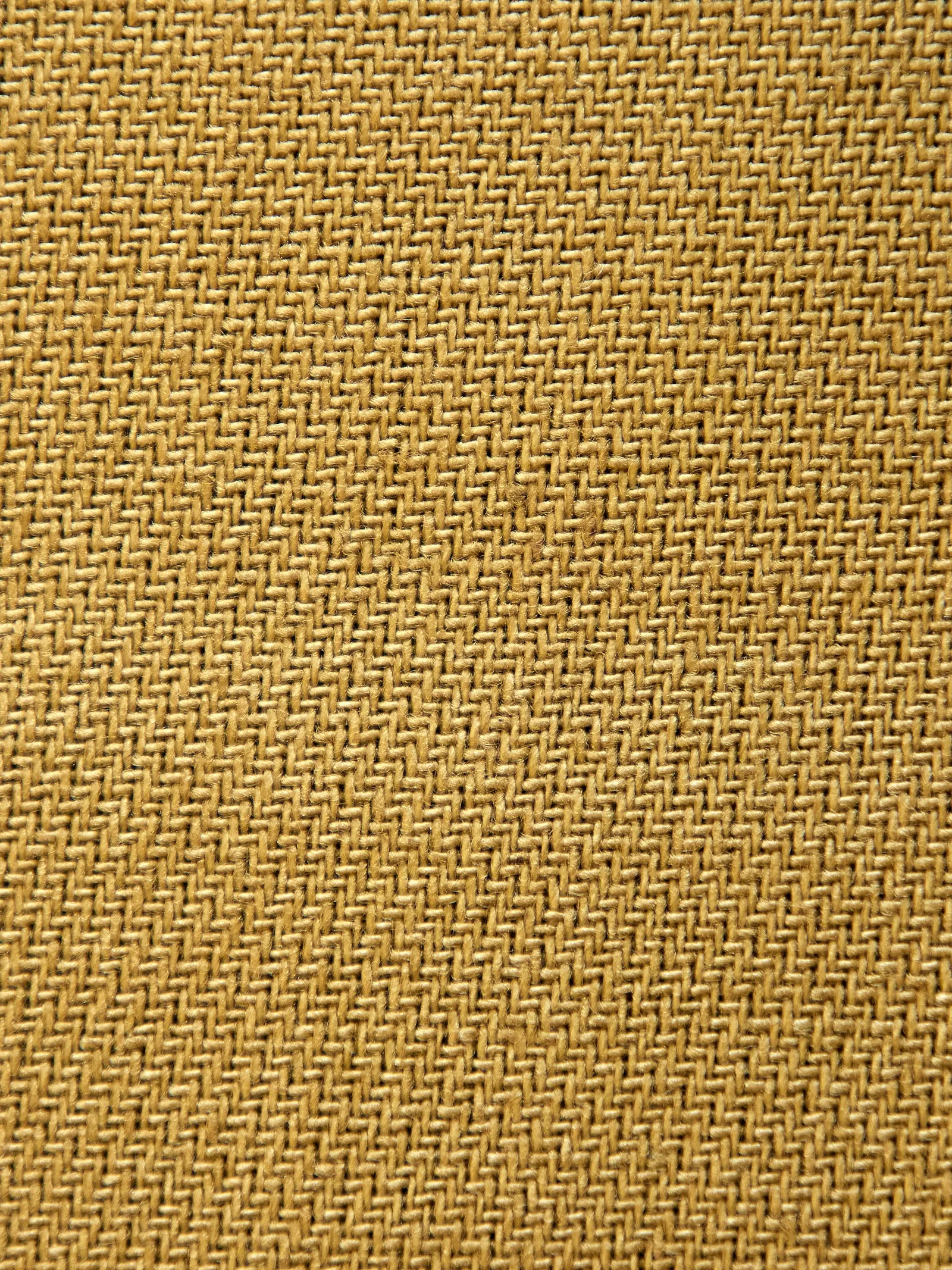
Grasscloth wallpaper is a woven wallcovering made from natural plant fibres, dyed and laminated onto a paper backing. It gives a wall a soft, uneven texture that catches light and reads as something made by hand, because much of it still is. No printed paper reproduces that depth convincingly up close.
It also comes with three facts that every buyer in Goa should hear before choosing it. The seams always show, and each strip differs a little in shade from the next. The fibres are porous, so they take up moisture from the air and stain if water or paste touches the face. And grasscloth cannot be washed or scrubbed, which means a mould spot or a splash is often permanent.
None of that rules it out. It does decide where it can go. In a dry, air-conditioned room with a sound internal wall, grasscloth can last for years. On the inside of a monsoon-facing wall in a naturally ventilated house, it is a poor risk. This guide explains why, where it works, and what to choose instead when the room is wrong for it.
What grasscloth wallpaper is made of
The Wallcovering Installers Association, the American trade body for paperhangers, defines grasscloth as natural materials such as vines, jute, wool, seagrass, coir, cork, hemp, sisal, cotton and grass that have been dyed and laminated to a paper backing. The fibres are laid side by side and held in place with fine threads; one adhesive maker's hanging guide describes the weave as a complex process using cotton threads with the natural material, all attached to a paper back. Despite its heavy look, the same guide calls it lightweight and delicate.
The German wallpaper industry's own institute groups these coverings as natural-material wallpapers and notes that some are still made and finished partly by hand, with a surface that always looks lively. That liveliness is the appeal. Every strand varies a little in thickness and colour, so the wall has a soft irregularity that changes as the light moves across it during the day.
The word is also used loosely. In shops, grasscloth can mean true woven grass, a paper weave, a jute or sisal weave, or a printed or embossed vinyl that only imitates the look. They behave very differently in humidity, so ask what the face actually is. The label or the maker's data sheet will say whether it is a natural fibre, and the price usually gives it away too, since real grasscloth is costly and fiddly to make.
Visible seams and colour variation are part of the character
Ordinary patterned papers are designed so the joint between drops disappears. Grasscloth cannot do that. The same adhesive maker's guide is plain about it: the natural colour variations between strands make matching seams all but impossible, no two strips will be identical, and buyers should not expect an unbroken finish. Some people find that a deal-breaker; for others it is exactly the point.
Paperhangers have two standard ways of softening the effect. The first is reverse hanging, turning every other strip upside down so that the darker edge of one meets the darker edge of the next. University of Kentucky extension guidance explains why it works: when plain or random papers are printed or coloured, one edge can come out heavier than the other, and reversing each strip butts dark to dark and light to light. The second is cutting alternate drops from two different rolls, so that slow shifts in shade along a single roll are spread across the wall.
Neither trick removes the seams. They make the variation look deliberate rather than accidental. A good installer will also plan where the joints fall before cutting anything, so they do not land in the middle of a bed or a television, and will check that every roll carries the same production run or dye lot number before hanging. Rolls from different runs can differ enough to show as a band across the wall.
| What you notice | Why it happens | What helps |
|---|---|---|
| Every seam visible | Fibres cannot be matched across a joint | Plan joint positions before cutting; accept them as part of the look |
| Strips slightly different in shade | Strands vary naturally in colour | Reverse alternate strips; cut from two rolls in turn |
| A band of different colour | Rolls from different production runs | Order every roll from one run, with spares |
| Wall colour showing at joints | Small openings at the seams | A primer tinted close to the paper's colour |
| Fibres flattened in lines | A hard smoothing tool used on the face | Smooth with a soft brush, not a plastic blade |
Planning something like this?
We visit homes across North and South Goa, measure on site, and bring samples to see in your own light.
Humidity, mould and staining in Goan rooms
This is where grasscloth and Goa meet head on. The India Meteorological Department's normals put morning relative humidity across the state at 87 to 91 per cent from June to September, and about 84 per cent in October. The US Environmental Protection Agency advises keeping indoor humidity below 60 per cent, ideally between 30 and 50, to limit mould. A naturally ventilated room in a Goan monsoon sits far above that for months.
Grasscloth suffers in those conditions for several reasons at once. The adhesive maker's guide states that grasscloth and other natural-fibre coverings are porous, will absorb moisture, and should not be used in areas of high humidity such as bathrooms. Plant fibre, a paper back and a starch or cellulose paste are all things mould can feed on. And once a porous material has grown mould, it rarely cleans up: the EPA notes that mould can grow into the crevices of porous materials, so it may be difficult or impossible to remove completely, and that absorbent materials which go mouldy may have to be thrown away. On a wall, that means replacing the strip.
Water marks are the other risk. The same guide warns that excess paste or water on the face of grasscloth can stain and may be difficult to wipe away, and that some natural fibres stain when washed with water at all. A leak from a terrace in August, condensation running down a wall behind a cupboard, or rain driven through a window left open can leave a tide line in the weave that will not come out.
Light is a slower enemy. The German wallpaper institute's glossary notes that jute papers, like all natural-material coverings, are not lightfast. A dyed grasscloth on a wall that takes direct afternoon sun from a west window will fade, and fade unevenly wherever a picture or a cabinet stood. Our guide to fading and sun damage explains how sheers and blinds cut that exposure.
If a room cannot be kept below about 60 per cent humidity through the monsoon, it is the wrong room for real grasscloth.
Rooms where grasscloth can work
The rooms that suit grasscloth share three things: controlled humidity all year, a wall that is dry and internal, and little reason for anyone to touch it. A bedroom or study that runs air conditioning or a dehumidifier through the monsoon, with the paper on a partition wall rather than an outside one, is the best case. A formal sitting room in an apartment on an upper floor, used and cooled regularly, can work. So can an office or a hotel suite where the building's air handling keeps the room steady and staff are trained not to wipe the walls.
The rooms to avoid are just as clear. Bathrooms and kitchens are out, for steam and splashes. Corridors and stairs are poor choices too: the adhesive maker's guide advises against grasscloth in high-traffic areas such as hallways, where it gets bumped, frayed and damaged, and University of Kentucky guidance lists it for light-use areas only. Behind a bed or a sofa pushed hard against the wall, the air never moves and the fibres get rubbed. And a house that is closed for the monsoon, with no one running the dehumidifier, is the hardest test of all; our guide to the closed-house season covers what happens to soft finishes in a shut house.
Air conditioning helps, but it is not a cure on its own. On the inside of an external wall, a cooled room pulls moist air towards the coolest surface, and anything that holds water behind the paper becomes a place for mould. Keep grasscloth to internal walls even in air-conditioned rooms, and read our guide to the best wallpaper for humid walls for the reasoning behind that rule. A dehumidifier for the home is often what makes a grasscloth room possible at all.
| Room or wall | Verdict | Why |
|---|---|---|
| Air-conditioned bedroom or study, internal wall | Good | Steady humidity, little touching |
| Formal sitting room used and cooled daily | Possible | Keep it off external walls and out of direct sun |
| Hotel suite or office with building air handling | Possible | Needs housekeeping told not to wipe it |
| Naturally ventilated living room | Avoid | Months above 85% humidity in the monsoon |
| Corridor, stair or entrance | Avoid | Knocks, hands and luggage fray the fibres |
| Bathroom or kitchen | Never | Steam, splashes and cleaning |
| House closed through the monsoon | Avoid | No air movement and no humidity control |
Vinyl grasscloth look-alikes and other alternatives
Where a room is wrong for natural fibre, the look can still be had. Vinyl wallcoverings are made with embossed or printed surfaces that imitate grasscloth, linen and other weaves. University of Kentucky extension guidance describes vinyls as having good soil, stain and scuff resistance, as mildew and moisture proof, and as washable with warm soapy water, with many scrubbable with a soft brush. The trade definitions are worth knowing: washable means the surface can be cleaned with a sponge, mild detergent and water, and scrubbable means it can withstand scrubbing with a brush.
The trade-off is honesty up close. A vinyl grasscloth reads well from across a room, especially in a matt finish, but under a raking light the texture is flatter and the printed variation repeats at regular intervals down the roll, where real fibre never repeats. The joints, ironically, are often less visible than on the real thing. If what you love is the irregularity, a vinyl will feel a little too tidy. If what you love is the warmth of the colour and a quiet texture, it will do the job in rooms where grasscloth would fail.
Vinyl has its own limit in Goa. A solid vinyl face does not let water vapour through, so on the inside of an external wall in an air-conditioned room it can trap moisture behind it. Use vinyl look-alikes on internal walls, or choose a textured non-woven paper, which breathes. For a stronger, more architectural texture, slatted or fluted panels do a similar job with more depth; our article on luxury wallpaper for humid homes compares the finer papers, and the home wallpaper page shows what we hang.
- Vinyl with an embossed weave: washable, moisture proof, internal walls only
- Textured non-woven paper: breathes, wipes lightly, good for ventilated rooms
- Paper weave or printed natural look: softer than vinyl, still keep it dry
- Fluted or slatted panels: real depth, wipe clean, suit damp-prone walls on battens
Hanging grasscloth: why the installer matters
University of Kentucky guidance lists real grasscloth among the materials worth hiring a professional for, along with silk and hand-printed papers. The reasons are practical. It is hung by pasting the back of each strip on a table, and not a smear of paste can reach the face. The adhesive maker's guide recommends a clear, non-staining paste, warns that excess adhesive on the face can ruin it, and asks installers to keep hands and tools constantly clean with a dry cloth to hand.
The fibres do not bend like paper, so inside and outside corners take patience, and they swell a little when pasted, so each strip has to rest for the time the maker specifies before it goes up. The guide suggests a wallpaper primer tinted close to the colour of the grasscloth, so any hairline gap at a seam does not flash white, and a soft smoothing brush rather than a hard plastic tool, which can crush the fibres into lines. Kentucky guidance adds that a lining paper is usually recommended under grasscloth, which also helps on an uneven wall.
In Goa, timing and the wall come first. Hang in the dry months, once the walls have had time to release the monsoon, and only after moisture readings show the wall is dry and even. Order every roll from one production run, count the drops with the wallpaper calculator, and add a spare. Our guide to wallpaper roll sizes explains how that count works.
Care and gentle cleaning without water marks or fading
Grasscloth is a dry-cleaning wall. University of Kentucky guidance is direct: non-washable coverings, particularly fabric and grasscloth, are best cleaned with the soft-brush attachment of a vacuum cleaner from time to time, and abrasives should not be used on any wall covering. In practice that means a light vacuum along the grain every month or two, working from top to bottom, with the brush held just against the surface.
When something does reach the face, act fast and keep it dry. Blot a fresh splash with a clean, dry, white cloth, pressing rather than rubbing, and let the area dry in moving air. Do not reach for a wet sponge or a cleaning spray, which spreads the stain and leaves a ring. If a mark will not move, the honest answer is a new strip.
That is why the spare roll matters more with grasscloth than with any other paper. The US federal wallcovering specification asks for extra stock from the same lot as the installed covering, labelled with its dye lot, and stored flat at 30 to 60 per cent relative humidity. In Goa that means an air-conditioned room, not a cupboard on an outside wall. Keep the label. When a strip is damaged, a matching replacement from the same run is the only repair that will not show.
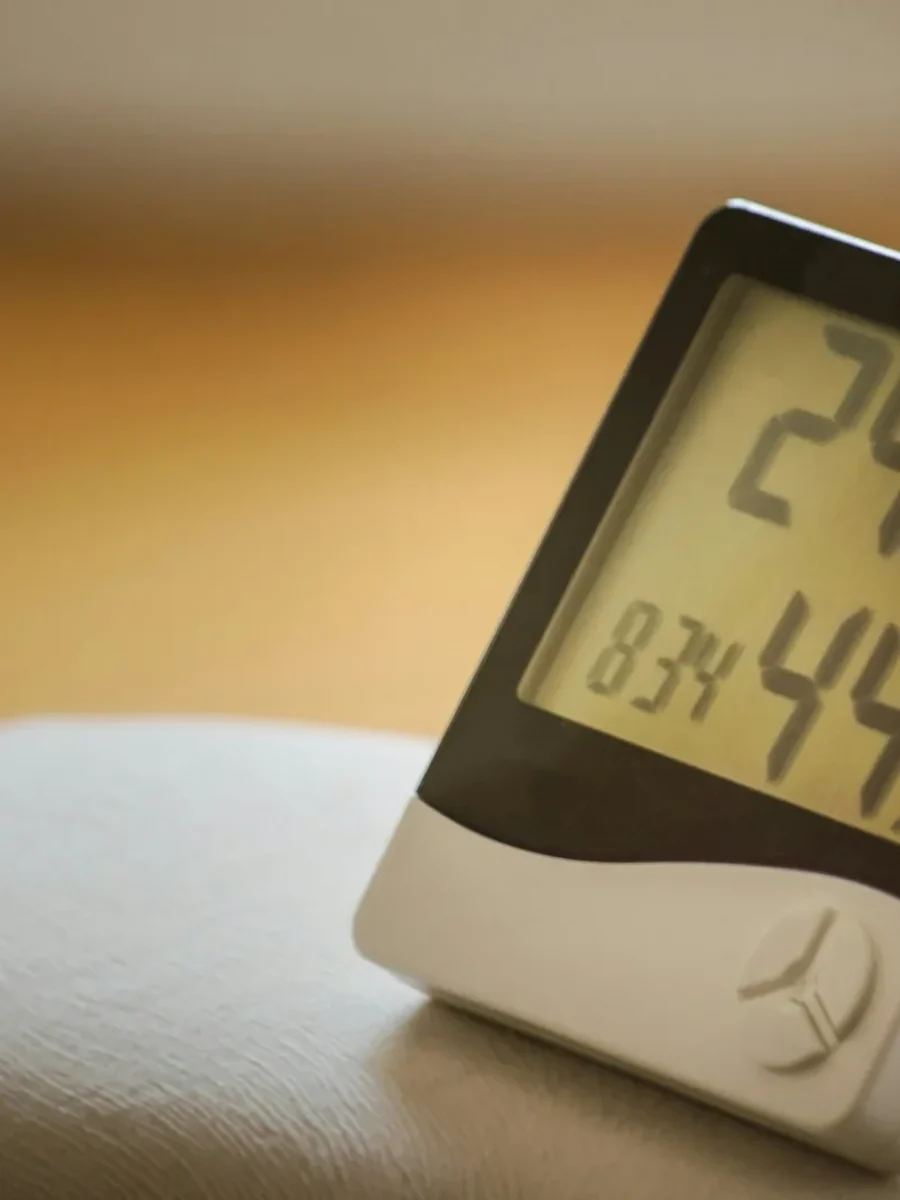
Watch the room through the monsoon. A small hygrometer tells you whether the room is staying below 60 per cent, and a musty smell or a soft grey bloom at the skirting is the early sign that it is not. Lower the humidity first, then deal with the mark. If you would like grasscloth samples brought to your wall and the wall itself checked before you decide, ask for a home visit.