 Drape Haus
Drape Haus
Preparing the room
Drape Haus
Preparing the room
Villa · Wall Panels
Panels can give a villa its feature walls and hide tired plaster — but on a damp laterite wall they can also hide a problem. Here is how to choose and where to put them.
In short
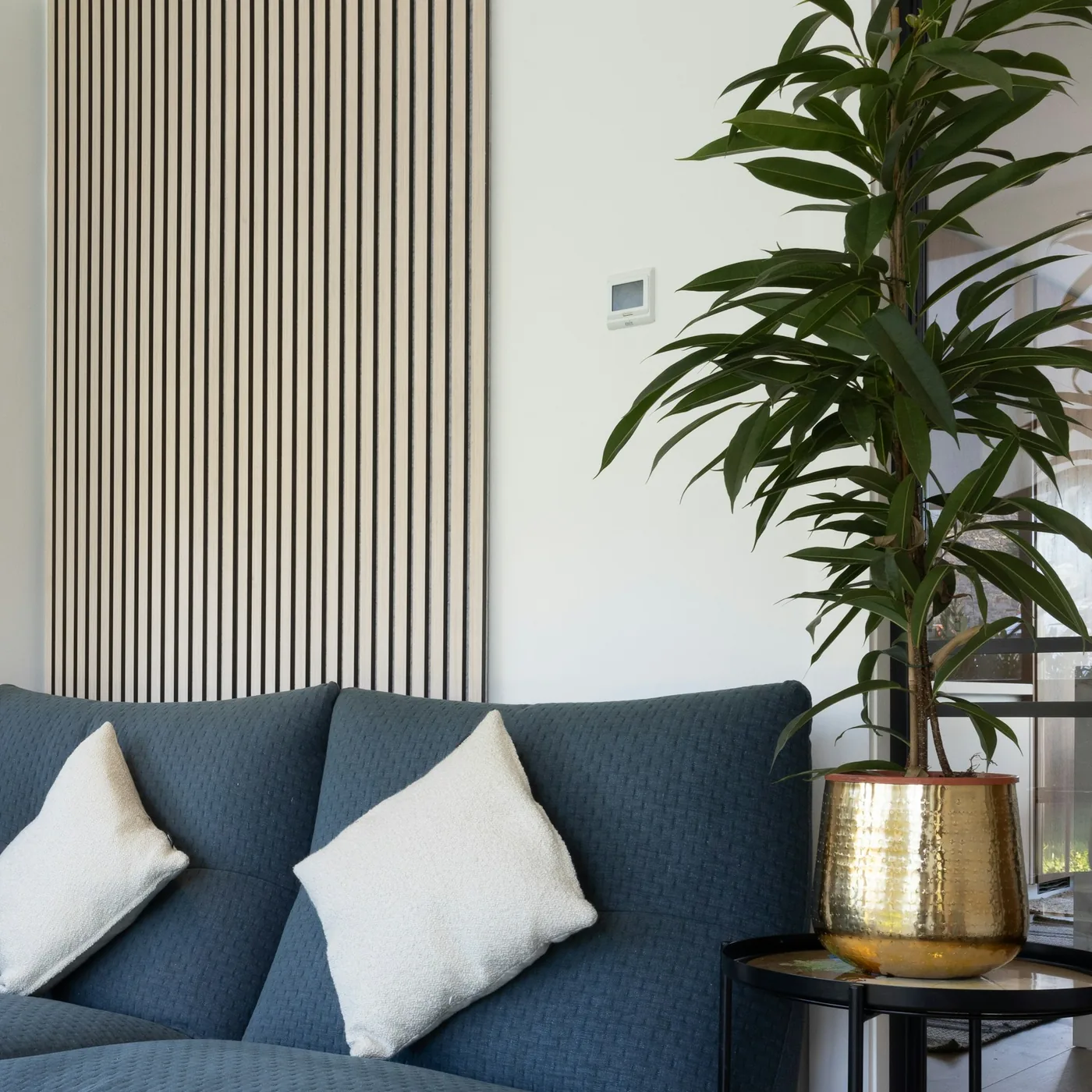
In a villa, use panels where they earn their place: behind the television, behind the beds, and on walls where plaster keeps flaking. Choose moisture-tolerant PVC or WPC for anything near a bathroom or an outside wall, keep real timber for dry interior walls, and always fix the source of damp before covering a wall — never panel over seepage.
What your villa asks of wall panels
See it in your villa
We bring samples to your home, hold them to your light and measure every opening — anywhere in North or South Goa.
The three walls we panel most in villas are the television wall in the living room, the wall behind each bed, and the entrance or staircase wall that guests see first. These are the walls that are looked at, touched and leaned on, and a panel gives them a durable surface.
In bathrooms and utility rooms, full PVC panelling is a practical alternative to tiles where re-tiling would be messy or costly. It also goes over existing tiles in some cases, which is useful when updating an older villa between seasons.
Press your hand on the wall in August. If it feels cold and damp, or the paint is bubbling near the floor, there is moisture coming through. Covering that with panels moves the problem out of sight; it doesn't solve it.
Fix what you can first — terrace waterproofing, a blocked gutter, a leaking pipe behind the wall. On walls that will always be a little damp, choose PVC fixed on a frame with a ventilation gap rather than glued flat.
Wood-look and fluted panels in warm mid-tones suit most Goan villas and age well. High-gloss and bright white panels show every fingerprint and scuff — not ideal in a house full of guests.
Keep it to one or two feature walls per room. A villa where every wall is panelled feels closed and heavy, especially in the darker monsoon months.
In Goa
Laterite is porous. In older villas built of it, and in newer ones with laterite infill, walls can hold moisture for weeks after heavy rain. That is the real test for any panel: does it let the wall breathe, and will it tolerate damp behind it without warping or growing mould?
In a villa that will be shut up, ask the caretaker to open the house on dry days and to check panelled walls near the floor and corners. A small patch of mould caught early is a wipe; caught at the end of the season, it can mean lifting panels.
More for your villa
Wall Panels for other spaces
We measure and fit wall panels across Goa — Panjim, Porvorim, Dona Paula, Mapusa, Candolim, Calangute, Assagao, Anjuna & Vagator, Siolim, Benaulim, Colva, Varca, Cavelossim, Margao, Majorda, Vasco da Gama, Canacona & Palolem, Ponda.
FAQ
WPC and PVC panels cope best with Goan humidity. WPC suits living rooms and feature walls with its timber look; PVC is best for bathrooms and damp-prone areas. Real wood is lovely but best kept to dry interior walls.
No. Panels can cover the marks, but the damp is still there and can get worse out of sight. Find and fix the source first, then choose a panel and fixing method that let the wall breathe.
Yes — they are durable, easy to wipe clean, and don't need repainting between seasons, which makes them practical for a let property.
Panelling is much quicker and cleaner than re-plastering. Tell us your first booking and we'll plan the work around it.