 Drapehaus
Drapehaus
Preparing the room
Drapehaus
Preparing the room
Blinds
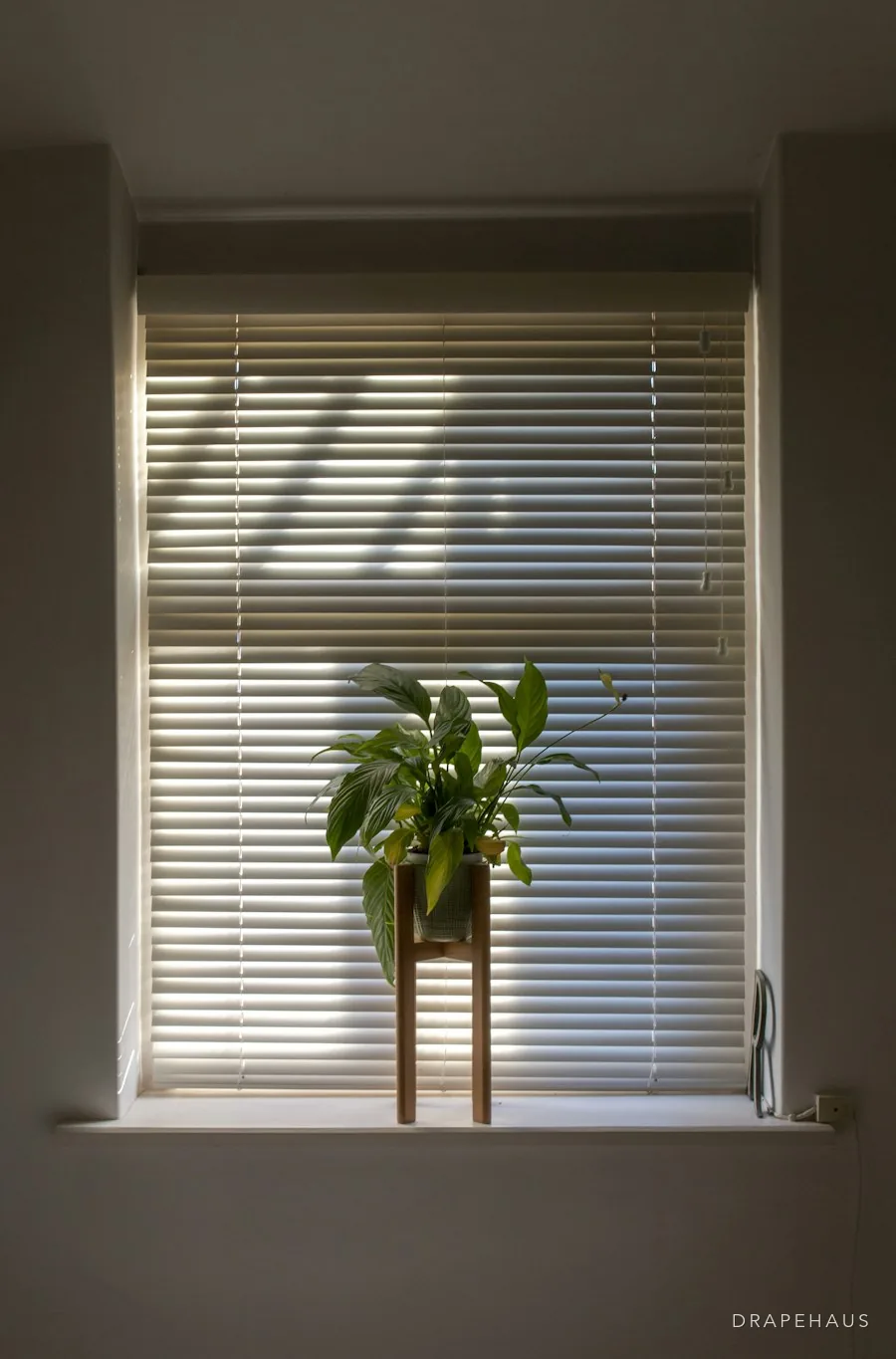
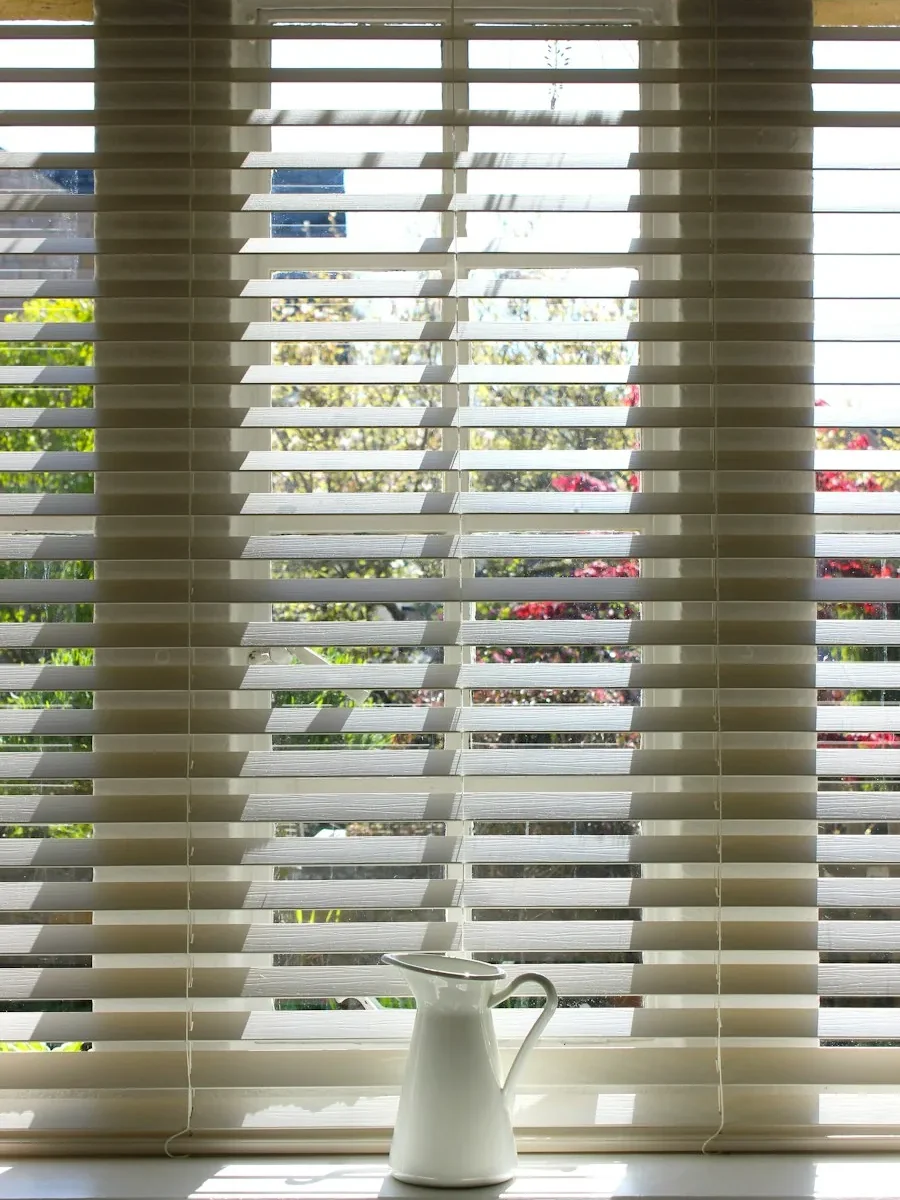
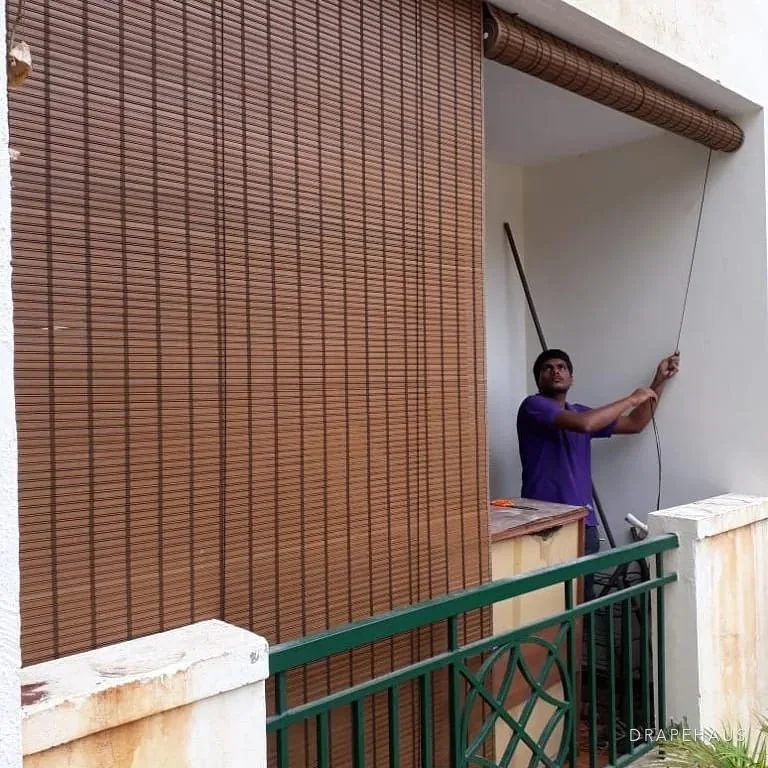
Horizontal slats that tilt to direct light exactly where you want it. Real timber brings a warmth that suits Goan interiors — and it belongs in dry rooms, not bathrooms.
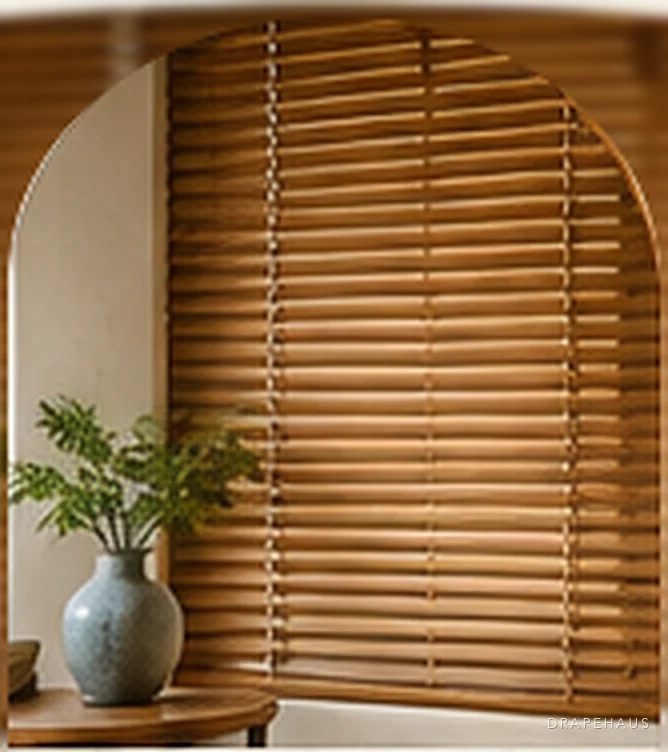
Wooden slats · Midday
Treatment
Time of day
Tilt the slats to bounce light off the ceiling and keep eyes out. Closed, near-total privacy; open, a striped view.
In short
By the Drapehaus studio · How we write
Is it right for you?
A Venetian blind is a stack of horizontal slats hung on ladder tapes or cords. Two separate controls do two separate jobs: one raises and lowers the stack, the other tilts every slat at once. That tilt is what sets Venetians apart from every other blind. You can angle the slats upward to throw daylight onto the ceiling while blocking the view in from the street, or down to cut the sun and keep a view of the garden.
Timber slats bring a warmth that no fabric or composite quite matches, and in a dry, lived-in room of an older Goan house - teak doors, limewashed walls, a tiled floor - real wood looks entirely at home. Aluminium Venetians give the same control in a lighter, more technical slat that shrugs off damp.
Timber is the wrong choice in bathrooms, kitchens and any room that takes spray or stays shut and humid through the monsoon. It is also heavy: a wide timber blind stacks deep at the head of the window and takes effort to raise. For those windows, the faux-wood and PVC page covers the better answer.
The details
Tilt the slats and you control both light and view: up for privacy with brightness, down to block the sun and keep a glimpse of the garden. Wooden slats look superb against whitewashed walls and old joinery.
Real timber moves and warps in steam and sustained damp, so in bathrooms, kitchens and exposed coastal rooms we specify faux-wood or aluminium Venetians, which look the part and shrug off moisture.
Your options
Two decisions shape a Venetian blind: the slat material and width, and how the slats are hung and controlled.
Swipe for all 6 →
The honest view
Light direction, not just quantity
Tilting slats steer daylight up onto the ceiling or down onto the floor. It is the only blind that lets you keep privacy and brightness at the same moment through slat angle alone.
Warmth of real timber
Timber slats bring natural grain and a soft, warm tone that suits old joinery, terracotta floors and limewashed walls.
Lighter than composite
Real wood weighs less than faux-wood of the same size, so a dry-room timber blind can span a wider window before it needs splitting.
Architectural presence
A good timber Venetian reads as part of the room's joinery rather than a soft furnishing, which suits studies, libraries and restored houses.
Moves with moisture
Timber swells and warps in steam and prolonged damp. In a closed house through the monsoon, even a dry room can be humid enough to bow the slats.
Deep stack when raised
The raised slats gather into a stack at the head of the window that takes a noticeable share of the glass, particularly with wide slats.
Dust on every slat
Horizontal slats collect dust and, near the sea, salt. They need dusting slat by slat, more often than a fabric blind.
Termites and sun
Timber can attract termites in an affected house, and strong sun through glass slowly dries and discolours finishes on the outward face.
Side by side
Where a timber Venetian is under consideration, the realistic alternatives are aluminium or faux-wood Venetians and a fabric Roman blind.
| Timber Venetian | Aluminium Venetian | Faux-wood Venetian | Roman blind | |
|---|---|---|---|---|
| Tilt control | Yes | Yes | Yes | No |
| Humidity tolerance | Low to moderate | Very high | Very high | Moderate |
| Weight | Moderate | Light | Heavy | Light to moderate |
| Look close up | Real grain | Technical | Painted, printed grain | Soft, textile |
| Stack when raised | Deep | Shallow | Deep | Moderate folds |
| Best place | Dry, lived-in rooms | Damp or exposed rooms | Wet rooms, rentals | Bedrooms, window seats |
Swipe to compare →
Rather see it in your own room?
We bring samples to the house, measure every window, and specify for the light and exposure you actually have.
Room by room
Tilt the slats up to throw daylight onto the ceiling and keep glare off the screen. Timber sits naturally beside bookshelves and a desk.
Excellent in a dry, lived-in room. On a wide window, split into two blinds so each stays light to raise.
Cloth tapes close the slats tightly for privacy, but light still passes between them. Add blackout curtains for sleep.
Steam and grease stick to timber and swell it over time. Choose aluminium or faux-wood in any cooking space.
Real wood does not belong here. Faux-wood or PVC looks the same and is made for wet rooms.
A room left shut through the monsoon can be humid enough to bow timber slats. Choose aluminium or composite unless the house is aired.
Wide timber slats in a stained or painted finish sit comfortably with old teak joinery and deep laterite reveals.
In depth — tap a heading to read
Timber is hygroscopic: it takes up water vapour from humid air and swells, then shrinks as it dries. A lacquered slat slows the exchange but does not stop it. Through the monsoon, when relative humidity in coastal Goa stays in the high eighties for weeks, an unventilated room lets slats take up enough moisture to bow, and a bowed slat never quite lies flat again.
So the rule is not simply 'no wood in bathrooms'. It is: timber belongs in rooms that are lived in, aired and dry. A study used every day, a bedroom with a ceiling fan and open windows on fine days, a living room with cross-ventilation - all fine. A guest room shut for four months, a room facing driving rain, a kitchen - choose aluminium or composite.
If the house is closed for the monsoon, the humidity of the empty room matters more than what the room is used for.
A Venetian raised to the top does not disappear. The slats gather into a stack under the headrail, and that stack is deeper with wide slats and tall drops. Inside a recess, it can cover a surprising share of the glass. We calculate the stack height before recommending an inside mount and, where the view matters, fix the blind above the opening so the stack sits over the wall rather than the window.
The recess needs enough depth for the headrail and for the slats to tilt fully without hitting handles. A 50 mm slat needs more depth than a 25 mm one when tilted. Old walls are rarely square, so we measure at three heights and at both sides, and make the blind to the narrowest point.
Most people tilt Venetians the wrong way. With the rounded side of the slats facing into the room and the slats tilted so the room-side edge is higher, you look up at the sky and passers-by cannot see down into the room, while daylight bounces off the slats onto the ceiling. That position gives privacy at street level with a bright room.
Tilted the other way, the slats block direct sun on a low afternoon angle and keep a view down into the garden. Closed fully, they give reasonable privacy, and cloth tapes close the cord holes, but a Venetian is never a blackout blind. Light always finds the gaps between slats.
The metal inside a Venetian headrail - the tilt gear, the cord locks, the brackets - is where salt does its damage. Close to the water, we specify headrails with corrosion-resistant internals and stainless or coated brackets, because a seized tilt mechanism makes a sound blind useless.
The finish on the slats matters too. Strong sun through glass slowly dries lacquer on the outward face and yellows pale paints. A mid-tone stain is the most forgiving over time; bright white shows discolouration first. Where a window takes hard afternoon sun, an aluminium Venetian in a wood-effect finish may be the wiser choice.
In a house with teak or rosewood joinery, match the slat to the joinery's undertone rather than its exact colour. A warm mid-brown slat beside dark teak reads as a considered pairing; a close match that is slightly off looks like a mistake.
Cloth tapes are worth considering in heritage rooms. A linen-coloured or dark tape running down the blind gives it a tailored, finished look, echoes the verticals of old window bars and hides the cord holes. In a plain whitewashed room, a painted white slat with matching tapes gives a quieter, more contemporary result.
Living with it
Close the slats flat and dust with a soft cloth or a microfibre duster, then tilt them the other way and repeat for the back.
Do not wash or spray wooden slats. A barely damp cloth for marks, dried immediately, is the most they should see.
Keep the room ventilated on dry days and run a fan or dehumidifier if the house is closed. Leave slats tilted open so air circulates.
Wipe slats with a dry cloth every few weeks in sea-facing rooms, and have the tilt mechanism checked if it begins to stiffen.
In a house with any termite history, look for fine dust or tracks at the headrail during routine cleaning and have it treated early.
Avoid these
A dry room left shut through the monsoon becomes a humid one. Choose aluminium or composite for rooms that will not be aired.
Wide slats on a short window stack into a deep band that blocks the view. Fix above the opening or choose a narrower slat.
A wide timber blind is heavy to lift and strains the cords. Split it into two or three.
Venetians never black a room out. Pair them with blackout curtains in bedrooms.
Standard headrail internals seize in salt air. Ask for corrosion-resistant components on sea-facing windows.
Checklist
More in blinds
Blinds do what curtains cannot: tight light control in a shallow recess, a clean line on a busy window, and genuine blackout when they run in side channels.
Our work
From the Journal
All articlesOur process
One team from the first visit to the last bracket, so nothing is lost between the person who specified it and the person who fits it.
FAQ
We advise against it. Real wood warps in steam and humidity. Faux-wood or aluminium Venetians give the same look and are made for wet rooms.
A Venetian is any blind with horizontal tilting slats. Wooden blinds are Venetians with timber slats; the same style also comes in aluminium and faux-wood.
They can. Timber takes up moisture and swells, and a slat that bows rarely lies flat again. In a dry, aired room with a sealed finish, wooden blinds are stable. In steamy rooms or houses closed through the monsoon, choose aluminium or faux-wood.
50 mm is the classic width for timber: bold, clear when open and in proportion with most windows. Wider slats suit tall windows and larger rooms; narrower ones suit small or shallow windows where a wide slat would look heavy or stack too deep.
Yes, when the slats are tilted so the room-side edge is higher. That blocks the view in from below while bouncing daylight onto the ceiling. Closed flat, they give good privacy, especially with cloth tapes, though light still passes between the slats.
In damp, exposed or coastal rooms, often the better choice. Aluminium is light, stiff and unaffected by humidity, and a matt or wood-effect finish looks far warmer than older metal blinds. Timber still wins close up in a dry room.
Close the slats and dust with a soft cloth or microfibre duster, then tilt the other way and do the back. Do not wash them or use a wet cloth. Remove marks with a barely damp cloth and dry the slat straight away.
Next step
A slat that looks right in a sample box can look wrong beside your joinery. We visit, measure each window at several points, work out the stack height and check which rooms will stay aired through the monsoon. We bring timber and aluminium slats in several finishes to hold up in your own light, then specify material, width, tapes and mechanism for each window before we make and fit them. Book a home visit, and we will bring the slats to you.