 Drape Haus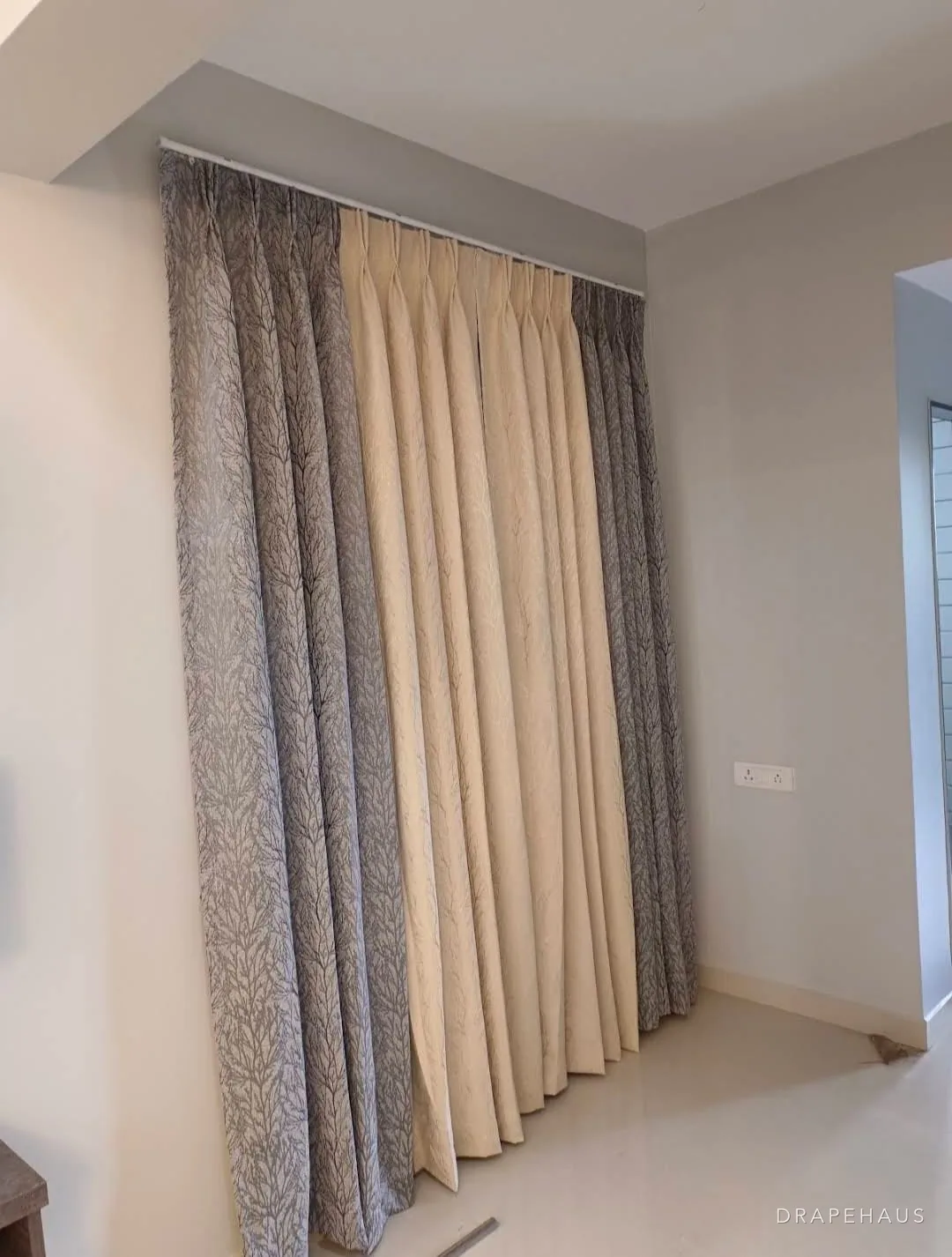
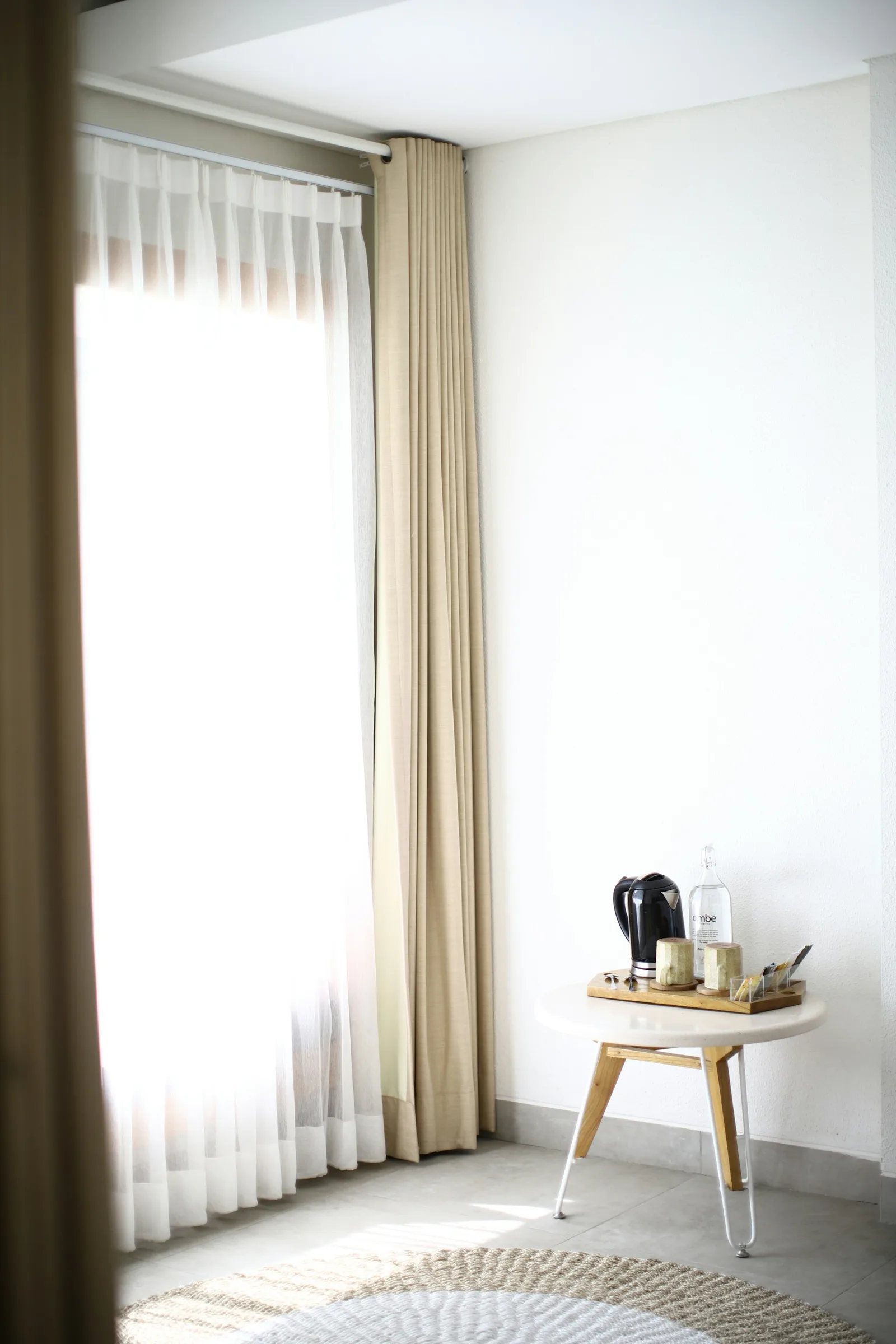
Sheer and blackout curtains do opposite jobs. A sheer is a translucent fabric that diffuses glare, keeps the room bright and blurs the view in from outside while it is daylight, and lets air through an open window. A blackout curtain carries an opaque lining that stops light passing through the fabric, gives complete privacy after dark and, fitted well, keeps a bedroom dark at dawn. A sheer does almost nothing for night privacy or darkness; a blackout curtain drawn by day turns the room into evening.
So the choice depends on when each room is used and what it faces. A living room on a quiet garden may need only a sheer. A bedroom facing the morning sun needs blackout. A street-facing room used day and night needs both, and the usual way to have both is a double track with the sheer nearest the glass and the blackout in front.
Below is what each does by day and by night, how each handles the breeze and humidity of a Goan house, what each does about heat, a room-by-room table, and how to plan a layered pair so both stack clear of the window. Our sheer curtain simulator shows the day and night difference on a drawn window, and the layered curtain simulator shows the two together.
What each curtain does, side by side
The quickest way to compare them is by the jobs a window has to do through a day. The table sets those out. It assumes a sheer in a typical polyester voile and a blackout curtain with a separate opaque lining, both made full and hung on a track that runs past the window.
Two rows decide most choices. Privacy after dark is where the sheer fails, and daylight with the curtain closed is where the blackout fails. Everything else is a matter of degree. If a room needs both rows answered, it needs both curtains, or a sheer with a blind behind it.
| Sheer | Blackout | |
|---|---|---|
| Daylight in the room | Most of it, softened | Almost none |
| Glare on screens and floors | Much reduced | Gone, with the light |
| View out by day | Softened, still there | None |
| Privacy by day | Good from outside | Complete |
| Privacy at night, lamps on | Little or none | Complete |
| Darkness for sleep | None | Dark, if the edges are fitted well |
| Breeze through an open window | Passes through the weave | Mostly blocked |
| Heat on a sunny window | Little effect | Some reduction, more with a white back |
By day: glare, view and the strong Goan sun
Goa's dry season is bright. From November to April the IMD climate summary records mostly clear or lightly clouded skies, and noon sun then comes close to the 100,000 lux that conservators in Canada quote for direct sunlight. A west-facing living room at four o'clock takes that light low and straight across the floor, and the problem is glare rather than darkness.
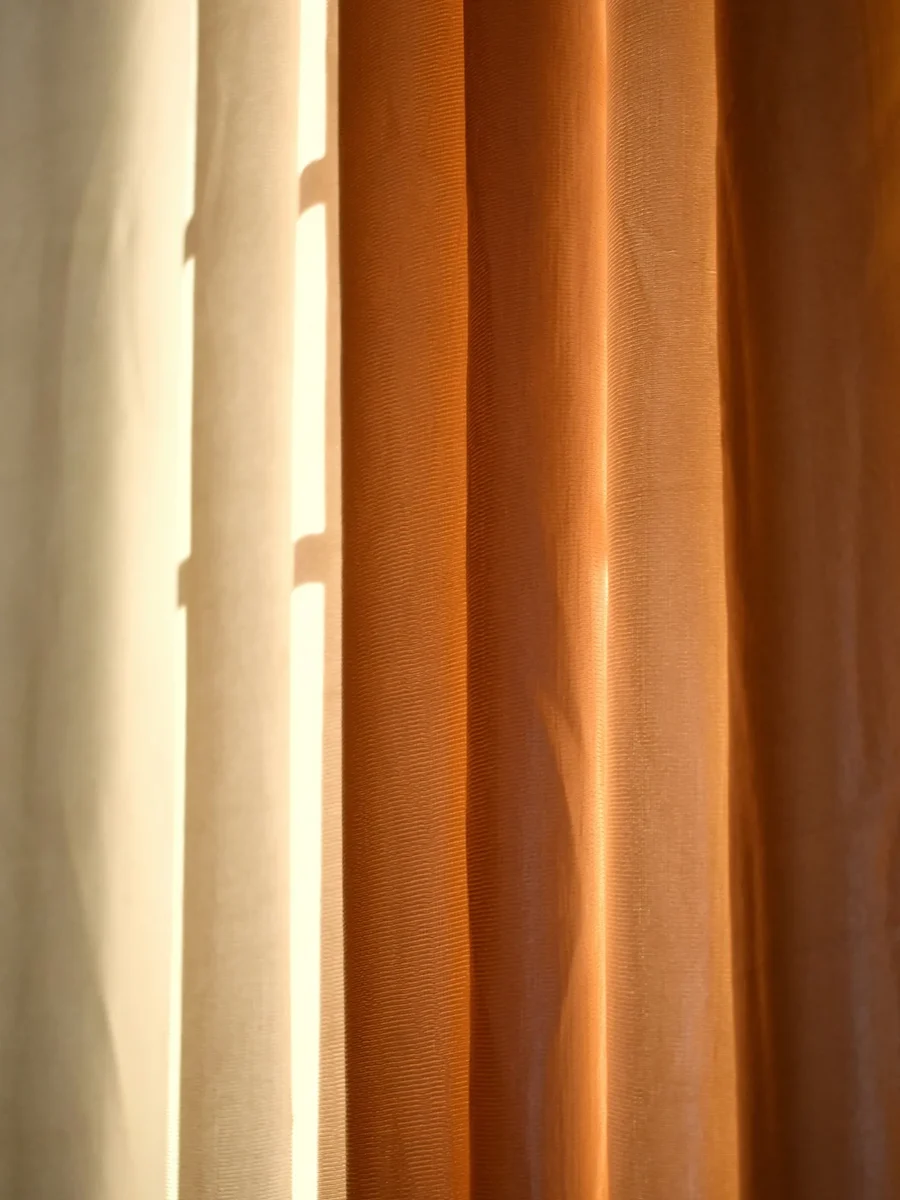
That is the sheer's job. The Building America Solution Center, run by Pacific Northwest National Laboratory for the US Department of Energy, describes sheer shades as providing very effective daylighting and glare control while maintaining a softened view to the outside. A sheer drawn across the glass turns a hard beam into soft, even light, keeps the room usable without lamps and still shows you the garden or the sea as a blur of colour.
A blackout curtain drawn by day does the opposite: the glare goes, and so does the daylight. That is right in a bedroom someone is sleeping in, or in a west room on the very hottest afternoon, and wrong in a room people are living in. A 1950 curtain-making manual put the daytime case well: thin glass curtains could permit a maximum view of the outdoors while still offering privacy from the person looking in.
Planning something like this?
We visit homes across North and South Goa, measure on site, and bring samples to see in your own light.
After dark: why a sheer alone gives little privacy
Privacy through any thin fabric depends on which side is brighter. By day, the outside is far brighter than the room, so someone looking in sees mostly the lit surface of the sheer, while you, looking out, see through it. After sunset the balance flips. With lamps on indoors and darkness outside, the sheer becomes a lit screen with the room behind it, and anyone outside can see in, sometimes in detail.
This catches people out because the sheer that seemed opaque at noon is the same fabric at nine at night. It is physics, not poor quality. A denser semi-sheer weave or a darker colour reduces what shows, but a lamp close to the window will still throw clear shapes. Any room overlooked from a lane, a neighbour or the next block needs a closing layer for the evening; our guide to privacy on narrow lanes, linked below, looks at the village-house version of the problem.
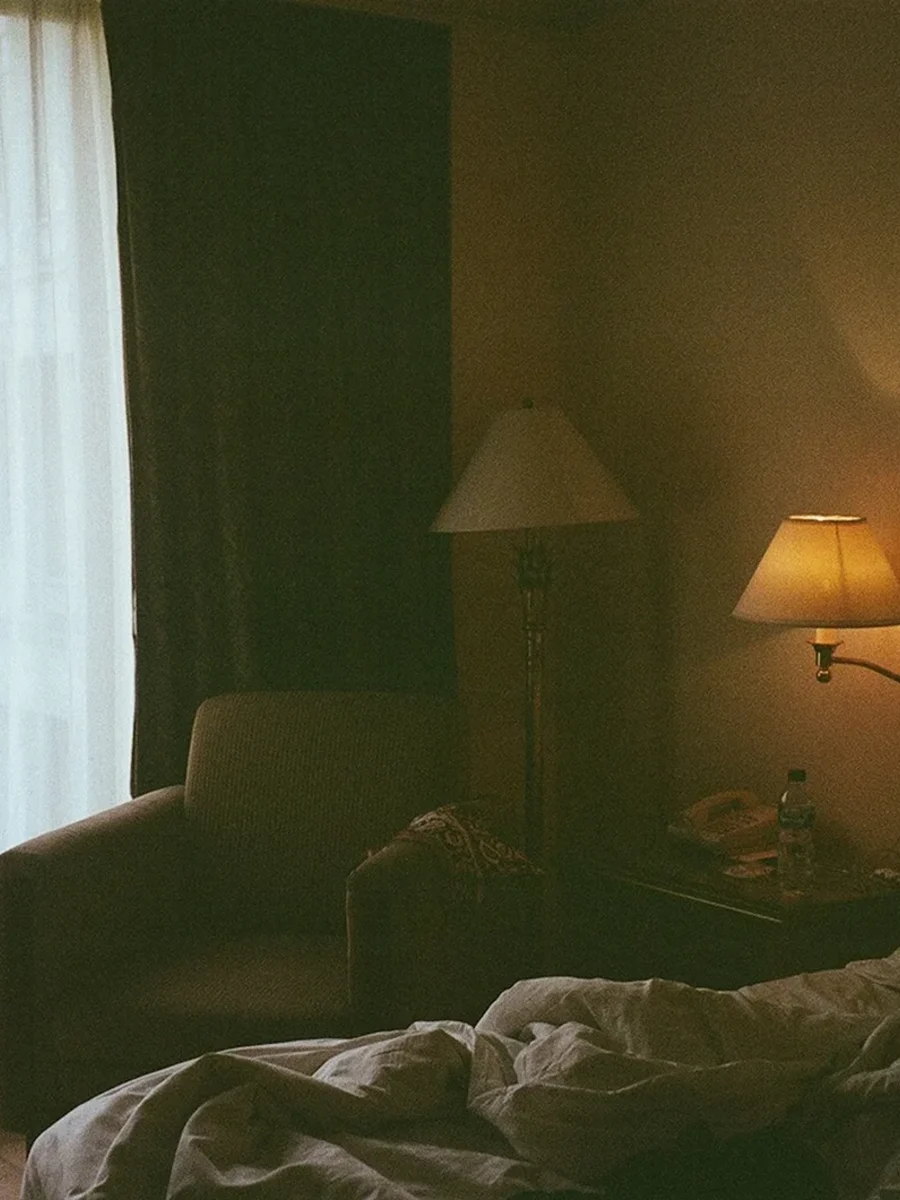
A blackout curtain solves night privacy completely, and for a bedroom it also solves the morning. For sleep, the NHS is clear that darkness helps: its sleep tips put a quiet, dark, cool bedroom among the changes worth trying, with the curtains fully closed, and its guidance on insomnia also names curtains and blinds as ways to keep a bedroom dark. A sheer cannot do either job.
A sheer is a daytime curtain. Plan the night-time layer at the same time, not after the first evening.
Breeze, humidity and ventilation in a Goan room
Many Goan houses live with their windows open for much of the year, and this is where the two curtains differ most in daily use. A sheer's open weave lets air through while it is drawn, so you can keep the glare out and the breeze in at the same time. A blackout curtain is a dense, coated barrier. The US Building America guidance notes of interior curtains and Roman shades that they will mostly block airflow for breeze when providing shade, and a blackout lining is the extreme of that.
Humidity adds a second consideration. Through the four monsoon months, morning humidity in Goa runs at 87–91% on the IMD's figures, far above the indoor ceiling of 60% that the US EPA recommends, and the agency says wet materials should be dried within a day or two if mould is not to take hold. A polyester sheer at an open window gets damp in a squall and dries in hours. A blackout curtain closed against an open window in the rain soaks up spray at the leading edge and stays damp, and a coated lining dries slowly.
The practical habits follow. In the monsoon, draw blackout curtains well back on dry days so the fabric and the glass both air, and close the window rather than the blackout when rain is driving in. Keep the sheer for daytime use at open windows, with a weighted hem so it does not billow into a fan or a sliding door. Our sheer and voile fabric guide covers the fabrics that cope best.
Heat: what each does on a sunny window
Neither curtain is a cooling system, but they are not equal. A sheer does little against heat, because most of the sun's energy passes through an open weave; the room looks less glaring and stays almost as warm. A lined or blackout curtain closed against the sun does more. In studies cited by the US Department of Energy, drapes in a medium colour with a white plastic back reduced heat gain by 33%, and the department advises closing draperies on windows that take direct summer sun.
The same guidance cites a DOE study finding that three in four household window coverings are left in one position all day, which matters in a Goan context. A blackout curtain only helps with heat while it is closed, and closing it costs you the daylight. That is why a west-facing living room usually wants the sheer drawn through the afternoon and the heavier curtain closed only for the worst hours, or a motor on a timer to do it.
If heat is the main complaint, look at the back of the blackout lining, which should be white or pale on the window side, and look outside the glass. Shade fixed outside a window stops the sun before it enters; our article on heat blocking curtains explains why that beats anything hung indoors.
Room by room: sheer, blackout or both
Most Goan homes end up with a mix, and the table gives our usual starting point for each room. A north-facing bedroom on a quiet compound may manage with a lined curtain and no sheer; an east-facing one over a road needs both layers. Which way a window faces, and what it faces, can shift any row.
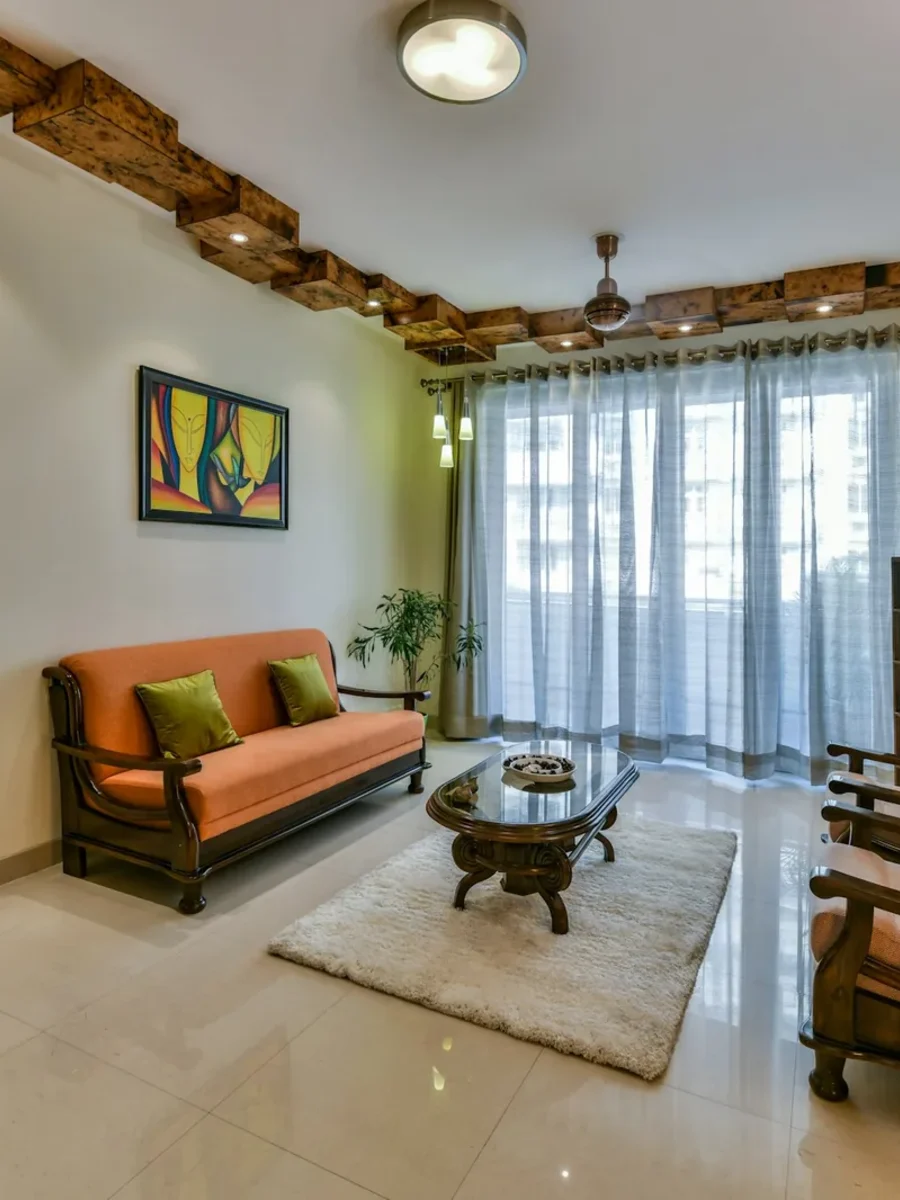
The cases that most often go wrong are living rooms given only sheers, which then feel exposed every evening, and bedrooms given only blackout, which are dark or bare with nothing in between. In both, the missing layer is the answer, and our living room curtains page shows the pairings we make.
| Room | Choice | Why |
|---|---|---|
| Living room, private garden | Sheer, with a lined curtain if the evening sun is strong | Light, breeze and the view matter most |
| Living room facing a road or neighbours | Sheer plus a lined or dim-out curtain | Daytime softness, evening privacy |
| Main bedroom, east-facing | Sheer plus blackout on a double track | Soft days, dark dawns |
| Guest room or homestay bedroom | Blackout, with a sheer if overlooked by day | Guests sleep late; simple to use |
| Children's room | Blackout or dim-out, optional sheer | Naps and early bedtimes |
| Home office | Sheer | Cuts screen glare without darkening the room |
| Media room | Blackout or dim-out | Screens need low light |
| Dining room | Sheer plus a lined curtain | Daytime light, evening privacy |
Layering sheers and blackout curtains on one track
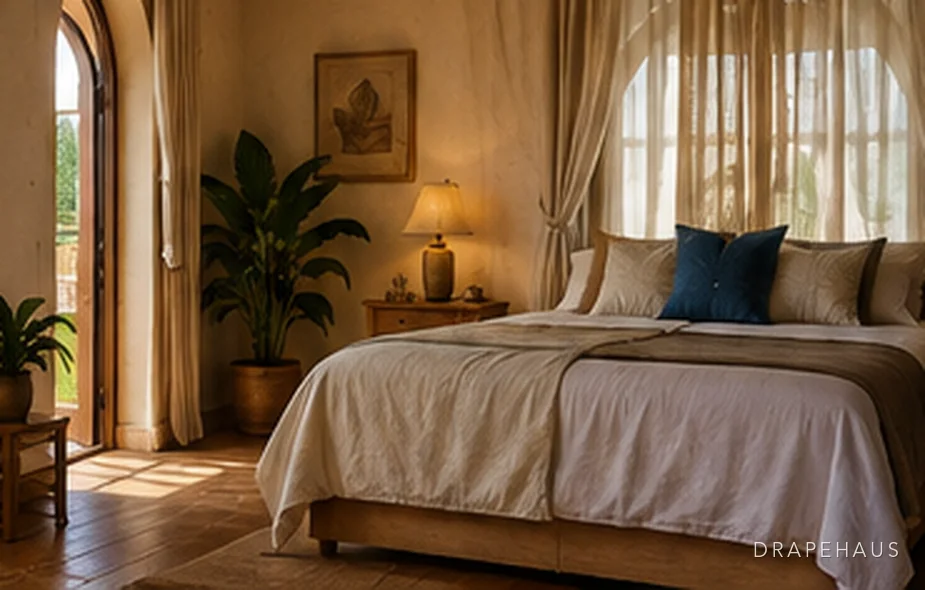
When a room needs both, hang them on a double track or a double pole. The sheer goes on the inner line, nearest the glass, and stays drawn through the day. The blackout goes on the outer line, facing the room, and closes over the sheer at dusk or for sleep. The room then has three settings: open, sheer only, and closed. Our layered curtains page shows the arrangements we make.
Plan the track for the heavier layer. Our curtain rod length planner gives very different answers for the two curtains on the same window. On a 180 cm window, a sheer pair on a wave heading needs a 235 cm track, about 26 cm past the glass each side; a lined pair on a wave heading needs 290 cm, about 54 cm each side. On a double track both layers run the longer length, or the blackout's stack ends up over the glass. Run on the 290 cm line, the sheer needs about 6.4 m of finished width rather than the 5.1 m the planner gives for it alone, so it is worth costing the sheer on the full track.
There are other ways to combine the two. A sheer curtain in front of a blackout roller blind fitted inside the reveal gives the softness of fabric by day and real darkness at night, with less wall needed for stacking. A blackout curtain with a light-filtering roller behind it reverses the idea. Our blackout versus room-darkening guide helps decide how dark the closing layer needs to be. When you are ready, the sheer curtains and blackout curtains pages are the place to start a quote.