 Drape Haus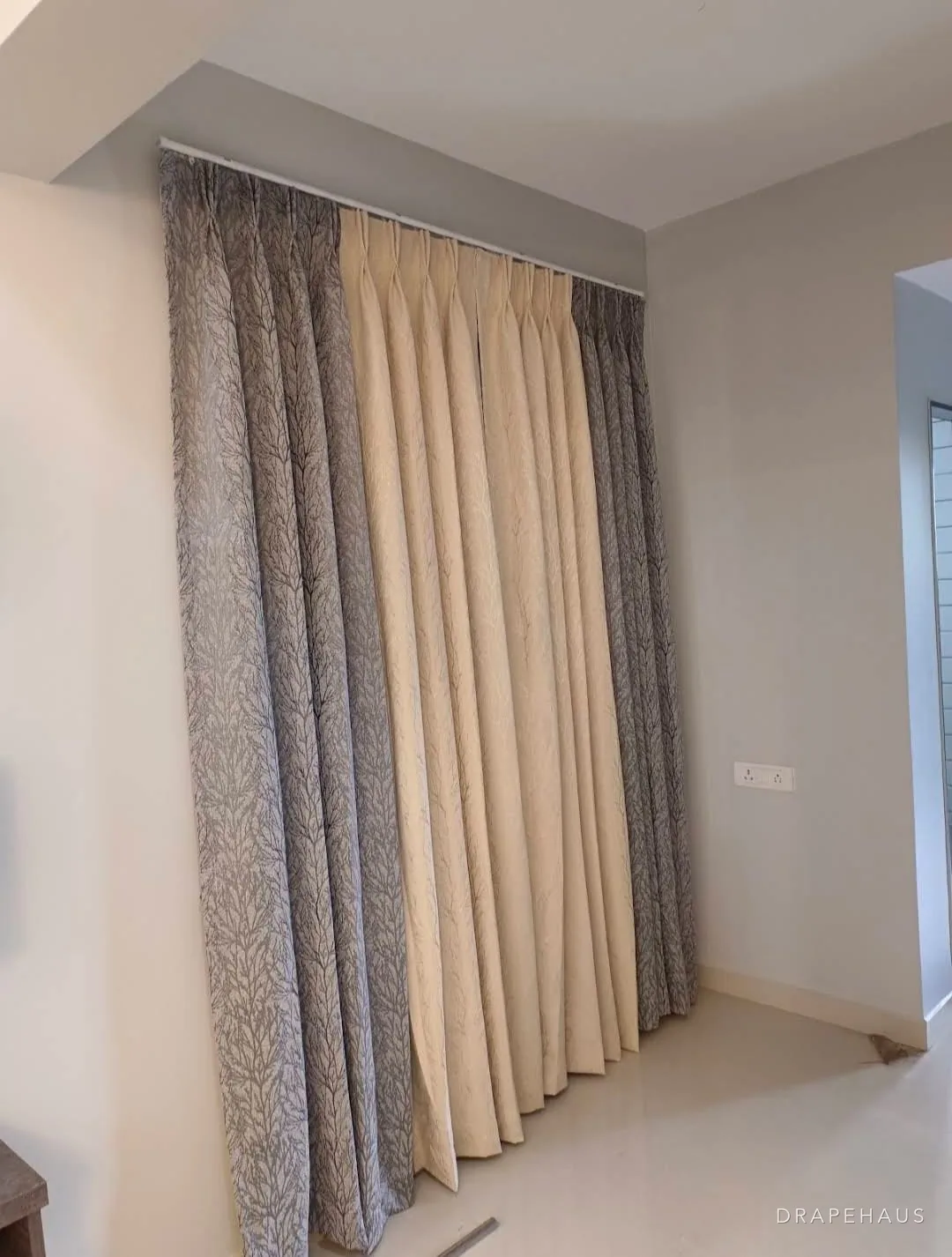
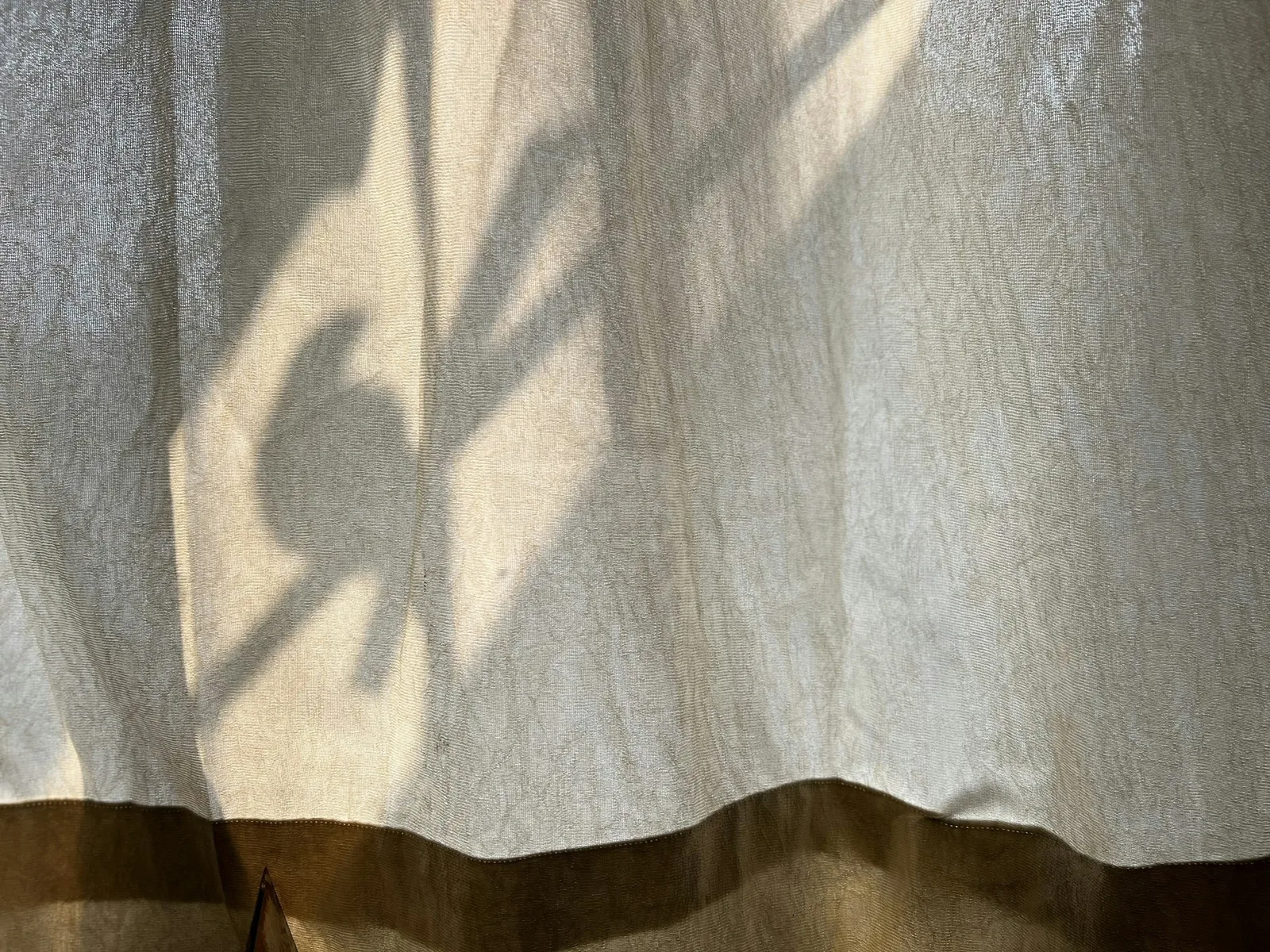
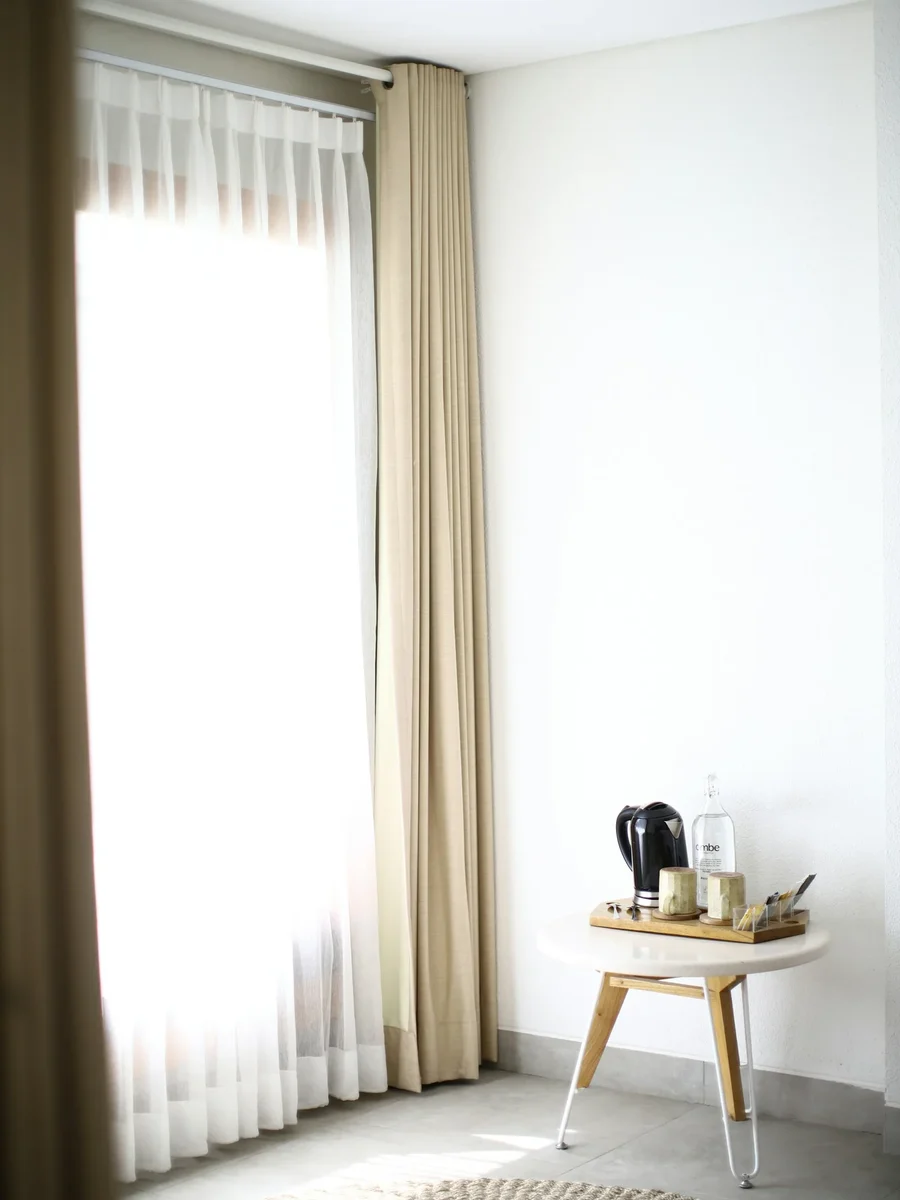
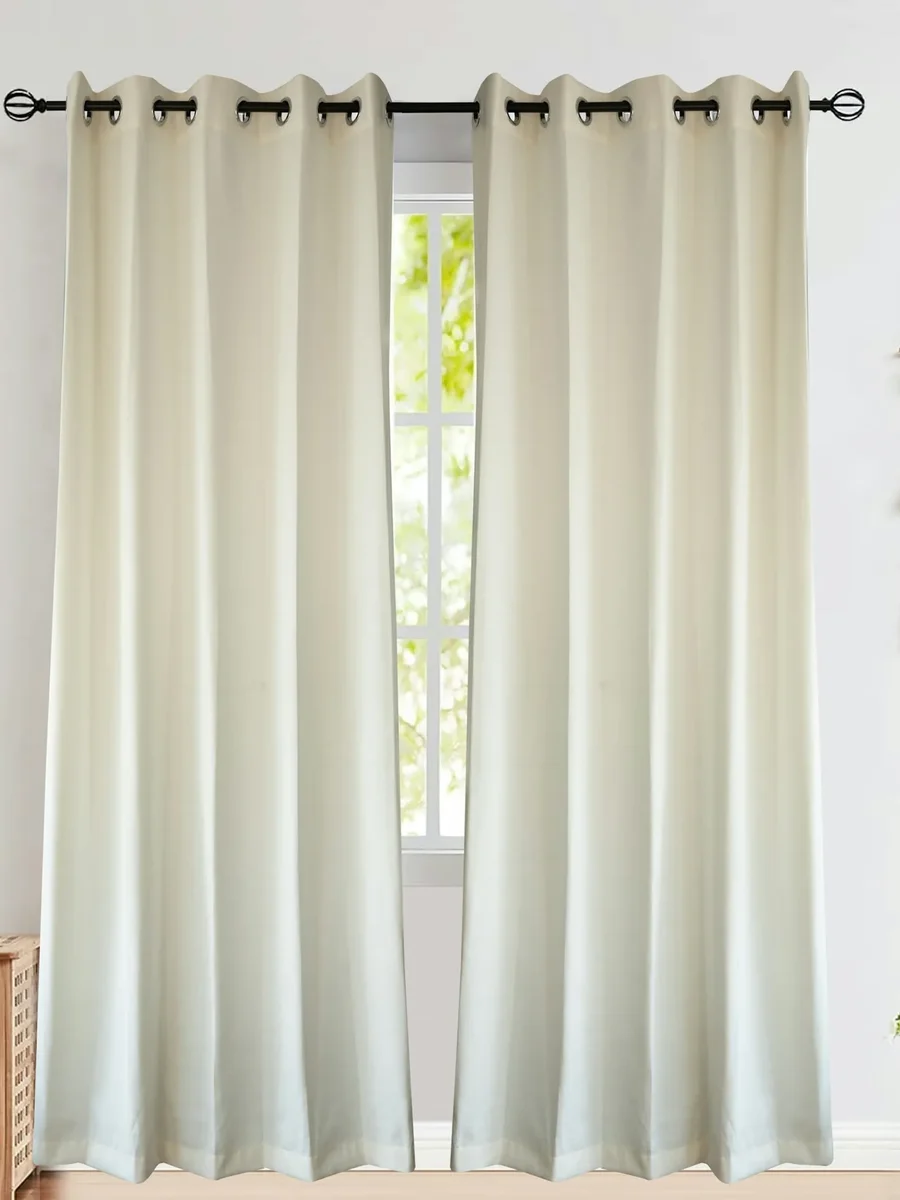
A lined curtain has a second layer of fabric sewn behind the face fabric you see; an unlined curtain is a single layer. The lining gives the curtain body so it falls in fuller folds, takes the sun so the face fabric fades and weakens more slowly, stops lamp light throwing shapes onto the curtain at night, and makes the room dimmer when the curtain is closed. An unlined curtain is lighter, glows when the sun is on it, moves in a breeze and dries quickly.
In most climates the advice is simply to line. A 1950 curtain-making manual put it plainly: unless draperies depend on sheerness for effect, they should be lined. In Goa the answer needs one more thought, because a lining is also an extra layer to hold moisture in a house where monsoon mornings sit close to saturation, and a curtain left closed against wet glass in a shut room is where mildew starts.
Below we look at what a lining adds, how it protects fabric from strong sun, what it changes about privacy and stacking, where the mildew risk lies, why detachable linings are often the sensible middle path, and which rooms suit each. The lined curtains simulator shows the difference in light and privacy on a drawn window.
What a lining is, and the kinds you can choose
Most linings are a plain, tightly woven cotton or polycotton, usually cream or white, sewn to the curtain at the sides and heading and turned in at the leading edge. From the room you see the face fabric; from the street you see the lining. A lined curtain cuts the light coming through it, but it is not blackout: the room goes dim rather than dark, and light still finds its way round the edges.
Beyond the standard lining there are several others, each a different decision. A dim-out lining cuts light much further. A blackout lining is opaque. A lining with a white or reflective back facing the glass is chosen for heat. An interlining, a soft blanket-like layer sandwiched between face and lining, adds weight and insulation; the same 1950 manual noted that interlinings were rarely used because they make a drapery difficult to clean and very heavy, and in a humid climate we leave them out altogether.
Finally, a lining can be sewn in or detachable. A sewn-in lining is joined to the curtain for good; a detachable one hangs from the same hooks or track as the curtain but can be taken off on its own. The table below sets out the options and what each is for. Our blackout linings guide covers the darkening ones in more depth, and our comparison of blackout and room-darkening curtains explains how dark each really gets.
| Lining | What it adds | Best for | In a humid house |
|---|---|---|---|
| None (unlined) | Light, movement, glow | Sheers, airy rooms, shaded windows | Dries fastest |
| Standard cotton or polycotton | Body, sun protection, night privacy | Most living and dining rooms | Breathes reasonably |
| Dim-out | Much less light through the fabric | Bedrooms that like some morning light, TV rooms | Woven types breathe better than coated ones |
| Blackout | Opaque fabric for darkness | Bedrooms, shift workers, rentals | Coated; needs an air gap and airing |
| White or reflective-backed | Some heat reflected back out | Sunny west and south windows | As for the lining type |
| Interlining | Weight and insulation | Not advised here | Holds moisture between two layers |
How a lining protects the face fabric from strong sun
Sun damage to fabric is a matter of dose. The Canadian Conservation Institute explains that the rate of light damage is proportional to intensity, and that the total exposure is light intensity multiplied by time. Direct noon sunlight, it notes, is almost 100,000 lux. It also lists what ultraviolet does over time to natural fibres: weakening and eventual fragmentation of wool, cotton and silk. An unlined curtain on a sunny window takes all of that on its face, every day it hangs there.
A lining takes the sun first. The face fabric sits in its shade, so colours fade more slowly and natural fibres keep their strength longer. The 1950 manual recommended lining draperies at a sunny exposure if the material was not sunfast, adding that the lining may be renewed, thus adding years of service to the fabric. That is still the logic: a lining is a working layer, and replacing a worn lining costs far less than remaking a curtain whose face has faded in stripes along the folds.
Heat comes with the same choice. The US Department of Energy cites studies where a medium-coloured drape with a white plastic backing lowered heat gain by 33%. Choose a lining that is white or pale on the side facing the glass and it does three jobs at once: it protects the face fabric, it reflects some of the sun back out, and it gives the house a tidy, even look from outside. On a west-facing window in Goa, where the afternoon sun comes in low and straight, that matters more than the colour of the face fabric. Our guide to fading and sun damage covers fibres and dyes.
Planning something like this?
We visit homes across North and South Goa, measure on site, and bring samples to see in your own light.
Privacy at night: what each shows to the street
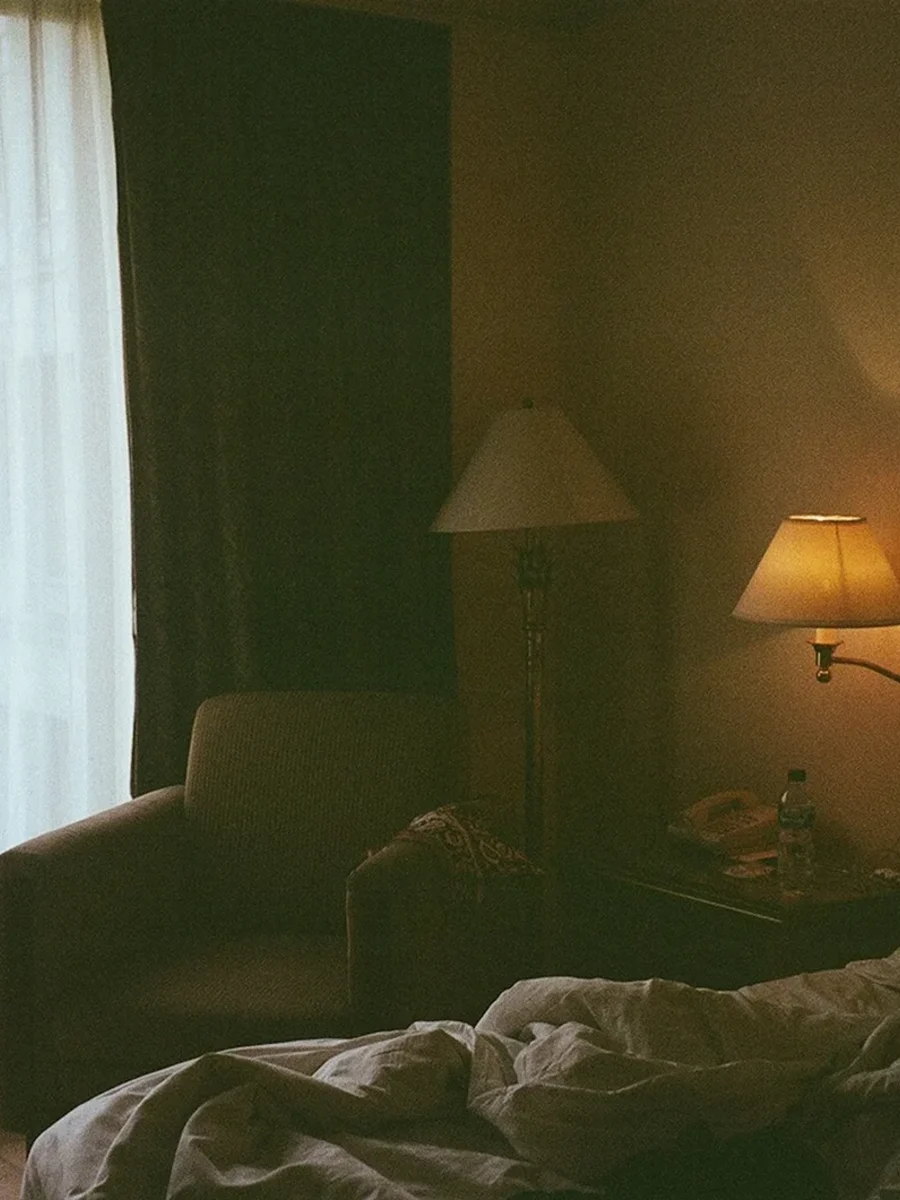
After dark, an unlined curtain becomes a lit screen. With lamps on inside, a light unlined fabric shows the shapes of people and furniture, and a thin pale cotton or linen can show more than that. A darker unlined fabric hides more, but it still glows and still throws silhouettes when someone stands near a lamp. In a ground-floor room beside a lane or a flat facing the next block, that is usually the deciding factor.
A lining fixes it. Two layers of fabric stop lamp light from casting shapes onto the curtain, so a lined curtain gives full privacy in the evening without needing to be blackout. If evening privacy is the main reason for a curtain, a standard lining is normally enough. Blackout is only needed if you also want the morning dark.
There is a daytime side too. An unlined patterned curtain reads backwards from the street, and its colour faces outward, where it fades first. A lined curtain shows a calm, even lining to the outside, which many apartment buildings prefer. Overlooked village houses beside a lane are where this matters most.
Drape, body, and the wall a lined curtain needs
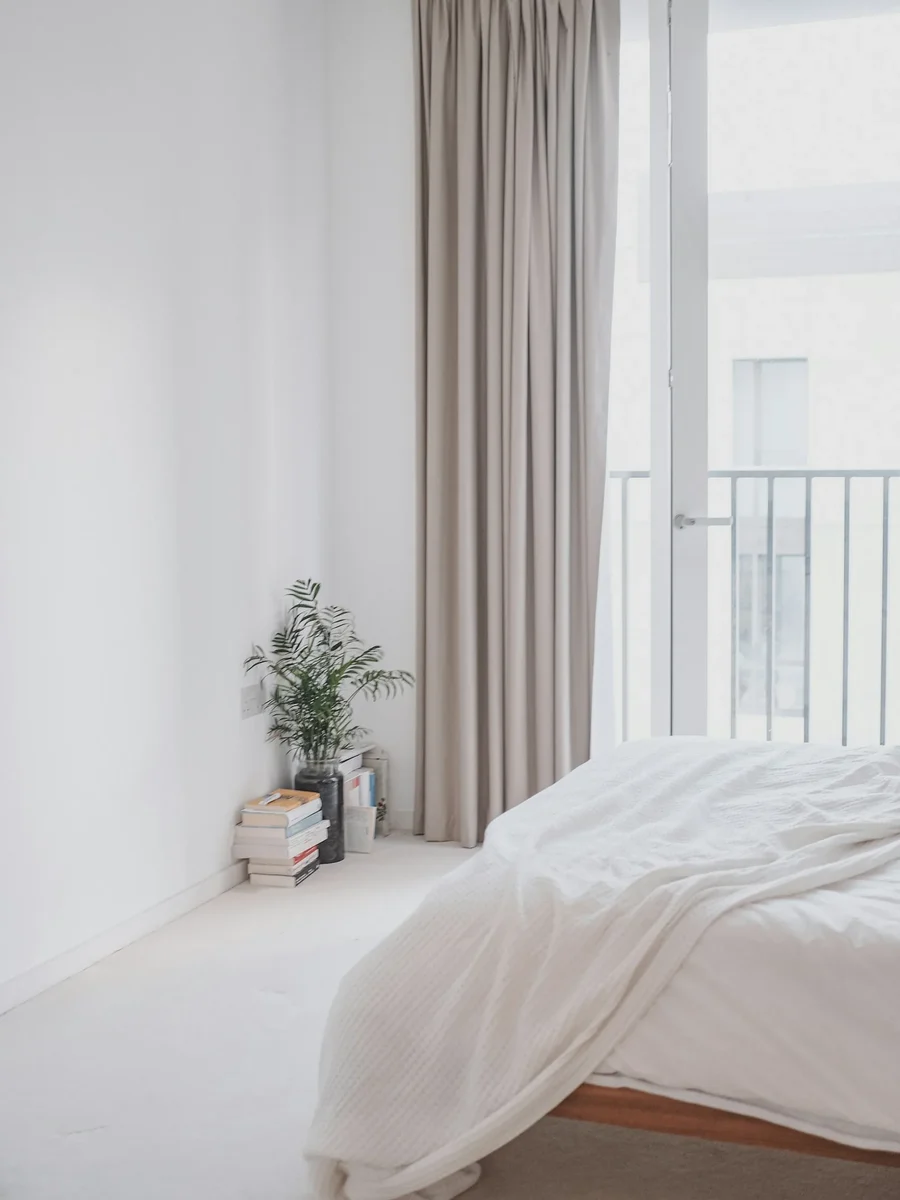
Linings change how a curtain hangs. The extra layer adds weight and body, so the folds fall deeper and more evenly and the hem hangs straighter; the 1950 manual said linings help draperies fall in richer folds. A fine linen or a thin printed cotton that looks limp on its own can look generous once lined. An unlined curtain is softer and more casual, moves with every draught and creases more visibly, which suits a relaxed room and looks underdressed in a formal one.
Body takes space. A lined curtain stacks wider when it is drawn back, so the track has to run further past the window to keep the glass clear. Our curtain rod length planner shows how much: on a 150 cm window with a pinch-pleat pair, an unlined curtain wants a 235 cm track, about 42 cm past the frame each side, while a lined one wants 275 cm, about 61 cm each side. That 40 cm of extra wall is the hidden cost of a lining in a small room.
The face fabric itself often costs no more. With a 240 cm drop in a 137 cm plain fabric, our fabric calculator rounds both versions to six widths, 16.8 metres, because the extra gathered width on the longer track still fits within the same number of widths. The lining is extra fabric and extra making, quoted separately, but it does not always push the face fabric up.
Breathability and mildew in humid, closed rooms
This is the Goan side of the question. The IMD records morning relative humidity of 87 to 91% across June, July, August and September. For homes, the US Environmental Protection Agency recommends indoor humidity under 60 percent, ideally 30 to 50, and says water-damaged items should be dried out inside one to two days. A single layer of fabric in moving air dries quickly. Two layers sewn together, hanging in still air against a cool window, dry more slowly, and the lining is the layer closest to the damp glass.
So a lining is not the risk in itself; stillness is. A lined curtain in a lived-in room with fans running and windows opened on dry days is rarely a problem. The same curtain drawn closed across a shut window for three months in an empty house, with condensation running down the glass behind it, is where spots appear first, on the lining and along the leading edge. Coated blackout linings, which do not breathe like cloth, need the most care, and interlining, which adds an absorbent layer between two others, is the construction we avoid entirely.
The habits that prevent it are simple. Leave a small gap between the curtain and the glass, and between the hem and the floor. Draw lined curtains fully back on dry days through the monsoon so both layers and the window can air. Wipe condensation from frames and sills. And if the house closes for the season, take the curtains down or leave them open; our guide to the closed-house season explains what still air does to fabric.
A lining in a ventilated room is protection. A lining against wet glass in a shut room is a place for mildew.
Detachable linings: the flexible middle path
A detachable lining is made as a separate curtain-shaped layer with its own heading tape, hooked onto the same hooks or gliders as the face curtain. It hangs behind the curtain exactly like a sewn-in lining, but either layer can come off without the other. In a humid climate that flexibility answers most of the objections to lining.
It helps in several ways. The face fabric and the lining can be cleaned separately, each in the way that suits it; a coated blackout lining dislikes the hot washing a cotton face fabric can take. The lining can come off for the monsoon in a house that is closed, leaving a single, quick-drying layer, or be stored dry. A worn or crazed lining can be replaced on its own. And a room can change character with the season: a blackout lining for the bright months in a bedroom, a standard one or none for the wet ones.
There are trade-offs. A detachable lining can drift slightly apart from the face fabric at the leading edge, so the two do not always hang as one, and the edges are a little less crisp than a lining sewn to the curtain. It suits rentals, guest rooms, bedrooms with blackout and any house that is closed part of the year; for a formal living room seen mostly from inside, a sewn-in lining looks more finished.
Which rooms suit lined curtains, and which are better unlined
Most rooms in a Goan house are better lined, for sun, privacy and drape. The exceptions are rooms where the curtain's job is mainly light and air: sheers, curtains on shaded verandah doors, and light curtains in rooms that are rarely overlooked. The table gives our usual answer room by room; the window's orientation and what it looks onto can move any of them.
If you are unsure, the deciding questions are short. Does the window take direct sun for more than an hour or two a day? Is the room overlooked after dark? Is the house closed for part of the year? A yes to the first two points towards a lining; a yes to the third points towards making that lining detachable. When you know which way each room goes, our curtains team can show lined and unlined samples against your own light before anything is made.
| Room | Usual choice | Why |
|---|---|---|
| Sunny living room | Lined, white-backed | Sun protection, drape, evening privacy |
| Living room on a shaded garden | Unlined or lightly lined, with a sheer | Light and air matter most |
| Bedroom | Lined, often dim-out or blackout | Privacy and morning darkness |
| Guest room or homestay | Detachable blackout lining | Darkness, washing and the monsoon |
| Dining room facing a lane | Lined | Evening privacy, prints read correctly from outside |
| Home office | Unlined light fabric or a sheer | Glare control without losing daylight |
| Verandah or sea-facing doors kept open | Unlined, quick-drying | Breeze, spray and fast drying |
| House closed through the monsoon | Detachable linings, taken off and stored | No damp layer left against the glass |