 Drape Haus
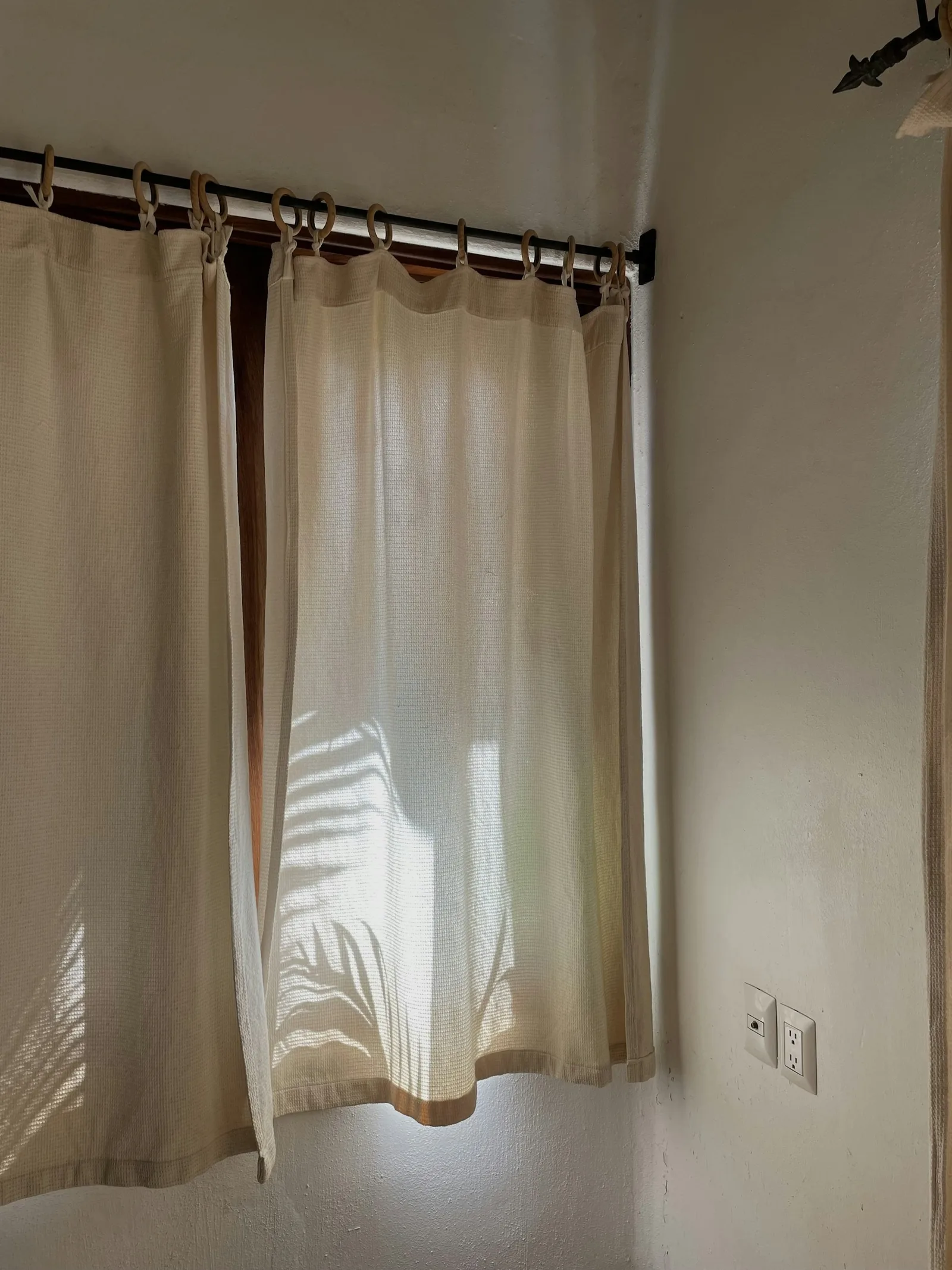
The main curtain heading types are pinch pleat and its French variant, the formal goblet, cartridge and box pleats, the pencil pleat, the eyelet, the wave or ripple fold, and the simple rod pocket and tab top. Each gathers the fabric in its own way, needs a different amount of it, and hangs from a different kind of hardware. Eyelets, rod pockets and tab tops need a pole. Wave headings need their own track. Pleated headings can go on either.
Choosing one is easier than the list suggests if you ask three questions. How formal is the room? How often will the curtain be drawn, and by whom? And how much air moves at the window? In a Goan house that last question matters more than people expect: a heading that behaves perfectly in a sealed, air-conditioned room can billow, slide or snag at an open window on a breezy afternoon.
Below, each heading is described with the fullness our fabric calculator uses for it, how it stacks, where it works and what to watch near the sea. The curtain simulator shows several of them on a drawn window, and our pleated curtains and eyelet curtains pages show finished work.
What a heading decides, and how much fabric each takes
A heading does three jobs at once. It gathers a wide piece of fabric into the width of the track, and the way it gathers sets the shape of every fold below. It decides the hardware, because rings, hooks, carriers and pockets each need something different to hang from. And it sets the stack, the bundle of fabric beside the window when the curtain is open, which in turn sets how long the track has to be.
The amount of fabric follows from the heading. Our calculator uses 2.5 times the track width for a pencil pleat, 2.25 for a pinch pleat, 2.2 for eyelet and wave, and 1.75 for a rod pocket, with a different allowance at the top for each. To see what that means in practice, the table runs one example through the calculator: a 250 cm track, a 240 cm drop and a plain 137 cm fabric, made as a pair. Four of the five headings round to the same six widths, so the difference in metres is small; the rod pocket, at much lower fullness, needs only four.
That rounding is worth understanding before you choose. On many windows, switching between pinch pleat, eyelet and wave changes the look far more than it changes the quantity of cloth. The bigger practical difference is often the hardware and the wall space the stack needs, which we come to under each heading.
| Heading | Fullness | Heading allowance | Widths | Cut length | Fabric |
|---|---|---|---|---|---|
| Pencil pleat | 2.5× | 12 cm | 6 | 272 cm | 16.4 m |
| Pinch pleat | 2.25× | 20 cm | 6 | 280 cm | 16.8 m |
| Eyelet | 2.2× | 15 cm | 6 | 275 cm | 16.5 m |
| Wave / ripple fold | 2.2× | 12 cm | 6 | 272 cm | 16.4 m |
| Rod pocket | 1.75× | 18 cm | 4 | 278 cm | 11.2 m |
Pinch and French pleats: tailored folds for traditional and heritage rooms
A pinch pleat gathers the fabric into small groups of folds, usually two or three, stitched together at the base and spaced evenly across the top. A 1950 curtain-making manual describes the pinch pleat as the most popular pleat, widely used on traverse curtains, and gives the method: make a tuck about two inches wide, divide it into three even pleats and stitch them securely across the back. A French pleat, the same manual says, is like a pinch pleat except that the pleats are not pressed in as firmly and flatten out at the top, which gives a softer, fanned look.
Because the folds are built into the curtain, a pinch pleat holds its shape without dressing and hangs in regular, tailored columns from top to hem. It suits tall windows, formal sitting rooms and the high-ceilinged rooms of older Goan houses, where a soft gathered heading can look underdressed beside carved timber and lime plaster. It hangs from hooks on a track, or from rings on a pole if you want the pole on show.
Two cautions apply here. The stiffening sewn inside the heading, traditionally buckram, can soften in a long humid monsoon and let the pleats droop, so the backing has to be one that tolerates humidity and the pleats spaced for the fabric weight. And a lined pinch pleat makes the widest stack of the three headings in our curtain rod length planner: on a 150 cm window, a lined pair wants a 275 cm track, about 61 cm past the frame each side, against 240 cm for the same curtain on a wave heading.
Planning something like this?
We visit homes across North and South Goa, measure on site, and bring samples to see in your own light.
Goblet, cartridge and box pleats: formal headings for statement windows
The formal pleats are about the view from below. A goblet pleat is shaped into a rounded cup at the top and stuffed or stiffened so it holds that shape. The 1950 manual describes two older relatives: the cartridge pleat, a round pleat stuffed with cotton for fullness, and the pipe-organ pleat, similar but larger and longer, recommended especially where the window is high and made around buckram moulds. All three read best on a tall window seen from across a large room, which is why they belong in double-height living rooms, formal dining rooms and heritage interiors.
A box pleat works the other way. The fabric is folded so that the face of the heading reads as flat panels with crisp edges, and the fullness sits behind. The manual allows three times the finished width for box pleats, and the result is architectural and calm. It suits plain fabrics in modern rooms, and patterned fabrics where a pinch pleat would chop the motif into pieces.
These headings are not in our calculator, because their fullness depends on the pleat size and spacing chosen for each window, and a workroom sets it from a made-up sample. They are also headings for curtains that are not pulled about all day. A goblet heading crushed back against a wall twenty times a day loses its shape; on a statement window drawn morning and evening, or one that stays open as a dress curtain, it lasts.
Eyelet: casual and quick to use, but watch the rings near the sea
An eyelet curtain has metal or resin rings set into a stiffened heading and threaded straight onto a pole. Each pair of rings throws one fold towards the room and one back towards the glass, so the curtain falls in deep, even tubes. It slides along the pole with one hand, with no hooks to come loose, which makes it the easy choice for flats, bedrooms, guest rooms and rentals where the curtain has to work for anyone.
Its limits are the hardware and the light. An eyelet heading only works on a pole, so it cannot be ceiling-fixed, recessed or motorised in the usual way. Light escapes over the top of the pole and through the gap between rings, so eyelets are a poor pick for a bedroom that must be properly dark. And the folds are deep, so the stack is close to that of a pinch pleat: on a 150 cm window our planner gives about 59 cm each side for a lined eyelet pair, against about 61 cm for pinch pleat and 45 cm for wave.
Near the sea, the rings are the detail to get right. Plated steel eyelets rust inside the fold, where nobody looks, and leave brown rings on pale fabric. Stainless steel is not automatically safe either: the Australian Stainless Steel Development Association notes that tea staining, a brown surface discolouration, occurs most commonly within about five kilometres of the surf, and that wind and exposure can carry the conditions twenty kilometres or more inland. Coated, anodised or plastic rings matched to an aluminium or suitable stainless pole avoid the problem.
On an eyelet curtain near the coast, ask what the rings are made of before you ask anything else.
Wave or ripple fold: even modern folds for tracks and motors
A wave heading is a flat panel with a tape of studs or hooks that clips onto carriers linked at a fixed spacing inside a dedicated track. The cloth falls forward and back of the track in turn and makes one continuous S-curve, the same on the room side and the street side. Because the carriers are linked, the folds stay even as the curtain moves, and the whole curtain travels in step when a motor pulls it.
In our planner it stacks about 15% tighter than the other headings, which matters on wide sliding doors and in rooms with little wall either side. It suits modern rooms, long runs of glass, sheers and ceiling tracks, and it is the usual heading for motorised curtains. It cannot hang from a pole, and it needs depth in front of the glass for the folds that swing backwards.
We cover the carriers, the fullness and the fabrics that suit it in our separate guide, what are wave curtains, and our ripple fold curtains page has photographs of finished work.
Pencil pleat, rod pocket and tab top: simple headings for light or occasional curtains
A pencil pleat is gathered on a tape with cords that are pulled up to form close, narrow folds like a row of pencils. It is the fullest heading in our calculator at 2.5 times, and the most forgiving: it works on almost any track or pole, suits sheers and light cottons, and hides small differences in width. It looks informal rather than tailored, and the gathers need dressing by hand after the curtain is first hung.
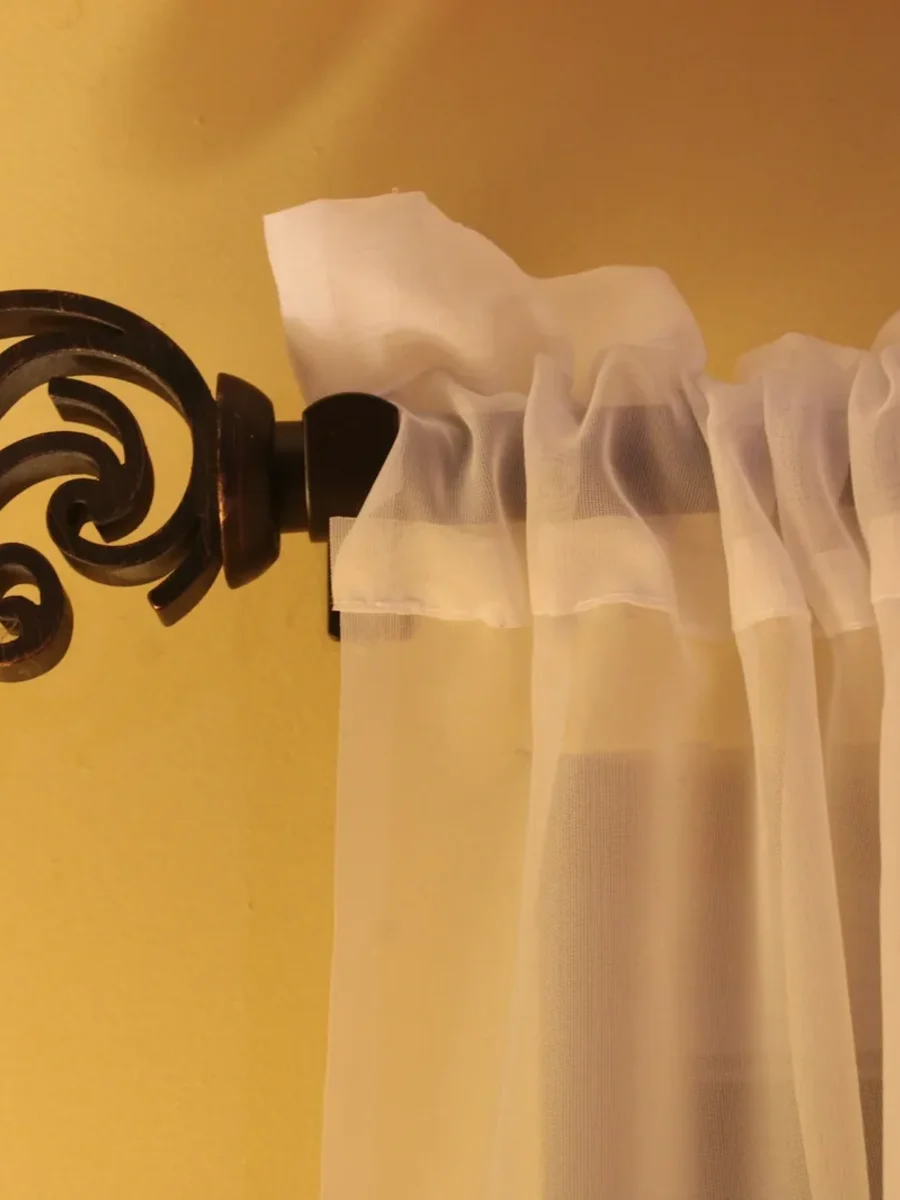
A rod pocket is a channel sewn across the top of the curtain, with the pole slid straight through it. The fabric gathers directly on the pole at a lower fullness, 1.75 times in our calculator, which is noted there as best for curtains that stay closed. Drawing one along the pole is slow, because the fabric drags, so it suits a sheer fixed across a glazed door, a café curtain on the lower half of a window, or a dress curtain that is tied back and rarely moved.
A tab top hangs from loops of fabric over the pole. Made flat or at low fullness, it gives a relaxed, cottage look and suits light fabrics in occasional use: a curtain across an open wardrobe, a pantry opening or a niche. Neither the rod pocket nor the tab top slides as easily as rings, and neither closes tightly at the top, so they are rarely the right answer for a bedroom that needs to be dark or a window used every day.
- Pencil pleat: soft gathers, the most fabric, on almost any track or pole
- Rod pocket: gathered on the pole, low fullness, for curtains that mostly stay put
- Tab top: fabric loops, flat and relaxed, for light curtains in occasional use
Choosing a heading by room, fabric weight and sea breeze
Formality is the first filter. Pinch, French and goblet pleats belong in formal and heritage rooms; wave suits modern rooms and long runs of glass; eyelet and pencil pleat are relaxed; rod pocket and tab top are for light curtains that do not move much. Then think about who draws the curtain. In a rental or a child's room, choose the heading that works with one obvious movement, which usually means eyelet or a wave on a smooth track.
Fabric weight is the second. Heavy lined fabrics hang well in pinch pleats and on wave tracks, where the load is spread across hooks or carriers. Very fine voiles look thin in a tightly spaced pleat and sit better in a pencil pleat or a wave. Eyelets want a fabric with enough body to hold the tube shape between rings.
The sea breeze is the Goan filter. On an open window facing the sea, a light curtain on a pole slides and bunches as the wind pushes it, and a fine eyelet sheer can creep along the pole on a gusty afternoon. A wave heading holds its spacing because the carriers are linked. Tab tops swing on their loops. Whatever the heading, a weighted hem and a tieback or holdback for the windiest days keep the fabric off furniture and out of a sliding door's track.
| Heading | Hangs from | Best rooms | In a sea breeze |
|---|---|---|---|
| Pinch or French pleat | Track or pole | Formal living rooms, heritage rooms, bedrooms | Steady when lined; pleats hold their spacing |
| Goblet, cartridge, box | Track or pole | Double-height and formal rooms, statement windows | Best on windows that stay mostly open or closed |
| Eyelet | Pole only | Flats, bedrooms, guest rooms, rentals | Slides and bunches on an open window; watch the rings |
| Wave / ripple fold | Wave track only | Modern rooms, sliding doors, motorised windows | Holds its spacing; needs depth for the folds |
| Pencil pleat | Track or pole | Sheers, light cottons, informal rooms | Light; benefits from a weighted hem |
| Rod pocket | Pole only | Glazed doors, café curtains, fixed dress curtains | Stays put; hard to draw |
| Tab top | Pole only | Occasional curtains, wardrobes, niches | Swings on its loops; keep fabric light |