 Drape Haus
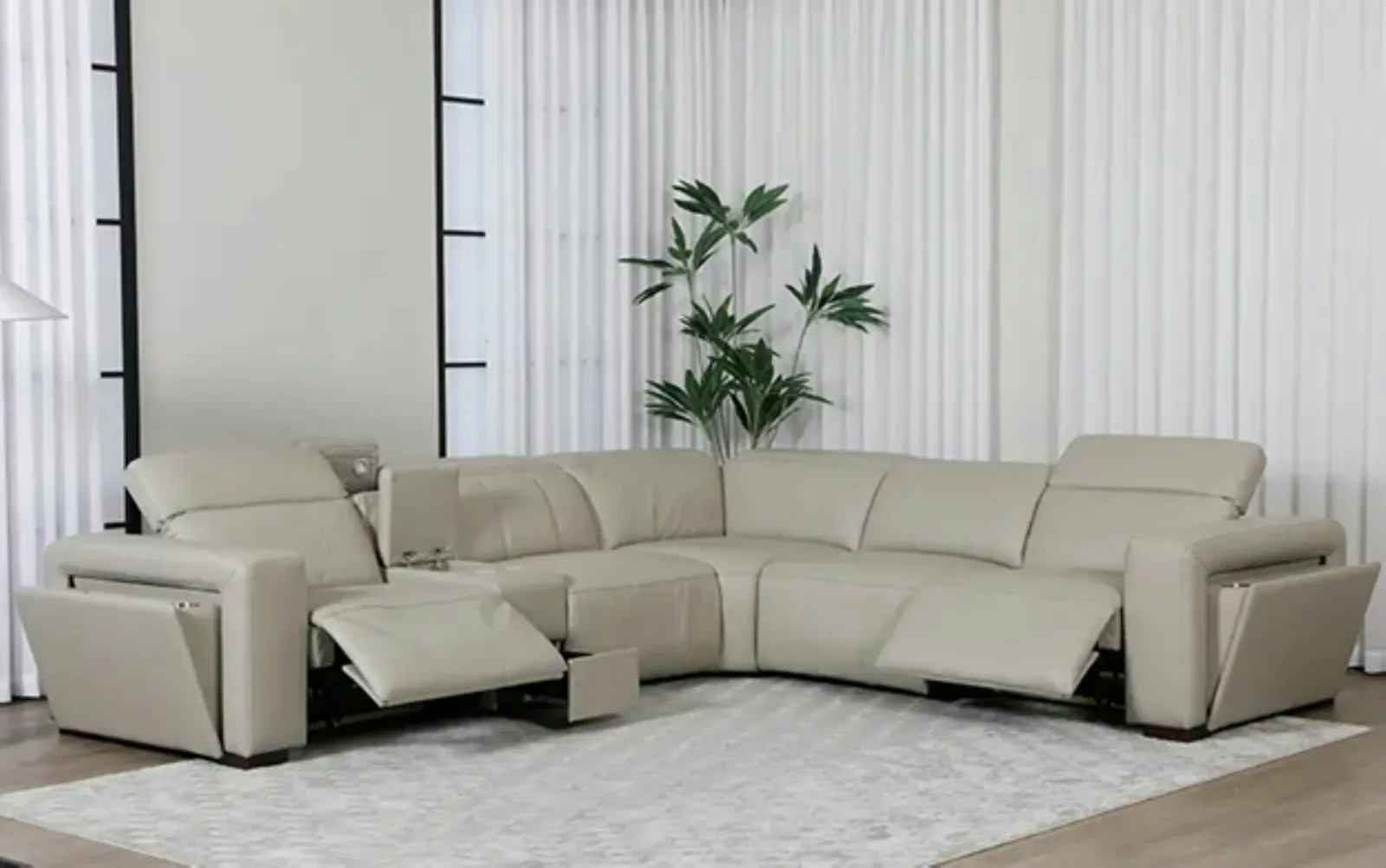
The best recliner sofa is the one whose mechanism suits the people using it, whose reclined size suits the room, and whose upholstery suits the climate. A recliner that fits all three is a pleasure for years. One that misses any of them becomes the sofa nobody reclines, or the one that has to be pulled out from the wall every evening.
Most buying mistakes happen in the showroom. A recliner is tried for a minute in an air-conditioned shop by someone who has not measured their room, has not thought about what happens when the power goes, and has not asked whether the footrest suits their legs. This guide covers each of those, in the order they tend to matter.
It starts with manual and power mechanisms and how each feels, then the space a recliner really takes, how to test recline comfort for your own height, the upholstery that copes with Goan heat and sweat, power cuts, safety around small children, and the faults recliners develop and how they are repaired.
Manual or power: how each one feels to use
A manual recliner is worked by a lever on the side of the arm, a pull tab in the seat, or a firm push back against the backrest. The movement is quick and positive: the footrest springs up, and you lean back to the position you want. Manual mechanisms tend to have a small number of fixed positions, and closing one means pushing the footrest down with your calves, which takes some leg strength.
A power recliner moves on a motor at the press of a button. It travels slowly and can stop anywhere, so you can find the exact angle for reading, watching or dozing. Many add a powered headrest that tilts forward as the back goes down, so you can still see the television when nearly flat. For someone with weak knees, arthritis in the hands or difficulty pushing a footrest closed, power is not a luxury.
Power has its costs. It needs a socket within reach, a cable across the floor, and a plan for outages, which we come to below. It also adds parts to fail: the motor, the switch and the wiring. Many households sensibly mix the two, putting a power mechanism in the seat of the person who most needs it and manual mechanisms elsewhere.
| Manual | Power | |
|---|---|---|
| How it opens | Lever, pull tab or push-back | Button or handset |
| Positions | A few fixed stops | Any angle |
| Effort to close | Push the footrest down with the legs | None |
| During a power cut | Works normally | Stops unless it has battery backup |
| Parts that can fail | Cable, lever, springs | Motor, switch, wiring, plus the mechanism |
How much room a recliner really needs
A recliner has three sizes: closed, fully reclined, and the space you need to get out of it. The difference is larger than people expect. A University of Arkansas interior design planning template shows a medium reclining chair at 49 inches (about 124 cm) deep when upright and 64 inches (about 163 cm) when reclined, an extra 38 cm or so. Recliner sofas vary by mechanism, so ask for the maker's figure, but plan for something of that order.
Where that extra length goes depends on the mechanism. A conventional recliner tips its back towards the wall and throws the footrest forward, so it needs a clear gap behind it as well as in front. A wall-hugger mechanism slides the seat forward as it reclines, so the back clears the wall with only a small gap, and almost all the extra length appears at the front. In a compact Goan flat, that is often the only way a recliner fits.
Then add the walkway. The same University of Arkansas guidance asks for at least 76 cm (30 inches) of clear traffic path; that path should be measured from the end of the raised footrest, not from the front of the closed seat. Coffee tables usually move further out, or give way to side tables, because a footrest and a table cannot share the same floor.
- Closed depth of the sofa
- Depth with the footrest raised and the back reclined
- Gap needed behind the back, from the maker's drawing
- Walkway beyond the raised footrest: at least 76 cm
- Distance to a socket for any power seat
Planning something like this?
We visit homes across North and South Goa, measure on site, and bring samples to see in your own light.
Testing recline comfort for your height
Recliners are less adjustable than they look. The mechanism fixes where your head, back and calves end up, so a recliner that suits one family member can leave another with their heels hanging off the footrest or their head pushed forward. Test it properly, in the clothes you wear at home, for at least ten minutes, and have every regular user do the same.
Sit upright first. Your feet should rest flat on the floor with your back against the backrest. On conventional sofas seat height is usually 41 to 46 cm and seat depth 51 to 61 cm; a recliner's figures are often similar, so compare them with the sofa you find comfortable now. Then recline fully and check four things: your head should rest on the headrest without being pushed forward; the lumbar cushion should meet the small of your back; your calves, not just your heels, should be supported by the footrest; and your knees should not be locked straight.
Tall users often find the footrest too short and their heels hanging off; short users find the headrest behind them rather than under their head. Some mechanisms offer a longer footrest or extension, and on a made-to-order recliner the back cushion thickness can be adjusted. Finally, practise getting out. If you have to rock forward several times, or pull on the arm, the seat is too low or too deep for you.
Have every regular user try the recline. A recliner fits the person, not just the room.
Leather, leatherette or fabric in hot, humid weather
Upholstery on a recliner works harder than on any fixed sofa. It stretches over the footrest each time it rises, folds at the hinge between seat and back, and rubs where hands push on the arms. In Goa it also meets sweat, sunscreen and humid air for much of the year.
Real leather is durable and wipes clean, and in an air-conditioned room it ages well. In a warm room it sticks to bare legs in April and May, and in a room closed through the monsoon it can grow mould; our article on fungus on a leather sofa explains why and what to do. Coated leatherette and rexine look similar on day one, but thin grades crack and peel first at the footrest fold and the seat front, exactly where a recliner flexes most. If you want the look, choose a heavy grade and ask what it is.
Woven fabric is the coolest choice against skin in hot weather and the most forgiving of humidity. Choose a tight weave with some give, in a mid-tone or a texture that hides the marks a footrest collects. Our leather and rexine service covers coated materials and leather repairs, and you can compare fabric colours on screen with the sofa fabric simulator before seeing samples.
Power cuts, battery packs and closing the seat
A power recliner without backup stops wherever it is when the electricity goes. If that happens while it is reclined, the person in it has to climb out over a raised footrest. For a fit adult that is a nuisance. For an older parent, it can be a real difficulty, and outages are more frequent in the monsoon.
There are two practical answers. A rechargeable battery pack fitted between the motor and the mains lets the seat close, and usually operate for a while, until power returns. Alternatively, the recliner's socket can be wired to an inverter-backed circuit by your electrician. Ask, too, whether the mechanism has a manual release. Our guide to power cuts and motorisation covers backup for motorised furnishings in more depth.
Recliners and small children
Recliners have a safety issue that buyers are rarely told about. In 2023 staff at the US Consumer Product Safety Commission wrote to furniture standards bodies about child entrapment in home recliners, enclosing thirteen incidents involving children aged between eight months and five years, seven of them fatal. They identified two hazard patterns: children trapped in the lift mechanism beneath the recliner, a risk made worse by motorised mechanisms, and children trapped by the movable footrest.
One incident described in the letter involved an infant crushed under a motorised recliner when an older sibling, playing with the buttons, closed the footrest. The staff also noted a 1988 US industry guideline that openings between the seat and the leg rest should be five inches (about 13 cm) or less, and that they could find no current consensus standard covering the hazard.
If there are small children in the house, or visiting grandchildren, check under and around the footrest before closing any recliner, keep the handsets of power seats out of reach, and ask whether the mechanism stops or reverses when it meets resistance. Choosing a mechanism with a small gap between seat and footrest is sensible, and teaching older children that the space under a recliner is not for hiding matters most of all.
Before closing a recliner, look under the footrest. Small children and pets crawl into that space.
Common recliner faults and how they are repaired
Most recliner problems are mechanical and fixable. A footrest that will not close, or will not stay up, is often a stretched or broken release cable, a slipped spring or a worn pivot. A lever that moves but releases nothing usually has a snapped cable. A power seat that hums but does not move points to the motor or its linkage; one that does nothing at all points first to the plug, the switch and the transformer, and the battery pack if one is fitted.
In a coastal house, rust is the slow enemy. Damp, salty air settles on bare steel under the seat, and rust starts at the pivots and spring hooks, which then stiffen, squeak and eventually fail. Lifting the seat after each monsoon to wipe the mechanism, check for orange bloom and oil the moving joints lightly prevents most of it.
Repairs usually mean tipping the sofa forward, opening the underside and replacing the cable, spring, pivot or motor; the upholstery need not come off. If the steel is sound but the cover has cracked, the recliner can be recovered. Our sofa repair service handles mechanisms and frames, and our recliner sofas are planned around the room's wall clearance, power supply and sea air from the start. Tell us who will use it and send a photograph of the room, and we will suggest the right mechanism.