 Drape Haus
Drape Haus
Preparing the room
Drape Haus
Preparing the room
Hardware
A curtain rod is the one piece of hardware everyone sees, so it has to look right and carry its load for years. Near the coast it also has to resist salt — the reason so many rods in Goa end up pitted, stuck and streaking rust down the wall.
Fabric
Heading
Opening
Track length
330 cm
about 73 cm past the window each side
Fullness
2.25×
fabric to track
Fabric width
7.3 m
finished, before hems
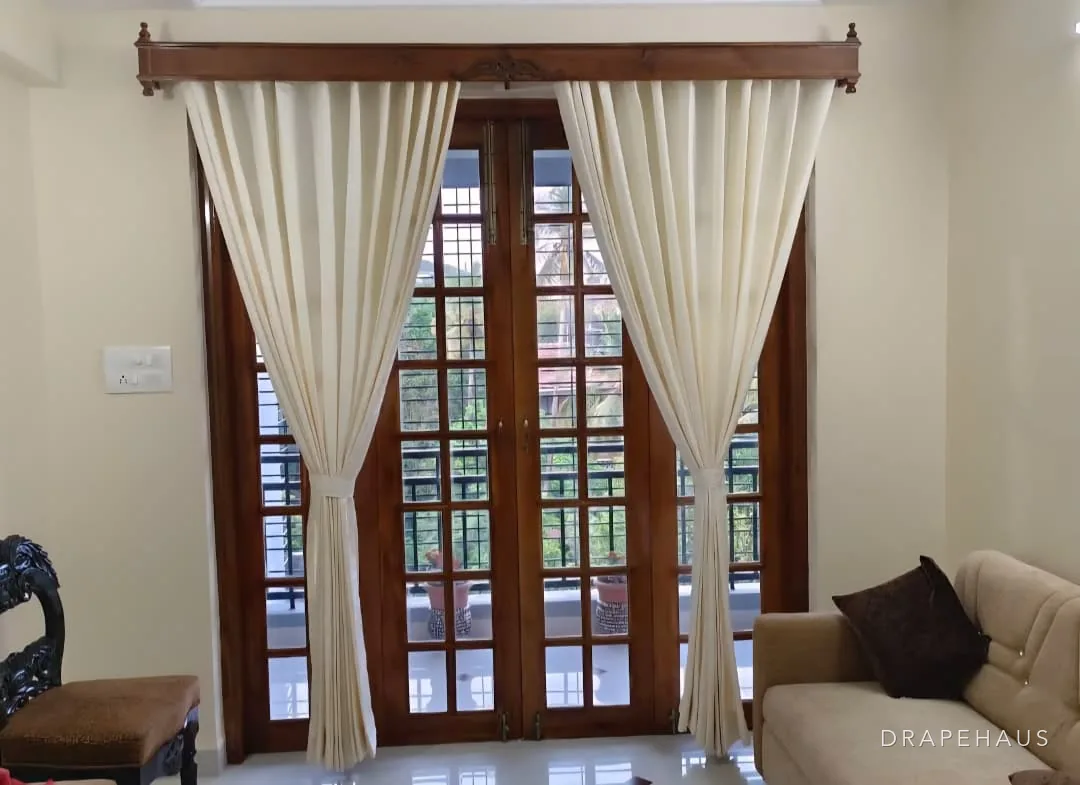
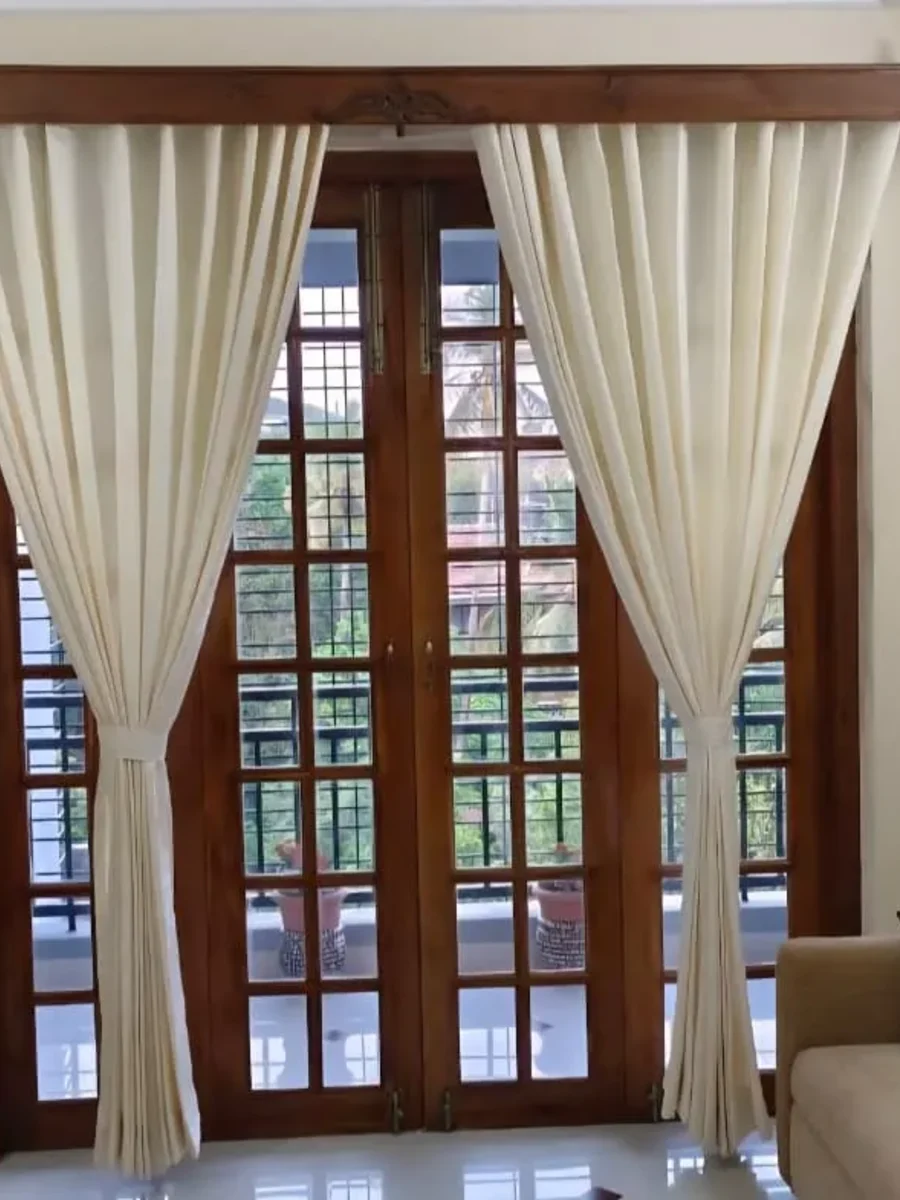
Run the track past the window by the stack, and the open curtains frame the glass instead of covering it — the room keeps its light and the window looks wider. Needs wall space either side; we check that, and the fixing, on site.
In short
By the Drape Haus studio · How we write
Is it right for you?
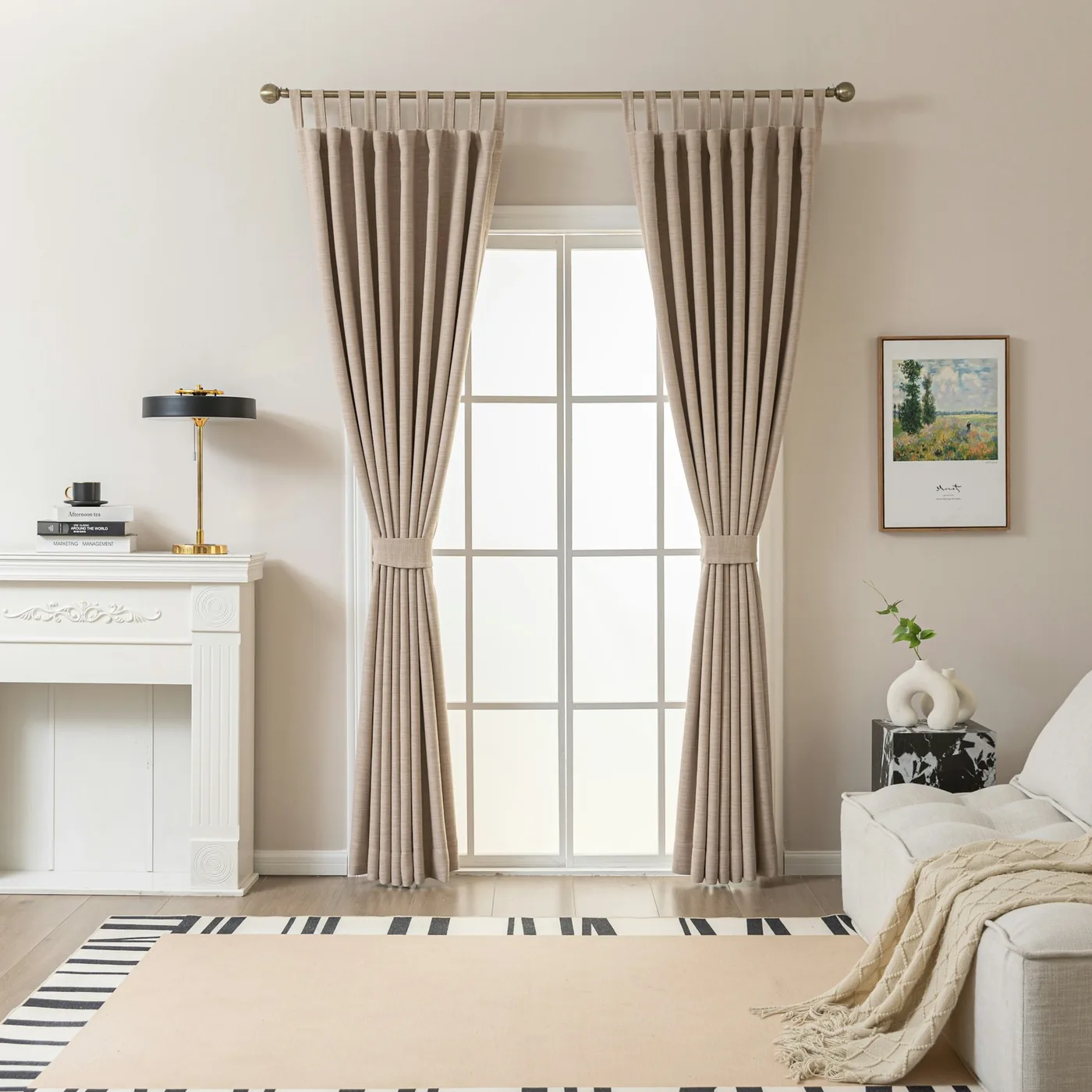
A curtain rod — or pole — is a visible piece of hardware on brackets, with the curtain hanging from rings or threaded through eyelets. Unlike a track, it is meant to be seen, so its material, finish and finials are part of the room's design. That is why most people choose a rod by how it looks. In a coastal house, how it lasts matters just as much.
Rods suit rooms where the hardware should add something: a turned timber pole in a heritage room, a slim matt black rod in a modern flat, a brushed stainless rod in a sea-facing bedroom. They work with eyelet curtains, which can only hang from a rod, and with pleated curtains on rings.
A rod is the wrong choice when the curtain must hang from the ceiling, run round a tight curve, close tightly at the top for darkness or be motorised. Those are track jobs, and our curtain tracks and ceiling curtain tracks pages cover them. Many rooms use both: a decorative rod for the dress curtain and a hidden track behind it for the working one.
The details
We specify rods by four things: the material and finish against the exposure, the diameter against the span and the curtain's weight, the brackets and where they can fix, and the length needed for the curtain to clear the glass. Get those right and the rod becomes part of the room; get one wrong and it bows, rusts or pulls out of the wall.
For houses near the sea we favour anodised or powder-coated aluminium and marine-grade stainless steel. Timber is lovely indoors when sealed. Solid brass is handsome but tarnishes quickly in salt air, and plain or plated steel and wrought iron rust unless they are properly coated and the coating stays intact.
Long rods need centre support, and the brackets need to fix into something solid. In laterite and old lime plaster we use resin anchors; in concrete we drill into the lintel or slab rather than the soft plaster skin. On a bay window, jointed elbows let a rod follow the angles, though a bent track usually draws more easily.
Use the curtain rod and track planner on this page to see how far the rod should run past the window. Then we confirm it on site against the wall space and the fabric's stack.
Your options
Material decides most of a rod's life near the coast. These are the options we fit, with an honest view of each in salt air and monsoon humidity.
Swipe for all 6 →
The honest view
Decorative in its own right
Finials, finishes and brackets add character that a hidden track cannot. In a heritage room the rod is part of the architecture.
The only option for eyelets
Eyelet curtains thread directly onto a rod. If you love that heading, a rod is the answer.
Easy to take curtains down
Lift the rod off its brackets and slide the curtains off — useful before a monsoon closure or a rental turnover.
Strong over moderate spans
A well-sized rod with proper brackets carries lined curtains without fuss.
Light over the top
The curtain hangs below the rod, so light spills above. Not ideal in a bedroom that must be dark.
Rings stop at brackets
On long rods with centre supports, rings cannot pass the bracket unless passing brackets are used.
No ceiling fixing or motors
Rods mount on the wall on brackets. For ceiling fixing or motors, a track is needed.
Side by side
How the common rod materials behave in a coastal Goan house, side by side.
| Anodised aluminium | Stainless steel | Sealed timber | Brass | Iron or plated steel | |
|---|---|---|---|---|---|
| Salt-air resistance | Very high | High (right grade) | Good indoors | Tarnishes | Poor |
| Humidity | Unaffected | Unaffected | Moves if unsealed | Unaffected | Rusts |
| Weight | Light | Moderate | Moderate | Heavy | Heavy |
| Look | Modern, many colours | Modern, crisp | Warm, traditional | Rich, period | Rustic |
| Upkeep | Wipe | Wipe | Check seal | Polish | Repaint, treat rust |
| Best location | Anywhere, esp. coast | Coast, modern | Indoors | Inland | Inland, coated |
Swipe to compare →
If you want the look of black iron near the sea, a black anodised or powder-coated aluminium rod gives it without the rust.
Rather see it in your own room?
We bring samples to the house, measure every window, and specify for the light and exposure you actually have.
Room by room
An anodised aluminium or marine-grade stainless rod, sized for the span, with rings that do not scrape. It will look the same in five monsoons.
A sealed timber or lacquered brass rod with period finials suits tall windows and lime-plastered walls. Fix into solid masonry with resin anchors.
A slim rod with eyelet or ring-hung curtains works well. If dawn light over the top bothers you, mount it close to the ceiling or add a pelmet.
A light aluminium rod with plastic-lined rings, firmly fixed. Avoid heavy finials that could come loose.
Steam and splashes work on any finish. Stainless or aluminium only; never timber or plated steel.
Long spans need several supports, and rings stop at each one. A track usually serves a wide opening better.
A rod with elbow joints follows the bay and keeps a decorative look. For the smoothest draw, consider a bent track instead.
In depth — tap a heading to read
A rod bends when its span is too long for its stiffness or its load. Thicker rods are stiffer, and aluminium and steel profiles of the same diameter differ a great deal. A slim rod is fine for a light sheer over a narrow window; a lined, full-length curtain over a wide window needs a heavier rod and a centre bracket.
We size the rod by the curtain it carries, not just the window. A curtain made with generous fullness and a blackout lining can weigh several times more than a ready-made unlined pair. As a rule we add a support wherever the unsupported span would otherwise let the rod bow under the stacked curtain.
A rod that bows has usually been chosen by width alone. Ask what the curtain will weigh.
A rod should run past the window on each side far enough for the open curtains to stack against the wall rather than over the glass. How far depends on the fabric, its fullness and the heading: eyelets and heavy lined curtains need more room than light sheers. The curtain rod and track planner on this page gives a sensible starting length.
Height changes how a room feels. Mounting the rod well above the frame, closer to the ceiling, makes the window look taller and hides the head of the frame. In houses with high ceilings, a rod set at mid-height can look lost; we usually take it up towards the cornice and let the curtains fall the full height.
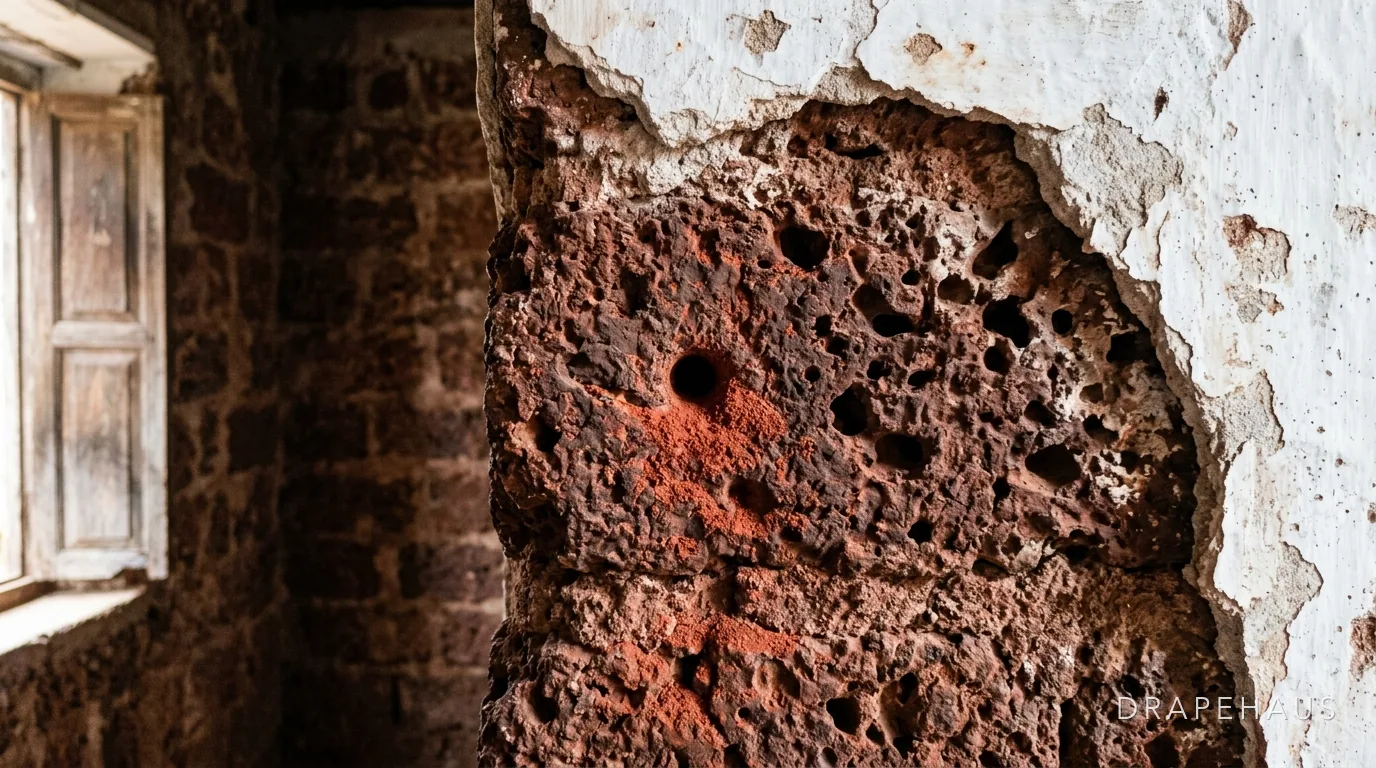
The fixing is as important as the rod. Laterite is soft and porous and crumbles around an ordinary plug; old lime plaster can hide voids and loose stone. In those walls we use resin anchors that bond into the masonry. In concrete-framed buildings we fix into the lintel or beam above the window rather than the thin plaster skin or a block infill that might be hollow.
Bracket projection must clear the window frame, handles and any sill, and allow for a second rod if a sheer is planned. Near the sea, bracket screws matter too: stainless fixings stop rust bleeding out from behind a perfectly good bracket.
Metal rings on a metal rod can scrape, stick and, near the sea, corrode. Rings with a plastic or nylon lining run quietly and smoothly, and they protect the rod's finish. For pleated curtains, each ring has a small eye for the hook; for eyelets, the curtain's own rings ride on the rod.
Finials stop the curtain sliding off and finish the look. Choose them in proportion: large, ornate finials suit wide rods in tall rooms; small end caps suit slim rods in modern spaces. Where a rod runs wall to wall, recess brackets replace finials and fix the rod ends to the side walls.
Telescopic, extendable rods are convenient and quick to fit, but the overlap creates a step that rings catch on, and the thinner inner section is the weak point. For a short span and a light curtain they serve; for anything long or heavy, a rod cut to size is stronger and draws more smoothly.
In rental flats and homestays, simple, robust rods do best: aluminium, firmly fixed, with no delicate finials for guests to knock. They are easy to clean, easy to lift off for washing curtains between stays and do not rust if a window is left open in the rain.
Living with it
In sea-facing rooms, wipe the rod with a damp cloth every few weeks and dry it. Salt build-up is what dulls finishes and makes rings stick.
Brackets can work loose with daily use, especially in soft walls. Tighten or re-fix before they pull out.
Re-seal timber rods if the finish wears, especially the ends, so humidity does not swell or split them.
Use a soft cloth and a mild polish on unlacquered brass. Avoid abrasive products that strip lacquer.
When rings start to scrape, replace the liners or the rings before they mark the rod.
Avoid these
It rusts within a few seasons and stains walls and curtains. Choose aluminium or stainless.
The rod sags in the middle. Size it to the curtain's weight and add a centre support.
The open curtains then cover the glass. Extend beyond the frame.
Ordinary plugs pull out of soft stone over time. Use resin anchors.
A rod just above the frame shortens the window. Go higher.
Checklist
More in hardware
A good curtain on a bad track is a bad curtain — and near the sea, a good curtain on untreated steel is a rust stain running down your wall within one monsoon.
From the Journal
All articlesOur process
One team from the first visit to the last bracket, so nothing is lost between the person who specified it and the person who fits it.
FAQ
Anodised or powder-coated aluminium and marine-grade stainless steel hold up best. Brass tarnishes, and plain or plated steel rusts in salt air within a few monsoons.
The span is too long for the diameter, the curtain is heavier than the rod was meant to carry, or there is no centre bracket. A thicker rod or an extra support fixes it.
Far enough for the open curtain to stack beside the glass rather than over it. The distance depends on fabric and fullness; the planner on this page gives a starting figure and we check it on site.
For a quick fix on a small window, they can be. For anything long or heavy, a cut-to-size rod is stronger, straighter and has no step where the two sections overlap.
Yes, with angled elbow joints and brackets either side of each corner. Rings cannot pass the joints, so each section holds its own curtain or uses passing brackets.
In everyday use, nothing — both describe a visible bar on brackets from which curtains hang. Pole is used more for thicker, decorative versions; rod more for slimmer ones.
If it is straight, rust-free, firmly fixed and long enough, yes. We check it at the visit and tell you honestly if it will not carry the new curtains.
On longer spans, yes, to stop the rod bowing. Where rings must travel past it, a passing bracket lets them slide over.
Long enough to clear the glass when open and thick enough for the curtain's weight over the span. The planner on this page helps with length; diameter we set from the curtain's weight.
Next step
We visit, look at the wall, the window and how close the sea is, find out what the brackets will fix into and measure the space for the stack. We then bring rod finishes to see against your walls and specify the rod, brackets, rings and fixings together with the curtain. Book a home visit, or use the planner on this page first to get a sense of the length.