 Drape Haus

PVC vs WPC wall panels is one of the first questions in any Goan panelling job, and the honest answer is that the two are closer relatives than their names suggest. A PVC panel is rigid polyvinyl chloride, usually hollow or foam-cored, with a printed or laminated face. A WPC panel is a wood-plastic composite: wood flour or fibre bound in a plastic. In much of what is sold in India as WPC for interiors, that plastic is itself PVC, with a modest share of wood in it.
Both resist water and termites far better than plywood, MDF or unsealed timber, which is why both have become so common in a state where the monsoon keeps the air close to saturation from June to September. Where they differ is in weight and stiffness, how much they move with heat, how they behave in a fire, and how convincing they look from a metre away.
This article compares them on each of those points, then sets out where each belongs in a Goan house. For the panels themselves, see our PVC wall panels and WPC wall panels pages.
What PVC and WPC panels are made of
A PVC wall panel is extruded rigid PVC. The thinner panels are hollow, with internal ribs between a front and back skin; better ones have a closed-cell foam core that makes them stiffer and quieter to knock on. The face is a printed film, a laminate or a plain colour, and the panels lock together along a tongue and groove. There is no wood in them at all.
Wood-plastic composite is defined by the US Forest Products Laboratory as wood in particulate form, wood flour or very short fibres, mixed with a thermoplastic that melts below about 200 degrees Celsius, the point at which wood starts to degrade. The common plastics are polyethylene, polypropylene and PVC. In the composite decking and lumber the laboratory studied, a 50:50 blend of wood and plastic is common and some products contain up to 70 per cent wood.
Indian interior panels sit at the other end of that range. One Indian manufacturer's guide gives typical WPC board as 70 to 75 per cent polymer, usually PVC, HDPE or PP, with 15 to 20 per cent wood powder and the rest additives such as foaming agents, stabilisers and colourants. In other words, many WPC wall panels in Indian homes are a denser, wood-filled cousin of the PVC panel rather than a wood product with some plastic in it. Formulations vary from maker to maker, so ask for the data sheet: polymer type, wood content and density tell you more than the label.
| PVC panel | WPC panel (typical Indian interior grade) | |
|---|---|---|
| Main material | Rigid PVC | Plastic matrix (often PVC) with wood powder |
| Core | Hollow ribs or foam | Foamed or solid, denser |
| Weight and feel | Light; can sound hollow | Heavier; closer to timber when knocked |
| Face | Printed film, laminate or colour | Laminate, film or co-extruded skin |
| Working | Cuts easily; clips and adhesive | Cuts, screws and routes like wood |
| Usual uses | Bathrooms, ceilings, utility rooms | Feature walls, fluting, TV walls, louvres |
Moisture, termites and monsoon damp
PVC does not absorb water. A splash, steam from a shower or weeks of monsoon humidity leave the panel unchanged, and termites, which feed on cellulose, find nothing in it to eat. That is the whole case for PVC in bathrooms and utility areas, and it is a strong one.
WPC is more nuanced, and the research is worth knowing. The Forest Products Laboratory found that the early promise, that plastic would wrap every wood particle and keep water out entirely, did not hold for outdoor composites. Moisture uptake is slow, but the outer 5 millimetres of commercial products took up enough water for fungal attack, and because the plastic slows evaporation, it dries slowly too. Extruded and hollow profiles absorbed the most. Makers responded by adding fungicides, mildewcides and light stabilisers.
Those findings concern decking left in rain and soil. An indoor wall panel is rarely wetted, and a high-plastic interior WPC has far less wood to take up water than a 50:50 deck board. In a living room or bedroom, even through a Goan monsoon, a good WPC panel stays stable. The lesson for the house is about edges and wet zones: seal cut ends, keep WPC out of shower areas and off floors that are mopped wet, and choose PVC where water actually lands.
Neither panel cures a damp wall. Both have sealed faces, so water coming through the masonry, from rising damp, a leaking terrace or rain through laterite, stays trapped behind them. On any doubtful wall we fix panels on a frame of PVC or aluminium battens with a ventilated gap, never on untreated wooden battens, which are exactly what termites look for. Our guide to termites and timber explains why the frame matters as much as the panel.
Planning something like this?
We visit homes across North and South Goa, measure on site, and bring samples to see in your own light.
Heat: sag and expansion on sunny walls
Plastics move with temperature far more than the materials around them. Standard engineering reference tables give PVC a linear expansion of 54 to 110 millionths of its length per degree Celsius. Wood along the grain moves about 3, concrete 13 to 14, and steel about 11 to 12.5. In practice that means a 3-metre PVC panel that warms by 20 degrees grows by roughly 3 to 7 millimetres, while a timber board of the same length would barely move.
That is why panels on a west-facing wall behind glass, or a wall heated by afternoon sun, ripple or open at the joints when they were fitted tight. The fix is not a better panel but a better installation: expansion gaps at ends and edges hidden under trims, fixings that let the panel slide, and no adhesive locking a long run solid. Our guide to heat gain covers the wider problem of hot west walls.
WPC moves with heat as well. It is stiffer than hollow PVC, so it resists bowing between fixings better, but it can creep, slowly sagging under a sustained load, which one Indian maker notes happens more readily in plastic-matrix materials than in plywood. Shelves, televisions and heavy mirrors should be fixed through the panel into the wall or to a dedicated frame, never hung from the panel alone. Both materials should be kept away from cookers, heaters and light fittings that run hot.
| Material | Expansion per °C |
|---|---|
| PVC | 54–110 |
| Aluminium | 23 |
| Concrete | 13–14 |
| Steel | 10.8–12.5 |
| Wood, along the grain | 3 |
A 3 m PVC panel can grow several millimetres on a hot wall. Leave gaps under the trims, or it will ripple.
Fire behaviour of PVC and WPC panels
PVC has a reputation for burning well, and for rigid PVC that is mostly unfair. Its chlorine content makes it hard to ignite. The Vinyl Council of Australia, an industry body, gives an ignition temperature of 391 degrees Celsius for unplasticised PVC against 260 for wood, and says rigid PVC self-extinguishes once the heat source is removed. A peer-reviewed study of burning PVC pipe in the journal Toxics likewise notes that PVC is inherently more fire resistant because of the chlorine in it.
The concern is the smoke. The same study found that burning PVC releases hydrogen chloride, a sensory and pulmonary irritant, as the polymer breaks down at around 200 to 300 degrees. In a room fire, that adds an acidic, choking component to smoke that is already the main danger. This is the strongest reason to keep PVC away from cooking flames, heaters and hot lamps, and to think about escape routes before lining a whole corridor or stairwell with it.
WPC depends on its recipe. The wood in it is fuel, and polyethylene burns readily; one Indian maker states that PVC-based WPC offers better fire resistance than HDPE-based boards. Because formulations vary, the only reliable answer is the maker's fire test report for that specific product. For homes this is a sensible question to ask; for hotels, restaurants and offices it is a requirement, and the panel should be checked against what the building's fire approval demands.
How PVC and WPC panels look and feel up close
From across a room, a good PVC panel and a good WPC panel can look alike, because both usually carry a printed or laminated surface. The difference shows when you touch them. PVC is light, and a hollow panel flexes under a thumb and sounds tinny when knocked. Thin panels show every bump in the wall behind them and can dent when a chair back hits them. Thicker, foam-cored PVC is much better, and in a bathroom or on a ceiling it is all most people need.
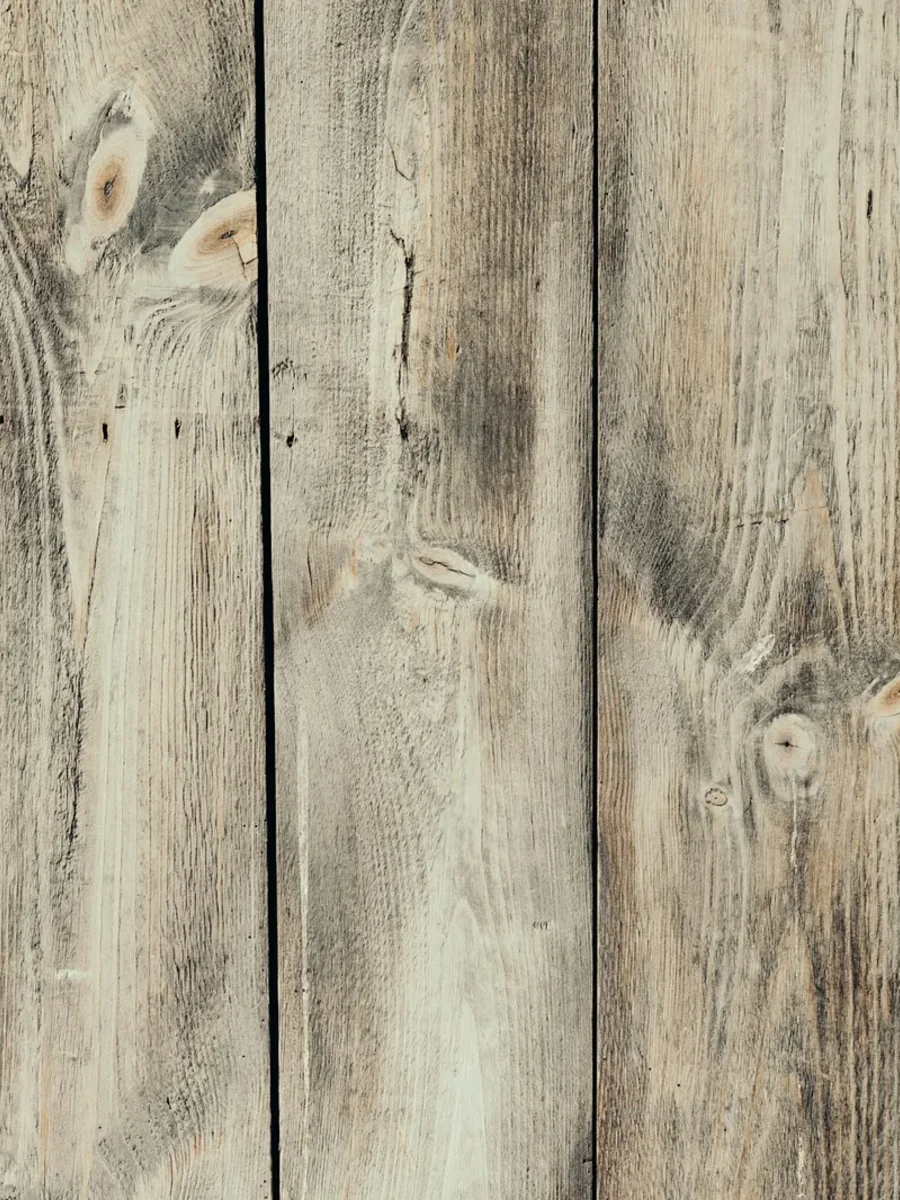
WPC feels more like wood. It is heavier, rigid enough to hold a straight line across a long wall, and it knocks with a dull, solid sound. It can be cut, screwed and edge-profiled with woodworking tools, which is why fluted and slatted designs, TV walls and louvres are usually WPC. The better panels have a co-extruded or laminated skin with a matt, textured grain that reads convincingly at normal viewing distance.
Neither is real wood, and both repeat their grain print every so often along a run. If you love the way old teak darkens and wears, a sealed hardwood or veneer is the truthful answer. If you want a timber look that stays exactly the same through every monsoon, WPC delivers it. Ask to handle full-size samples of both before deciding: press a thumb into them, knock on them and look at a joint in daylight. Our fluted wall panels page shows the ribbed profiles where that difference is most visible.
Where to use PVC and where to use WPC
Put simply, PVC belongs where water lands and WPC where the eye lands. PVC suits bathrooms above the tiled splash zone, utility rooms, kitchen walls away from the hob, balcony ceilings and rental flats that need a fast, wipe-clean refresh between seasons. WPC suits living-room feature walls, bedroom headboard walls, fluted panelling, TV wall panels and exterior-grade louvres on verandahs.
Some rooms take either. A ground-floor room in a house that is closed for the monsoon is a good place for both, provided the wall is dry and the panels are on a ventilated frame. A children's room benefits from WPC's resistance to knocks, but PVC costs less and is easy to replace panel by panel. For a stone look, PVC marble sheets are the PVC family's glossy variant, best on internal walls out of direct sun.
| Room or use | First choice | Why |
|---|---|---|
| Bathroom walls and ceiling | PVC | Fully water-indifferent; wipes clean; light enough for ceilings |
| Kitchen, away from the hob | PVC | Wipeable; keep both away from heat and flame |
| Living-room feature wall | WPC | Rigid, solid feel, convincing grain, takes fluting |
| TV wall with cables | WPC on a frame | Stiff, screws well, hides conduits; fix the TV to the wall |
| Bedroom headboard wall | WPC | Warm timber look without the monsoon swelling of plywood |
| Balcony or verandah ceiling | PVC, or exterior-grade WPC | Light and moisture-proof; specify for outdoor use |
| Verandah screens and louvres | Exterior-grade WPC | Interior panels should never go outside |
| Rental flat refresh | Either | Both wipe clean and cope with closed seasons |
Fixing either panel so it lasts
Most failures blamed on the panel are installation failures. Start with the wall: a moisture reading at several heights, a look for salts and tide marks near the floor, and a question about where the water goes in the rains. A dry, sound internal wall can take panels fixed directly; a doubtful one gets a batten frame with an air gap and ventilation at top and bottom; a wet wall needs its damp cured before anything is fixed to it.
Leave room for movement at every end and edge, hidden under skirting, cornice and corner trims. Seal the bottom edge of bathroom panels with a trim and a bead of silicone so water cannot wick behind, and keep panels a few millimetres off a wet-mopped floor. Plan electrical points and conduits before the frame goes up, and fix anything heavy through to the wall.
If you are weighing the two for a particular wall, we bring full-size samples of both, test the wall, and quote for wall panels fitted by our own team. A home visit is the quickest way to settle PVC versus WPC for your rooms.