 Drape Haus
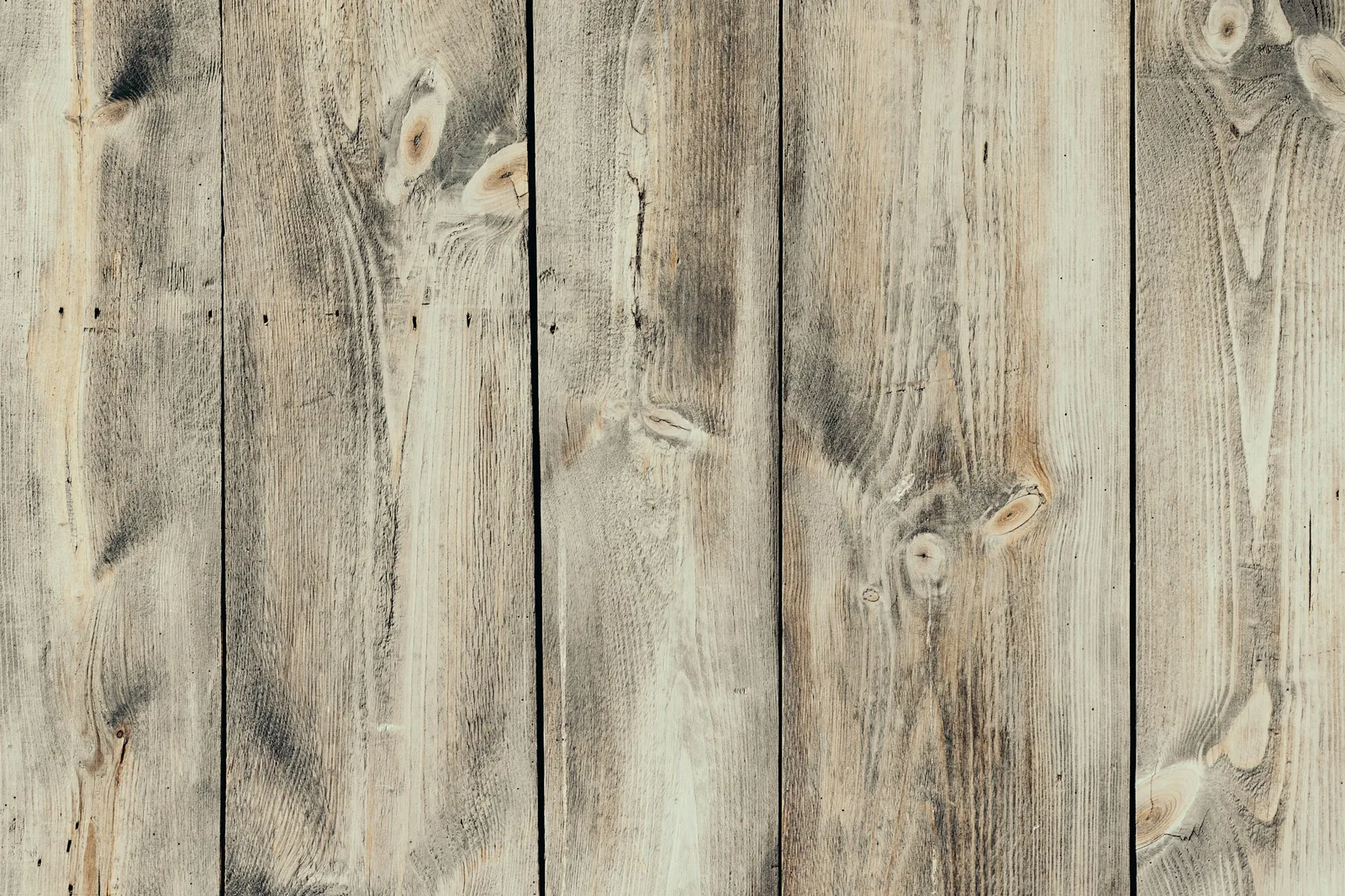
Wooden wallpaper is a printed paper that shows the grain, knots and boards of timber on a flat surface. It is the lightest and quickest way to give a wall a wood look, and on a dry wall it can be convincing from across a room. It is not wood, though, and it does not have the depth, the warmth to the touch or the shadow lines of real boards.
When people search for it, they are usually weighing it against two other options: real timber panelling, and WPC panels, the wood-plastic composite profiles now used on so many Goan feature walls. The three differ in more than price. Real wood moves with every swing in humidity. WPC barely notices the monsoon. Wallpaper depends entirely on the wall behind it.
This guide explains how wood-effect wallpaper is made, how it compares up close and at a distance, how each option copes with Goan humidity, how each is fitted, and which rooms each one suits.
What wood-effect wallpaper is and how it is printed
A wood-effect wallpaper starts as an image: a photograph or scan of real boards, or a drawn grain, laid out as a repeating design. That design is printed onto the paper's base, which may be a non-woven, a paper or a vinyl. The German wallpaper industry's institute describes the main printing routes in its glossary. Rotary screen printing pushes ink through fine cylindrical screens onto the paper. Digital printing works from a computer file without printing plates or screens. The American trade body for paperhangers describes rotogravure, where the image is engraved into a hard cylinder and the ink sits in the recesses rather than on raised surfaces.
On top of the print, many wood papers carry an embossed texture, pressed into the surface to imitate open grain or the saw marks of reclaimed boards. Vinyl versions have a tougher, wipeable face. Non-woven versions are more breathable and hang by pasting the wall. The label tells you which you are buying, and that matters more in Goa than the pattern does.
There is a separate product worth knowing about: real wood veneer wallcovering. The US federal wallcovering specification describes it as natural veneer on a paper, fabric or non-woven backing, finished natural, stained or clear coated, and asks for the substrate to be primed or sealed against moisture before it goes up. It is real wood, sliced thin, and it behaves like wood. It belongs in the dry, air-conditioned rooms where fine paper belongs.
How it looks up close versus from across the room
From four or five metres, in even light, a good wood-effect paper reads as boards. The eye takes in the colour, the plank widths and the rhythm of joints, and fills in the rest. From an arm's length the illusion thins. There is no shadow at the board joints, because they are printed, not cut. The grain does not change as you move past it, because it is flat. And somewhere on the wall the same knot appears again, because the design repeats.
Light is the deciding factor. A wall lit from the front by ceiling lights forgives a lot. A wall grazed by low afternoon sun from a west window, which is common in Goan living rooms, shows every flat area and every seam. Embossed and matt papers hold up better than smooth or glossy ones, and wider plank designs look more believable than narrow, busy ones, because real boards on a wall are usually generous.
Before you choose, look at a full drop, not a sample square. Find the repeat length in the sample book and check how often the same board pattern recurs across a wall your size. A long repeat, or a design with several plank variations, avoids the stamped look. Hold the sample in the room's own light at the time of day you use it most.
Planning something like this?
We visit homes across North and South Goa, measure on site, and bring samples to see in your own light.
Humidity and longevity: paper, real wood and WPC
Wallpaper's weakness is the wall. If the plaster behind it carries damp, salts or condensation, the paste lets go and the paper lifts, bubbles or grows mould, whatever is printed on it. On a dry internal wall, a wood-effect paper lasts as long as any other wallpaper. On the inside of an external wall in an air-conditioned room, a vinyl face can trap moisture behind it, so choose a breathable non-woven there. Our guide to the best wallpaper for humid walls explains which paper goes where.
Real wood responds to the air itself. The US Forest Products Laboratory's Wood Handbook explains that wood swells as it takes up moisture and shrinks as it dries, most across the growth rings, about half as much across the radius, and very little along the grain, and that finishes such as varnish or paint slow these changes but do not prevent them. Using the Handbook's own equation, wood at about 27 °C settles near 20 per cent moisture content in 90 per cent humidity and near 11 per cent at 60 per cent. Goan monsoon mornings average 87 to 91 per cent, according to the India Meteorological Department. The Laboratory notes that air-dried wood should stay at or below 20 per cent moisture to resist decay. Unconditioned timber in a Goan monsoon is working close to that line, which is why it has to be treated, ventilated and allowed to move.
WPC sits between the two. The Forest Products Laboratory describes wood-plastic composites as wood particles bound in plastic, with wood content up to 70 per cent and 50/50 common. The plastic slows moisture uptake a great deal compared with solid wood, although the Laboratory's research also found that composites exposed outdoors for years can absorb enough moisture at the surface for fungi to attack. Indoors, on a wall that is not wet, WPC is the most stable of the three. Our comparison of PVC and WPC wall panels goes further into the materials.
| Wood-effect wallpaper | WPC panels | Real wood panelling | |
|---|---|---|---|
| Depth and shadow | None; printed joints | Real grooves and profiles | Real boards, real grain |
| Up close | Flat; design repeats | Convincing film or cap; repeats over a run | Every board different |
| Monsoon humidity | Depends on a dry wall | Very stable indoors | Swells and shrinks; needs gaps |
| Termites | Not a target | Little to eat; check battens | Needs treated or durable timber |
| Cleaning | Wipe vinyl; dust non-woven | Wipe; brush grooves | Dust; re-oil or refinish |
| Ages by | Fading in sun, lifting on damp walls | Staying much the same | Darkening and patina |
| Change it later | Strip and repaper | Unscrew or prise off | Sand and refinish, or remove |
WPC and real wood panels for a three-dimensional wood look
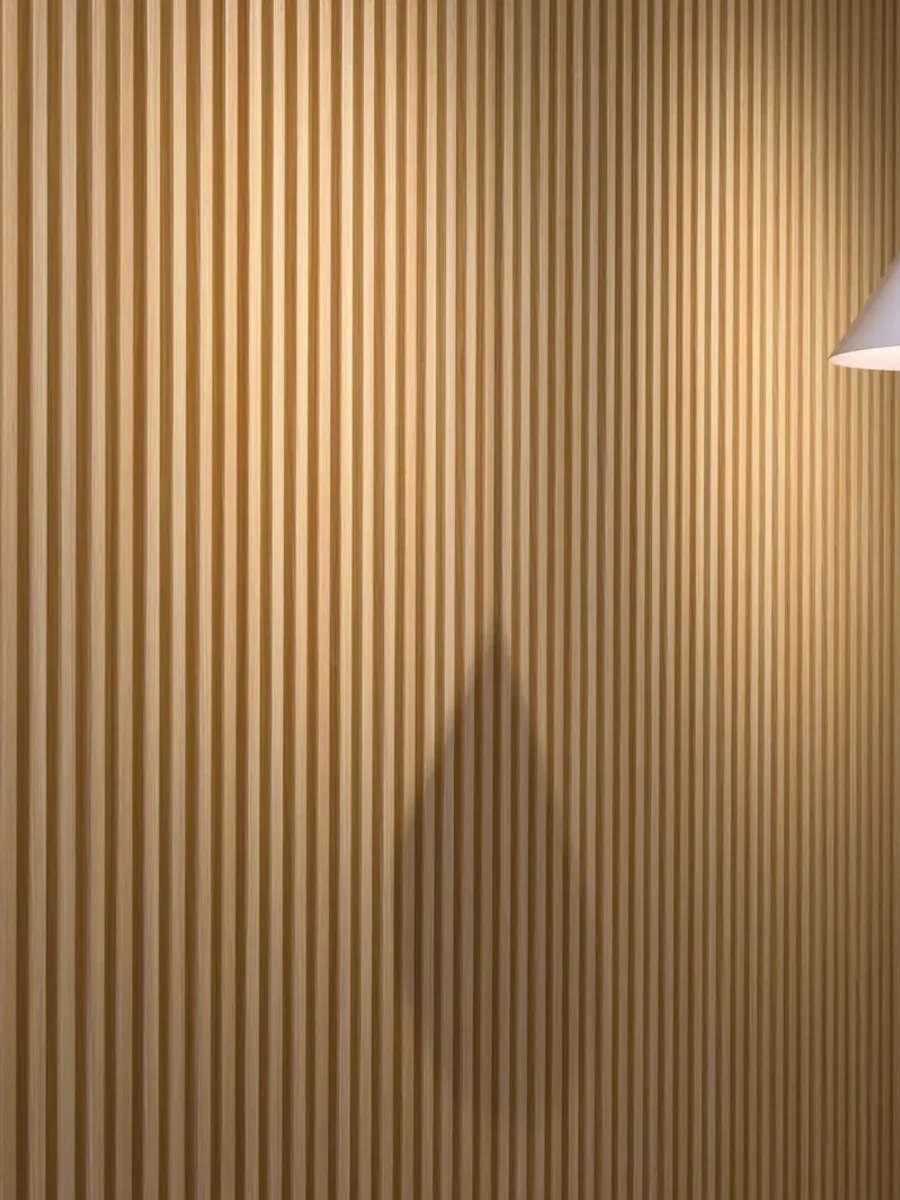
If the reason you want wood on the wall is depth, a print will disappoint you, and a panel will not. WPC wall panels come as flat boards, tongue-and-groove planks, fluted ribs and slatted louvres, with a wood-grain film or a co-extruded cap on the face. They give real shadow lines, they sound solid when you knock on them, and they hold a straight line across a long wall. Fluted WPC behind a television or a bed is one of the most requested wooden wall designs in Goa at the moment, and for good reason: it looks like joinery and asks very little of the owner.
Real wooden wall panels are the richest option and the most demanding. Solid boards, veneered plywood and painted timber cladding all bring warmth, a grain that never repeats and a surface that darkens and mellows. They suit older Goan houses with timber ceilings, libraries, studies and master bedrooms with steady air conditioning. They need durable or treated timber, treated battens, sealing on every face, and gaps that let the boards move through the seasons.
There is a middle path too. A wall can mix the two: WPC on the lower part of a wall that sees knocks or sits near a damp floor, real veneer above, or a wood-effect paper on a ceiling where nobody will ever see it up close. The point is to spend depth where people look and touch, and save it where they do not.
Installation differences, and what each asks of the wall
Wallpaper is a wet trade. The wall is checked for damp, filled, sanded and primed, then the paper is hung with the paste its maker specifies, usually in a day or two for a feature wall. The German wallpaper institute's tips are that each drop is the room height plus five to ten centimetres for trimming, and that every roll should carry the same production number. A wood design with a strong vertical grain also shows any wall that is out of plumb, so the first drop is set with a plumb line, not the corner.
WPC is a dry trade. Panels are fixed with clips or screws onto a frame of battens, or bonded directly to a flat, sound internal wall. Trims finish the ends and corners. Because composites expand with heat more than timber does along its length, long runs need expansion gaps hidden under those trims. Cables, sockets and the bracket for a television are planned before the first panel goes up, with solid blocking behind the panel wherever weight will hang.
Real timber is joinery. The boards are brought into the room to settle to its conditions before fitting, treated against termites and fungus, sealed on the back as well as the face, and fixed so they can move. On any wall that might take damp, they go on a batten frame with an air gap that is vented at top and bottom, so the masonry can dry and the wood never touches it. That takes longer and costs more, and it is the only way real wood lasts on a Goan wall.
- Wallpaper: dry, sound, primed wall; one or two days; strippable later if the label says so
- WPC: battens or direct fixing; expansion gaps under trims; services planned first
- Real wood: acclimatised, treated, sealed all round; ventilated batten frame; movement gaps
Where each wood look fits in Goan living rooms and bedrooms
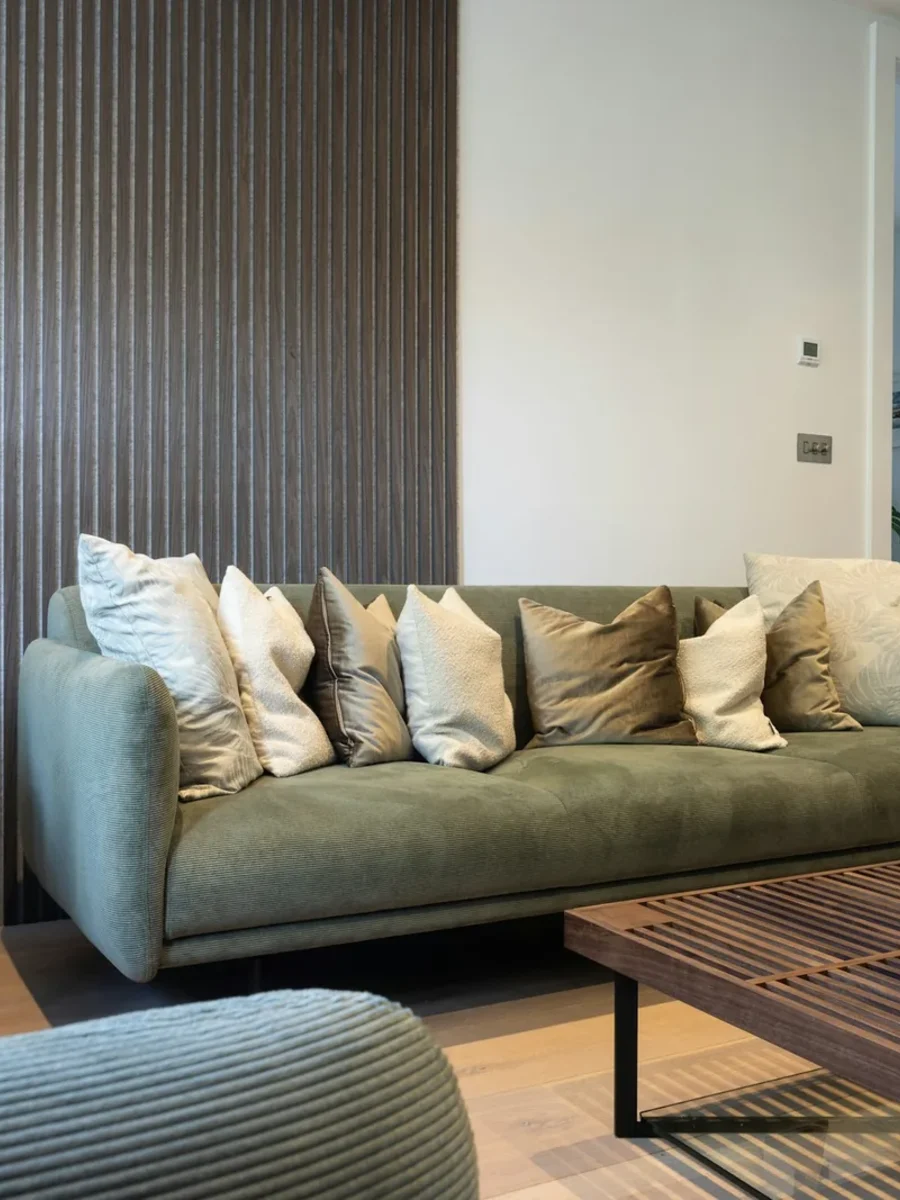
Behind a television in a living room, WPC is usually the answer. It hides cables in its frame, takes the bracket on solid blocking, wipes clean and does not care about the monsoon. Fluted or slatted profiles give the most depth; our living room wall design article covers the composition and lighting. If the wall is external and faces the rains, battens and an air gap are not optional.
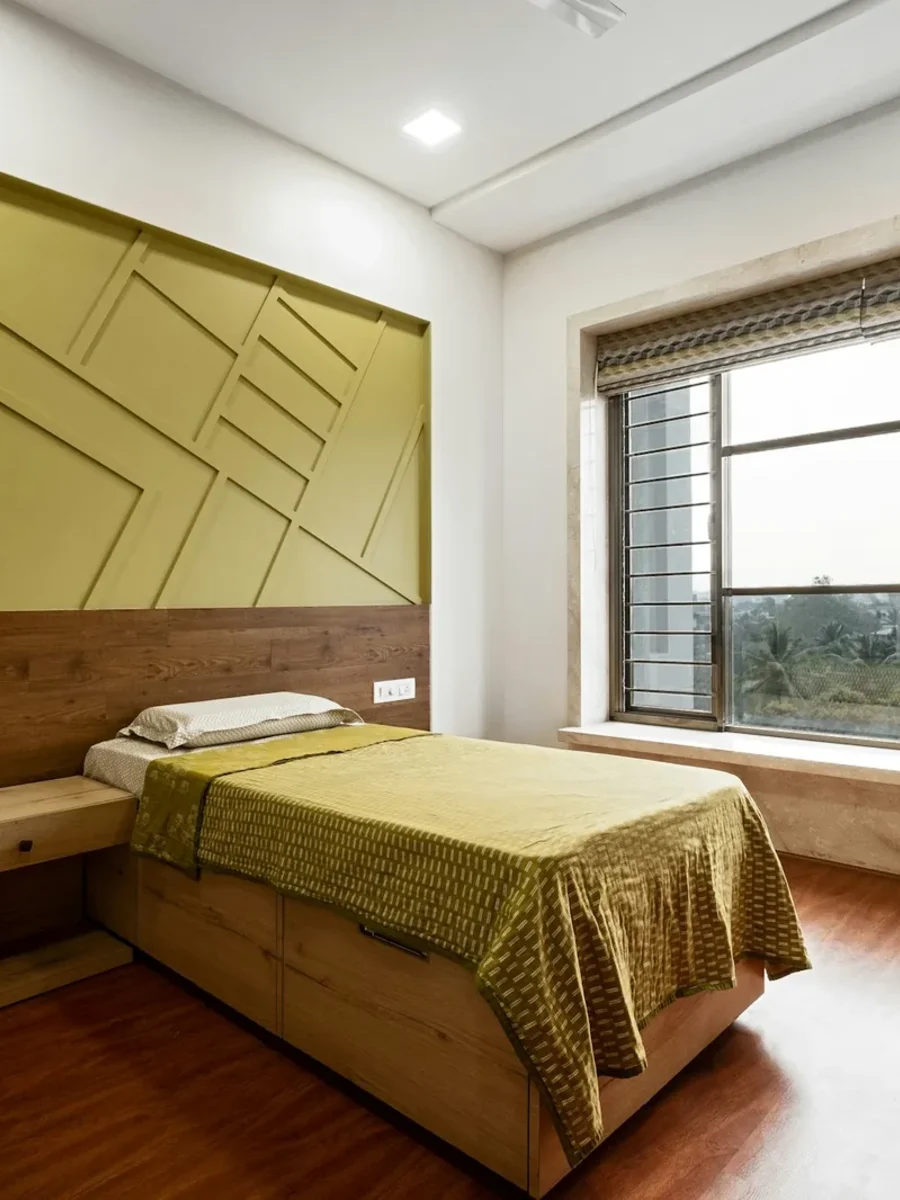
Behind a bed, all three can work, and the wall decides. On a dry internal wall in an air-conditioned bedroom, a wood-effect paper or a veneer panel gives a calm, warm backdrop at a fraction of the weight of boards. On an external wall, WPC on battens is safer than paper. In a master bedroom of a heritage house with a timber ceiling, real wood is often the only thing that will look as though it belongs. Our bedroom wall design article goes through headboard walls in more detail.
For a rented flat, wallpaper is the light-touch choice: it goes up quickly and, if it is a strippable paper, comes off without damaging the wall. For a villa that is closed for months, WPC is the low-worry choice. For a room whose whole character is old timber, real wood is worth the care it takes. If you are unsure which suits your wall, we can bring wood-look samples of all three, hold them in your light and check the wall's moisture on the same visit. The home wallpaper page is the place to start.
Spend depth where people look and touch; use print where they never come close.