 Drape Haus
Drape Haus
Preparing the room
Drape Haus
Preparing the room
Wall Panels
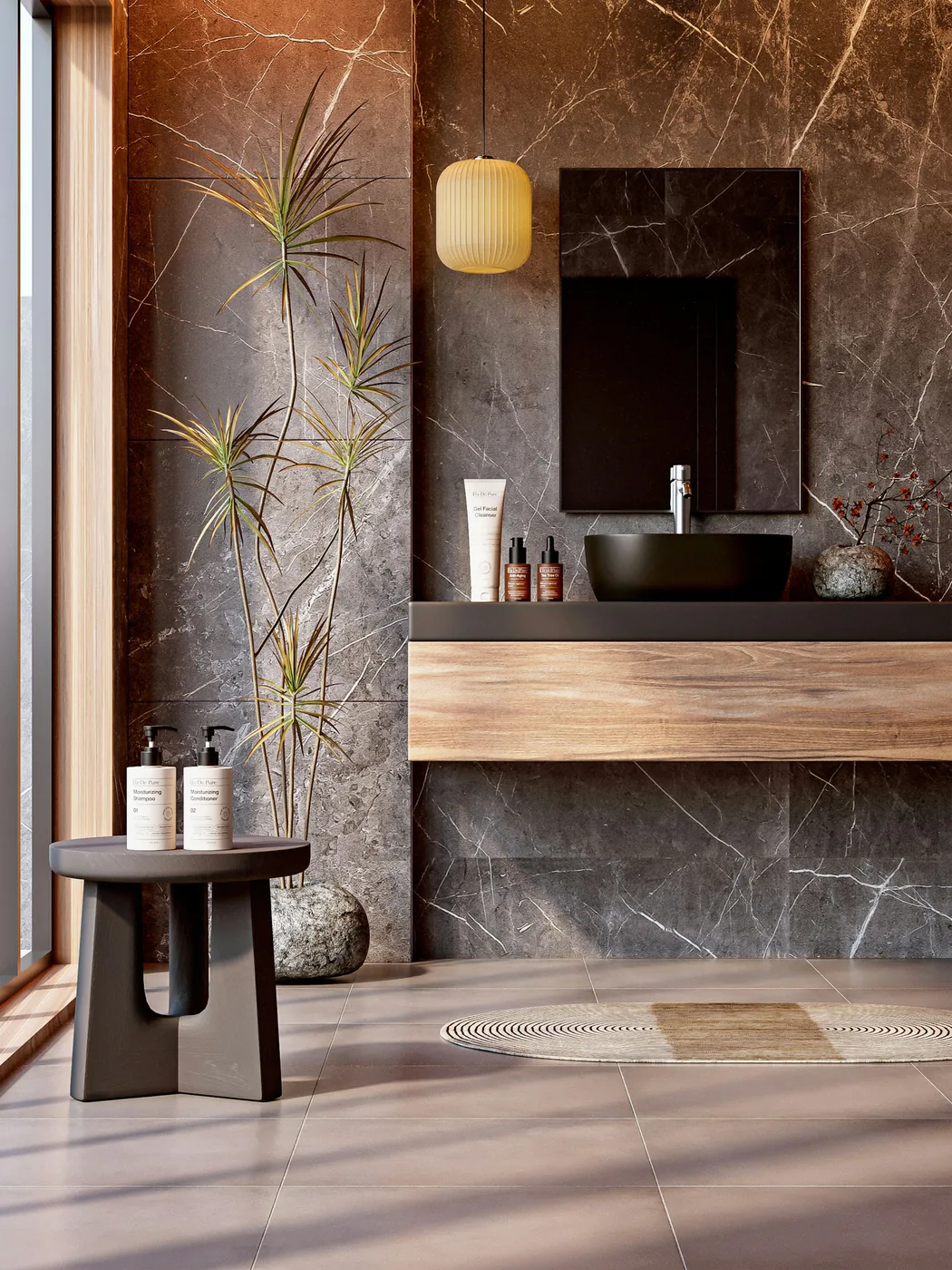
Thin PVC sheets printed with a marble or stone pattern and finished in gloss or matt. They give a stone look to a wall quickly and lightly — in the right places, and only there.
In short
By the Drape Haus studio · How we write
Is it right for you?
A PVC marble sheet is a thin, rigid plastic sheet with a high-resolution photograph of marble or another stone printed on its face and sealed under a glossy or matt protective coat. Fixed to a wall with adhesive, it gives the look of veined stone across a large area with very few joints, at a fraction of the weight of real slabs and without wet trades or cutting dust in the house.
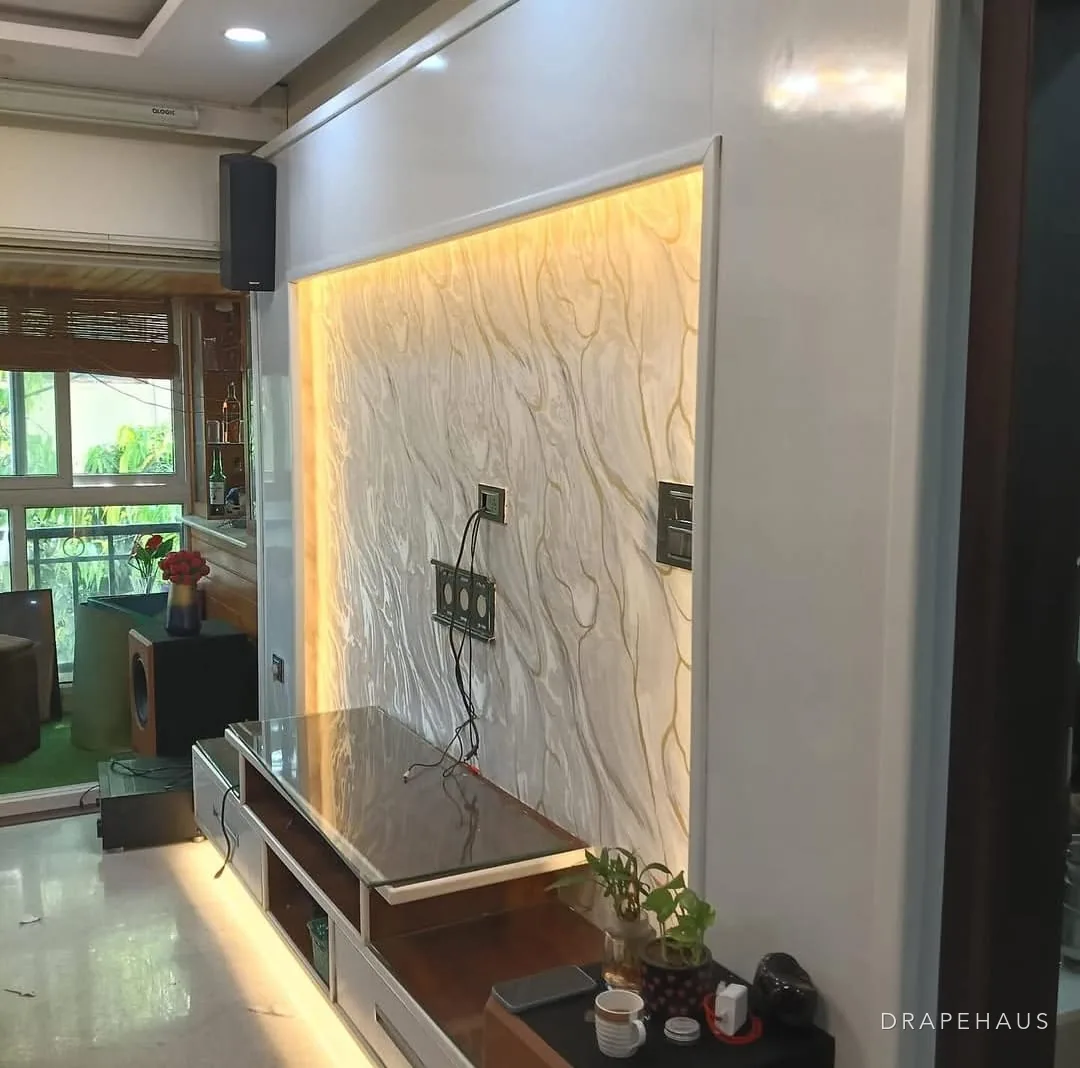
Used in the right place, it is a sensible material. A TV wall, a bedroom headboard wall, the back of an open wardrobe, the dry walls of a bathroom away from the shower, a reception backdrop or a quick refresh of a rental flat between tenants are all good candidates. It is light enough to go on a partition and quick enough to fit in a room that must be back in use within a day or two.
It is not stone, and it should not be treated like stone. It softens and distorts with heat, so it does not belong behind a gas burner. It scratches more easily than polished marble. It is not a waterproofing layer, and sticking it over a wall that is damp only seals the moisture in. And it is a wall finish only; it will not survive foot traffic.
This guide sets out where the sheets work and where they fail, how the wall must be prepared, how joints and edges are handled, how the sheets behave in Goan humidity and sun, and how they compare with real stone, tiles, laminates and paint.
The details
A PVC marble sheet is a printed decorative sheet with a protective top coat, fixed with adhesive to a flat, sound backing. The joints are tight butt joints or finished with slim trims. They suit feature walls, TV walls, bedroom headboard walls, wardrobe backs and the dry walls of a bathroom.
They are not stone, and they should not be asked to behave like it. Behind a gas hob or any heat source they can scorch, distort or soften, so a kitchen backsplash right behind the burners needs tile, glass or stone. In direct shower spray they need careful sealing and are better replaced by tile.
Above all, they are not waterproofing. A sheet glued over a damp wall hides the patch for a season, then the adhesive lets go and the sheet bubbles. Damp has to be traced and cured first; the sheet goes on once the wall is dry, or on a backing board on battens.
Gloss sheets show every ripple in the wall behind them, so the substrate must be flat. We check it with a straight edge and use a backing board where the plaster is uneven.
Your options
Sheets look similar in a sample book. What separates a convincing wall from an obviously plastic one is the finish, the pattern and how the sheets are joined.
Swipe for all 6 →
The honest view
Stone look without the weight
A light sheet can go on partitions, upper floors and walls that could not carry real slabs, with no structural questions to answer.
Quick, clean fitting
No grout, no wet cutting and no curing time. A room is usually back in use far sooner than after a tiling or stone job.
Large panels, few joints
Sheets come in large formats, so a TV wall may need only a handful of joints compared with dozens of tile grout lines.
Wipes clean on dry walls
The coated face resists everyday marks and splashes and cleans with a damp cloth, which suits rentals and busy family rooms.
Heat softens it
PVC distorts at temperatures a gas hob or a halogen lamp can reach. It must stay well away from burners, ovens and hot light fittings.
Scratches and dents
Furniture, keys and abrasive cleaners mark the coated face. Unlike stone, a deep scratch cannot be polished out.
Shows the wall behind
Any bump, crack or hollow in the substrate telegraphs through, especially under gloss. Poor preparation is visible for as long as the sheet is on the wall.
Not waterproofing
The sheet keeps splashes off the plaster, but water that gets behind through joints, or moisture rising through a damp wall, is trapped and can lift the adhesive and grow mould.
Side by side
For a feature wall or a bathroom refresh, these are the realistic choices. Each has a place.
| PVC marble sheet | Natural marble | Ceramic or vitrified tile | Decorative laminate | |
|---|---|---|---|---|
| Heat near a hob | Not suitable | Good | Good | Poor |
| Wet zones | Splash areas only, detailed | Good when sealed | Very good | Poor |
| Weight on the wall | Very light | Heavy | Moderate | Light |
| Scratch resistance | Low | Moderate, can be repolished | High | Moderate |
| Joints | Few, visible if careless | Few with slabs | Many grout lines | Few, with trims |
| Fitting disruption | Low | High | High | Moderate |
Swipe to compare →
Paint remains the honest answer for a damp wall that has not been cured. Fix the moisture, let the plaster dry, and only then choose a decorative sheet.
Rather see it in your own room?
We bring samples to the house, measure every window, and specify for the light and exposure you actually have.
Room by room
The most common use. A book-matched or softly veined sheet gives a stone backdrop with concealed cable routes cut in before fixing. Choose matt if the wall faces a window, to avoid glare on the screen.
A single wall in a honed finish adds depth without the coldness of real stone. Keep reading lights a safe distance off the surface.
Works on walls away from the shower, behind a vanity mirror or as a dado above tiles. The wall must be dry and joints and edges sealed.
Direct, daily spray finds every joint. Unless the wall is properly waterproofed and the sheet system is detailed for wet use, tiles or stone are the safer choice.
Acceptable behind a sink or a worktop away from the cooking zone. Never directly behind a gas burner, where heat will warp and discolour the sheet.
Fast to fit between tenants, clean to install and easy to wipe down. A good way to lift a dated wall without breaking tiles.
Makes a counter wall or reception look finished quickly. Protect corners with trims where trolleys and bags pass.
In depth — tap a heading to read
Everything about a PVC marble sheet installation depends on what is behind it. The adhesive needs a dry, sound, flat surface to grip. Loose paint, flaking putty, efflorescence and powdery plaster all give way, and the sheet comes away with them. Before fixing, we check external walls and bathroom walls with a moisture meter, look for salt bloom and tap for hollow plaster.
On laterite walls and in older houses, rising and penetrating damp are common. A plastic sheet stuck over that wall stops the masonry breathing into the room. The moisture has nowhere to go, gathers behind the sheet, softens the adhesive and feeds mould that you will smell before you see. Where a wall is damp, the source has to be dealt with first, whether that is a roof leak, a failed external coat or a plumbing line, and the plaster left to dry out.
Where the substrate is sound but uneven, we either correct it with a skim or fix the sheet onto a flat backing board on battens, which also keeps it off a wall that is slow to dry.
If you would not paint a wall because it is damp, do not cover it with PVC either.
Joints decide whether the wall looks like stone or like plastic. Book-matched sheets must be fixed in the right sequence, cut square and butted tightly. On long runs, small expansion gaps at the ends and at junctions with other materials allow the sheet to move with temperature without bowing.
Exposed edges are the weak point for chips and for water getting in. Trims at outside corners, at the top of a dado and around windows protect them. Switch plates, sockets and cable entries are cut precisely before fixing, so plates sit flush rather than pressing on the sheet.
PVC expands and contracts with temperature more than plaster does. On a wall that takes direct afternoon sun through glass, a dark sheet can warm enough to move, and a tightly fitted run with no allowance can ripple. Pale and matt sheets cope better in sunlit rooms. Prolonged strong sunlight can also fade the print over the years, so a sheet facing a large west window is a gamble that a north-facing wall is not.
Humidity in the air does not hurt the sheet itself; PVC does not absorb water. The risk is behind it, in the plaster and the adhesive. In a house closed through the monsoon, keep some airflow in the rooms with sheet finishes and check bathroom joints when you reopen it.
In a kitchen, a sheet can work behind a sink or along a worktop used for preparation, provided it stops short of the cooking zone. Behind a gas burner, heat and flame will soften and scorch it within a season. That area needs tiles, stone, glass or stainless steel.
In a bathroom, the sheet suits the walls around a basin, a toilet and the space above a tiled dado. Inside a shower, water hits every joint daily and drains down the face. Unless the wall behind has its own waterproofing membrane and the sheet system is designed for wet use, tiles remain the better answer there.
Living with it
Wipe with a damp microfibre cloth and a little mild detergent, then dry. That is all the coating needs.
Abrasive pads, powder cleaners and strong solvents dull and scratch the protective coat permanently.
Do not mount heaters, halogen lamps or hot appliances against the sheet, and keep irons and hair tools off nearby surfaces.
Check sealant at joints and edges every few months. Re-seal any gap promptly so water does not reach the adhesive.
A bubble, a lifting edge or a musty smell means moisture or movement behind the sheet. Have it looked at before it spreads.
Avoid these
The most damaging mistake. Sealing a wet wall traps moisture, lifts the sheet and breeds mould. Fix the source first.
Heat from burners warps and discolours PVC. Use a heat-proof material in the cooking zone.
High gloss magnifies every bump. Either flatten the wall or choose a matt finish.
Random placement of veined sheets looks artificial. Lay out the sequence before fixing.
It is a wall product. Foot traffic scratches and dents it quickly.
Checklist
More in wall panels
PVC, WPC, wood, fluted, acoustic and marble-effect panels, chosen for the wall they are going on as much as for the look.
Our process
One team from the first visit to the last bracket, so nothing is lost between the person who specified it and the person who fits it.
FAQ
Not directly behind the burners. Heat can distort or scorch them. Use tile, glass or stone behind the hob and the sheet elsewhere.
No. It hides damp briefly and then fails. The cause of the damp must be fixed first.
For dry zones, yes, with sealed edges. For shower walls, tile is the better choice.
Gloss finishes can scratch with abrasive cleaners or sharp knocks. Clean with a soft cloth and mild soap.
The sheet itself does not absorb water, but an installation is not waterproof. Water can get behind through joints and edges, and moisture in the wall is trapped by the sheet. It is a decorative finish, not a substitute for waterproofing.
Behind a sink or a preparation area, yes, if the wall is dry and joints are sealed. Not behind a gas burner or near an oven, where heat will warp and scorch the sheet.
No. Covering a damp wall traps the moisture, weakens the adhesive and encourages mould behind the sheet. Find and fix the cause of the damp and let the plaster dry before any sheet is fitted.
Strong, direct sun over years can fade the print and the sheet can move with heat. Pale, matt sheets cope better on sunny walls; keep vivid or dark patterns for walls out of direct sun.
They look similar from a distance and are far lighter and quicker to fit. Real marble handles heat and wet areas much better and can be repolished; PVC scratches and cannot be restored the same way.
Next step
We visit, test the wall for moisture, check how flat and sound it is, and see what heat, water and sunlight it will face. If a sheet suits it, we bring finishes to hold up in your light, plan the vein layout and the trims, and fit it with the joints and cut-outs worked out in advance. If it does not suit, we will say so and suggest what will. Book a visit to have the wall assessed.