 Drape Haus
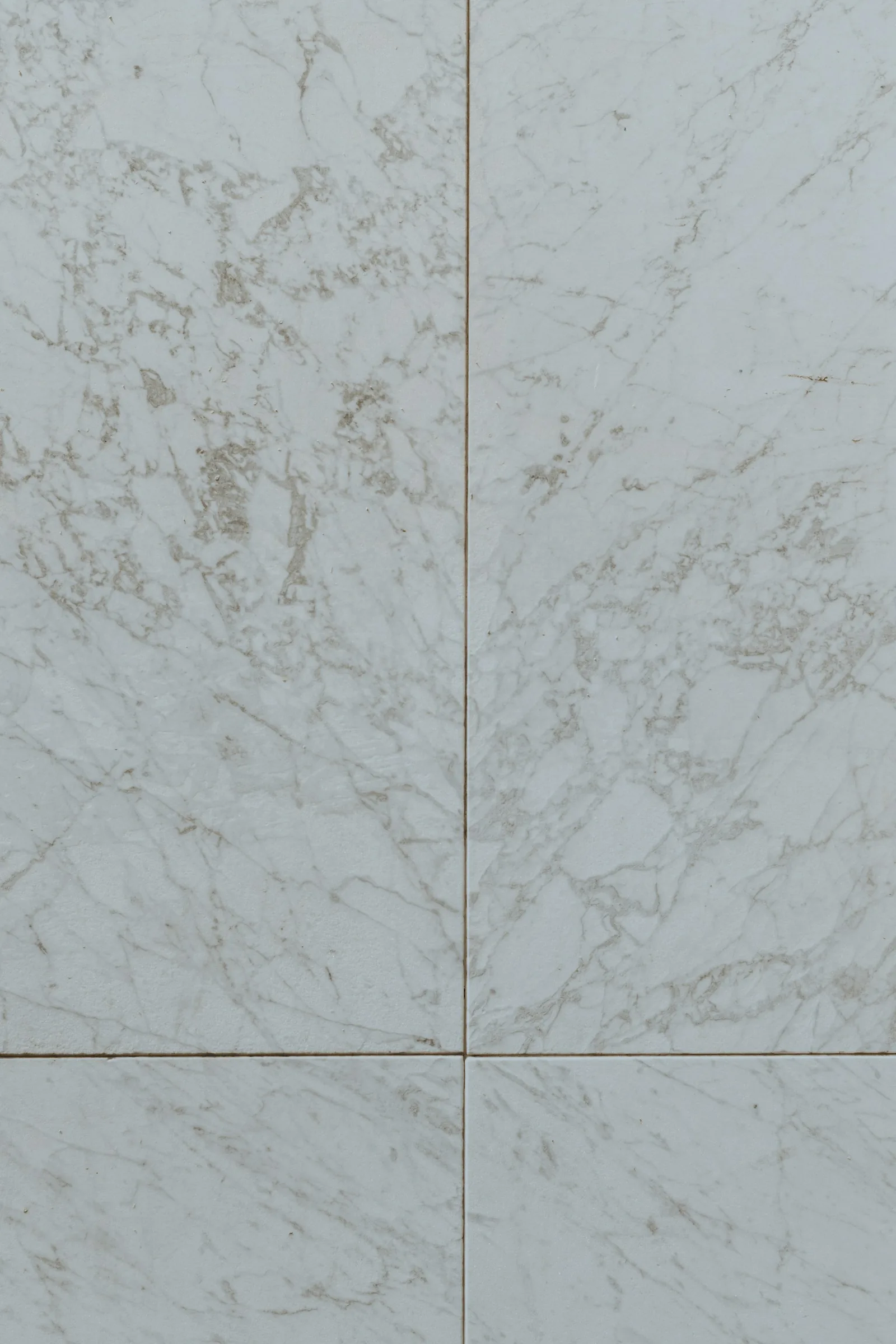
A PVC marble sheet is a thin, rigid plastic sheet printed with a marble pattern and finished with a protective top coat, usually glossy. Real marble is a natural stone cut into slabs and tiles. On a feature wall seen from across a room they can look surprisingly alike. In almost every other respect they are different materials, and choosing between them is less about looks than about weight, heat, water and how each one ages.
The short answer is this. PVC marble sheet is light, quick to fit and suits dry feature walls, television walls and the dry zones of bathrooms, provided the wall behind it is flat and dry. Real marble is heavy, needs a strong wall and a skilled fixer, and lasts for generations, but it scratches, etches with acids and takes stains if it is not cared for. Neither is right everywhere.
This guide compares the two on the points that matter in a Goan home: what each is, how it looks at the joints, its weight and the wall it needs, how it behaves in a bathroom, how it takes scratches and heat, and how long you can expect it to last.
What PVC marble sheet is, and what marble is
A PVC marble sheet is a decorative sheet of rigid polyvinyl chloride with a printed marble or stone pattern under a protective coat. Sellers often call the glossy versions UV marble sheets; the name refers to the top coat, which is cured under ultraviolet light to give a hard, shiny surface, not to any special resistance to sunlight. Ask what the coating is and whether the sheet is rated for indoor use only. The sheet is fixed with adhesive to a flat, sound backing, and the joints are butted tight or covered with slim trims.
Marble is something else entirely. Indian Standard IS 1130, the Bureau of Indian Standards' specification for marble blocks, slabs and tiles, defines marbles as metamorphic rocks capable of taking a polish, formed by the recrystallisation of limestones or dolomitic limestones. Geology.com, a long-running geology publication, describes it as composed mainly of the mineral calcite, calcium carbonate, often with clay minerals, micas, iron oxides or graphite that give it colour and veining. The same Indian Standard lists Makrana, Abu, Ambaji and Kishangarh among the places where it is found in quantity.
One line in the standard captures the difference in spirit. Because marble is a product of nature, IS 1130 says, it is impossible to guarantee uniformity of colour, veining or other characteristics, and a sample shows only an average. A PVC sheet is the opposite: every sheet from a batch is the same print.
Look and visible joints compared with real marble
Real marble has depth. Geology.com notes that marble is slightly translucent, which is part of why a polished white slab seems to glow rather than merely shine, and the veining runs through the stone, so it continues around an edge or a corner. Every slab is different, and on a large wall a good fixer lays slabs out on the floor first and arranges them so the veining flows, or book-matches consecutive slices so they mirror each other across a joint.
A PVC sheet's pattern sits on the surface. From the sofa a good print with a matt or semi-gloss finish can be convincing; from an arm's length the veining looks flat, and on a large wall the same pattern repeats sheet after sheet unless the print offers variations. Some sheets are printed in mirrored pairs to imitate book-matching. At the joints, the veins rarely run on from one sheet to the next unless the sheets were designed and set out to do so.
Gloss is the other giveaway. A high-gloss PVC sheet reflects every ripple in the wall behind it, so on an older plastered wall it can look wavy in raking light. The fix is a flat backing board, not a better sheet. Real marble is rigid and hides an uneven wall behind its own thickness, provided the fixer beds it true.
Planning something like this?
We visit homes across North and South Goa, measure on site, and bring samples to see in your own light.
Weight and wall preparation
Weight is the starkest difference. Standard engineering reference tables give marble a density of 2.6 to 2.8 grams per cubic centimetre and PVC 1.39 to 1.42. IS 1130 lists marble tiles at 18 to 24 millimetres thick and slabs from 20 millimetres upwards. At those figures, a square metre of 18-millimetre marble weighs roughly 47 to 50 kilograms, and 20-millimetre slab roughly 52 to 56. A solid PVC sheet three millimetres thick, for comparison, works out at about four kilograms a square metre. Check the actual thickness of any sheet you are offered; they vary.
That difference changes what the wall has to be. A marble-clad wall needs sound masonry, a properly prepared surface and fixing designed for the weight and height; on tall walls stone cladding is normally held with mechanical fixings as well as adhesive, specified by whoever designs the cladding. A partition of thin board or an old wall with hollow plaster may not be fit to carry it. Upper-floor walls in older houses deserve a structural question before anyone hangs half a tonne of stone on them.
A PVC sheet asks for flatness and dryness rather than strength. It is fixed with adhesive to a flat, clean, dry surface, or to a backing board on battens where the plaster is uneven or doubtful. That makes it practical on partitions, wardrobe backs and walls that could never take stone. It also means a sheet glued to a damp wall will fail, as the next section explains.
Bathrooms, humid rooms and monsoon walls
Marble is not as watertight as it looks. IS 1130 allows marble to absorb up to 0.4 per cent of its weight in water after 24 hours' immersion, which is low but not zero, and the joints between slabs or tiles are only as watertight as the grout and the waterproofing behind them. Marble's bigger weakness in a bathroom is chemistry. Because it is calcium carbonate, Geology.com notes, marble reacts with many acids. Acidic bathroom cleaners, lime-scale removers and even lemon juice dull a polished surface where they touch it. Use pH-neutral cleaners on marble, and seal it as its supplier advises.
PVC does not absorb water, but a PVC wall is not a waterproof wall. Water finds the joints and edges, and if it gets behind the sheet it has no way out. In direct shower spray, tiles over proper waterproofing are the better answer. US building guidance from the Pacific Northwest National Laboratory, written for warm, humid climates, makes the same distinction: ceramic tile is acceptable at shower and tub walls, while other low-permeability finishes should not be attached to the inside of external walls. Our bathroom wall panels page shows where panels and sheets suit a bathroom and where tile does.
The monsoon wall is the trap. A PVC marble sheet glued over a wall that is damp in August will hide the stain for a season, then the adhesive lets go and the sheet bubbles or bows. Moisture trapped behind plastic also feeds mould. Trace and cure the damp first, let the wall dry after the rains, and on any doubtful wall fix the sheet to a backing board on battens with an air gap. Our guide to monsoon damp and mildew covers the causes.
Neither material is waterproofing. Marble needs sound grout and a membrane behind it; a PVC sheet needs a dry wall.
Scratches, knocks and heat from lamps and sunlight
Marble is softer than many people assume. Geology.com gives it a hardness of three on the Mohs scale, and IS 1130 sets the same minimum. Quartz sand, which is harder, will scratch it, so grit carried in on shoes or a gritty cleaning cloth can leave fine marks on a polished surface over time. The upside is that scratches and etching on marble can be honed and repolished; IS 1130 itself describes sand, honed and polished finishes. A chip can be filled by a stone repairer.
A PVC sheet's gloss coat scratches with abrasive pads and powders and can dent where a chair back or a suitcase hits it. Damage cannot be polished out; the sheet is replaced. That makes PVC a poor choice at hip height in a busy corridor and a fine one on a television wall nobody touches.
Heat is where the two differ most. Standard engineering reference tables give PVC a thermal expansion of 54 to 110 millionths of its length per degree Celsius, against 5.5 to 14.1 for marble. A 2.4-metre PVC sheet that warms by 20 degrees on a sunny wall grows by roughly 2.6 to 5.3 millimetres; the same length of marble by well under one. Fitted tight, PVC ripples or opens at the joints, so it needs small gaps hidden under trims. Plastics also soften well below temperatures that would trouble stone, so keep PVC sheets away from gas hobs, heaters and hot halogen lamps, and do not use them as a backsplash behind burners. On fire, rigid PVC is hard to ignite: the Vinyl Council of Australia, an industry body, gives an ignition temperature of 391 °C against 260 °C for wood. But a peer-reviewed study in the journal Toxics found that burning PVC releases hydrogen chloride among its fumes, which is a reason to think carefully before lining an escape route with it.
| PVC marble sheet | Real marble | |
|---|---|---|
| What it is | Printed rigid PVC with a top coat | Metamorphic rock, mainly calcite |
| Weight per m² | Roughly 4 kg for a 3 mm solid sheet | Roughly 47–56 kg at 18–20 mm |
| Wall it needs | Flat, dry backing | Sound masonry; fixing designed for weight |
| Water | Does not absorb; fails if wall behind is damp | Up to 0.4% absorption; grout and membrane matter |
| Acids and cleaners | Mild soap; no abrasives | Etched by acids; pH-neutral cleaners only |
| Scratches | Coat scratches; cannot be polished out | Mohs 3; can be honed and repolished |
| Heat | Expands a lot; keep from hobs and hot lamps | Stable; suits hearths and backsplashes |
| Pattern | Repeats; same in every sheet | Every slab unique |
How long each lasts in a Goan home
Marble, well fixed and cared for, outlasts the people who chose it. Floors, stairs and wall facings of marble survive for generations, and IS 1130 lists exactly those uses: flooring, stairs, facing and table tops. What ages marble is mostly care: acid etching in kitchens and bathrooms, oil and turmeric stains that sink into the surface, and grit that dulls the polish. All of it can be reduced by sealing, neutral cleaners and doormats, and much of it can be reversed by a stone polisher.
A PVC marble sheet's life depends on where it is and what is behind it. Indoors, on a dry, flat wall, out of direct sun and away from heat, it can look the same for years. The common failures are predictable: adhesive letting go on a damp wall, the print softening where strong sun falls through west-facing glass, scratches from cleaning, and dents at hip height. There is no refinishing; a damaged sheet is replaced, ideally from spare sheets bought with the original order so the print matches.
In a Goan house the honest pattern is this. Choose marble where you want permanence and can give it a strong wall, such as a bathroom vanity wall over proper waterproofing, a staircase or a heritage floor. Choose PVC marble sheet for a quick, light feature where weight or time rules stone out: a television wall in a flat, a headboard wall, a rental that needs refreshing between tenants. Our PVC marble sheets page shows what we fit and where, and our comparison of PVC and WPC wall panels covers the related panel materials.