 Drape Haus
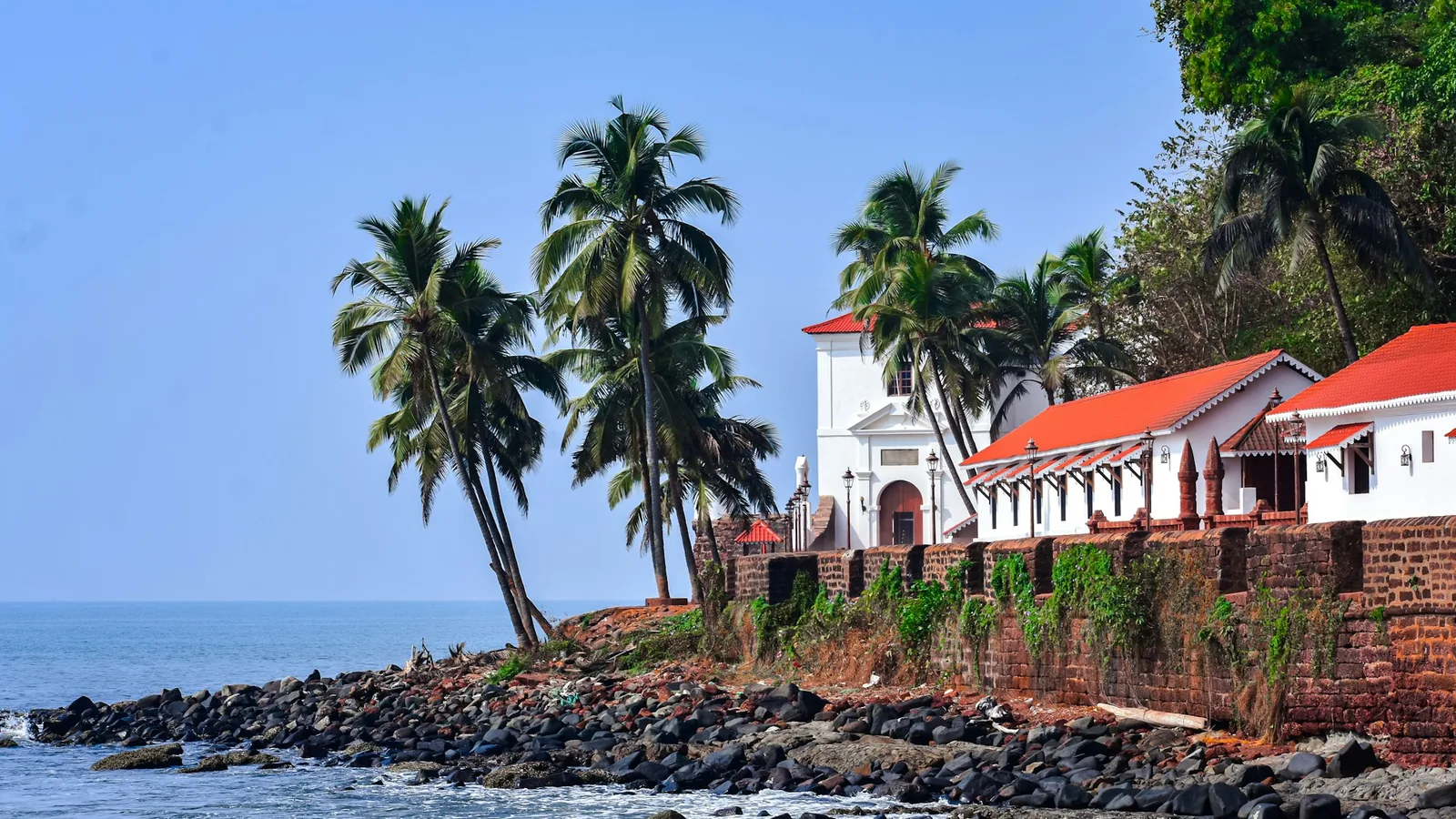
Living in Goa is not the same as holidaying in Goa, and most people who make the move discover the difference in their first June. The beaches, the light, the food, the music and the village feasts are all real. So are four months of heavy rain, air that stays close to saturation for weeks, salt on every metal fitting near the coast, power cuts in storms, and a tourist season that fills roads and towns for part of the year.
This is not a travel piece. It looks at living in Goa from the point of view of the house and the people running it: what the climate does to a home and what it costs in time and attention, how services and tradespeople work in practice, where healthcare sits on the map, how tourism shapes the year, and what long-term residents tend to wish they had known at the start. It is meant to be balanced, because the case for Goa is strong enough not to need exaggerating.
We see this from inside a lot of homes. As a soft-furnishing studio we are called in after the monsoon to replace mouldy curtains and in the spring to fit nets before the rains. That gives us a clear view of which choices make Goan homes easier to live in and which make them harder.
Living in Goa: the short, honest version
The table below is a fair summary of what year-round life in Goa offers and asks for. Neither column is exhaustive, and how much each point matters depends on where you live, what kind of house you choose and how you like to live. Someone in a village house near Benaulim and someone in a city flat in Panaji will weigh them differently.
The pattern behind the table is simple. Most of the advantages are about pace, place and people. Most of the drawbacks are about climate, infrastructure and seasonality, which are exactly the things a well-chosen and well-run house can soften. That is why the rest of this guide spends more time on the house than on the beach.
| Pros | Cons |
|---|---|
| Slower pace and a strong sense of village and neighbourhood life | A long, heavy monsoon and high humidity for months |
| Pleasant winters, from December to February | Oppressive heat in April and May |
| The sea, rivers, fields and hills within short distances | Salt air and damp that steadily wear on houses and furnishings |
| A distinctive culture, cuisine and architecture | Power cuts and surges, especially in storms |
| Space and light compared with most Indian cities | Busy roads and towns in the peak tourist season |
| A small state where most places are within reach | Healthcare, services and tradespeople vary by area |
The year as a resident lives it
The India Meteorological Department's climate summary divides Goa's year plainly. December to February is pleasant. April and May bring oppressive heat. June to October is warm, humid and uncomfortable. The monsoon sets in during the first week of June, and July alone brings around a third of the year's rain. For a resident, those seasons define the rhythm of the house far more than the tourist calendar does.
The dry months from November to May are when things get done: roofs repaired, walls painted, nets fitted, furniture reupholstered, gardens cut back. By May, the sensible household is preparing for the rains: clearing gutters, checking roof tiles, taking down or storing fabrics in rooms that will be closed. IMD notes that thunderstorms are most frequent in May, June, September and October, and that monsoon thunderstorms are sometimes accompanied by squalls, which is when trees fall on lines and power goes.
Then the monsoon itself. It is beautiful, green and quiet, and many residents love it. It is also when shoes and leather grow mould in a week, when clothes refuse to dry, and when every weakness in a roof shows itself. Our guides to Goa's climate month by month and monsoon rainfall set out what each month brings.
Planning something like this?
We visit homes across North and South Goa, measure on site, and bring samples to see in your own light.
What the climate costs your house
The biggest hidden cost of living in Goa is the upkeep that humidity, rain and salt demand. It is not mainly money, though there is that; it is attention, every year, on a predictable calendar. IMD records monsoon morning humidity across the state of 87 to 91%. The US Environmental Protection Agency advises keeping indoor humidity below 60% to limit mould. In an unconditioned Goan room in August, the gap between those numbers is the whole story.
In practice that means mould on walls behind wardrobes, on leather bags and shoes, on the backs of sofas pushed against outside walls, and in curtains left drawn in closed rooms. It means swollen doors and drawers, rust on hinges and curtain rails near the sea, and paint that blisters where walls take driven rain. Our articles on humidity in Goa and fungus on walls go into each in detail.
The upside is that most of it is preventable with the right choices. Rooms that can be closed and dehumidified. Furniture kept a few centimetres off outside walls. Fabrics that tolerate damp and can be washed. Aluminium or stainless hardware rather than plain steel near the coast. A routine for airing the house on dry days in the monsoon. Residents who build these habits early spend far less time and money putting things right each October.
In Goa, upkeep is a calendar, not an emergency. Plan the year around the monsoon and most problems never start.
Services, tradespeople and the power supply
How easy it is to find a reliable electrician, plumber, carpenter or painter depends a great deal on where you live. In and around the towns, choice is wider; in remote villages, a good tradesperson may serve a large area and be booked well ahead. Demand also peaks before the monsoon, when everyone wants roofs and gutters fixed at the same time. Book pre-monsoon work early, ideally by March or April, and keep the numbers of the people who did good work.
Power cuts are part of life in Goa, and storm season brings more of them. That affects how you set up a house. Many households run an inverter or backup for lights, fans and the fridge. Anything electronic benefits from surge protection, because the moment power returns is often harder on equipment than the cut itself. If you motorise curtains or blinds, choose battery or solar motors, or mains motors with a manual override; our guide to power cuts and motorisation explains why.
Water supply and drainage vary as well, from piped supply to wells and tankers, and from municipal drains to septic tanks. Ask about both before you rent or buy, and ask neighbours how the supply holds up in April and May, when demand is high and wells are low.
Healthcare and where you live
Healthcare access is one of the clearest ways in which location matters. The Government of Goa's Directorate of Health Services describes a network of sub-centres, primary health centres and community health centres, urban health centres in Panaji, Mapusa, Margao and Vasco, district hospitals in Margao and Mapusa, and sub-district hospitals at Ponda and Chicalim. Goa Medical College and Hospital at Bambolim sits at the top of the public system. There are private hospitals and clinics as well.
For someone choosing where to live, the practical questions are distance and time. How long does it take to reach a hospital with an emergency department from the house, in the evening rush, in peak season and in a monsoon downpour? Which specialists are nearby? We do not advise on medical services, insurance or costs, and they change; check them directly with providers and your insurer before deciding where to settle. If health is a central concern, our guide to retiring in Goa looks at choosing a house with that in mind.
Tourist seasons, crowds and traffic
Tourism is the backdrop to everyday life in much of Goa. The Department of Tourism recorded 1,08,02,410 tourist arrivals in 2025, including 5,17,802 foreign tourists. The state portal gives Goa's population as 1,458,545. Even allowing for the fact that visitors come and go across the year, that is a lot of extra people in a small state, and residents feel it in traffic, parking, noise and prices in the popular areas during the peak months.
How much it affects you depends on where you live. Coastal villages in the busiest belts change character in season; inland villages and some towns hardly notice. Many residents plan around it: shopping early in the morning, avoiding certain roads in the evenings, and keeping December and New Year quiet at home. The monsoon is the opposite, when many beach businesses close and villages feel like villages again.
If you let part of your home to visitors, tourism becomes an income rather than an inconvenience, with its own furnishing demands. Our guides to pre-season rental preparation and furnished versus unfurnished rentals cover that side.
Mosquitoes, insects and the open-window life
One of the great pleasures of a Goan house is living with the windows open, with the breeze moving through tall rooms. The cost of that is insects. The World Health Organization notes that the mosquitoes that spread dengue are active during the day, and recommends window screens and mosquito nets among the ways to avoid bites, along with emptying and cleaning water containers every week. In the monsoon, standing water collects everywhere, from plant saucers to blocked gutters.
Screens that work with the house make open windows possible without the bites. Sliding window nets and mosquito nets for doors can be fitted to most Goan openings, including tall old windows, and are far easier to live with than nets you have to remember to put up. Termites, ants and the occasional snake or bat are part of the picture too; our guides to insects and screens and termites and timber cover them.
What long-term residents tend to learn
Certain lessons come up again and again in the houses we work in. The first is not to furnish a home like a holiday rental. Velvet, silk, leather and pale linens in a closed, unconditioned room will suffer every monsoon. Choose fabrics for the climate, with washable covers, lined curtains for sun-facing windows, and monsoon-friendly storage for what cannot cope.
The second is that the house teaches you. Which wall gets the driven rain, which room stays damp, which window takes the afternoon sun, which corner the water comes through in a storm: living through one full year shows you, and it is worth waiting that year before committing to expensive finishes. The third is that people matter. A good relationship with a carpenter, an electrician and a neighbour who will check the house when you are away is worth more than any appliance.
None of this is a reason not to live here. It is a reason to come with clear eyes, choose a house that suits the climate, and set it up for the year rather than for the winter. When you are ready to set up your home, we can visit, measure and talk it through.