 Drapehaus
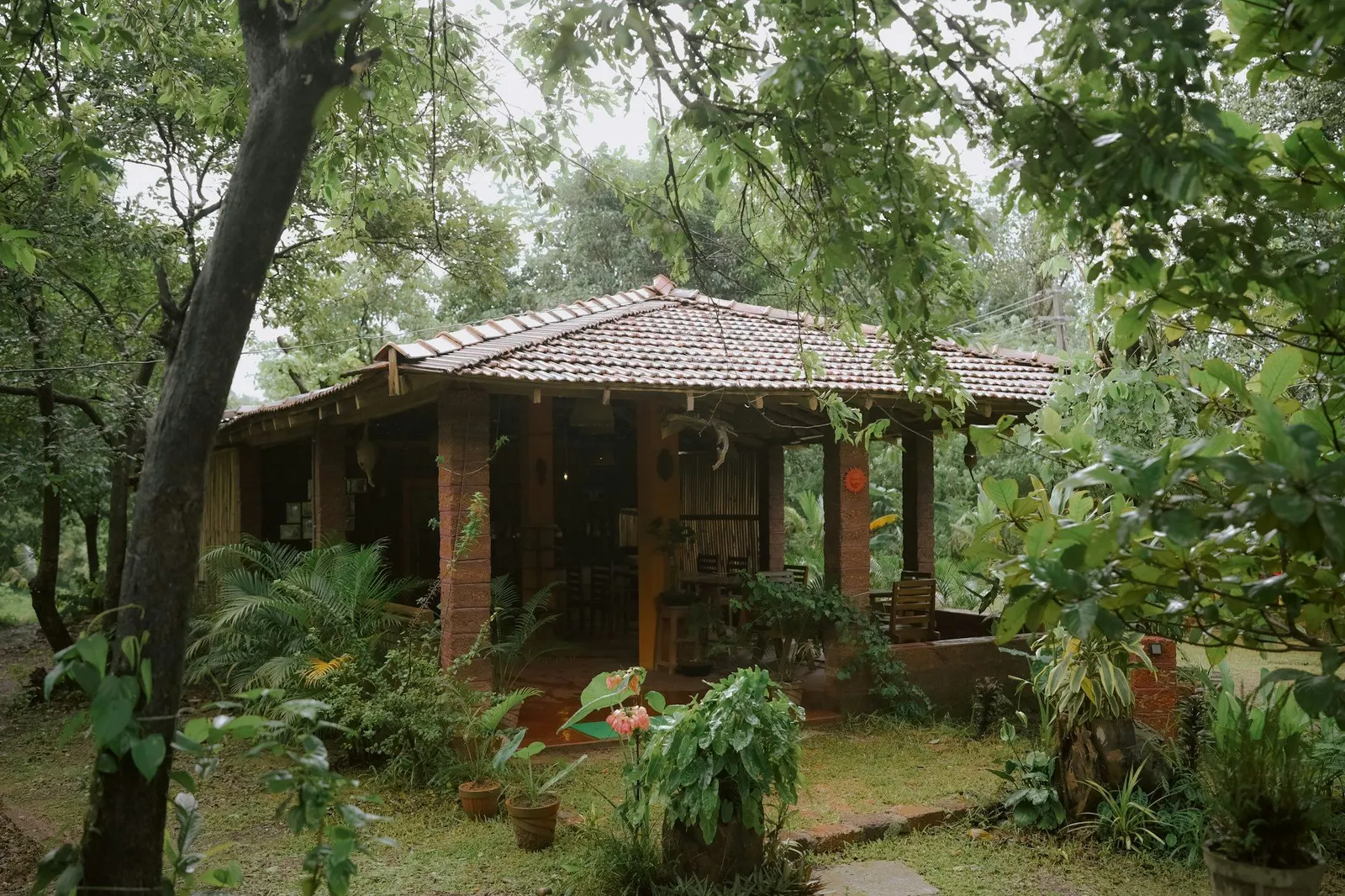
Anyone who sets out to buy a villa in Goa quickly finds that the listing tells you very little about the two things that decide whether the purchase goes well. One is the paper: the title, the land classification, the coastal zone, the duty payable and who is legally allowed to own what. The other is the building: how it has coped with a climate that puts more than three metres of rain on it in four months and keeps the air close to saturation for most of that time.
This guide takes both in turn. The regulatory half is an orientation, not legal advice. Rates and rules change, and every point below should be confirmed with an advocate who handles Goan conveyancing and against the current government notification before you commit money.
The second half is where we can speak from what we see on site. We are a soft-furnishing studio, not surveyors or builders, but we spend our working lives inside Goan houses measuring windows, fixing into walls and dealing with what damp and salt have done. A few of those observations are worth having before you sign.
Stamp duty in Goa and e-stamping
Stamp duty is the largest transaction cost after the price itself, and Goa has revised its structure. A Revenue Department notification reported on 8 July 2026 sets graded slabs by consideration value, running from 3% at the lower end to 6% on property above Rs 5 crore. Some online calculators still show 3.5% for the first slab, which is a good illustration of why you should work from the notification in force on the day you register rather than from any calculator or article, this one included.
Since 1 April 2025, stamp duty above Rs 9,999 must be paid by e-stamping under the Goa e-Stamp (Second Amendment) Rules, 2025. For any villa purchase that means an e-stamp certificate, not franked or physical stamp paper. Registration fees are charged separately; ask your advocate for the current rate, as we have not been able to verify a published figure.
| Consideration value | Stamp duty |
|---|---|
| Rs 600 to Rs 50 lakh | 3% |
| Rs 50 lakh to Rs 75 lakh | 4% |
| Rs 75 lakh to Rs 1 crore | 4.5% |
| Rs 1 crore to Rs 5 crore | 5% |
| Above Rs 5 crore | 6% |
Rates, slabs and fees change. Confirm the notification in force on the day of registration, and take advice from an advocate.
Who can buy property in Goa, and on what land
For Indian residents the question is mostly one of title. For non-resident Indians and Overseas Citizens of India it is also one of land type. Under FEMA, as summarised by the Ministry of External Affairs, NRIs and OCIs may acquire any immovable property in India other than agricultural land, plantation property or a farmhouse. They cannot take those by gift either, though they can inherit them. The current framework is the Foreign Exchange Management (Non-Debt Instruments) Rules, 2019.
This matters in Goa because a good deal of attractive land, particularly in villages and on hillsides, is or was agricultural. Use of land for non-agricultural purposes needs a sanad under Section 32 of the Goa, Daman and Diu Land Revenue Code, 1968. A villa built on land where conversion was never properly completed is a problem for any buyer and a serious one for a non-resident buyer. Ask to see the sanad and have the survey records checked against it. If you are buying from abroad, our note on managing a Goa home from abroad covers what ownership looks like after the keys change hands.
Planning something like this?
We visit homes across North and South Goa, measure on site, and bring samples to see in your own light.
The coast: CRZ 2019 and No Development Zones
Many villas for sale in Goa are sold on proximity to the sea or a river, and that proximity is regulated. The Coastal Regulation Zone Notification 2019 sets No Development Zones measured from the high tide line. In densely populated rural areas classed CRZ-III A, the zone is 50 metres, reduced from 200 metres under the 2011 notification; the 50 metre line applies once the state's Coastal Zone Management Plan under the 2019 notification is approved. In CRZ-III B areas it remains 200 metres. Along tidal water bodies it is 50 metres or the width of the creek, whichever is less.
Within a No Development Zone only temporary tourism facilities such as shacks, toilets and change rooms are allowed. A permanent house inside one needs a very clear account of when and how it was built. Your advocate should check the plot against the approved coastal zone maps, not rely on the seller's description. The same applies to rivers and creeks inland: a quiet backwater plot can still sit within a regulated zone, and a buyer who assumes otherwise may find extensions, pools or even repairs harder to approve than expected.
Reading a house for damp before you buy a villa in Goa
The single most useful thing you can do on a viewing is look for water where it should not be. Goa's normal annual rainfall is about 3,370 mm, and roughly 91% of it falls between June and September. Relative humidity in Panjim sits between 88% and 91% on monsoon mornings. A house that has handled that well shows it; one that has not shows it too, if you know where to look.
Check the base of walls, especially external walls, for tide marks, blistered paint and salts blooming through the plaster. Look at the top corners of rooms under terraces and flat roofs, and behind wardrobes that sit against outside walls. Smell cupboards. A fresh coat of paint on one wall in an otherwise tired room is worth a question. Our pieces on fungus on walls and monsoon damp and mildew explain what those signs usually mean. If you can, visit in the rains or shortly after. A house seen in March, fully aired and freshly painted, tells you much less than the same house seen in August.
Orientation, windows and glazing
Goa's monsoon winds come off the sea from the west and south-west, and the afternoon sun comes from the same side for much of the year. West-facing glass therefore takes both the driven rain and the low, hot sun. Look at the seals and sills on that side first: stained timber, rusted fixings and water marks on the inside face of the sill are all signs of water getting in.
Note the window types as you go. Large sliding doors, double-height glazing and arched openings are handsome and entirely workable, but each one needs a particular kind of treatment for glare, heat and privacy, and some need motorisation to be practical. It is far easier to plan for that at purchase than to discover it the first time you try to draw a curtain across a six-metre opening. Check whether windows have usable insect screens and whether the frames will take them. In Goa the choice between an open window and a closed one is often really a choice about mosquitoes.
Laterite, salt and how the house was closed up
Most older Goan houses, and many newer ones, are built in laterite. It is a good, breathable stone, but it is soft and variable to fix into, and walls that have taken water can crumble around a plug. Fixing curtain tracks into laterite often calls for longer fixings or resin anchors, and a wall that will not hold a screw near the window is telling you something about its condition. The laterite and old walls guide goes into this in more detail.
Near the sea, look at metal: hinges, handles, window stays, curtain rails and light fittings. Pitting and orange bloom on hardware is ordinary salt air damage and is replaceable, but its extent tells you how exposed the house is and how often it has been maintained. Finally, ask how the house has been left in past monsoons. Was it lived in, let or locked? Were the curtains taken down, the upholstery covered, the rooms aired? A house that was sealed for four months a year without care will usually carry the evidence in its soft furnishings, wardrobes and wall finishes, and that tells you what the first year of ownership will involve.
Look at the house in the rain if you can. A villa seen only in the dry season has hidden half its character.