 Drape Haus
Retiring in Goa appeals for good reasons: a slower pace, the sea, village life, a strong sense of community and winters that are genuinely pleasant. It is also a place with a long, heavy monsoon, high humidity for months on end, hot weeks before the rains, and houses that need steady upkeep. The people who settle happily tend to be those who chose their house with all of that in mind, not just the view from the verandah in January.
This guide looks at retirement in Goa from the house's point of view: the climate across a full year, choosing a home that will stay easy to live in as mobility changes, what the public health network looks like on the map, and how to set up floors, seating, windows and help at home so daily life stays simple. It ends where our own work begins, with furnishings that make a house easier rather than harder to run.
It does not cover visas, residency, pensions, tax, insurance or the cost of healthcare. Those depend on your nationality and circumstances, they change, and they are outside what we know. Check them with the relevant Government of India offices, your insurer and a qualified adviser before you plan around them.
Retiring in Goa: the climate across a full year
The India Meteorological Department's climate summary for Goa is refreshingly plain about the seasons. The climate, it says, is pleasant from December to February. April and May are uncomfortable with oppressive heat. June to October is warm, humid and uncomfortable. Anyone who has only visited in the winter season should know that the pleasant months are roughly a quarter of the year, and plan the house for the other three quarters.
Humidity is the defining feature. From June to September, IMD records morning humidity across the state of 87 to 91%, and even in the drier months it rarely falls far. For a retired couple at home most of the day, that means a house that stays dry and airy matters more than one that looks good in photographs. Rooms that can be closed and dehumidified, wardrobes that breathe, and fabrics that tolerate damp all make daily life easier.
Where you live within Goa changes the experience. IMD notes that areas within 20 to 25 kilometres of the coast are the most pleasant in the hot months, with the sea breeze blowing for much of the day, while the tract at the foot of the Western Ghats is oppressive by day and night in the hot season. Coastal living brings its own upkeep, from salt air on metal fittings to driven rain on west-facing walls. Our guide to humidity in Goa goes into what the numbers mean indoors.
Choosing a house you can grow old in
The most useful question when choosing a house for retirement is not how it suits you now but how it will suit you in fifteen or twenty years. Stairs are the obvious issue. A two-storey Goan house with bedrooms upstairs is charming at sixty and can become a daily obstacle later. Look for a home where you can live entirely on one level if you need to, with a bedroom, a bathroom and the kitchen on the ground floor. In a flat, a working lift, and a building with a plan for when the lift fails during a power cut, matter just as much.
Look closely at the small level changes too. Many Goan houses stand on a raised plinth with steps up to the balcão and the front door, and older houses often have steps between rooms and raised thresholds. None of these is a reason to walk away, but count them, note whether there is room for a handrail or a gentle ramp, and check that the main route from the gate to the bedroom and bathroom can be made safe. The bathroom deserves its own look: space to move, a shower without a high step, and walls solid enough to take grab rails.
Think about location in practical terms as well as scenic ones. How far is the nearest pharmacy, the nearest health centre, the nearest hospital with an emergency department? Can you reach them by road in the monsoon, when some low-lying village roads flood? Is there a market you can walk to, and neighbours nearby? A quiet house at the end of a long unlit lane is lovely until you need help at night.
- A bedroom, bathroom and kitchen on one level
- Few steps, or room to add rails and a ramp where there are steps
- A bathroom with space to move, a level or low-step shower and walls that take grab rails
- Good light in corridors and at steps, including at night
- A route to hospital and pharmacy that stays passable in the rains
- Neighbours or a community within reach
Planning something like this?
We visit homes across North and South Goa, measure on site, and bring samples to see in your own light.
Healthcare access: what the public network looks like
Healthcare is a reasonable worry for anyone retiring somewhere new, and it varies by where you live. We are not health advisers, so here we describe only the shape of the public system as the Government of Goa sets it out, and leave the rest to you and your doctor. The Directorate of Health Services describes a three-tier network of sub-centres, primary health centres and community health centres, with urban health centres in Panaji, Mapusa, Margao and Vasco. It lists two district hospitals, South Goa District Hospital in Margao and North Goa District Hospital in Mapusa, and sub-district hospitals at Ponda and Chicalim.
At the top of the public system is Goa Medical College and Hospital, now headquartered at Bambolim in Tiswadi, which the state government's page traces back to a medical school founded under Portuguese rule in 1842. Goa also has private hospitals and clinics. What matters for a retiree is the distance and travel time from your house to the facilities you are likely to need, which specialists are available where, and how your insurance or any government scheme applies. Confirm all of that directly with the hospitals and your insurer; services, schemes and eligibility change.
When you shortlist houses, plot them against these facilities and drive the route at the time of day you would most likely need it. In peak tourist season, traffic on some coastal roads can add a great deal of time; in the monsoon, flooding can close routes. A house twenty minutes from a district hospital on a clear road is a different proposition from one forty minutes away down narrow lanes.
Check healthcare access, schemes and costs directly with hospitals, your insurer and the Directorate of Health Services. They change, and this guide does not cover them.
Floors, rugs and falls
Falls matter more with age, and the numbers are sobering. The World Health Organization estimates that 684,000 people die from falls each year worldwide, and that adults older than 60 suffer the greatest number of fatal falls. It lists unsafe environments as a risk, particularly for people with poor balance and limited vision, and includes home assessment and modification among the interventions that work for older people.
Goan floors add their own risks. Polished stone, glazed tiles and red oxide are beautiful and cool, but they can be slippery when wet, and in the monsoon floors near doors and verandahs are often damp from rain carried in on feet. The NHS advises against clutter and things you could trip on, such as loose wires or rugs, and recommends non-slip mats in the bath or shower, rails on steps and grab rails in the bathroom. Good doormats at every outside door, inside and out, help keep water off the floor in the first place.
That does not mean no rugs at all. A large rug that lies flat, with low pile and a non-slip underlay, can make a tiled sala warmer and quieter without being a hazard; small loose rugs on polished floors and runners in corridors are the real problem. If you want rugs, choose fewer and larger, make sure edges lie flat, and keep them out of walking routes to the bathroom. Our rug sizes simulator helps choose a size that sits under furniture rather than floating in the middle of the floor.
Sofas and chairs you can get out of easily
A deep, soft sofa is lovely for a nap and hard work to get out of. For a retirement home, seating that supports you as you stand up is worth far more than seating that swallows you. The features that help are simple: a firm seat cushion that does not sink too far, a seat high enough that your knees are not above your hips, a seat depth that lets you sit with your back against the back cushion and your feet flat on the floor, and solid arms at a height you can push up from.
There is no single correct measurement, because people differ, so try seating before you buy and take the person who will use it most. Made-to-measure is especially useful here: a custom sofa can be built to a seat height and depth that suit you, with firmer foam and arms placed where your hands naturally go. Existing furniture can often be improved too. Many old Goan chairs and settees with good frames sit low because their seats have sagged; rebuilding them with firmer cushioning through reupholstery is often all they need.
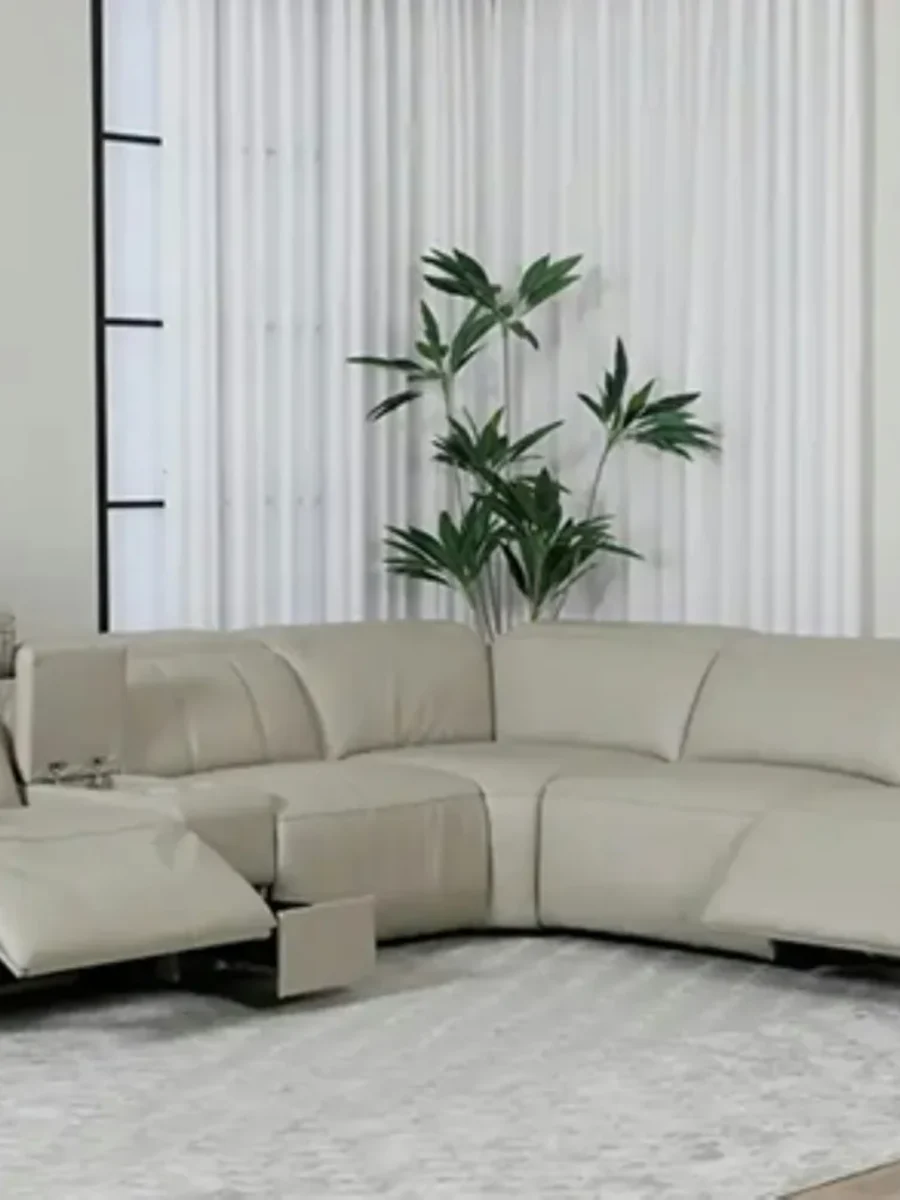
Fabric matters in Goa's climate. Choose upholstery that tolerates humidity and cleaning, and consider removable covers that can be washed after the monsoon. Recliners can be genuinely helpful for some people, but a powered recliner stuck in the reclined position during a power cut is a real problem; ask about manual release or battery backup before buying one. Our guide to recliner sofas covers the mechanisms.
Curtains, blinds and nets that are easy to work
Windows are where small physical tasks add up. Reaching across furniture to pull a heavy curtain, wrestling a blind cord or lifting a mosquito screen frame every evening is manageable now and wearing later. The goal in a retirement home is window treatments that can be worked with one hand, from a comfortable position, without stretching or climbing.
Motorised curtains are the most complete answer, especially for tall windows in old houses and for bedrooms, where they can be opened and closed from the bed. In Goa, power cuts are part of life, so the specification matters: battery and solar motors keep working during an outage, and mains motors should have a manual override. Our guide to power cuts and motorisation explains the choices. Where motorisation is more than you need, a curtain on a smooth track with a draw rod, or a cordless blind that you lift and lower by the bottom rail, does the same job by hand.
Insect screens deserve the same thought. The WHO notes that the mosquitoes that spread dengue are active in the day, and recommends window screens and nets among the ways to avoid bites. Fixed screens that stay in place, or sliding window nets that glide in a track, are far easier to live with than frames that have to be lifted in and out. Choose light, easy-to-clean fabrics for curtains too; heavy lined curtains are harder to take down for washing and storing before the monsoon.
Domestic help, caretakers and briefing them on the house
Most retirees in Goa rely on some help, whether a cook, a cleaner, a driver, a gardener or a caretaker who keeps an eye on the house when the owners travel. Finding the right people usually happens by word of mouth through neighbours, the parish or the village. Once you have found them, the Goa Police citizen services portal lists servant verification among its online services; ask at your local police station what is currently expected of employers.
The house will run better if the people helping you know how it works through the year. Write a short note, in the language your helpers read, covering the monsoon routine: which windows to open on dry days, which rooms to air, where the dehumidifier drains, how to run the motorised curtains and what to do if they stop. Include who to call for a plumbing leak, an electrical fault or a roof problem, and where the main water valve and electricity switch are.
If you travel for part of the year, the closed-house season needs a plan. Curtains, cushions and rugs left in a sealed house through the monsoon can come back mouldy. Some owners have them taken down, cleaned and stored before they leave; our monsoon take-down and storage service exists for exactly that, and our guide to the closed-house season covers the rest of the routine. When you are ready to set up the house itself, we can visit and talk it through.