 Drape Haus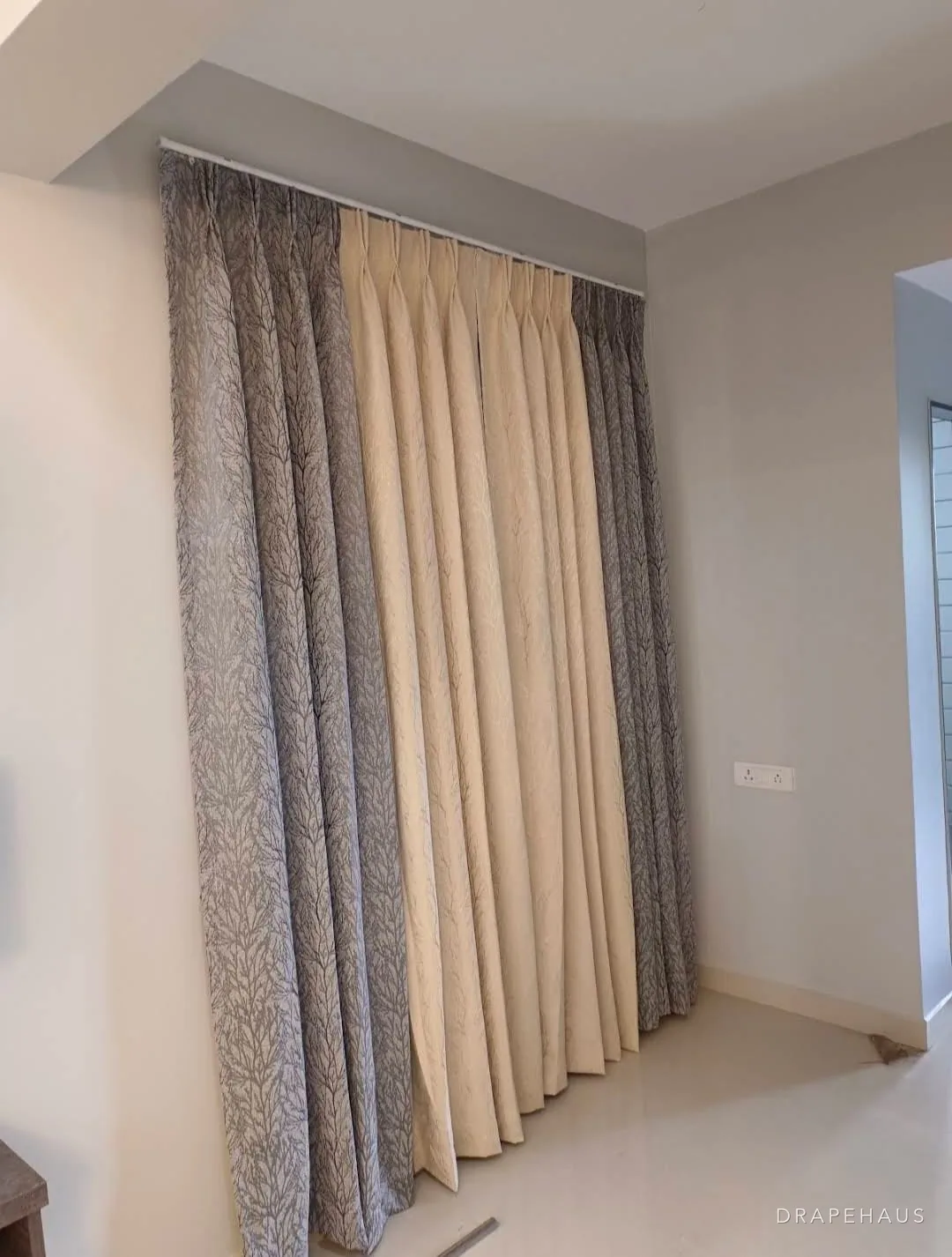
The best way to choose curtains is as a sequence of decisions rather than a single choice. First, what must the window do: give privacy, darken a bedroom, cut afternoon glare, or simply frame a view? Second, which fabric will survive the room's humidity and sun? Third, lined, unlined or blackout? Fourth, which heading and how much fullness? Fifth, which rod or track, fixed where? Sixth, measure properly and get a made-to-measure quote. Taken in that order, each step narrows the next.
The order matters more in Goa than in most places. A fabric chosen first, because it looked lovely in a showroom, may turn out to be a pure linen for a sea-facing window in a house that is shut through the monsoon. Choosing the window's job first, and the fibre for the conditions second, avoids most of the expensive mistakes we are asked to put right.
This is a decision path, not a catalogue. For the range of curtain types themselves, see our companion guide to types of curtains. To try fabrics on a drawn Goan window at different times of day, use the curtain simulator.
Step 1: decide what the window has to do
University of Kentucky Extension guidance on window treatments lists their jobs plainly: control light, affect air circulation, insulate against weather and noise, provide privacy, and enhance a good view or hide a poor one. It advises deciding which of those comes first before choosing anything. That is the right starting point, because one curtain rarely does all of them well.
Walk the room at the times it is used. A bedroom that faces east is judged at dawn, when the low sun finds every gap. A living room facing west is judged late in the afternoon, when glare and heat come straight in. A dining room on a narrow village lane is judged after dark, when lamps inside turn every sheer into a shop window. Write one main job against each window, and a second if there is one.
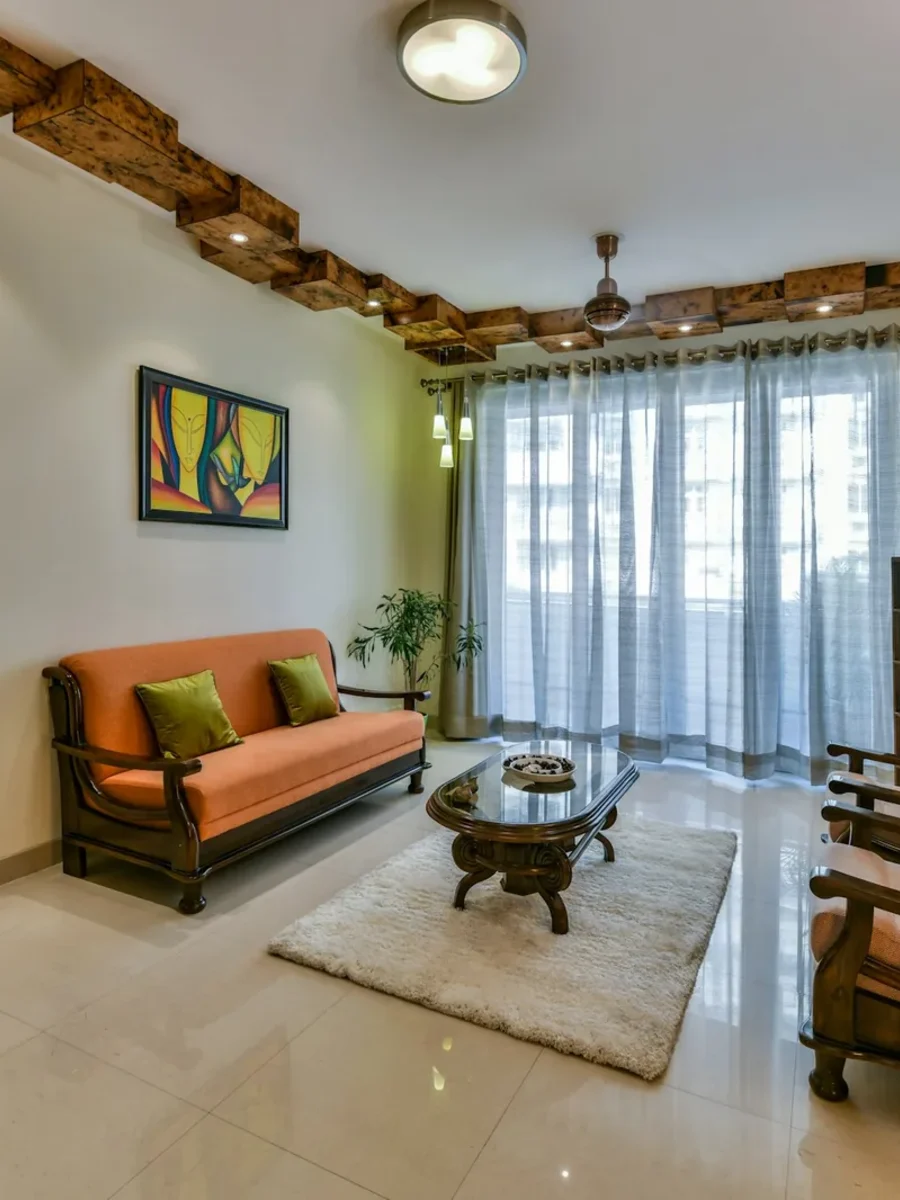
Then add the Goan question: does the room need air? Many houses here keep windows open for much of the year, and a curtain over an open window has to let breeze through, move without tangling, and not flap into a ceiling fan. Rooms that are sealed and air-conditioned have different needs from rooms that breathe. Our curtain ideas for the living room look at that balance in detail.
- Privacy by day: a sheer or light-filtering curtain
- Privacy after dark: a lined curtain or blind that closes
- Darkness for sleep: blackout lining, fitted to stop light at the edges
- Glare and heat on a west wall: a sheer by day, a lined layer for the worst hours
- Breeze and view: a light curtain that stacks well clear of the opening
Step 2: choose a fabric for the humidity and the sun
Humidity is the first filter. Through the four monsoon months, IMD's normals for the state show morning humidity between 87 and 91%. Conservators at the Smithsonian put the threshold for mould on cotton and linen in still air at about 80%, and point out that polyester and nylon take up very little water. So the rule is simple: the more exposed the window and the longer the house is closed, the stronger the case for polyester or a blend.
Sun is the second filter. Faded colour never comes back, and ultraviolet also weakens cotton and silk over time, according to Canada's national conservation institute. Its guidance adds that visible light, not ultraviolet, does most of the fading in sensitive colours, so a UV film on the glass is only a partial defence. On a west or south window, choose colours that fade gracefully, or line the curtain so the lining takes the sun.
Within those limits, choose what you like. Linen and cotton bring texture and suit lime-plastered rooms in an occupied, ventilated house away from the sea. Polyester voiles and linen-look polyesters hold up best near the water and in closed houses. Velvet belongs in a sealed, air-conditioned room. Our coastal fabric advisor suggests fibres from your distance to the sea and how the house is used, and our fabric guides cover linen, cotton, and polyester and blends in depth.
Planning something like this?
We visit homes across North and South Goa, measure on site, and bring samples to see in your own light.
Step 3: lined, unlined or blackout
A lining is a second layer sewn behind the face fabric. It gives the curtain body so it hangs in fuller folds, stops a printed pattern showing through backwards from outside, and protects the face from sun. An unlined curtain is lighter, filters light softly and moves in a breeze. A blackout curtain carries an opaque lining that stops light passing through the fabric; whether the room is actually dark then depends on how the curtain meets the wall at the top and sides.
Heat is a reason to line as well. America's energy department reports that drapes in a medium colour, backed in white plastic, cut heat gain through a sunny window by about a third in studies. That is worth having in a hot west room. Shade fixed outside the glass still beats it, as the department's building guidance explains, because the sun is stopped before it reaches the window at all.
The Goan caution is moisture. A sealed, foam-backed lining against cold glass in a closed monsoon house traps damp, which is why we specify breathable blackout linings and do not interline curtains here. Decide by room: blackout for bedrooms where people sleep past sunrise, a standard lining for sunny living rooms and printed fabrics, unlined sheers for daytime privacy. Our guide to blackout linings compares the options.
| Choice | Light | Privacy at night | Best for | Goa caution |
|---|---|---|---|---|
| Unlined sheer | Soft, bright | None with lights on | Living rooms, verandah doors | Pair with a closing layer |
| Unlined curtain | Filtered | Partial | Relaxed rooms, guest rooms | Fades faster on sunny glass |
| Lined curtain | Dim when closed | Good | Living rooms, printed fabrics, sunny windows | Lining should breathe |
| Blackout-lined | Dark when fitted well | Complete | Bedrooms, media rooms, rentals | Keep air moving in closed houses |
Step 4: pick a heading and fullness for how the curtain is used
The heading is the top of the curtain, where the fabric is gathered and hung. It decides how the folds fall, how the curtain stacks and what it can hang from. A pinch pleat is tailored and suits formal rooms and tall windows. A wave or ripple-fold heading falls in an even S-curve, stacks tightly and runs best on long tracks and motors. An eyelet is relaxed, slides easily on a pole and suits single windows. A pencil pleat is simple and forgiving.
Think about how often the curtain moves. A curtain beside a sliding door that is pushed open twenty times a day wants a smooth track and a heading that stacks without dressing, which points to wave. A curtain in a formal sitting room that is drawn twice a day can be a pinch pleat on a handsome pole. In a rental or a child's room, choose the heading that works with one obvious movement.
Then set the fullness, which is how much fabric goes into the curtain compared with the track it covers. Pencil pleats take the most, pinch pleats a little less, eyelet and wave less again; our calculator lists the working figure for each heading. Below about twice the track, curtains look thin whatever the fabric. Our guide to how much fabric you need works through the numbers.
Step 5: rod or track, wall or ceiling, and hardware that survives salt air
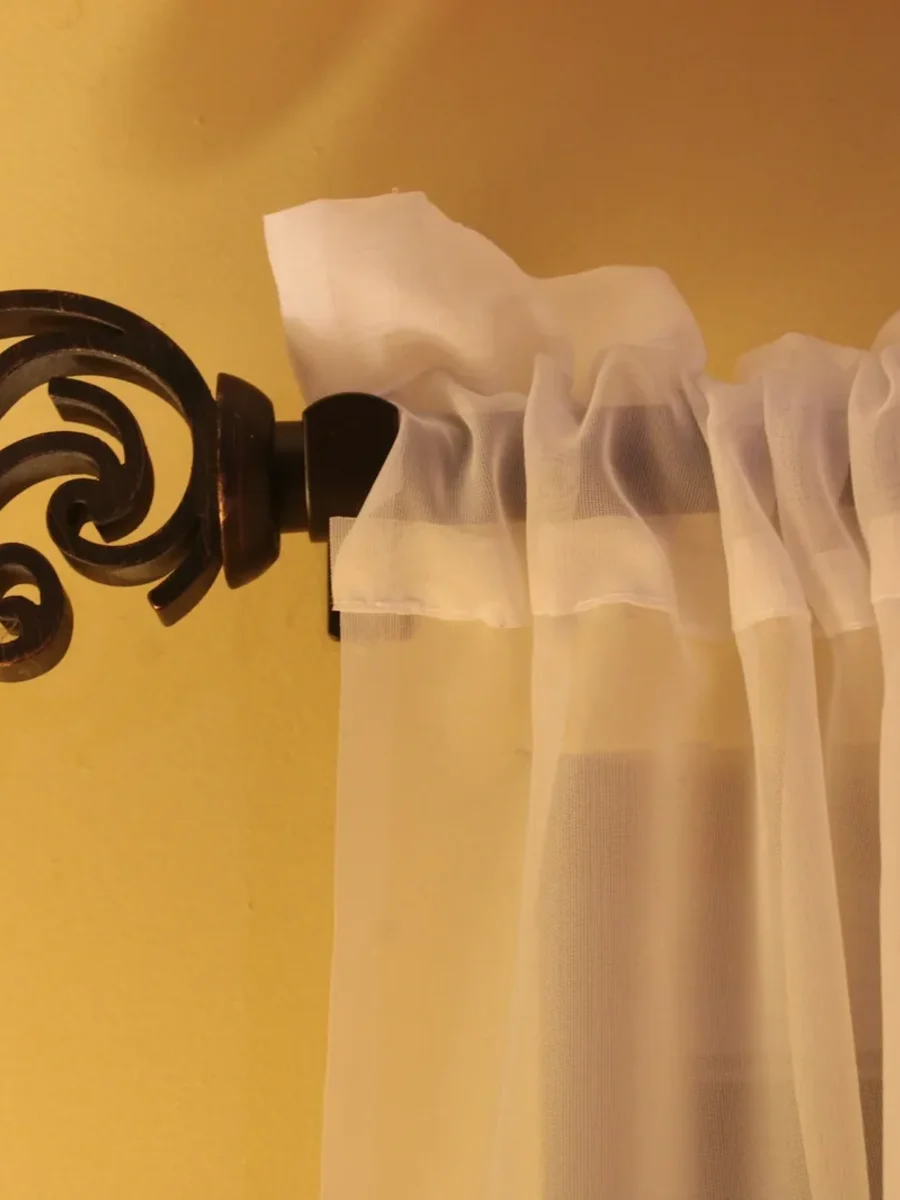
The heading largely chooses the hardware. Eyelets need a pole; wave headings need their own track; pleats can go on either. A pole is part of the look, and suits heritage rooms and single windows. A track is quieter, carries heavier curtains over longer spans, can be fixed to the ceiling, and is the only way to motorise. Our guide to types of curtain rods covers rods in detail, and the curtain tracks page covers the alternative.
Fix high and wide. A track close to the ceiling makes a window look taller and helps a bedroom stay dark; a track that runs past the frame lets the curtains stack beside the glass instead of over it. The curtain rod length planner shows how far, from the window width, fabric and heading.
Near the sea, metal choice is not cosmetic. Plated steel rods, rings and hooks rust in salt air and leave brown marks on pale fabric; anodised or powder-coated aluminium and suitable stainless steel last. The fixing matters as much as the rod: laterite and old lime plaster need fixings that bond, and concrete-framed houses are strongest at the lintel.
Step 6: measure, sample and get a made-to-measure quote
Measure the track width and the drop, not the window; our step-by-step guide on how to measure for curtains shows how, including the extra readings older houses need. Those numbers let you estimate fabric and compare quotes on equal terms.
Then see the fabric where it will hang. The Kentucky Extension guidance recommends large fabric swatches or samples for an on-location comparison before buying, and that is doubly true here, where a colour chosen under shop lights can look quite different against lime wash in strong west light. Hold samples at the window at the time of day the room matters most.
When comparing quotes, the same guidance advises making sure the quote includes measurements and installation, written into the contract. Ask each supplier the same questions: what fullness, what lining, what heading, what track and fixings, and who measures and fits. A lower figure that assumes less fullness or a lighter track is not describing the same curtain.
Common mistakes when choosing curtains
Most disappointing curtains fail for one of a handful of reasons, and almost all of them are decided before the fabric is chosen. The list below covers the ones we see most in Goan homes, from town flats to old village houses and new coastal villas.
If any of them sounds familiar on an existing window, the fix is often smaller than a full remake: a longer track, a new lining, a hem adjusted, or a second layer added. Our curtains team can look at what you have before suggesting anything new.
- Too short: a hem that stops a few centimetres off the floor looks accidental; finish just clear of it
- Too narrow: low fullness makes even a fine fabric look thin
- Track cut to the window: the open stack covers the glass and the light
- Track fixed just above the frame on a tall window: the window looks shorter and light spills over
- Pure linen or cotton on a sea-facing window in a closed house: mildew and weakened fibre within a few monsoons
- A sheer alone on a street-facing room: no privacy once the lamps are on
- Plated steel hardware near the sea: rust on the rod and stains on the fabric
- Loose cords in a child's room: choose hand-drawn, wand or motorised instead