 Drape Haus

To clean blinds made of fabric, dust them regularly, spot-clean marks gently, and never soak or machine-wash them. That is the whole principle, and it applies to the three fabric blinds most Goan flats and villas have: roller blinds, zebra or day-and-night blinds, and vertical blinds with fabric vanes. Each is made from fabric that has been stiffened, coated or both, so that it hangs flat, rolls straight and resists fraying at cut edges. Water, rubbing and detergent in the wrong amounts break down exactly those finishes.
The good news is that fabric blinds need very little. A few minutes of dusting every week or two, quick attention to marks when they happen, and a careful check after each monsoon will keep most blinds looking right for years. The routine below covers all three types, including the double layers of zebra blinds, the right order for taking down vertical slats, and what to do about mildew spots.
If your blinds are past cleaning, we refabric and replace roller blinds, zebra blinds and vertical blinds. For Roman blinds, which are sewn and lined like curtains, see our separate explainer on Roman blinds.
Know what you are cleaning
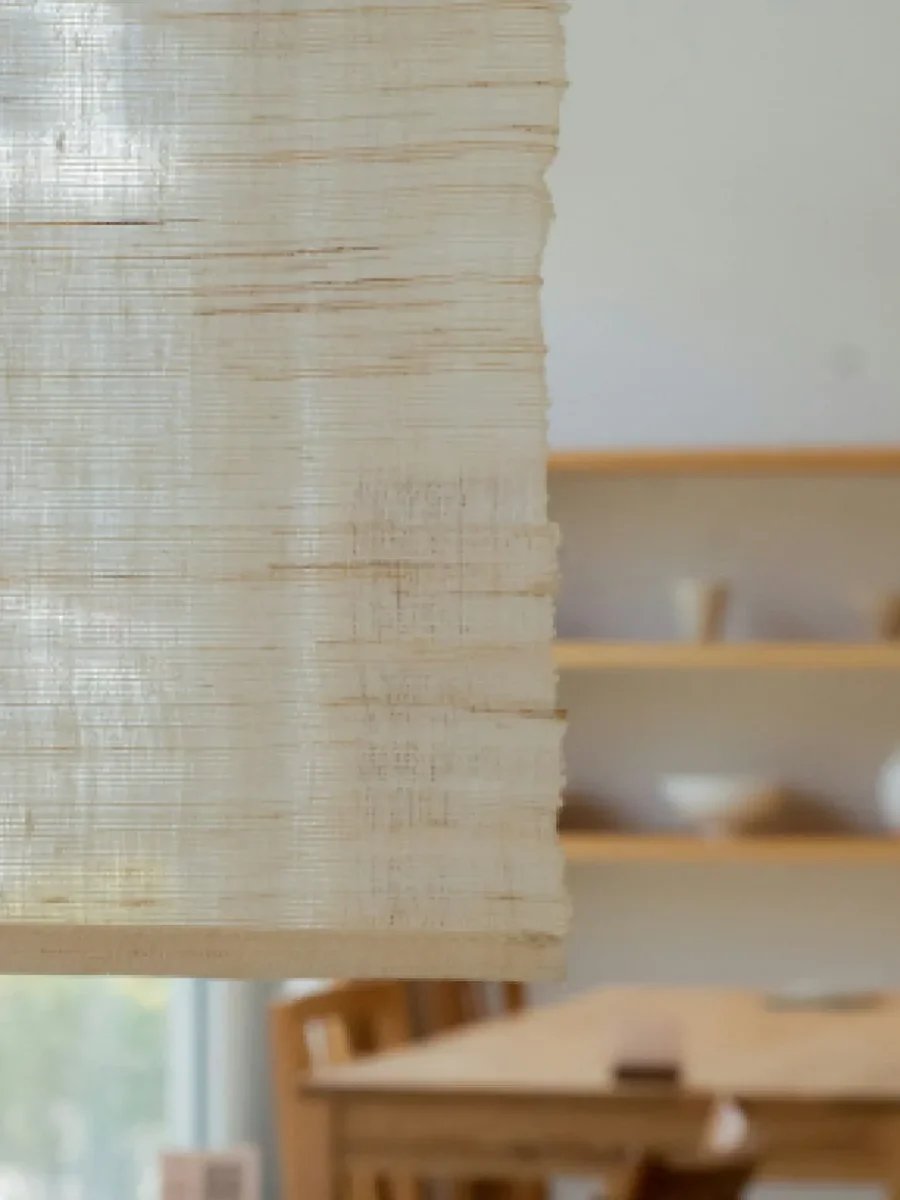
Roller blinds are a single sheet of fabric on a tube. Most are polyester or a polyester blend treated with a stiffening finish, and many carry a coating: an acrylic or similar layer on the back of blackout and dim-out fabrics, a reflective backing on some solar fabrics, or a full PVC coating on wipe-clean versions for kitchens and bathrooms. Solar screen fabrics are often an open weave of coated yarns. Their edges are usually cut and sealed rather than hemmed, and the stiffener is what keeps them from curling.
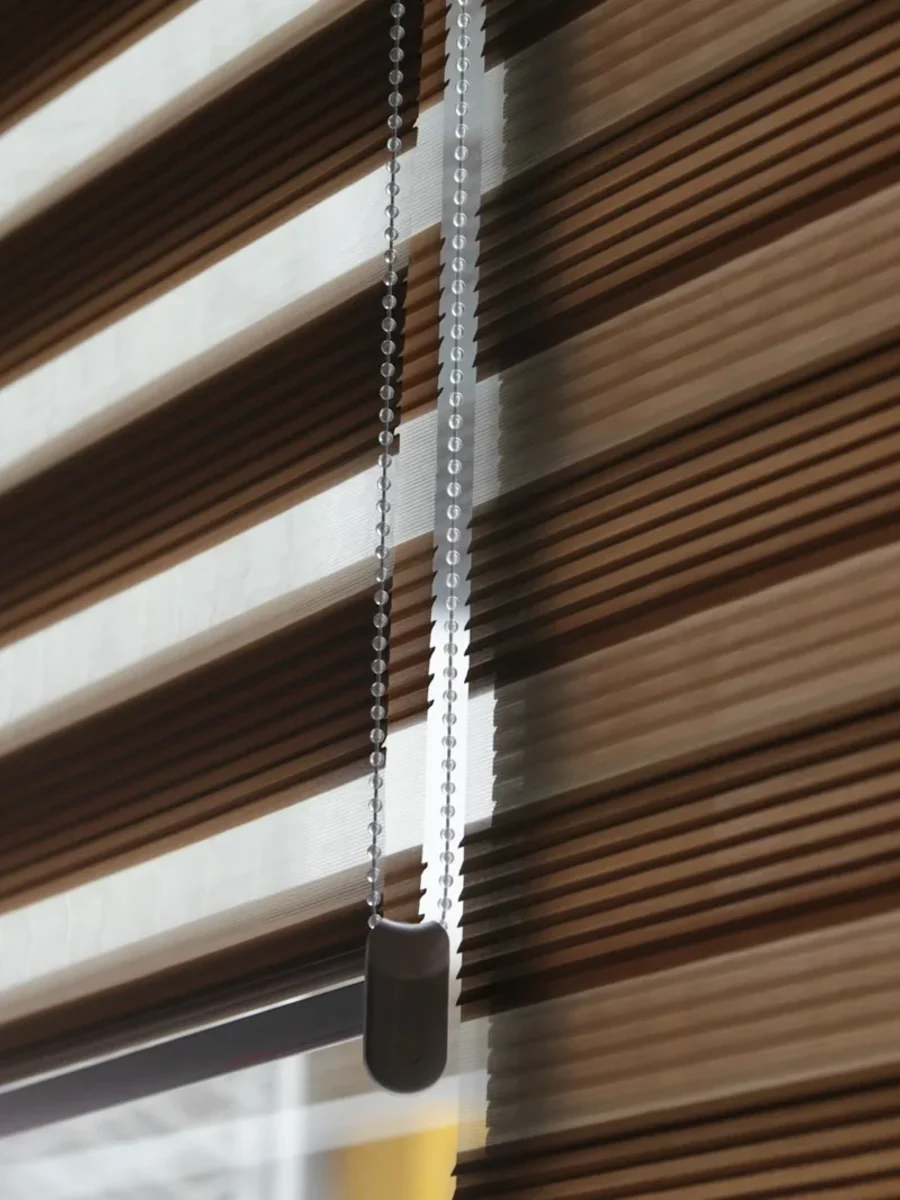
Zebra blinds use the same kind of stiffened polyester, but as a double layer with alternating sheer and solid bands, so the sheer rows have an open weave that traps dust. Vertical blinds hang as separate vanes; fabric vanes are stiffened polyester with a weight in a pocket at the bottom and, often, a chain linking the weights so the vanes rotate together.
Check the care label or the maker's information before you start, if you have it. Coated and PVC-faced blinds are generally the most tolerant of a damp wipe; uncoated sheer and solar fabrics are the most easily marked. Whatever the type, test any cleaning method on a hidden corner first and let it dry before judging the result.
Weekly dusting: brush attachment, microfibre and direction
Dust is the main enemy of a fabric blind, not because it looks bad but because it holds moisture. The Smithsonian's Museum Conservation Institute notes that soiling and residues let mildew grow on fabric at lower humidity than it would on clean cloth, and Goan monsoon mornings average 87 to 91 per cent relative humidity across the state, according to the India Meteorological Department. A dusty blind in a damp room is a likely place for spots to start.
Lower the blind fully. Use a vacuum cleaner on low suction with a soft brush attachment, holding the brush lightly against the fabric, or a dry, clean microfibre cloth. Work from the top down in long, even strokes across the width, so dust falls towards parts you have not done yet rather than onto clean fabric. Support the bottom of the blind with your other hand so you are not pulling the fabric against the roller. Do the back as well as the front where you can reach it, because the back faces the glass and collects salt and condensation.
For zebra blinds, set the bands to the open position first, so both layers are exposed and the sheer rows are not hidden behind solid ones. For vertical blinds, close the vanes flat in one direction and brush down them, then rotate them to close the other way and repeat. In a sea-facing room, follow with a cloth just damp enough to lift salt from the surface, then let the blind dry fully lowered.
Planning something like this?
We visit homes across North and South Goa, measure on site, and bring samples to see in your own light.
Spot cleaning coated and blackout fabrics without tide marks
Tide marks, the pale or dark rings left round a cleaned spot, form when water spreads into the fabric, dissolves dirt and carries it outward as it dries. They are the commonest result of enthusiastic spot cleaning. The cure is to use as little water as possible and to stop it spreading.
Mix a few drops of mild, colourless washing-up liquid in lukewarm water. Dip a white cloth or sponge, wring it until it is barely damp, and dab the mark, working from the outside of the mark towards the centre so you do not push dirt outward. Do not rub or scrub; friction lifts coatings and roughens the face. Rinse the cloth in clean water, wring it out, and dab again to remove soap, then blot with a dry towel. Feather the edge of the damp area outward slightly so there is no hard line where wet meets dry, and let the blind dry fully lowered and flat.
On the coated back of a blackout blind, the same method works, with even less pressure; a cracked or flaking coating lets light through in pinpricks and cannot be repaired. Never use solvents, bleach, ammonia-based cleaners or stain removers on coated fabrics, and never mix bleach with ammonia products, which the US Environmental Protection Agency warns can produce toxic fumes. If a stain is oily, set or large, stop and ask for professional cleaning or a new fabric rather than risk the rest of the blind.
Dab, never rub: friction and too much water are what leave rings and lift coatings.
Why soaking or machine-washing roller fabric ruins it
It is tempting to take a grubby roller blind off its tube and put it in the bath or the washing machine. Please don't. The stiffening finish that keeps the fabric flat is partly washed out by soaking and agitation, so the blind comes back limp and curls at the edges. Coatings on the back can crack, wrinkle or separate from the fabric. Sealed edges fray once they have been flexed wet. And a fabric that was cut perfectly square can distort slightly as it dries, which you will see the first time it rolls.
That last point is the one that ends most home-washed blinds. A roller blind only rolls straight if the fabric is square to the tube. If it has shrunk or stretched even a little more on one side than the other, it will track towards one end as it winds, a fault called telescoping, until it rubs on the bracket and frays. There is no reliable way to correct that afterwards.
If a blind is too dirty for dusting and spot cleaning, the realistic options are a specialist cleaner who handles blinds or a new fabric on the existing roller and brackets. Refabricing is often a sensible choice, because the mechanism usually outlives the fabric, and it is something we do routinely.
Zebra blinds: cleaning the double layers and the bottom rail
A zebra blind is one continuous loop of fabric, so you are cleaning a front face, a back face and the inside of each. With the bands in the open position, brush or vacuum the front from top to bottom. Then lower the blind fully and, where the window allows, reach behind to do the back face the same way. Dust and salt collect most in the sheer bands, so give those a little more time.
Do not try to separate the layers or pull the fabric away from the bottom rail to reach inside the loop; the fabric is fixed and you can distort it. Light dust inside the loop is best dealt with by gentle vacuuming through the sheer bands from the outside, on the lowest suction.
The bottom rail is the dirtiest part of most zebra and roller blinds, because hands grip it and it hangs nearest the sill. Wipe it with a damp cloth and a drop of washing-up liquid, then dry it, taking care not to wet the fabric that wraps round it. While you are there, check the chain and its wall anchor: the US Consumer Product Safety Commission advises anchoring continuous-loop chains securely to the wall or floor, and a missing tensioner is worth replacing.
Vertical slats: remove, wipe and rehang in the right order
Vertical fabric vanes can be cleaned in place with a brush, but for a thorough clean it is easier to take them down. Rotate the vanes so they are open, at right angles to the window. At the bottom, unhook the linking chain from each weight, or slide the weights out, noting which way round they sit. Then number each vane on its top edge with a small piece of masking tape, from left to right, before you remove it. Vanes fade slightly differently and may vary a little in length, so putting them back in their original order keeps the blind even.
To remove a vane, lift it gently up into its carrier hook and ease it off, or follow the release method for your headrail; do not pull it down hard, which can break the carrier. Lay each vane flat on a clean towel, dust both sides, and spot-clean marks with the dab method above. Do not soak the vanes or immerse the weighted bottoms. Let them dry completely, flat, before rehanging.
Rehang in number order, check that every vane faces the same way, refit the weights and reconnect the bottom chain, then rotate the blind open and closed a few times to make sure all the vanes turn together. If one hangs crooked, its carrier hook may be cracked, and that is a small replacement part rather than a reason to change the blind.
Mildew spots after the monsoon, and when to replace the fabric
Mildew on a blind usually shows after the rains as small grey, green or black spots, often near the bottom or along the back face nearest the glass, sometimes with a musty smell. It is most likely on blinds left lowered in a closed, humid room. The Smithsonian's Museum Conservation Institute advises letting mildew dry first, then removing the residue by gentle vacuuming with a HEPA-filtered vacuum, testing the suction and brush on a small area, and notes that wholesale washing is not recommended. Do it outdoors or by an open window, and wear a mask: the US Environmental Protection Agency suggests an N-95 respirator when cleaning mould.
After vacuuming, a dab of mild detergent solution can lift remaining marks on coated fabrics. On uncoated and sheer fabrics, mildew often leaves a stain even after the growth is gone. The EPA notes that absorbent or porous materials may have to be thrown away if they become mouldy, and a blind whose fabric is spotted through, smells musty after cleaning, or has lost its coating is at that point. The roller and brackets can usually be kept and the fabric replaced, which is part of our blinds work.
Prevention is easier than cure. The EPA's guidance is that the key to mould control is moisture control, with indoor humidity kept below 60 per cent and ideally 30 to 50. In practice that means air conditioning or a dehumidifier in rooms that stay closed, raising blinds on dry mornings so air reaches the glass, dusting before the monsoon, and checking blinds in a shut house. Our guides to monsoon damp and mildew and after the monsoon cover the wider house.
How to clean fabric blinds: the routine
For roller, zebra and vertical fabric blinds. Test every step on a hidden area first.
Lower or open the blind
Lower roller and zebra blinds fully, with zebra bands in the open position. Rotate vertical vanes so they lie flat. This exposes the most fabric and stops you pulling against the mechanism.
Dust from top to bottom
Use a vacuum on low suction with a soft brush attachment, or a dry microfibre cloth, in long strokes from the top down. Support the bottom rail with your other hand.
Do the back face
Where you can reach, dust the side facing the glass too. It collects salt, condensation and the dust that feeds mildew.
Spot-clean marks by dabbing
Use a barely damp white cloth with a few drops of mild washing-up liquid in lukewarm water. Dab from the outside of the mark inward, rinse with a clean damp cloth, blot dry and feather the edge.
Wipe rails, weights and chains
Clean the bottom rail, vane weights and chain with a damp cloth, keeping water off the fabric, and check that chain anchors are secure.
Dry fully lowered
Leave the blind down, or vertical vanes flat, until completely dry, out of direct sun. Rolling up a damp blind traps moisture in the roll.
Check after the monsoon
Look closely at the back face and bottom edge for spots or a musty smell. Treat dry mildew with a HEPA vacuum and consider refabricing if it has stained through.